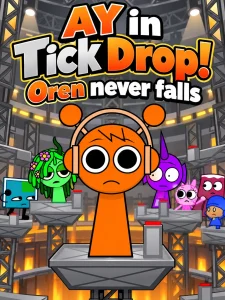
A crowd of tiny contestants gathers across a gray circular platform, waiting as a mechanical arena selects who remains standing and who falls away. AY in Tick Drop! But Chiara has 4 Different Clones shifts the standard browser elimination formula away from direct platforming control, turning each round into an automated spectator showcase. Instead of steering a character past moving floor traps, the player launches the simulation, monitors names appearing over the cast, and follows a roulette-style elimination process until a single survivor remains.
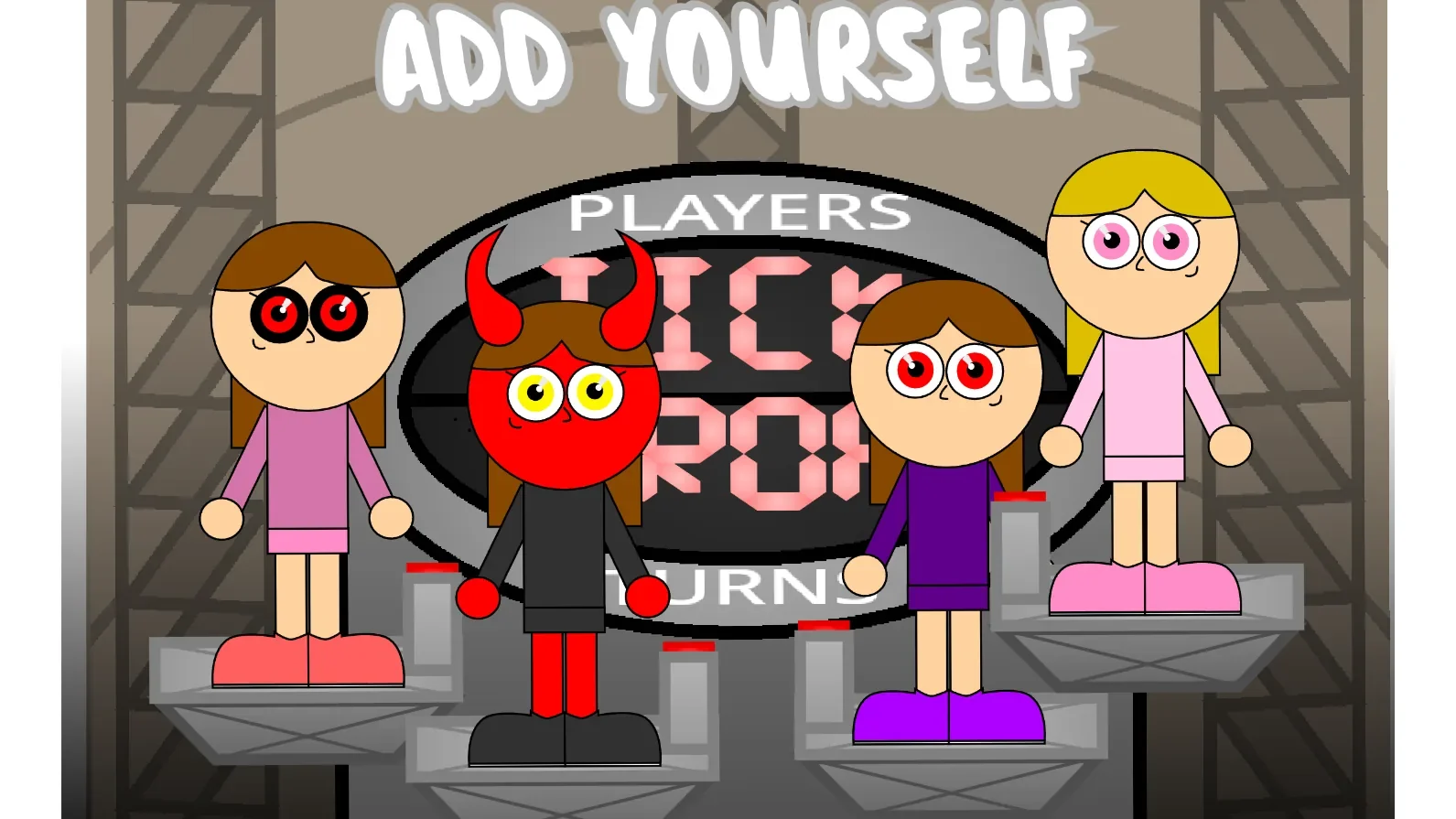
The title highlights the central focal point of this edition: rather than filling the platform entirely with disconnected crossover figures, the roster centers around Chiara and four specific alternate forms. Dark Demon Chiara, Chiara.EXE, Devil Chiara, and Faker Chiara stand alongside the normal Chiara, giving the crowded stage a thematic core. The surrounding arena features a large central display showing active contestant metrics, a black "PRESS" indicator, and a visible "Now Playing" audio tracker that anchors the presentation.
 3 Game Screenshots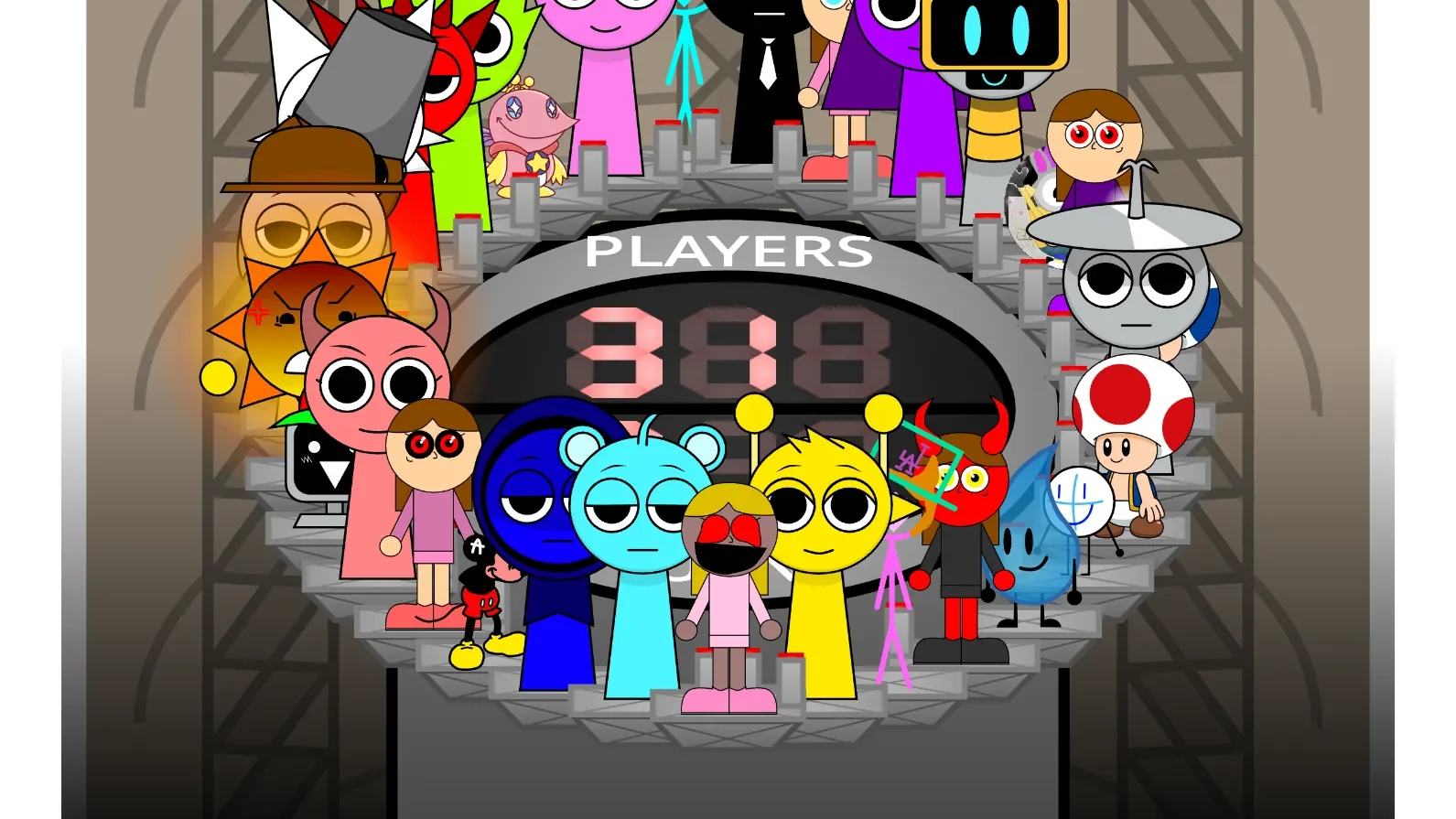
The Chiara Variants and Crossover Roster
Clustering attention around a single character's alternate forms prevents the large contestant list from blurring into an unrecognizable group of sprites. Each of the four Chiara variants uses distinct visual cues: red demon colorations, glitchy face overlays, and stylized faker artwork contrast against the standard Chiara sprite. These visual differences allow viewers to scan the circular arena quickly and track which version of Chiara stays active as the elimination rounds progress.
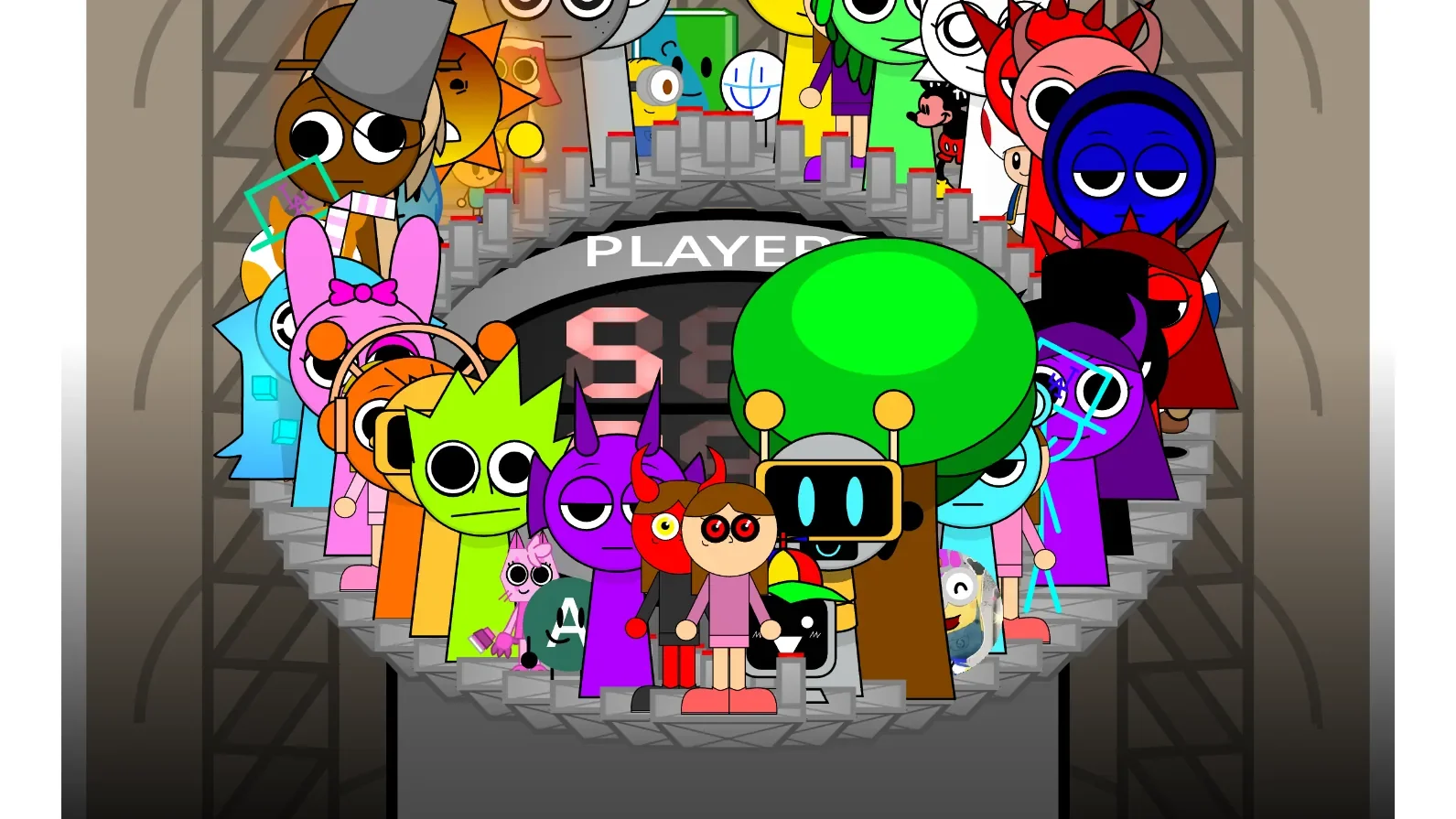
Beyond the featured Chiaras, the roster draws heavily from Sprunki characters and third-party crossovers. Sprunki figures on the platform include Oren, Raddy, Clukr, Funbot, Vineria, Gray, Brud, Wenda, Pinki, Jevin, Black, Tunner, and Durple. They share the gray floor with broader crossover characters such as Pocoyo, Pato, Toadette, Teardrop, Scrapziez, Brightney, Animatic, Aqua, Salmolina, Violetina, C-Elsa, C-Rod, Goobert, Simon, and Ganorld. Creator @PinkFlowerFan2674Returns structures the wide array of characters so that every run displays a different combination of callouts and survival paths, even if individual background figures do not receive dedicated mechanics during a short match.
Automated Elimination Flow and Arena Mechanics
Starting a round requires minimal setup, as the game operates as an automated elimination loop rather than a skill-driven obstacle course. Once the round begins, the cast shuffles across the circular platform while speech bubbles appear overhead to identify active contestants. The mechanical stage cycles through randomized selection checks, triggering a countdown display before marking specific characters to drop out. When selected, a character plays a drop-out animation, plays associated sound effects, and is removed from the internal active roster tracking.
This hands-off structure shifts the tension entirely to the randomness of the selection script. When hosted on Fortcade, the simulation maintains its automated pace without requiring complex input mapping or precision platforming inputs from the player. Rounds continue automatically through successive drop checks until the active contestant count drops to one. Upon reaching the final contestant, the system triggers a victory state with celebratory graphics and winner audio cues to signal the end of the match.
Arena Design, Audio Cues, and Readability Limits
The physical arena layout emphasizes a game-show environment. Gray platform tiles, red button caps, a central countdown timer, and layered character placements give the stage an active, industrial feel. Audio elements include dedicated start sounds, looping background music, sound effects for fall events, and winning celebration fanfares, all paired with the onscreen "Now Playing" music display.
However, the high character density creates visual readability challenges. Sprites layer directly over one another, and larger character models that drift toward the foreground frequently cover smaller figures behind them. In active runs, speech bubbles naming contestants like C-Elsa or Simon can be partially obscured by neighboring sprites, and the central display can become hidden behind crowded contestant groups. Rather than functioning as a precise competitive tool, the visual interface acts as a dense, overlapping collage where players simply observe the general flow of eliminations.
Player Agency and Spectator Expectations
Because the game relies on automatic scripts for movement, selection, and fall sequences, direct player interaction ends after launching the round. Players cannot manually jump over drop zones, steer chosen characters away from edges, or influence which variant survives deep into the tournament. Those seeking precise controls or mechanical depth will find little direct gameplay beyond watching the outcome unfold.
For viewers interested in character-focused elimination simulations, the clear visual identities of the four Chiara clones combined with the broad Sprunki crossover cast provide enough variety to justify brief spectator runs. The game functions best as a quick, low-effort character roulette where the appeal comes from watching an overcrowded arena select its final survivor.