
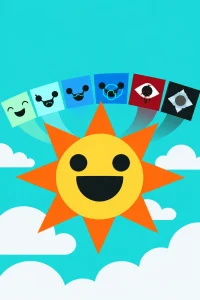
A cheerful hand-drawn mascot floating in a bright blue sky greets players, but staring at him yields an uncomfortable result: the screen washes out with overexposure until the scene advances. Don't Look At MR SUN, created by @namarikarte, takes a simple real-world safety warning and transforms it into a seven-stage puzzle sequence. What starts as a direct gaze test quickly evolves into a deceptive exercise in lateral thinking where the player must identify what counts as "the sun" across menus, written characters, and interface elements.
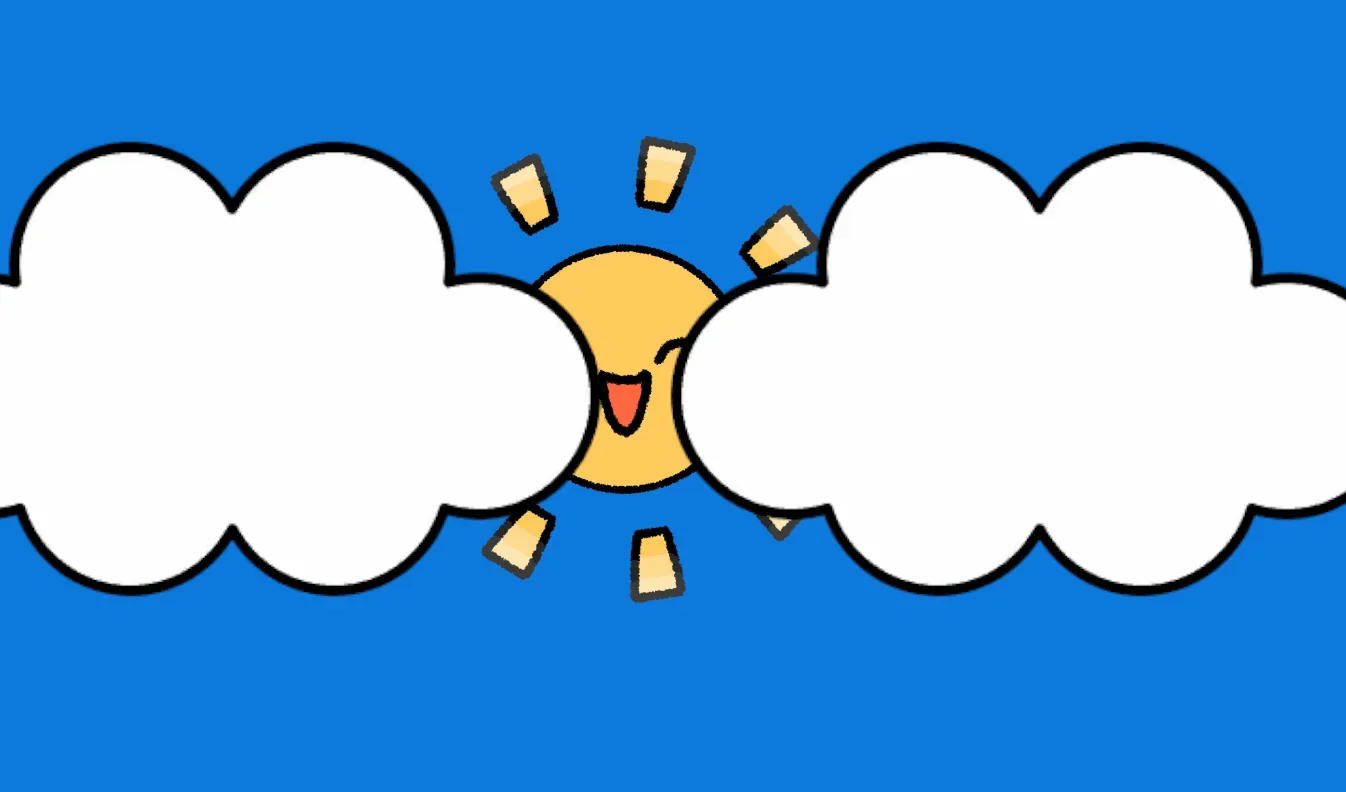
In the opening stage, Mr. Sun sits in plain view, smiling as sustained contact turns the surrounding canvas white. The second stage introduces a row of drifting clouds that obscure his face. While some players initially treat this as a timing test—attempting to track the narrow gaps between moving clouds—the clouds themselves are fully interactive. Dragging the obstructions away restores a direct line of sight, teaching players early on that physical manipulation is just as important as holding a pointer over a target.
 3 Game Screenshots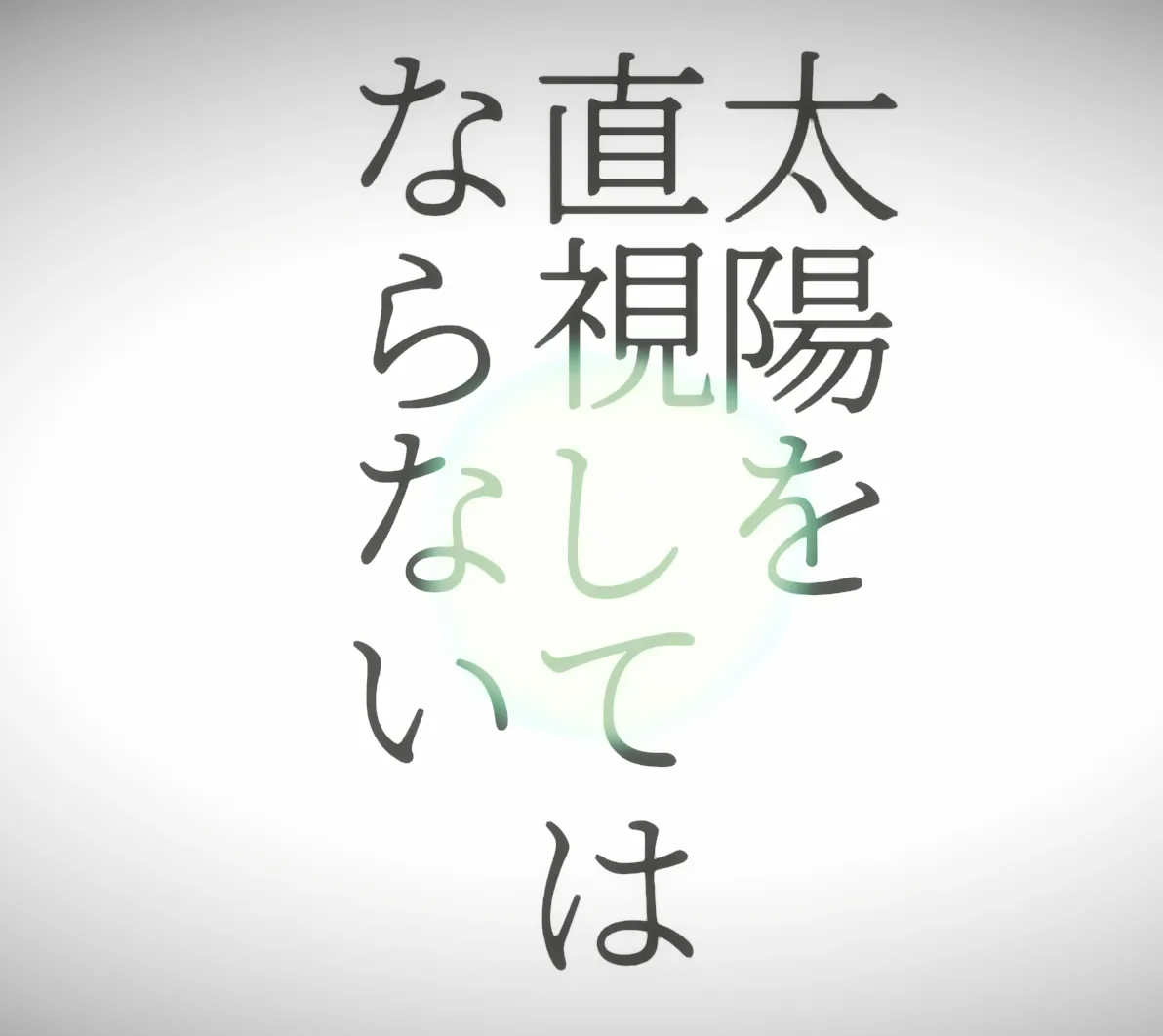
Redefining the Target Through Wordplay and Interfaces
From Stage 3 onward, the game stops relying strictly on the mascot's graphic figure and turns toward interface elements and language. A calendar puzzle requires tearing away daily pages until the kanji character 日 appears—a character that signifies both "day" and "sun." In another scene, a dejected Mr. Sun is linked to the background music volume slider; raising the BGM restores his energy, converting an ordinary settings menu into an active puzzle component. The wordplay deepens in a childlike diary entry where all direct sun drawings are blacked out. Here, players must alter the kanji 目 (meaning "eye") by removing a stroke to form 日, actively editing written text to construct their target.
Stage 6 reframes the experience as an online message board accompanied by a personal-information form. Typing specific country names into the active text field generates their corresponding national flags. The system selectively accepts flags displaying explicit solar symbols, such as those of Japan or Argentina, while rejecting flags with non-solar celestial iconography like the moon symbols on Palau or Laos flags. Interactions throughout these stages remain straightforward across desktop and touch devices, requiring pointer hovers, taps, click-and-drag movements, or text inputs.
Mascot Horror and Sound Clues
As the stages progress, the visual presentation shifts away from its initial cartoon aesthetic. The feedback mechanism relies on gradual overexposure, darkness, blurred light, and stark white typography rather than traditional progress bars or explicit health meters. The cheerful atmosphere becomes increasingly unsettling as Mr. Sun's rosy cheeks and rounded smile become associated with blinding vision loss. Sound design further enhances this atmospheric tension; beyond the BGM slider, a post-logo sequence invites players to manipulate fragments of the speaker control, "SE" labels, and the Unity engine logo to spell out "SUn."
The standard play route rewards players for repeatedly ignoring the title's warning, escalating until the vision-damaging consequences reach their logical conclusion. However, a secret true ending completely flips this dynamic. By entering Stage 1 and remaining entirely passive for roughly one minute without placing the pointer on Mr. Sun, the game grants a full resolution. Players occasionally stumble upon this outcome by leaving the game idle or stepping away from their screens, discovering that the ultimate answer was explicitly stated in the title all along. On Fortcade, where short experimental titles often rely on rapid trial and error, Don't Look At MR SUN distinguishes itself by rewarding careful screen observation over hasty clicking.
Despite its clever escalation, the game presents specific barriers for non-Japanese speakers. Because several central puzzles depend on kanji manipulation (such as transforming 目 into 日) and Japanese message-board context, players unfamiliar with the language may find certain solutions less intuitive, relying on visual trial and error rather than immediate comprehension. Additionally, given the estimated 30-minute runtime for a first playthrough, replayability relies primarily on uncovering the secret ending or testing alternative country flags in the message-board scene.
To navigate these stages effectively, players must adapt their inputs to each scene's implicit rules:
- Direct Gaze / Touch: Hovering or tapping and holding over a sun target triggers the screen-brightening progression.
- Object Manipulation: Clicking and dragging allows players to clear cloud barriers, tear calendar pages, and adjust kanji strokes.
- Text & Audio Inputs: Typing country names in form fields summons flags, while adjusting volume sliders or reassembling UI labels unlocks audio-driven solutions.
Ultimately, Don't Look At MR SUN provides a compact, unsettling puzzle experience that constantly shifts the boundaries of its core premise. It suits players who enjoy lateral thinking, subtle horror, and games that subvert interface design conventions. Its individual interactions remain simple throughout, but its strength lies in forcing the player to question where the sun is hiding—and whether they should look at it at all.



![AY in Tick Drop! [MY uae_flag] game cover](https://fortcade.com/wp-content/uploads/2026/10/ay-in-tick-drop-my-uae-flag-225x300.webp)