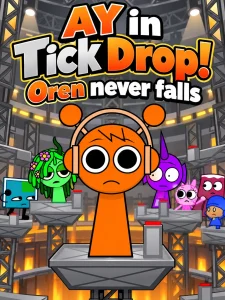
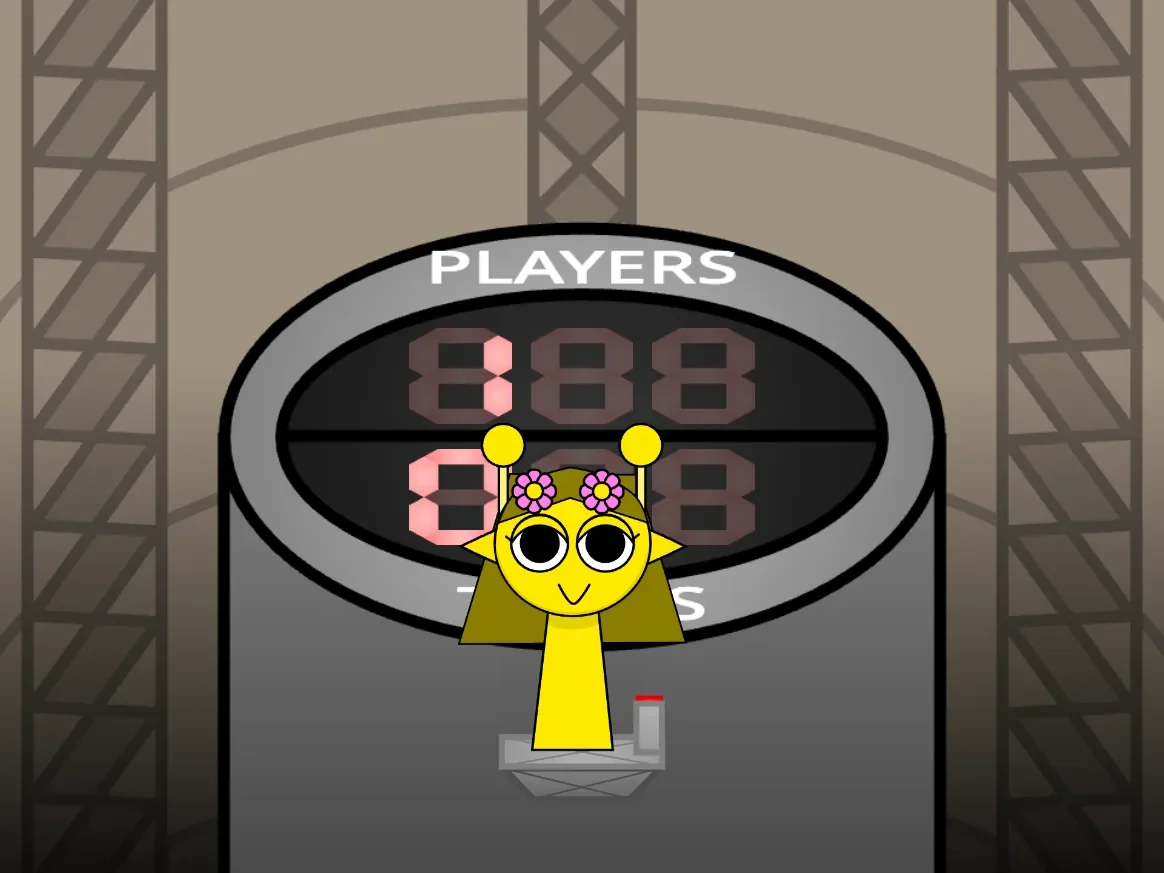
A giant green button sits inside a gray circular platform labeled “PLAYERS,” surrounded by a dense crowd of contestants waiting to see whose turn ends in elimination. Pressing the button advances a central digital counter, triggering a rotation sequence that shifts every character around the stage until someone lands at the drop point. In AY in Tick Drop! Sprunkies but Simon has a Family, created by @MixelsXD67, this mechanical elimination system forms the foundation for a passive, roster-focused arena where outcomes depend entirely on where the turn counter lands.
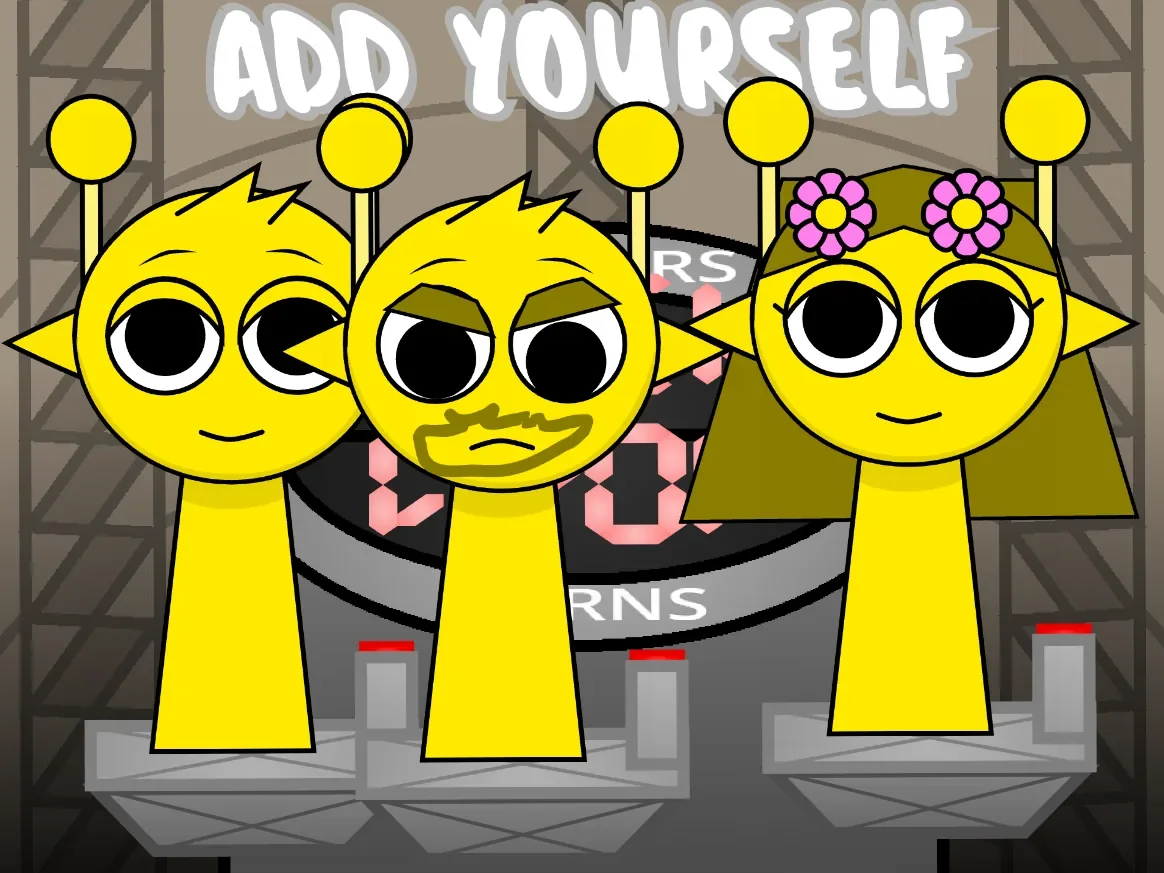
The defining addition in this edition is the inclusion of Simon's full household. Simon appears alongside Simon’s Mom, Simon’s Dad, and Simon’s Sister, joining an expansive lineup of Sprunki cast members and crossover guests. Instead of asking players to dodge hazards, jump across platforms, or manage complex controls, the experience functions as an automated elimination show. Victory and loss are decided by the mechanical counter while players watch the lineup shuffle, pose, and react to each round.
 3 Game Screenshots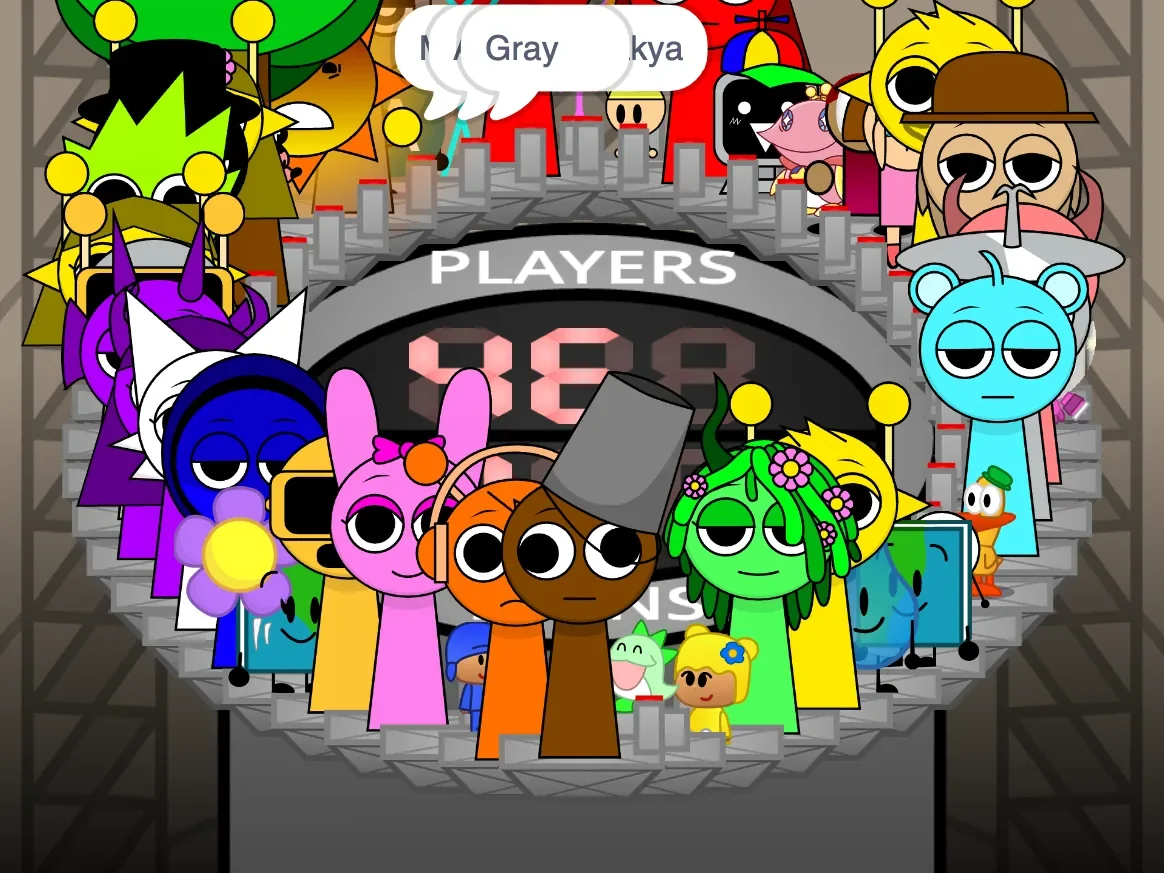
How the Turn Counter and Elimination Loop Function
The elimination cycle follows a clear three-step sequence. When the game loads, characters stand around the gray circular platform near small red-topped posts surrounding the stage floor. Once the active phase begins, contestants take turns moving forward to press the large green button. Each press raises the number displayed on the digital counter at the center of the platform.
After the button phase finishes, the entire roster begins rotating through the exact number of turns registered on the counter. The lineup moves step by step, shifting positions along the circle until the counter finishes counting down. The contestant left at the end of the rotation order is removed from the arena, and the remaining roster resets for the next cycle. This process is designed to repeat until only a single winner remains on stage.
Because the counter can reach high numbers, rounds do not resolve instantly. When watching the loop on Fortcade, the suspense builds during the rotation phase as the digital count decreases and the soundtrack plays in the background. Testing on the Scratch player confirmed that the soundtrack display appears, the counter advances, and the cast rotates through the standard elimination sequence. A full winner screen requires completing every elimination round, making the overall experience a longer commitment rather than a quick-click minigame.
Roster Details and Interface Features
The central draw of this edition is its extensive roster. Beyond Simon and his family, the platform includes Oren, Raddy, Clukr, Funbot, Vineria, Gray, Brud, Wenda, Pinki, Black, Mr Sun, Mr Tree, Scrapziez, Brightney, Worried Chiara (Grassy), Pocoyo, Pato, JAD, and Goobert. To help identify individual characters within the crowded arena, hovering the mouse pointer over any contestant displays their name inside a speech bubble.
While most characters perform standard loop actions—standing idle, pressing the button, displaying a loss animation, or celebrating a win—several feature customized costume variations, unique audio cues, or dedicated reaction branches. Simon’s Dad, for example, features a distinct angry state during interactions. These small edits give individual contestants distinct personalities on stage, even though they all operate within the same underlying Tick Drop mechanics.
However, packing so many characters onto a single platform creates visual crowding. Contestant sprites overlap heavily across the platform, making it difficult to track a specific character throughout the rotation unless they happen to stand near the front of the stage. The dense arrangement communicates the scale of the contestant pool, but it sacrifices visual clarity in exchange for roster size.
Scope and Suitability
The interaction model remains deliberately restricted. There are no navigable environments, movement controls, puzzle mechanics, or tactical choices available to the player. Interaction is limited to pressing the button and hovering over characters to read their speech bubbles. Success is determined entirely by the automated turn counter rather than player decision-making.
Pacing also varies depending on how high the counter climbs during the setup phase. When the digital display reaches double digits, players must watch the rotation play out step by step before learning which contestant is eliminated. Players who enjoy slow-building suspense and character rosters will find value in watching the family dynamics and crossover contestants filter through each round. Conversely, those seeking fast action, direct character control, or immediate results may find the automated rotation loop overly passive.