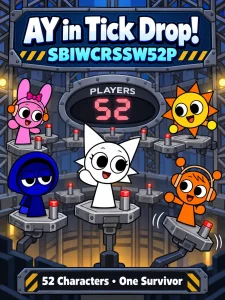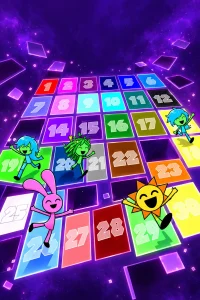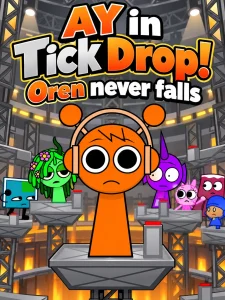
Instead of requiring direct character movement or reflex timing, AY in Tick Drop! but Gray has a Father places the player in front of an automated elimination wheel where an oversized button-like marker sweeps across a crowded gray stage. The initial scene opens with a grayscale presentation centered around two large gray figures on the title screen before transitioning into a dense lineup of colorful characters arranged around a central pressure platform. Rather than testing direct inputs, the experience relies on the passive tension of watching a randomized hazard move through the cast to decide who gets picked.
Credited to @MixelsXD67, this release forms part of the ongoing AY (Add Yourself) in Tick Drop remix tree. The root structure—AY in Tick Drop! [Remix 0 | 10 Players]—attributes its original mechanical concept to the Whomp Stomp minigame from Mario Party 9. That heritage remains visible in how the stage operates: rather than offering player-driven maneuvering or skill tests, the scene functions as a digital game-show hazard where contestants stand idle while a sweeping indicator determines the outcome.
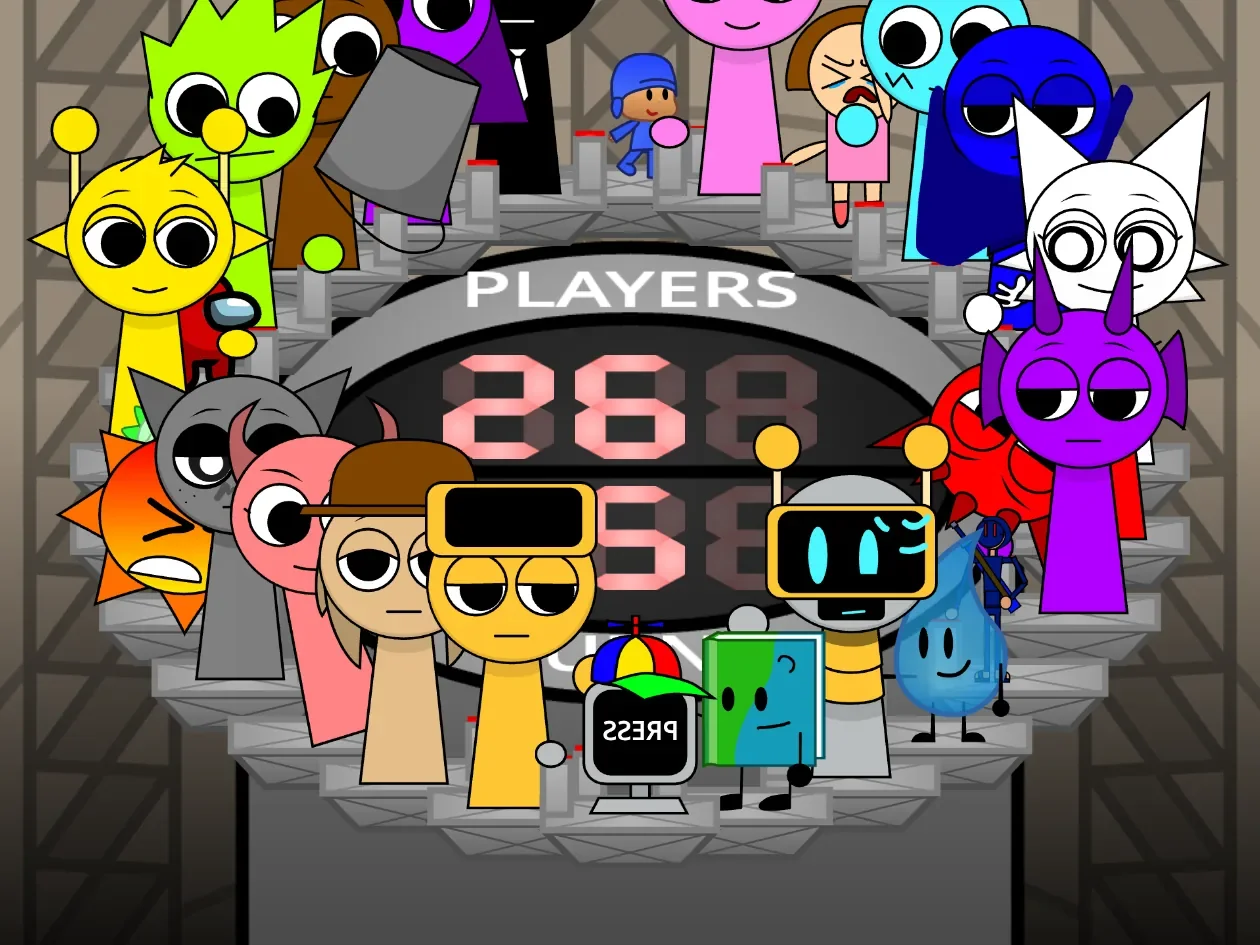
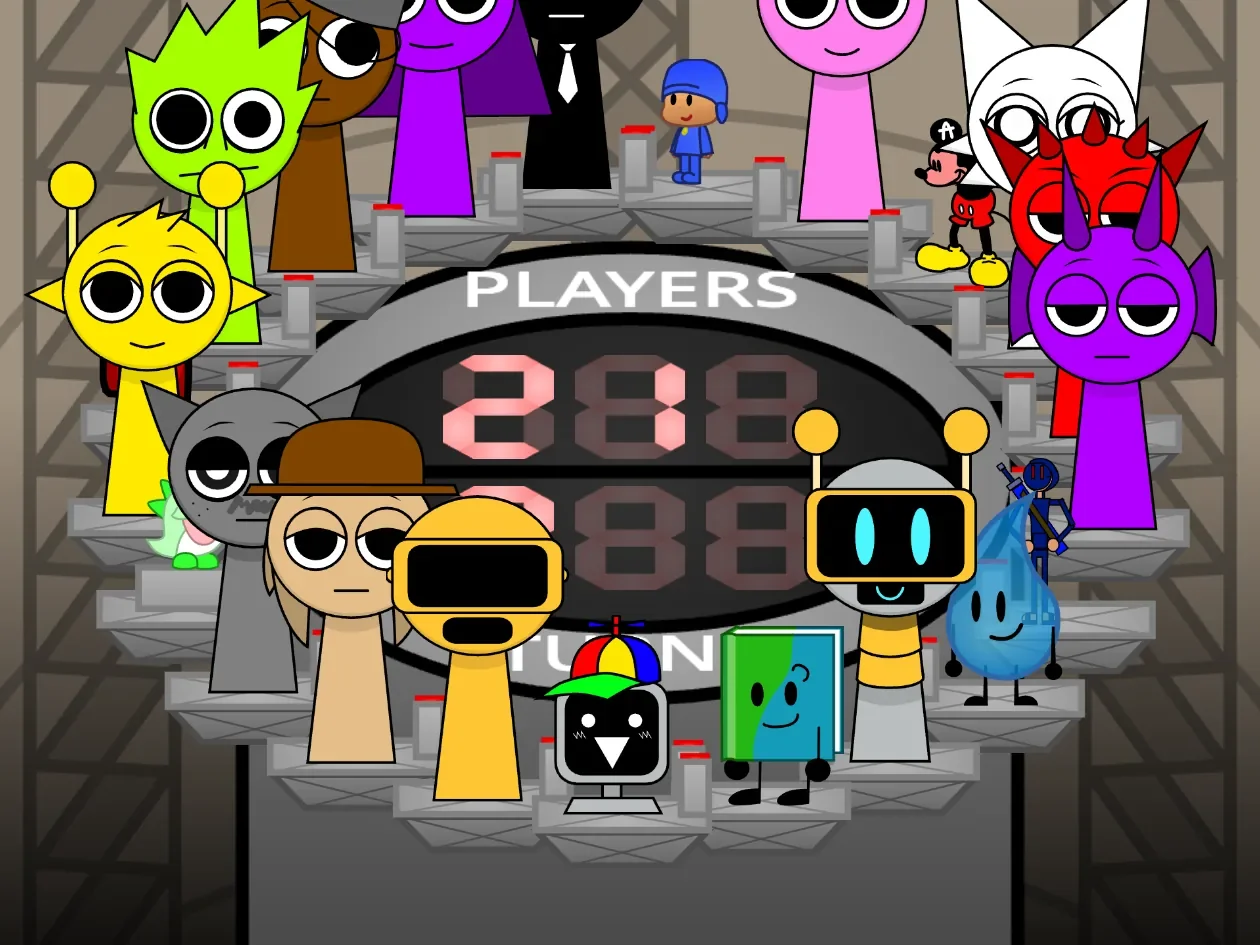
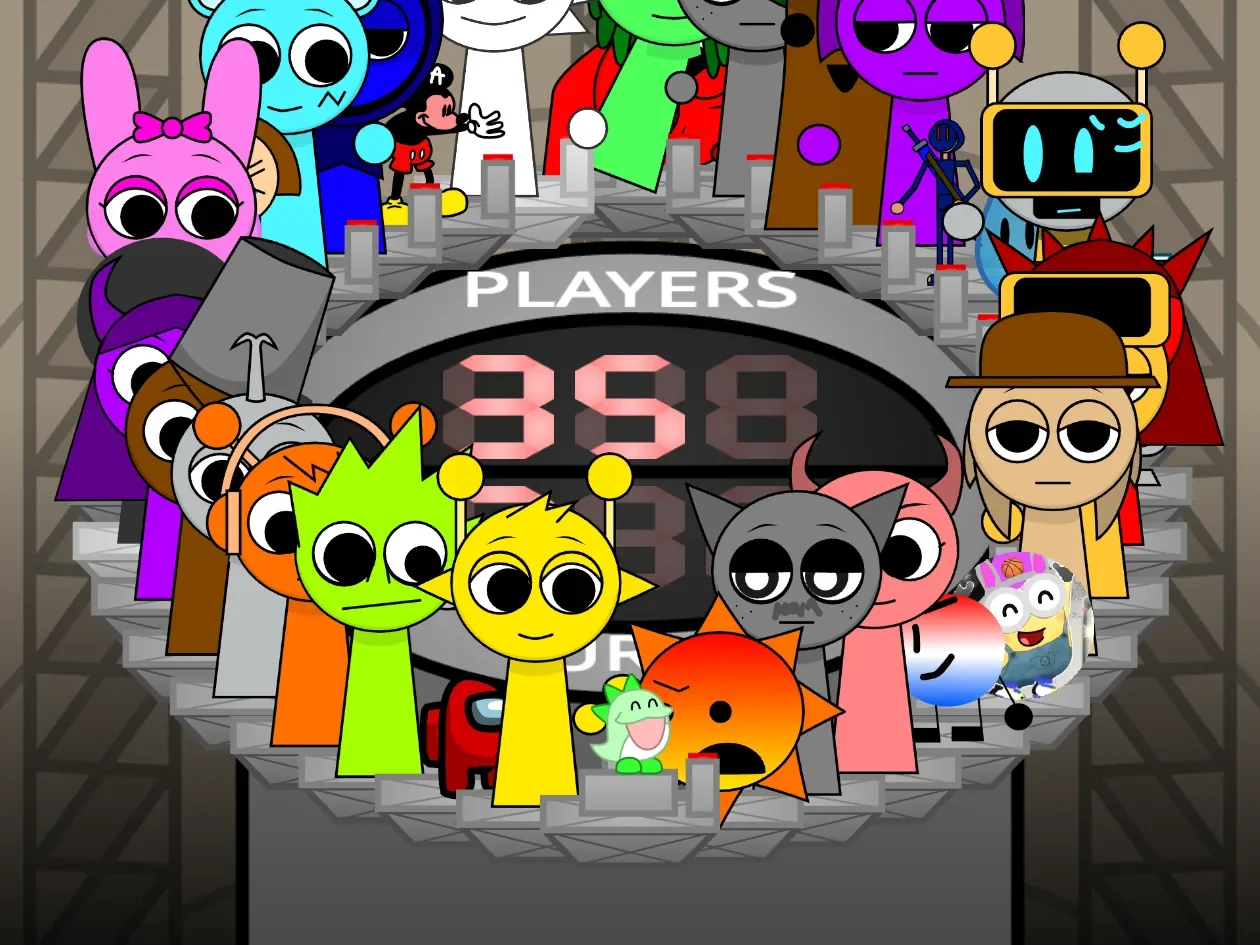 5 Game Screenshots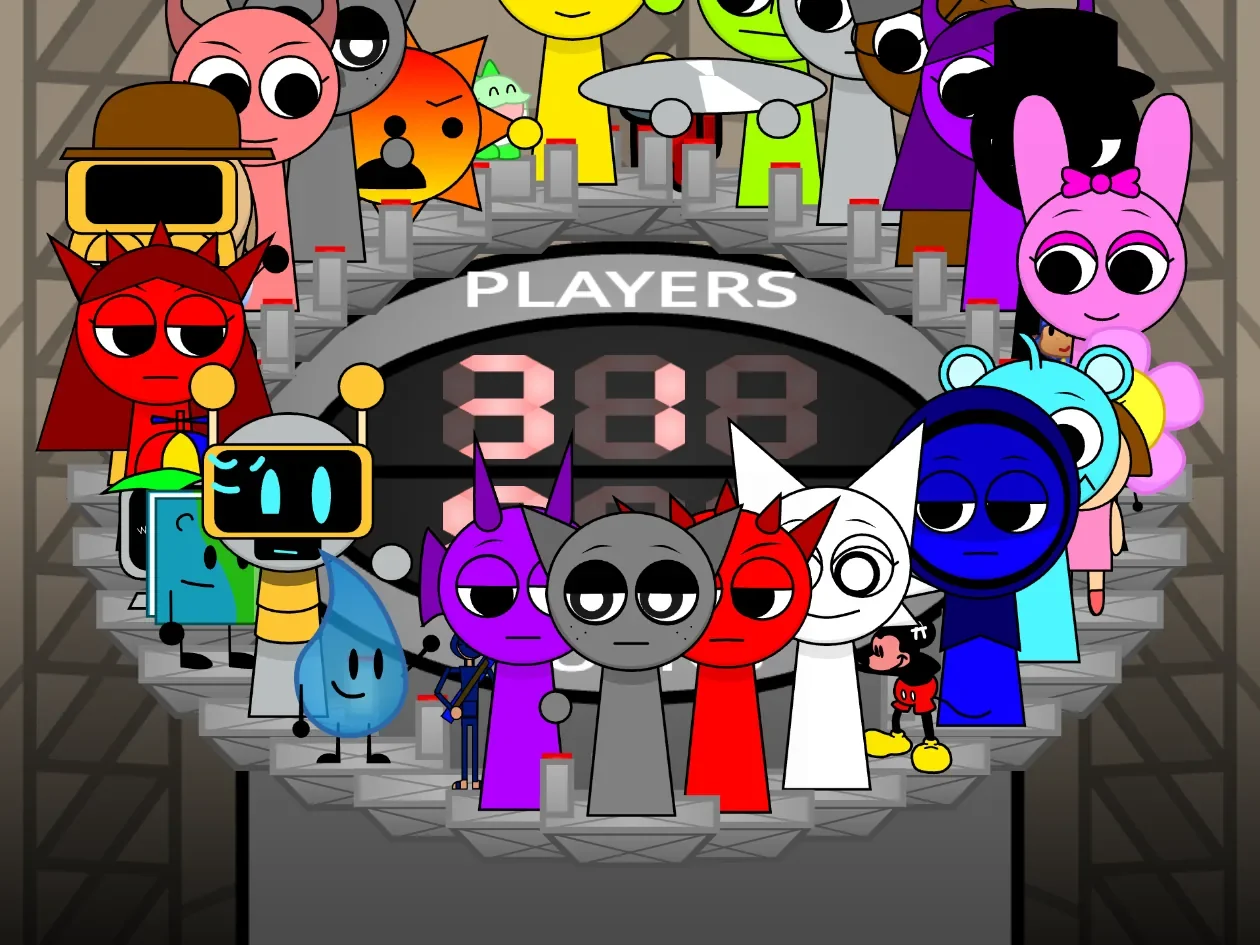
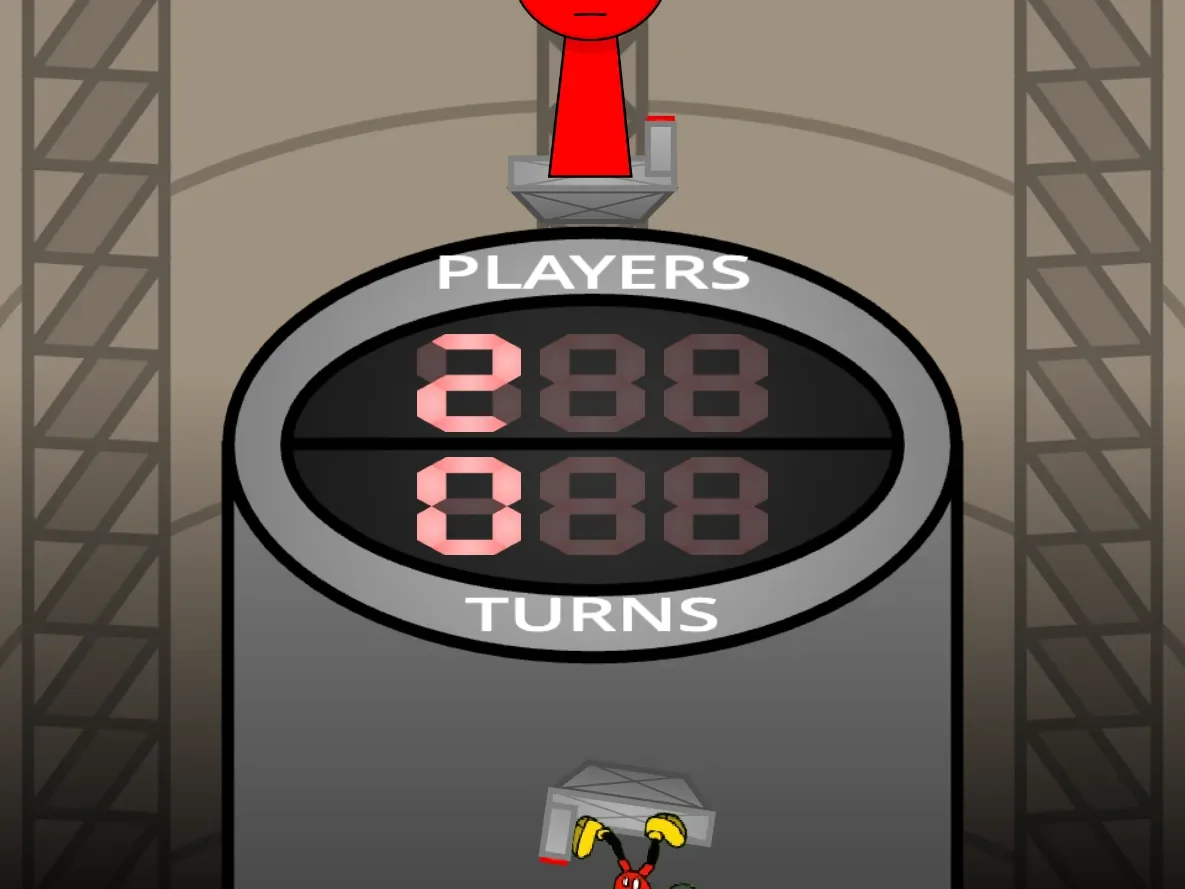
The 35-Player Roster and the Family Premise
Where earlier entries in the remix chain feature modest groups of 10 participants, this edition drastically expands the field to 35 named contestants. The roster brings together an eclectic mixture of Sprunki-inspired figures, object-show references, internet memes, and custom edits. The complete lineup includes Oren, Raddy, Clukr, Funbot, Vineria, Gray, Brud, Ganorld, Owacx, Sky, Mr Sun, Durple, Mr Tree, Simon, Tunner, Mr Fun Computer, Wenda, Pinki, Black, Book, Adi, Pocoyo, Goobert, JAD, Teardrop, Worried Chiara (Grassy), Gray's Father, Dark Blue Lou, Among us, Anoral The Switch Ball (P4), Raddy's Sister, Salmolina, Violetina, and Flower.
The central focus of this specific variant is advertised directly in its title and opening artwork. The cover screen features Gray alongside Gray's Father, explicitly positioning the family relationship beneath the standard "Add Yourself" header. This detail is not merely decorative packaging; Gray's Father is integrated into the active contestant roster as a playable participant, taking a spot on the stage alongside standard Sprunki names and crossover additions. For players comparing different entries across the wider Tick Drop remix ecosystem, the addition of Gray's Father provides a clear thematic anchor among otherwise similar elimination setups.
Visually, the stage creates a deliberate contrast between its muted industrial environment and the brightly colored cast. The central Tick Drop machine and surrounding floor are rendered in drained shades of gray, while the 35 contestants retain their full color palettes. Because so many figures are crammed around a single platform, sprites frequently overlap, shift positions, or slide slightly off-center as the scene initializes. While this visual crowding creates a busy display, it also introduces readability challenges: smaller characters near the back or sides can be difficult to identify while the selection marker is in motion.
Automated Execution and Interface Details
Interacting with the game is straightforward and relies entirely on standard interface triggers. Launching the game with the green flag shifts the screen from the title artwork into the main active layout. Upon loading, the visual interface displays a "Players" counter locked at 35, confirming that the full roster has loaded into the active scene rather than remaining in a smaller hidden test state.
| Action | Input | Result |
|---|---|---|
| Start the run | Green flag | Shifts from the title screen into the 35-player Tick Drop stage. |
| Stop or reset | Stop button | Halts all automated motion and displays the stopped overlay. |
Sound design plays an active role in shaping the stage atmosphere. An on-screen "Now Playing" HUD element explicitly identifies the active music track as the game runs, rotating through recognizable background music including the Super Smash Bros. Melee Classic Mode Intro and Mario Party DS's "Get Into It." Displaying the track names directly on the interface gives the presentation a broadcast style, reinforcing the feeling of watching a televised elimination minigame.
Beyond initiating the simulation via the green flag, true player input remains minimal. Players do not control a character's position, press buttons to jump over the sweeping hazard, or influence which contestant gets highlighted. Browsing through casual web games on Fortcade often highlights a wide variety of interactive formats, and recognizing this game's structural reliance on automated sequencing helps set accurate player expectations before starting a run.
Logic Branches and Elimination Limits
Players expecting a fully structured tournament that methodically eliminates all 35 characters down to a single victor will find that the game operates differently. During standard execution, the sequence moves from the title card into the automated sweeping phase, continuing its rotation for a period before returning directly to a stopped project overlay rather than completing an exhaustive bracket.
The internal logic also contains distinct conditional branches rather than a linear win-state screen. Specifically, the software incorporates a JAD-linked "Uh Oh..." sequence and an abrupt "GAME OVER" screen. This event acts as a sudden interruption to the standard sweeping loop rather than a traditional victory celebration, highlighting the game's identity as an experimental Scratch remix showcase rather than a balanced competitive simulation.
Scope and Viewer Experience
Ultimately, the value of this release depends on what a player expects from an "Add Yourself" project. As a mechanical challenge or interactive minigame, its minimal inputs and sudden conclusion offer little long-term replayability. However, as a character showcase and visual artifact within the Sprunki remix scene, the sheer volume of contestants and the quirky presence of Gray's Father deliver a brief, highly concentrated piece of fan media. It serves best as a quick visual spectacle to observe, contrast with other Tick Drop variants, and sample for its dense cast.
![AY in Noggin's RL, GL Game Redux [ 40 Players ] game cover](https://fortcade.com/wp-content/uploads/2026/10/ay-in-noggin-s-rl-gl-game-redux-40-players-225x300.webp)
![AY in Shape Dodge REDUX! [ 10 Players ] game cover](https://fortcade.com/wp-content/uploads/2026/10/ay-in-shape-dodge-redux-10-players-225x300.webp)
![AY in Noggin's RL, GL Game Redux [ 25 Players ] game cover](https://fortcade.com/wp-content/uploads/2026/10/ay-in-noggin-s-rl-gl-game-redux-25-players-225x300.webp)
![AY in Block Party! [ 45 Players ] game cover](https://fortcade.com/wp-content/uploads/2026/10/ay-in-block-party-45-players-225x300.webp)