
Taking Simon home from a rain-soaked cardboard box looks like the beginning of a gentle virtual-pet game. Accept him in Take Care Of Sprunki Simon, however, and the simple rescue opens into a room-based sandbox that mixes feeding, washing, and bedtime routines with cartoon blood and deliberately harsh bad outcomes. Created by @_dominator3, the game is affectionate one moment and unruly the next.
 4 Game Screenshots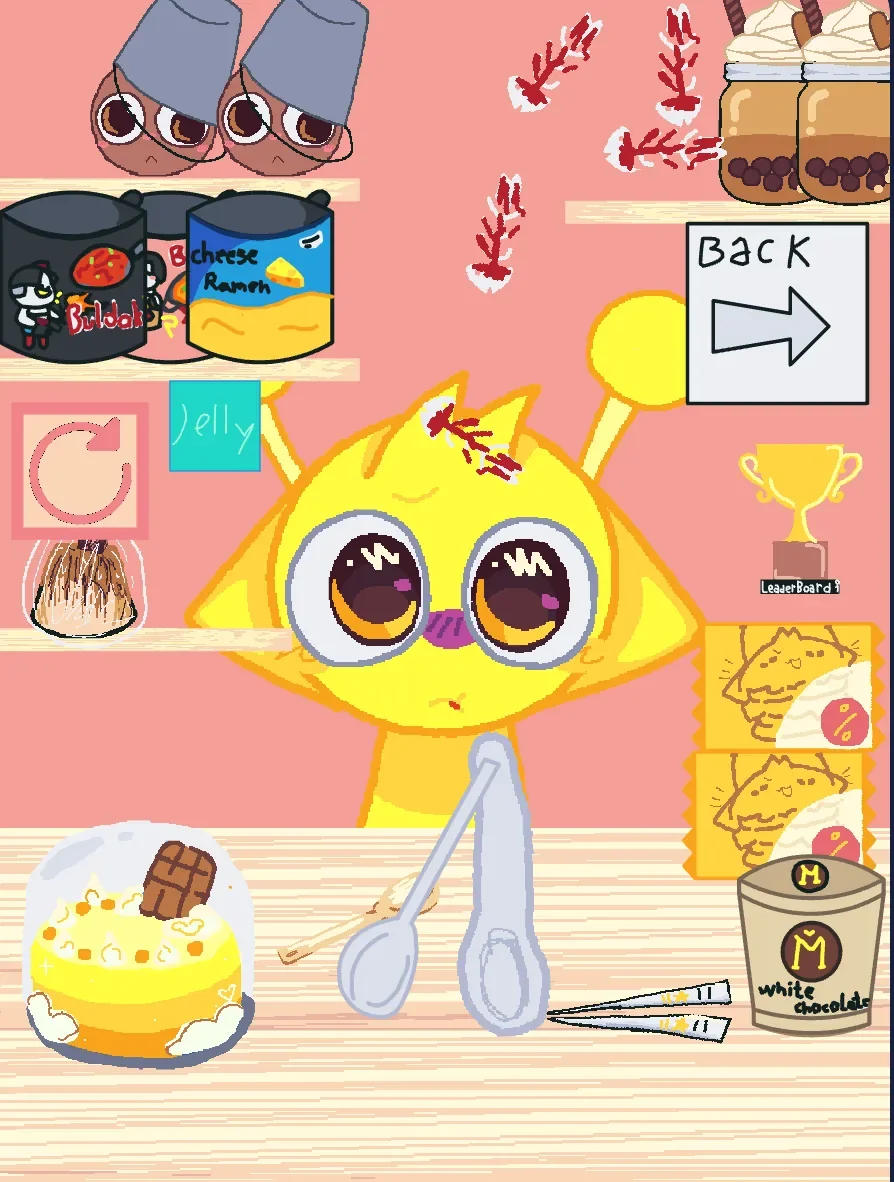
Simon’s Home Works Like a Playable Scrapbook
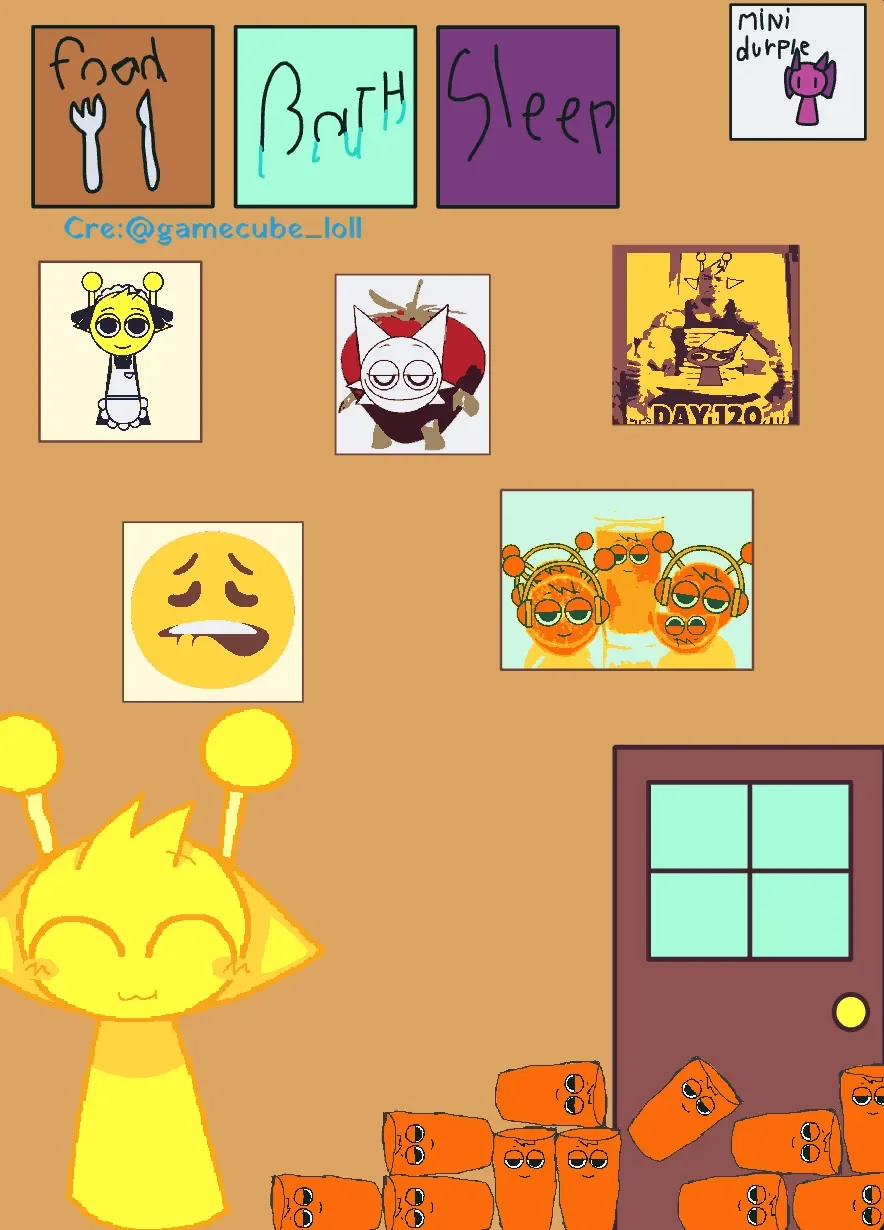
The main room serves as a hub built from posters, portraits, handwritten decorations, and an unexplained orange pile beside the door. Simon bounces happily in the middle of it all. Large Food, Bath, and Sleep panels lead to the main care activities, while a smaller Durple-themed tile opens an additional character scene.
Interaction is limited to a few basic inputs, but the game does not always explain which one an object needs:
| Action | Input | Result |
|---|---|---|
| Select or activate something | Tap or left-click | Choose a room, open food, toggle objects, or trigger a reaction |
| Move an object or character | Drag with a finger or mouse | Reposition Simon, food, utensils, soap, and other movable props |
The room labels make the broad destinations clear. Inside each activity, though, players may need to try tapping an object, dragging it, or bringing it into contact with something else. That experimentation suits the toy-box design, although clearer visual prompts would make the first few minutes less hesitant.
Feeding Simon is the busiest and most responsive activity. He sits behind a table surrounded by cake, chocolate, several kinds of ramen, hamburgers, steak, cola, boba tea, character-shaped snacks, spoons, and chopsticks. Food can be tapped or moved, utensils react when they touch compatible dishes, and ramen responds to the chopsticks. The cake changes as it is handled, while several snacks produce their own eating animations and short sound effects.
Simon’s changing expressions give the room more physical feedback than a static food menu. At the same time, the crowded shelves can make it difficult to tell which pieces are interactive. There is no prominently explained nutrition objective or conventional level progression here; most of the enjoyment comes from handling unfamiliar items and seeing what reacts.
Washing, Bedtime, and Small Character Reactions
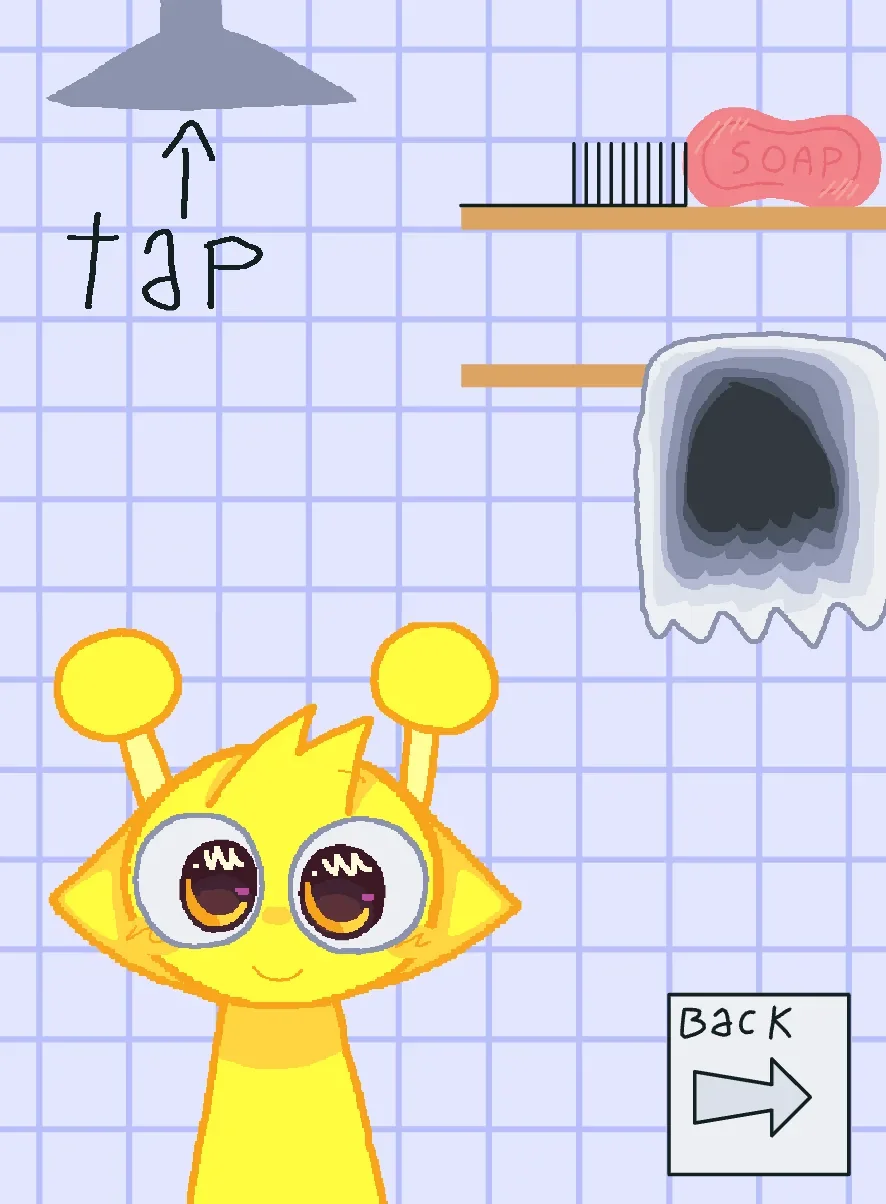
The bathroom treats Simon like a draggable toy. Moving him into the shower area, using the soap, and bringing him into contact with the towel changes his animation through different stages of washing and drying. The shower control can also be tapped, and several bathroom props can be moved around.
The game never formally explains the intended order of those actions, so the room plays like a compact interaction puzzle. Its rules are easy to understand once the objects begin reacting, but the opening sequence depends more on trial and error than instruction.
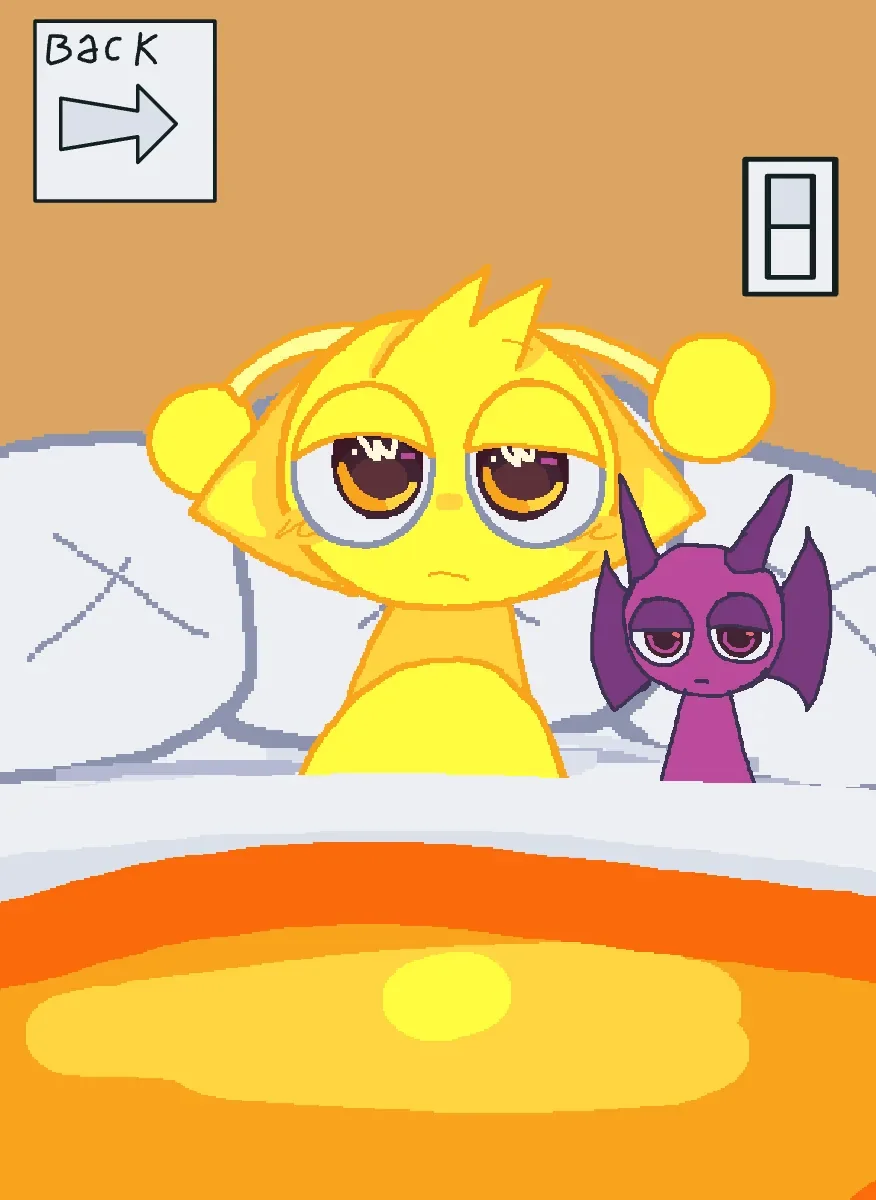
Bedtime is quieter. Simon appears beside a bed and a sunset-colored window, with controls that alter the state of the bed or room. Tapping Simon produces another reaction, and a sleepy purple Durple adds a small character cameo. This room has fewer meaningful combinations than the food and bathroom activities, but it gives the domestic care loop a calmer endpoint.
Hand-drawn animation connects all three rooms. Lines wobble, facial expressions change abruptly, and the furniture looks as though it was cut from different pages of the same sketchbook. Short musical loops and exaggerated reaction sounds reinforce that improvised presentation without making it feel polished or uniform.
The Caretaking Premise Has Sharp Edges
Leaving Simon in the cardboard box produces a blunt bad outcome. The game declares that he died of hunger, holds the player responsible, and shows a distressed version of Simon alongside cartoon weapon imagery. It is a sudden change from the innocent adoption screen.
Player comments reflect that tonal collision. Several express guilt or regret after Simon’s bad outcome, while others respond gleefully to the violent scenes. Those reactions do not establish additional endings or mechanics, but they show how memorable the abrupt shift can be.
The bonus character area pushes the contrast further. It places a movable one-eyed figure alongside Simon, Wenda, Pinki, and a miniature Oren. An on-screen prompt encourages hitting Pinki, leading to dialogue, confrontation, impact effects, and visible cartoon blood. The scene resembles an experimental Sprunki skit more than another part of the caregiving routine.
On Fortcade, the most useful expectation is to approach Take Care Of Sprunki Simon as an interactive sketchbook rather than a structured digital-pet simulation. Feeding and washing contain its strongest toy-like reactions, while bedtime offers a gentler pause between experiments. Players looking for clear goals and carefully explained rules may find it loose or confusing; those willing to tap and drag unfamiliar objects will uncover more of its personality.
The death message, weapon imagery, and bloody slapstick also make the game less innocent than its opening suggests. Younger players expecting only a cute Simon care game may be surprised by that material.







![AY in Tick Drop! [MY uae_flag] game cover](https://fortcade.com/wp-content/uploads/2026/10/ay-in-tick-drop-my-uae-flag-225x300.webp)