
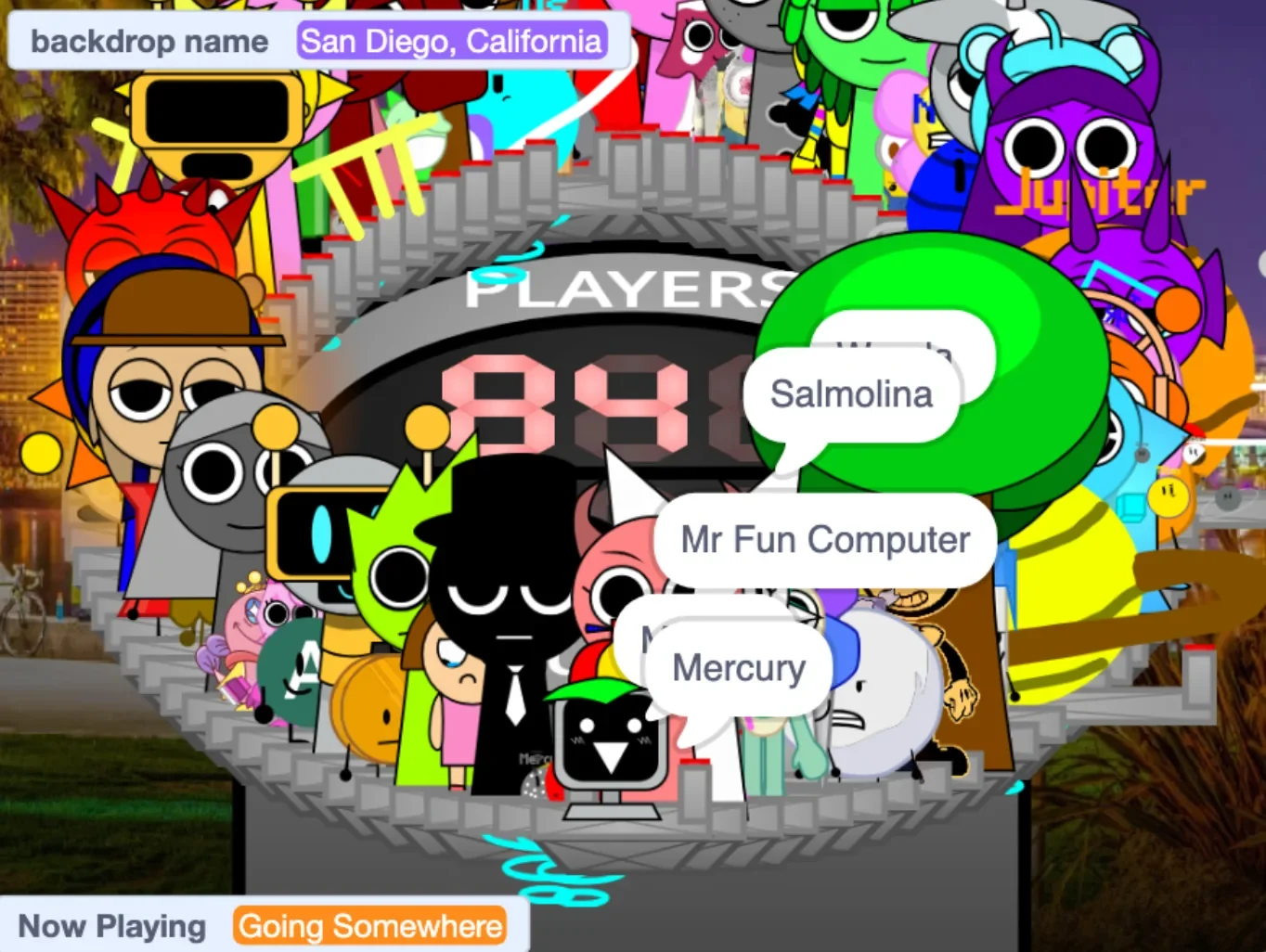
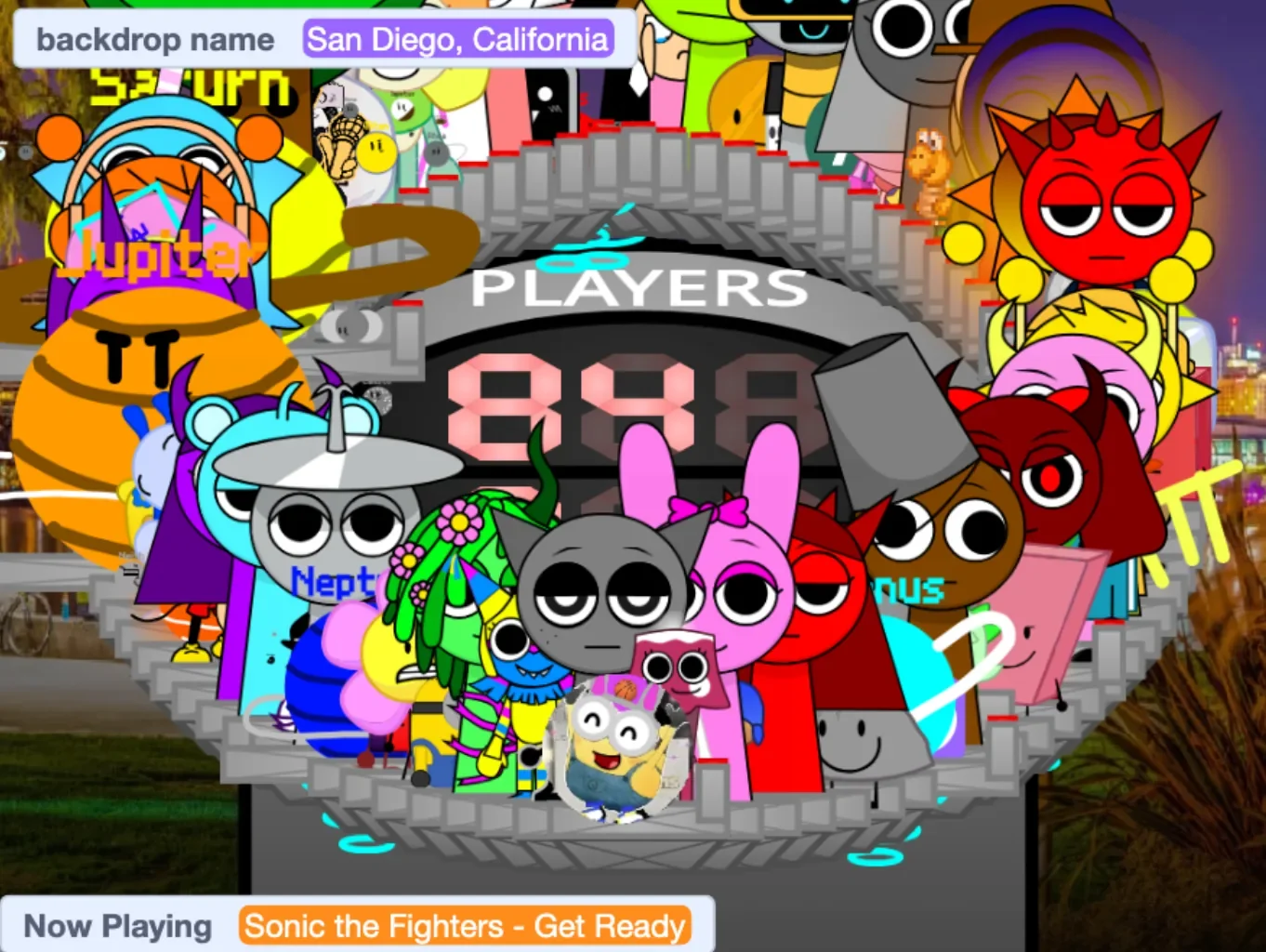
A crowded circular arena marked "PLAYERS" fills the center of the stage, holding dozens of contestants while a digital counter ticks upward. In AY in Tick Drop! but there are a lots of backgrounds, the familiar luck-driven elimination loop remains intact, but the stage itself is no longer fixed to a blank backdrop. Instead, a backdrop monitor mounted at the top of the screen displays randomized cityscapes and planetary locations, turning every match into a scenic elimination showcase.
Created by @MixelsXD67, the game relies on an automated elimination system rather than direct character movement or reflex action. Contestants stand clustered around the central platform while the turn counter rises following button moments. As the rotation sequence advances, the round arrives at the "Who falls?" step, removing one chosen contestant at a time until a single winner remains on the platform.
 3 Game Screenshots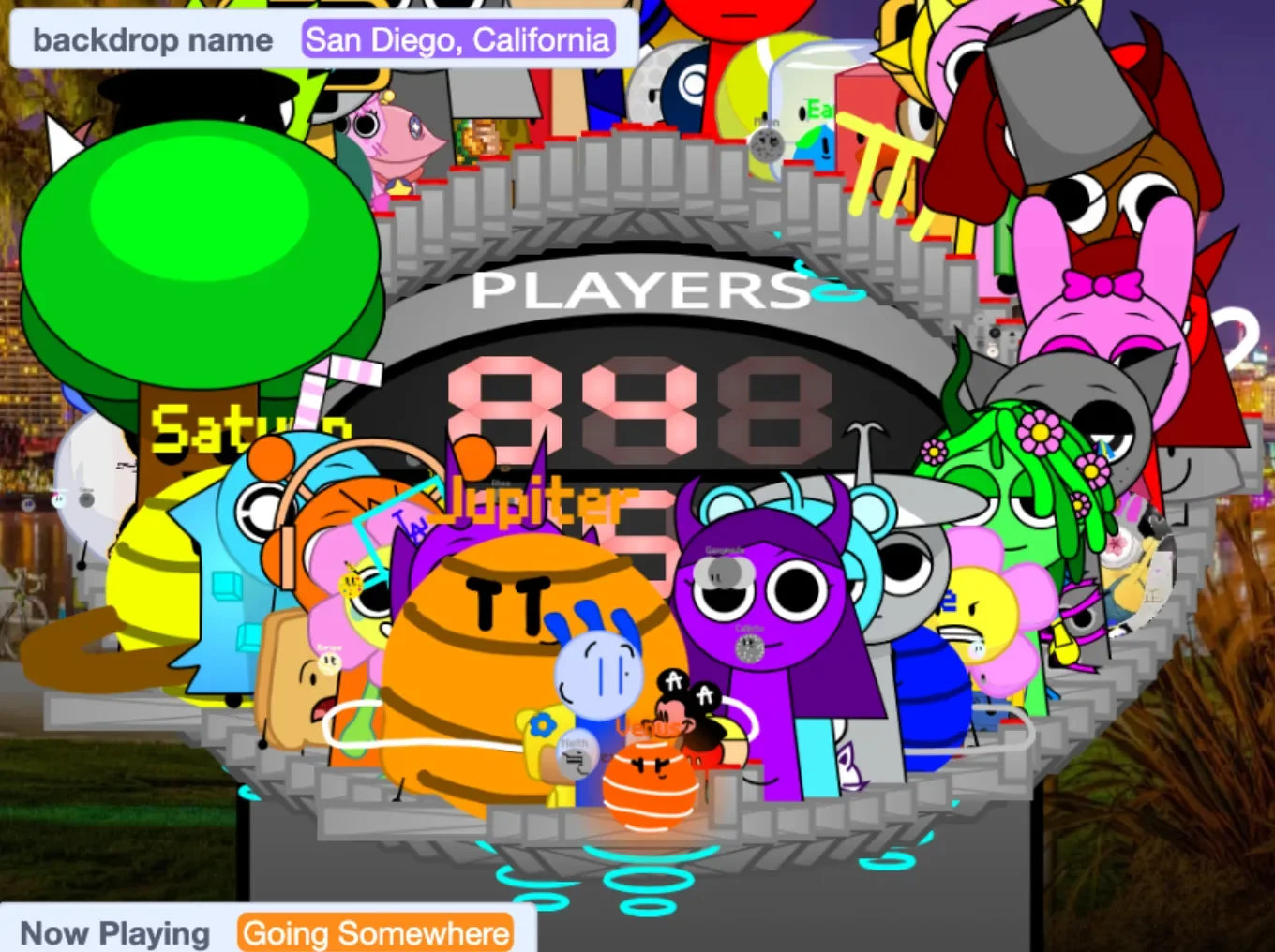
Rotating Stages and Visual Settings
The defining addition in this edition is its varied background system. Pressing the green flag to initialize a round causes the backdrop monitor to pick from eleven potential settings. A match might open in San Diego, California, or randomize to global travel spots including Sao Paulo, Los Angeles, Las Vegas, Jakarta, Chicago, Rio de Janeiro, Dubai, and Caracas. The selection also extends into deep space, placing the platform against the surfaces of Mars or Kepler-186f.
These eleven backdrops operate strictly as visual dressing rather than mechanical modifiers. Setting a round in Dubai or on Kepler-186f changes the backdrop graphic and label, but it does not alter elimination odds, counter speeds, or player controls. Even so, the location label gives each match a distinct sense of venue, counteracting the repetition of a static stage background when observing long roster runs on Fortcade.
Managing the 84-Player Roster
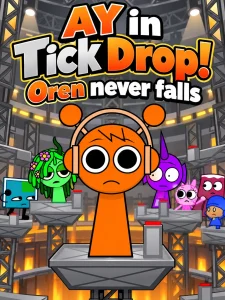
To fill the expanded arena space, the game utilizes an 84-player crowd. The lineup combines object-show characters, Sprunki-style figures, and astronomical bodies. Notable contestants visible in the crowd include Oren, Raddy, Clukr, Funbot, Vineria, Gray, Brud, Simon, Wenda, Pinki, Brightney, Salmolina, Violetina, Mr Fun Computer, Golf Ball, Pin, and Woody. Planetary figures—including Mercury, Venus, Earth, Mars, Jupiter, Saturn, Uranus, Neptune, and Pluto—align neatly with the celestial backdrop choices.
Because 84 characters occupy the same circular platform, the visual field is dense. To help players identify specific contestants within the group, hovering the mouse pointer over any character triggers an overhead speech bubble containing their name. Inspecting the crowd this way helps trace specific figures like Salmolina or Mr Fun Computer amid overlapping character art and ongoing rotation movement.
Session Structure and Controls
The interactive structure is deliberately lightweight, focusing on observation and counter tracking rather than real-time steering.
| Input | Action | Result |
|---|---|---|
| Green Flag / Start Button | Initialize Match | Loads the arena, randomizes the background setting, and starts audio playback. |
| Mouse Pointer Hover | Inspect Characters | Displays name bubbles above crowded contestants on the platform. |
| Automatic Play | Watch Round Flow | Cycles character rotations, advances turn count, and resolves eliminations. |
Audio tracking reinforces the presentation during play. The startup track plays initially before transitioning into "Going Somewhere" as the roster continues to rotate and the counter advances. Supporting assets such as an editor sheet or lore gallery exist as supporting project files rather than player-facing menus; the actual game focuses strictly on the automated arena flow, randomized setting, and character drop sequence.
Format Limitations and Player Suitability
Because the game relies on automated counter timing, progress requires patient watching rather than rapid input. The main friction comes from visual crowding; when multiple speech bubbles display over overlapping sprites, following individual contestants during rotations can prove difficult. Furthermore, players expecting location-based physics or unique rulesets for Mars versus Las Vegas will find that all eleven backdrops behave identically.
For players interested in crossover rosters and passive elimination games, the addition of eleven backdrop locations provides a clear sense of place. The core elimination loop remains simple, but the backdrop monitor and 84-player crowd ensure each session feels like a new leg of an ongoing arena tour.





![AY in Tick Drop! [MY uae_flag] game cover](https://fortcade.com/wp-content/uploads/2026/10/ay-in-tick-drop-my-uae-flag-225x300.webp)