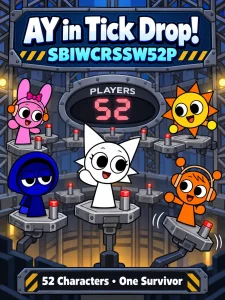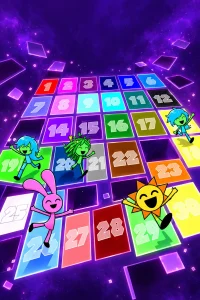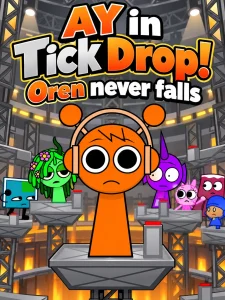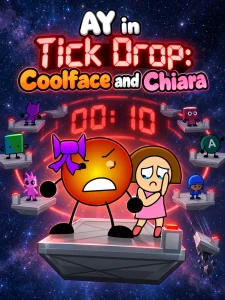
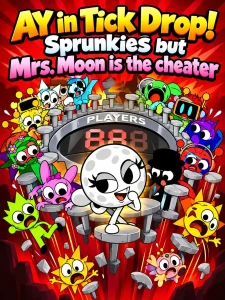
A sprawling ring of 163 contestants surrounds a central mechanical arena in AY in Tick Drop! with 163 players, leaving the survival of every participant entirely to automated chance. Rather than giving players direct movement keys or tactical combat buttons, this simulation places the viewer in the role of an observer watching a massive randomized tournament. Every match begins by arranging the entire roster along a circular layout, where automated decisions dictate how far the roster turns and which character is eventually rotated directly over the drop trap. The appeal rests on picking a personal favorite out of the overcrowded lineup and seeing if raw probability carries them through dozens of consecutive elimination rounds.
The match structure follows a strict sequence divided into decision, rotation, and elimination phases. During the decision phase, each surviving character on the board has an opportunity to press their individual illustrated button after a brief pause. These automated choices are calculated independently, and every successful button press adds one turn to the primary digital display at the center of the arena. Because individual decision outcomes fluctuate on every cycle, the total turn tally changes constantly, preventing any single run from repeating the exact movement path of a previous match.
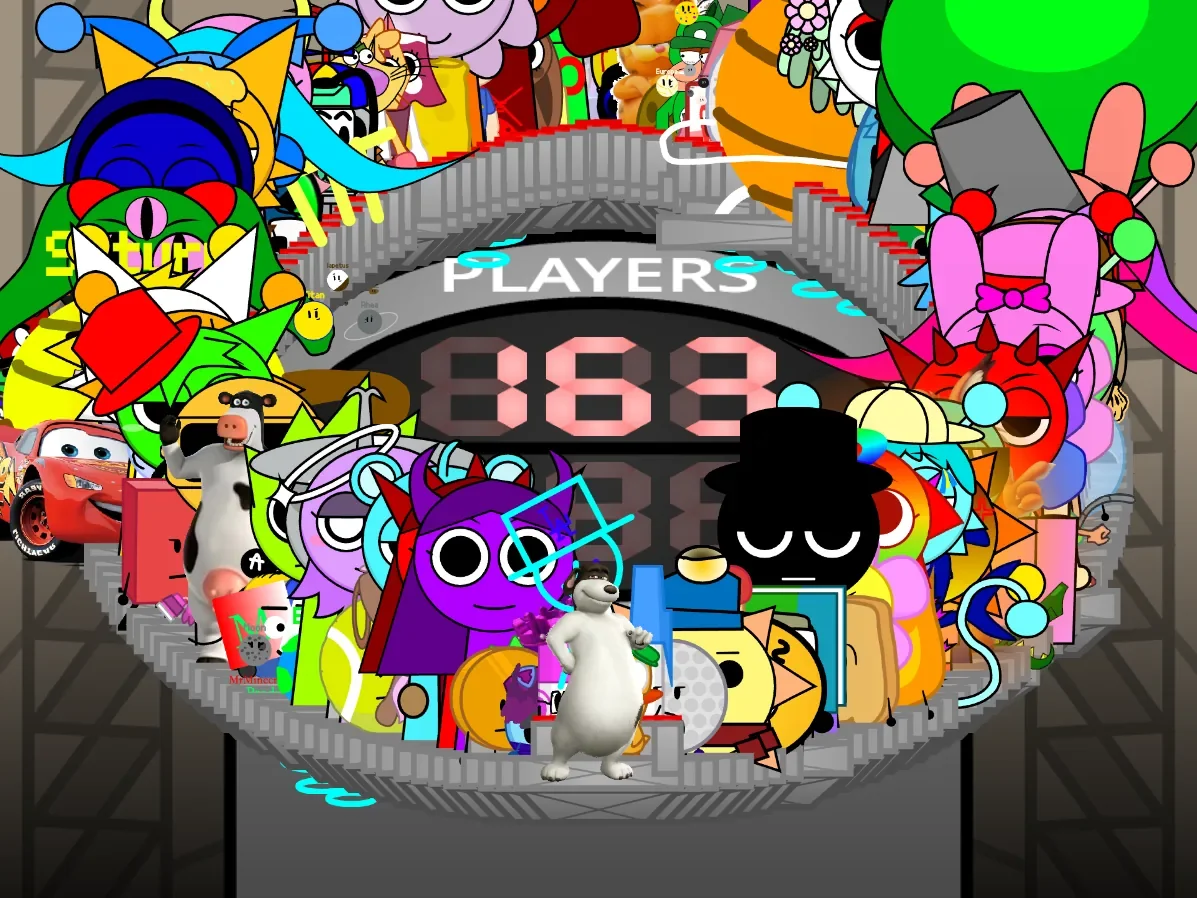 4 Game Screenshots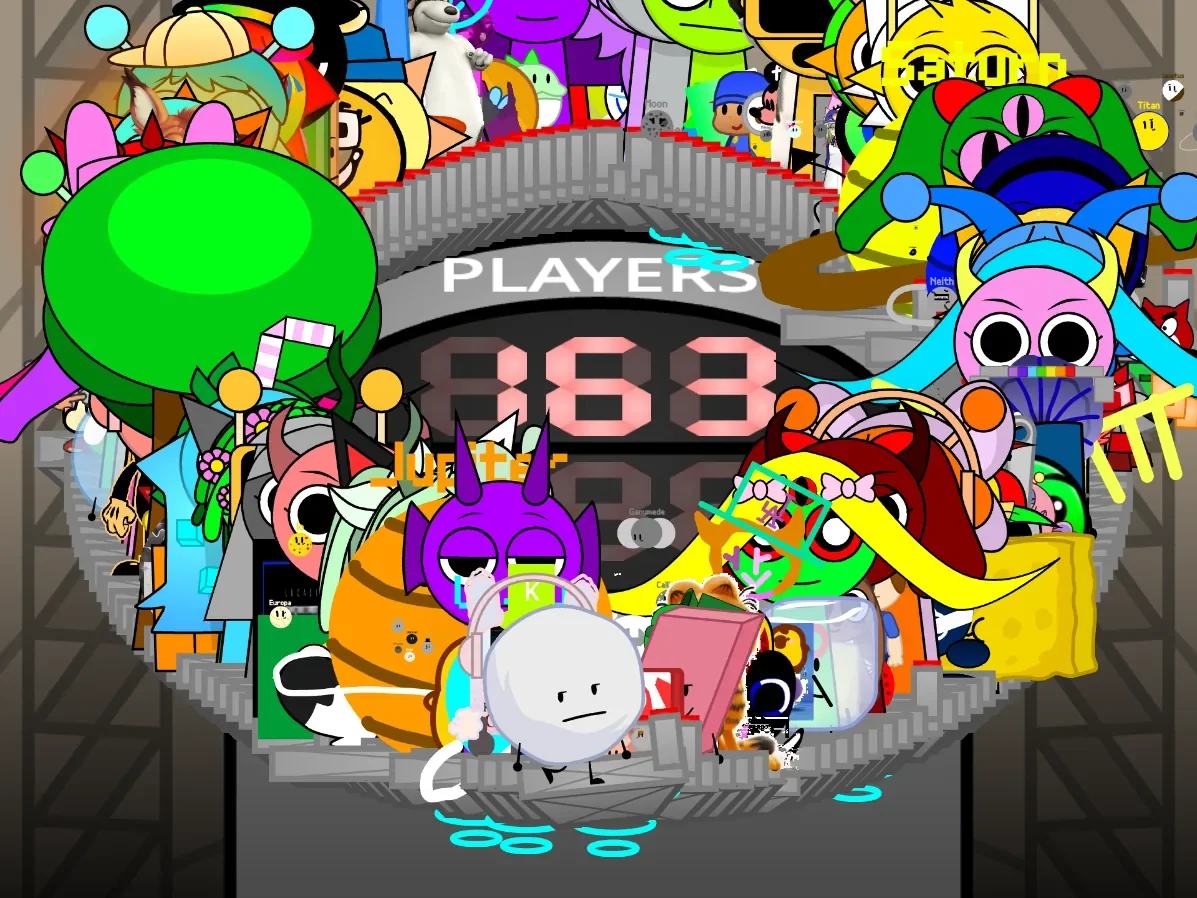
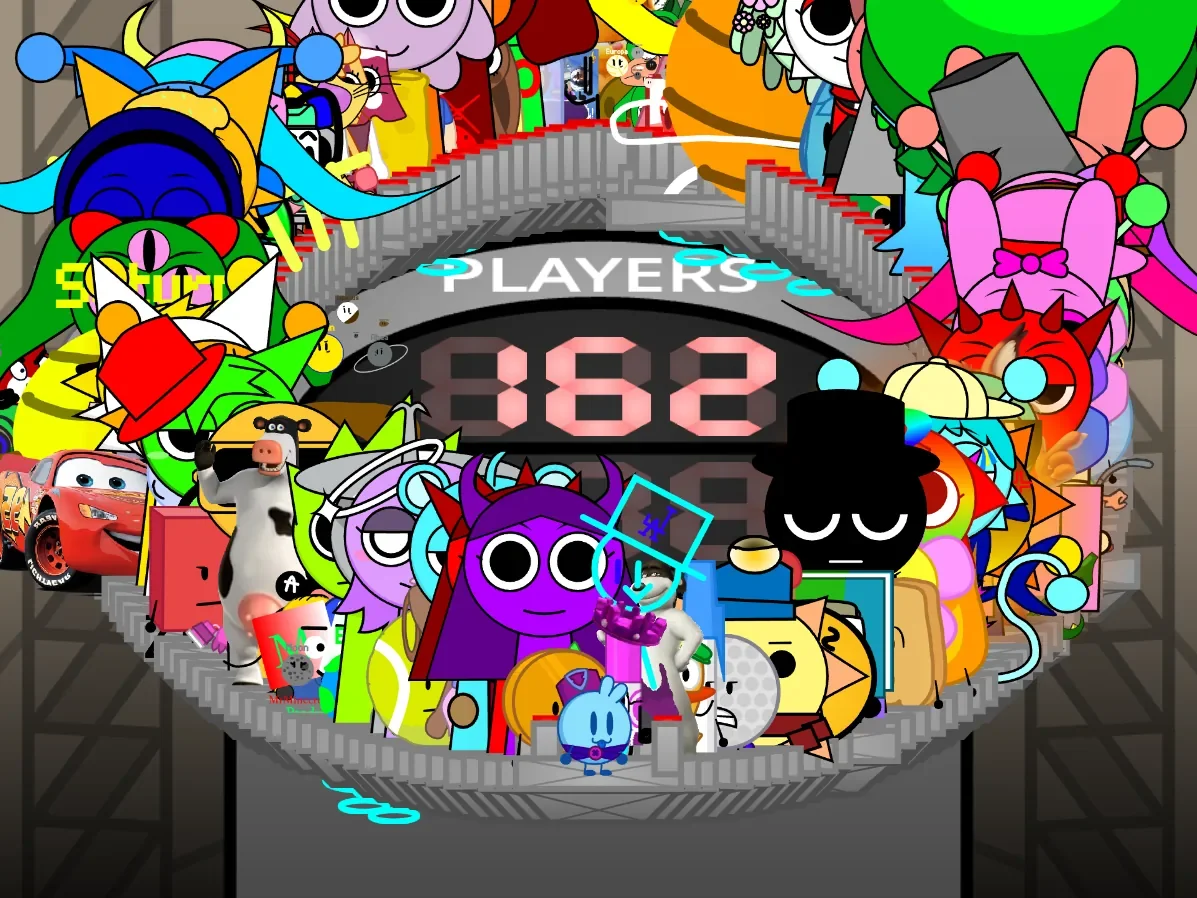
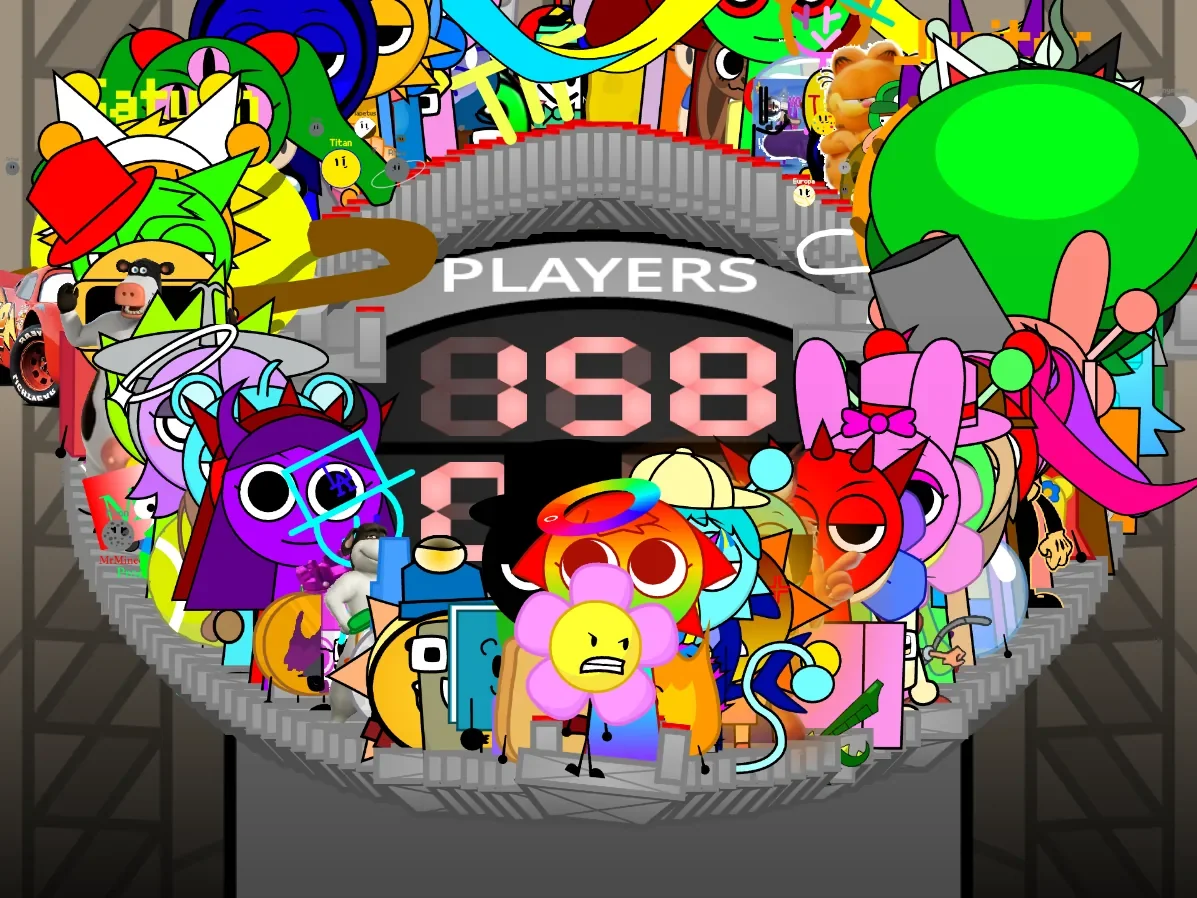
Automated Rotations and the Elimination Trap
Once the decision phase completes, the arena initiates its mechanical movement. The entire 163-player ring rotates step by step according to the accumulated turn counter, accompanied by a sharp audio tick for every decremented count on the display. As the number ticks down toward zero, characters shift positions around the perimeter until the final rotation comes to a halt. The contestant occupying the designated drop position when the counter hits zero exhibits a startled reaction before falling out of the competition entirely. Following each drop, the player counter updates, the remaining cast tightens its circle across the stage, and the next decision phase starts immediately.
Direct player intervention is intentionally limited to setup and identification. Viewers cannot force a favorite sprite to press its button, alter the central turn counter, or pull a targeted character away from the drop slot. Interface controls are restricted to starting the automated match and hovering over individual sprites to inspect their designated names:
| Action | Input | Result |
|---|---|---|
| Start the tournament | Click the green flag | Displays the mechanical arena and begins the continuous simulation |
| Identify contestants | Position mouse pointer over a sprite | Displays the character's designated name inside a speech bubble |
The 163-Player Crossover Roster and Remix Lineage
The massive cast serves as the primary focal point of the game. The 163-character field consists of 154 numbered player sprites and nine distinct planet contestants. Among the lineup are prominent Sprunki figures—including Oren, Raddy, Clukr, Funbot, Vineria, Gray, Brud, Pinki, Wenda, and Simon—alongside various object-show characters, original fan creations, personal creator avatars, and recognizable guest pop-culture figures such as Garfield, Pocoyo, Koopa Troopa, and Mr. Game & Watch. Each character features distinct sprite artwork for idle states, button presses, startled reactions, losing drops, and winning celebrations.
This diverse compilation stems from the "AY" or "Add Yourself" remix tradition within the community. The project title references a template model where contributors duplicate a player sprite, insert their own artwork and sound effects, and save an expanded version to the chain. Created by @MixelsXD67, this 163-player edition traces its lineage back through an extended series of community remixes originating from @croassung's initial 10-player setup. Because dozens of different authors contributed sprites over time, the visual style displays varied line weights, inconsistent character scales, and contrasting art techniques set against a shared industrial gray background.
Visual Readability, Audio Design, and Match Pacing
Fitting 163 animated sprites onto a standard 480-by-360 screen creates noticeable presentation challenges during the opening stages of a match. With the full cast present, character bodies overlap significantly around the circle, frequently obscuring the central numerical counter and hiding smaller contestants behind larger sprites. Attempting to identify specific figures by hovering can trigger multiple overlapping speech bubbles when the pointer touches tightly clustered sprites. Visual clarity improves only after repeated drop cycles eliminate a large portion of the field and widen the space between surviving characters.
Sound cues and music selections provide critical feedback throughout the match state transitions. The primary elimination loop features a sharp mechanical tick for every rotation step and plays "Sonic CD Metallic Madness Bad Future JP" as its main tournament soundtrack. When the field is eventually reduced to a single standing contestant, the background audio transitions into dedicated victory and results music while confetti rains down around the winning character's customized victory pose. For viewers discovering the title on Fortcade, these audio-visual cues help maintain clarity across a long automated running time that offers no branching game modes, alternate secret endings, or mid-match interactive toggles.
Tournament Duration and Final Verdict
The sheer size of the roster transforms what is normally a brief random draw into a prolonged spectator commitment. Eliminating 162 contestants one by one requires repeating the decision, rotation, drop, and reset cycle over a hundred times. A single match unfolds continuously without artificial checkpoints, speed adjustments, or round skips. While players interested in long-form automated elimination brackets can enjoy watching the gradual thinning of a giant character showcase, those seeking immediate interactive mechanics or fast-paced decision-making will find the passive watching structure repetitive.
Ultimately, AY in Tick Drop! with 163 players delivers a massive community showcase driven entirely by chance and visual scale. Its appeal relies on the unpredictability of its rotating counter and the novelty of seeing a massive crossover cast compete in a single ring. Provided viewers approach it as a patient elimination broadcast rather than an active hands-on challenge, watching their chosen character survive against improbable odds provides a genuine sense of suspense.
![AY in Noggin's RL, GL Game Redux [ 40 Players ] game cover](https://fortcade.com/wp-content/uploads/2026/10/ay-in-noggin-s-rl-gl-game-redux-40-players-225x300.webp)
![AY in Shape Dodge REDUX! [ 10 Players ] game cover](https://fortcade.com/wp-content/uploads/2026/10/ay-in-shape-dodge-redux-10-players-225x300.webp)
![AY in Noggin's RL, GL Game Redux [ 25 Players ] game cover](https://fortcade.com/wp-content/uploads/2026/10/ay-in-noggin-s-rl-gl-game-redux-25-players-225x300.webp)
![AY in Block Party! [ 45 Players ] game cover](https://fortcade.com/wp-content/uploads/2026/10/ay-in-block-party-45-players-225x300.webp)