
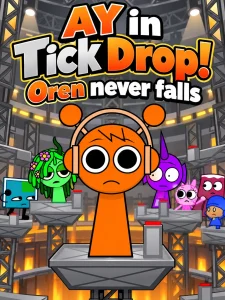
A mechanical arena spins automatically while twelve colorful contestants wait to see who drops off the stage first. In AY in Tick Drop! FREDERICK AND FRIENDS CHARACTERS, created by @PinkFlowerFan2674Returns, players launch an automated elimination tournament where randomized turn counts decide every fall. There are no direct movement controls, combat inputs, or strategic choices during match execution, turning the entire show into a pure spectator simulation driven by random numbers.
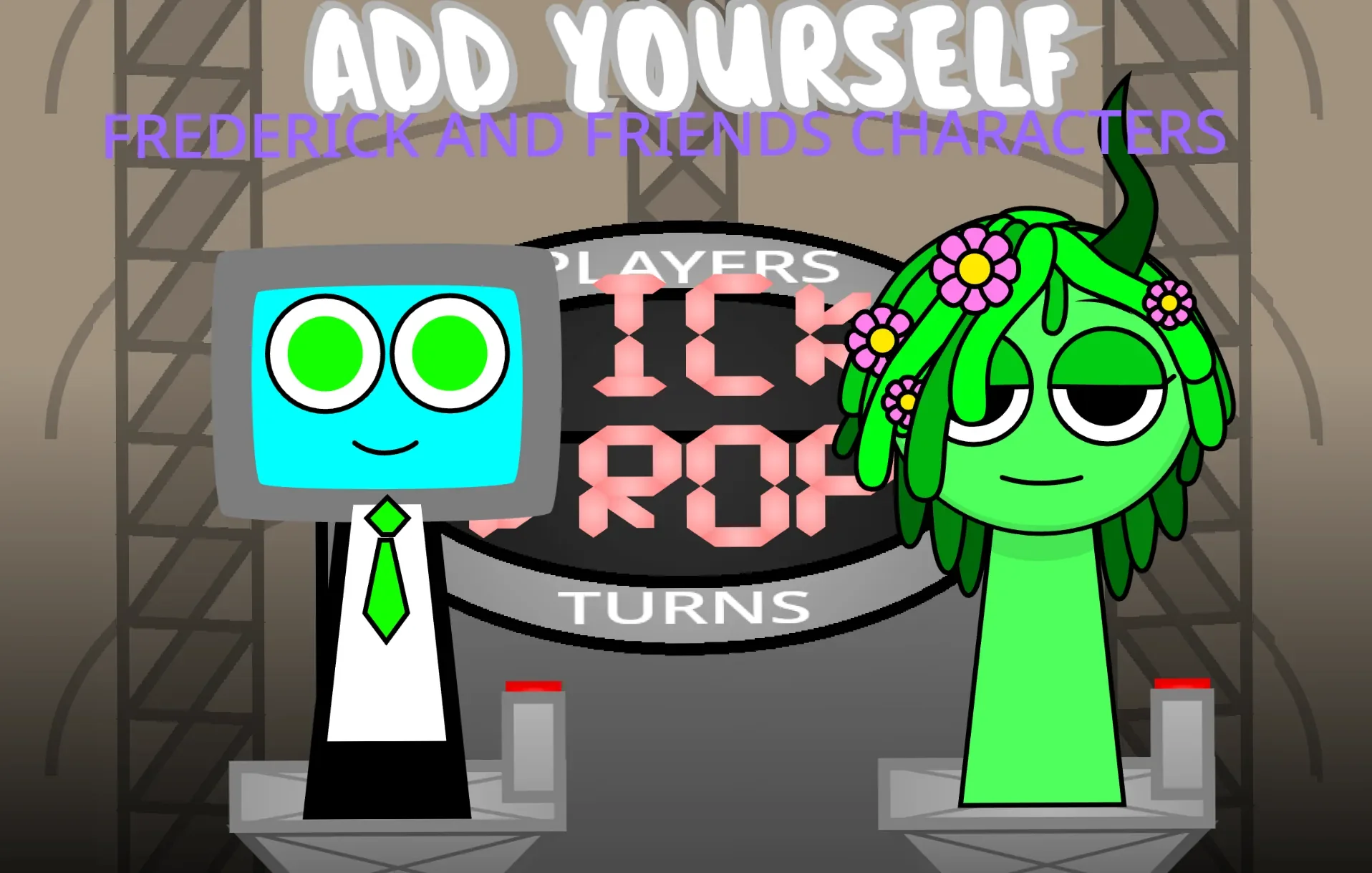
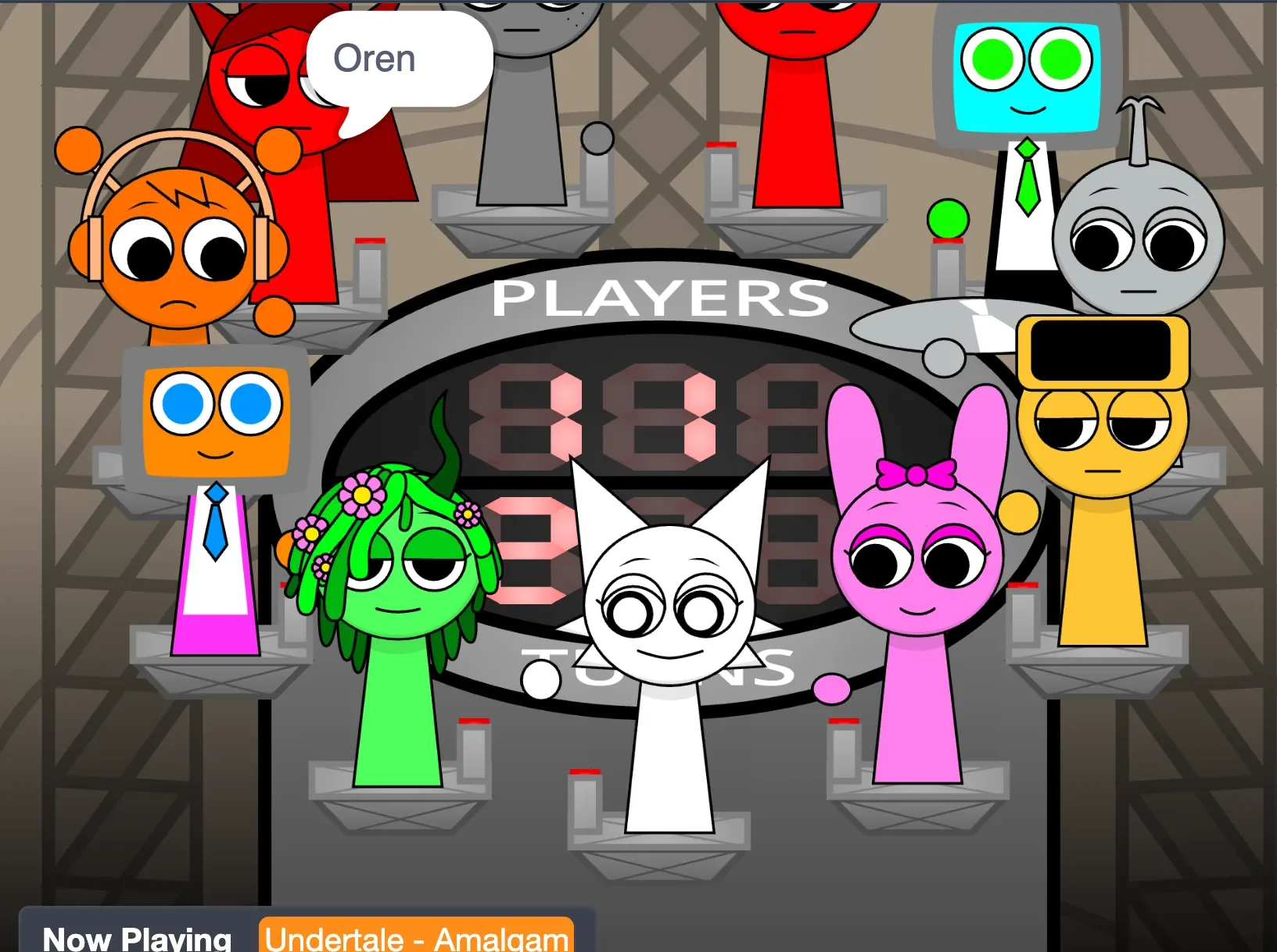
The opening card shows Frederick and Vineria standing before the stage before transitioning into the full lineup. A digital display tracks the remaining participant count alongside a secondary counter for the current turn sequence. Around this central module, twelve characters line up along steel beams, platforms, and red-tipped controls, orbiting the centerpiece while waiting for their buttons to activate.
 3 Game Screenshots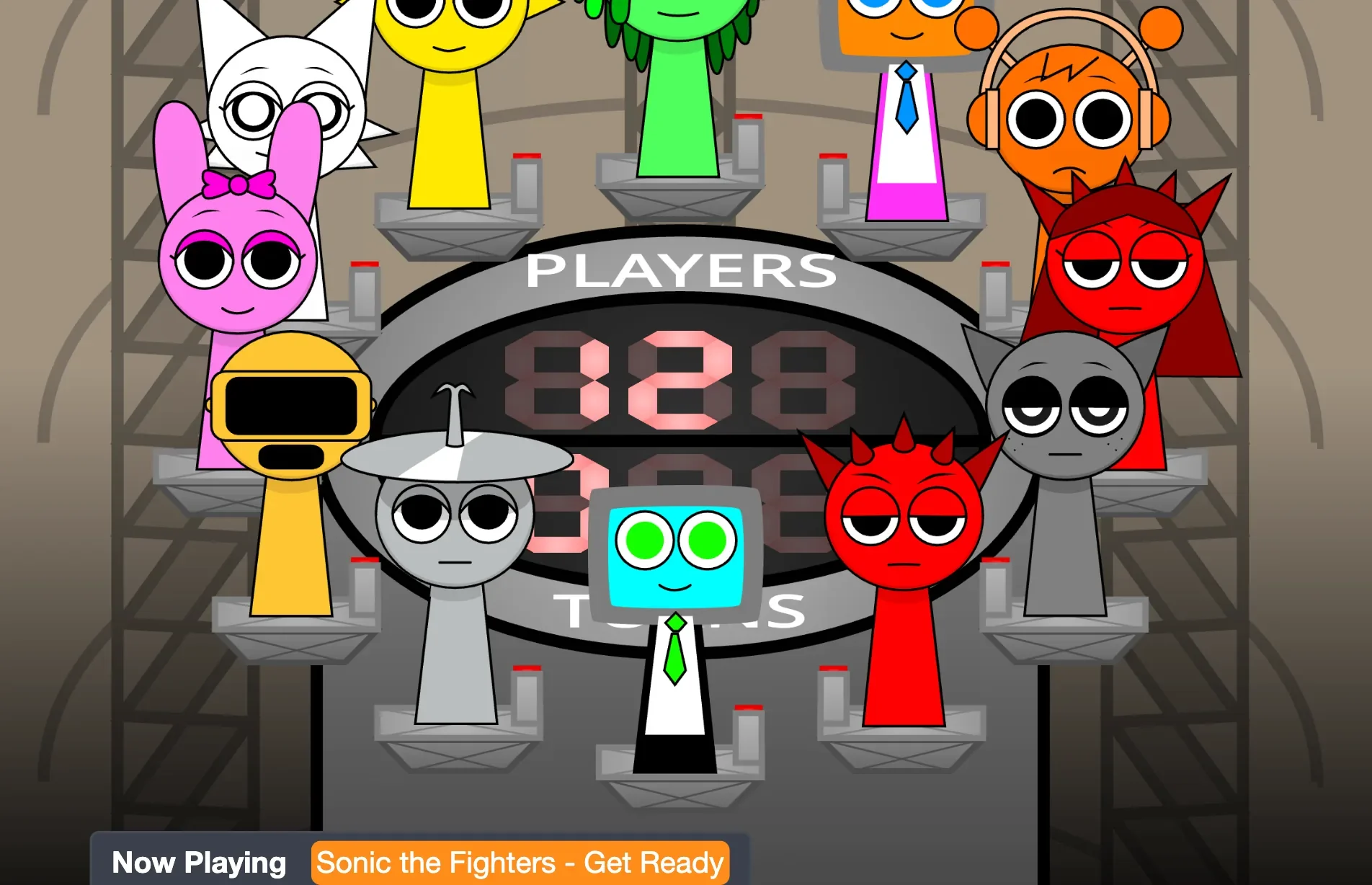
Mechanical Rotations and Automated Eliminations
Every elimination cycle begins when characters randomly press their activation buttons. Each successful button press adds one point to the current turn counter. Once the total turn count accumulates, the roster rotates clockwise around the central screen by that exact number of positions. Whichever character lands directly on the designated drop spot triggers the elimination sequence: they freeze into a surprised expression, shake through a noisy mechanical rattling phase, and tumble out of the arena.
The loop repeats continuously as the contestant count thins. A smaller roster makes the remaining positions easier to read, building suspense around whichever favorites remain standing. When only one participant survives, the standard rotation loop stops. The winner performs an exclusive victory pose as the soundtrack transitions from match music to a triumphant fanfare and final results theme. In a verified test match, Simon claimed victory, though the random generator ensures a different outcome every time the simulation runs.
Roster Diversity and Character Details
The twelve-character cast brings together figures from Frederick and Friends alongside recognizable Sprunki-style crossover designs. The full roster includes Frederick, Bruce, Wenda, Gray, Oren, Pinki, Vineria, Raddy’s Sister, Raddy, Clukr, Garnold, and Simon. While the project file lists Garnold under the internal spelling "Ganorld," the character's yellow visor matches his established design.
Each contestant features a complete set of distinct graphic states. Rather than relying on simple static sprites, characters shift between an idle stance, two button-pressing poses, a startled reaction frame, a defeat animation, and dedicated winner poses. Custom voice clips and sound effects accompany these state changes. Frederick's cyan monitor head and green tie make him easy to track across the layout, while Vineria's flower-adorned green silhouette stands out clearly against the gray industrial background.
Audio Selection and Unused Project Data
The presentation leans heavily on dynamic game-show audio styling. The opening menu plays "Sonic the Fighters – Get Ready" before transitioning into "Undertale – Amalgam" during the main tournament phase. Sudden teleport effects, metallic thuds, reaction screams, and heavy falling sounds punctuate each dropping sequence. Because twelve characters surround the central hub initially, sprites tend to overlap near the top and sides of the arena during the early rounds, though this visual crowding naturally clears up as eliminations reduce the count.
An inspection of the game's internal files reveals several unused assets that never trigger during standard gameplay. These dormant graphics include a scriptless Scratch Cat sprite sheet, alternate cast images, an extra costume for Wenda, unused "Incoming" and "Talking" poses for Vineria, a voice file named "Vineria Is Angry," and a standalone Wario voice compilation. These leftovers appear to be editing remnants from previous development cycles rather than secret mechanics that players can activate.
Spectator Design and Overall Value
Because the simulation functions entirely on automated scripts, replay value depends strictly on watching different elimination orders unfold. Players cannot influence character movements or change outcomes once the match begins. The public project page on Cocrea retains default placeholder text for both instructions and description, leaving players to figure out the rules through observation alone.
When evaluated as a lightweight zero-player game on Fortcade, the simulation fulfills its goal of delivering a swift, readable tournament with expressive character reactions. The term "AY" in the title stands for "Add Yourself," referencing the Scratch remix format where creators insert custom characters into shared template structures. While it lacks deep mechanical interaction, the smooth rotation, custom voice clips, and randomized tension provide a satisfying brief distraction for spectators of automated elimination showcases.



![AY in Tick Drop! [MY uae_flag] game cover](https://fortcade.com/wp-content/uploads/2026/10/ay-in-tick-drop-my-uae-flag-225x300.webp)