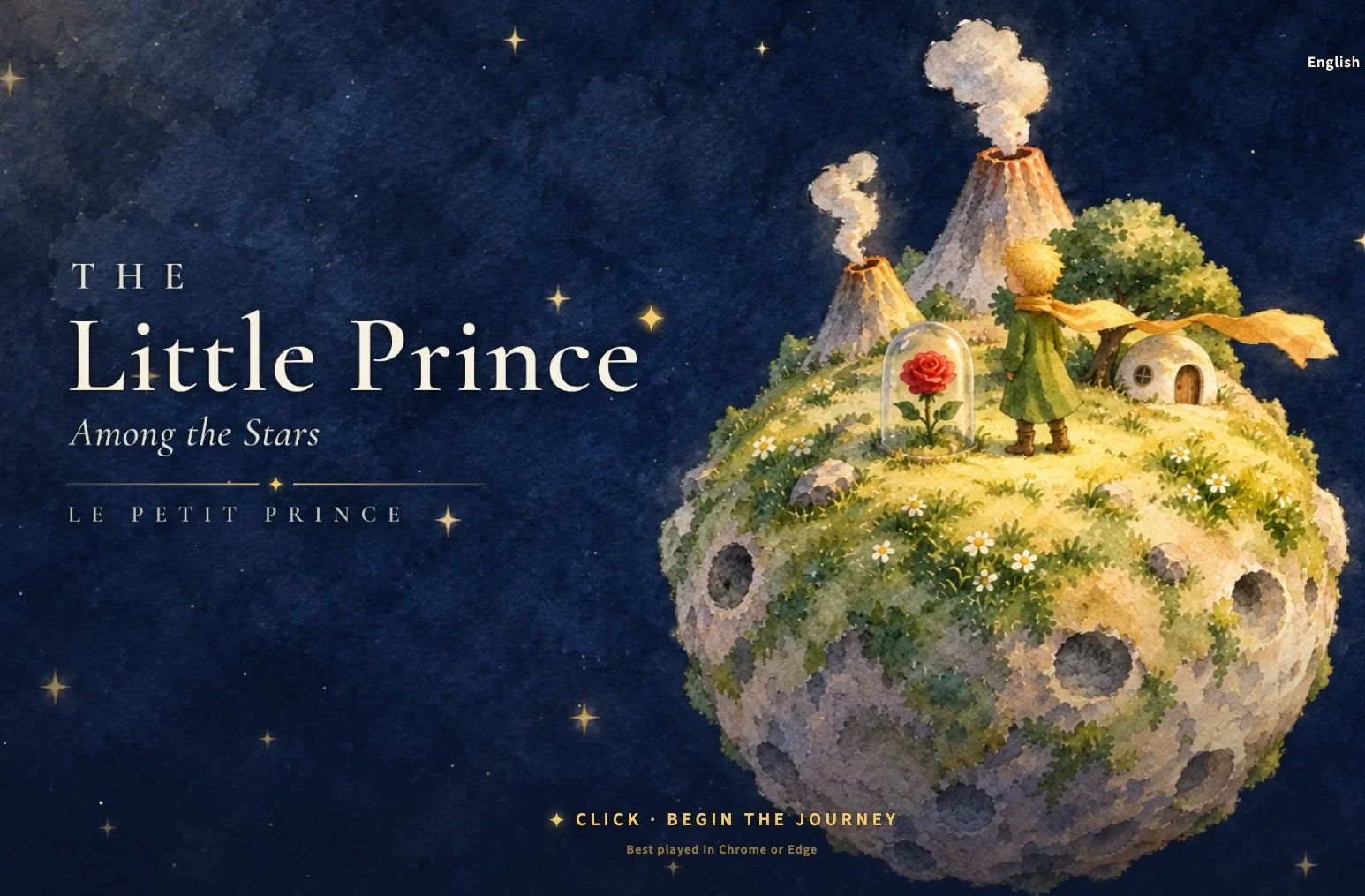
The Little Prince Among the Stars is a browser-based 3D story adventure by Sac (@Saccc_c). You guide the blond, scarf-wearing prince through small worlds, follow objectives, interact with objects, and meet characters from The Little Prince. Its strongest moments come from giving familiar story gestures a physical place: carrying water back to the rose, approaching her glass globe, or walking into an ornate theater to speak with its solitary performer.
The pace is gentle and deliberate. Expect walking, short tasks, dialogue, and carefully framed scenes. The appeal lies in spending time inside these places and seeing how an ordinary action becomes part of a farewell or an encounter.
 8 Game Screenshots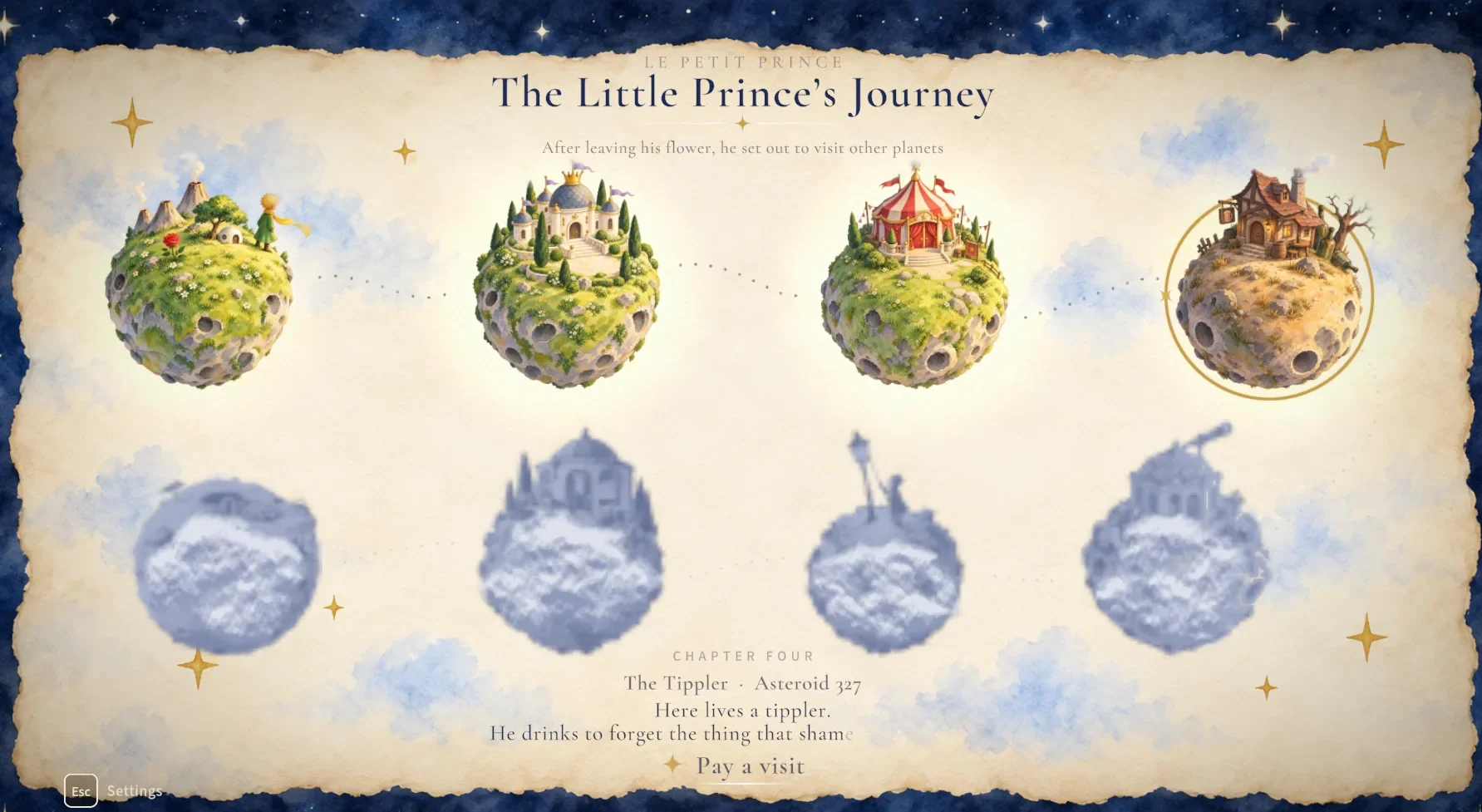
A small planet with personal chores
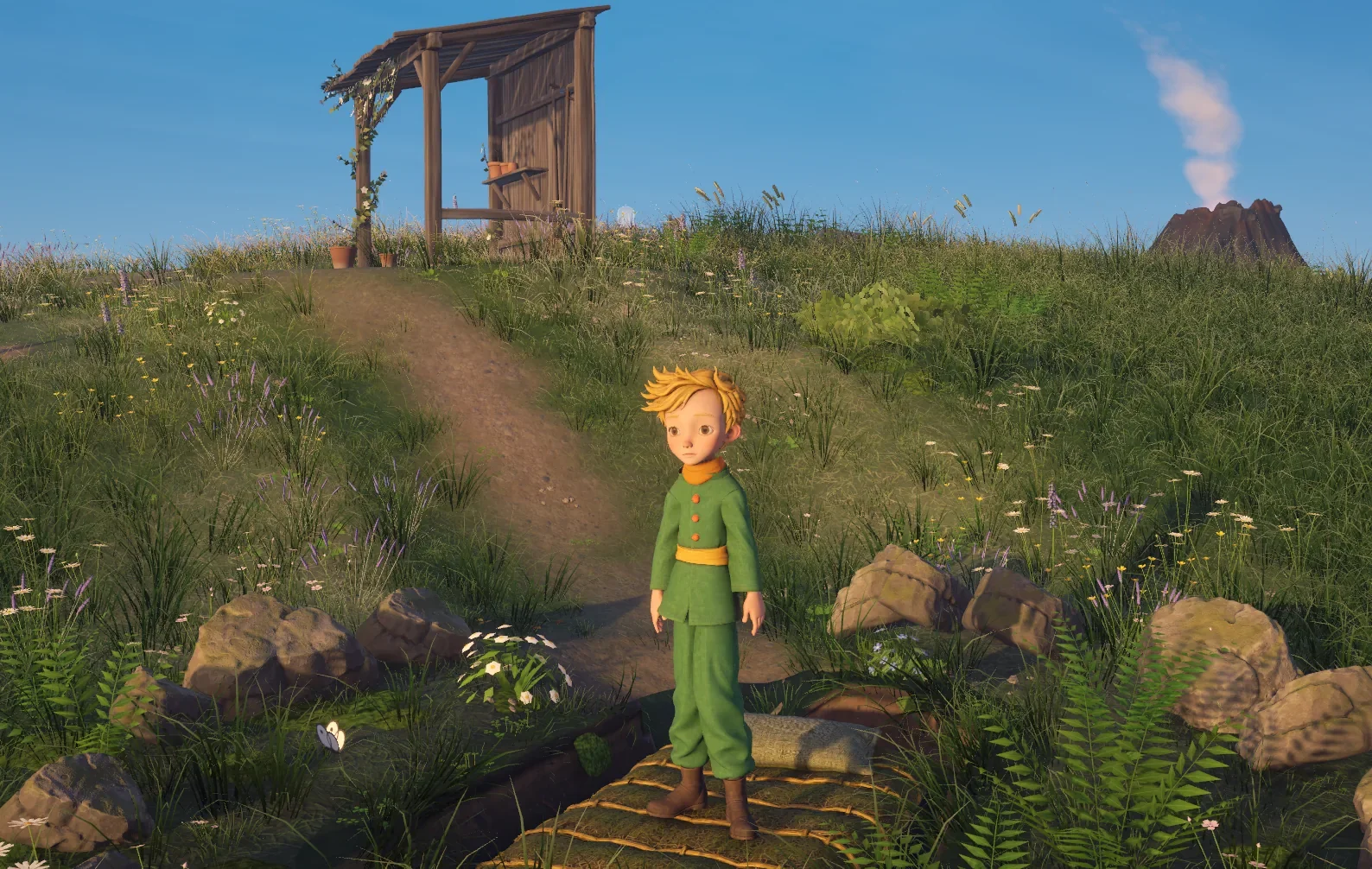
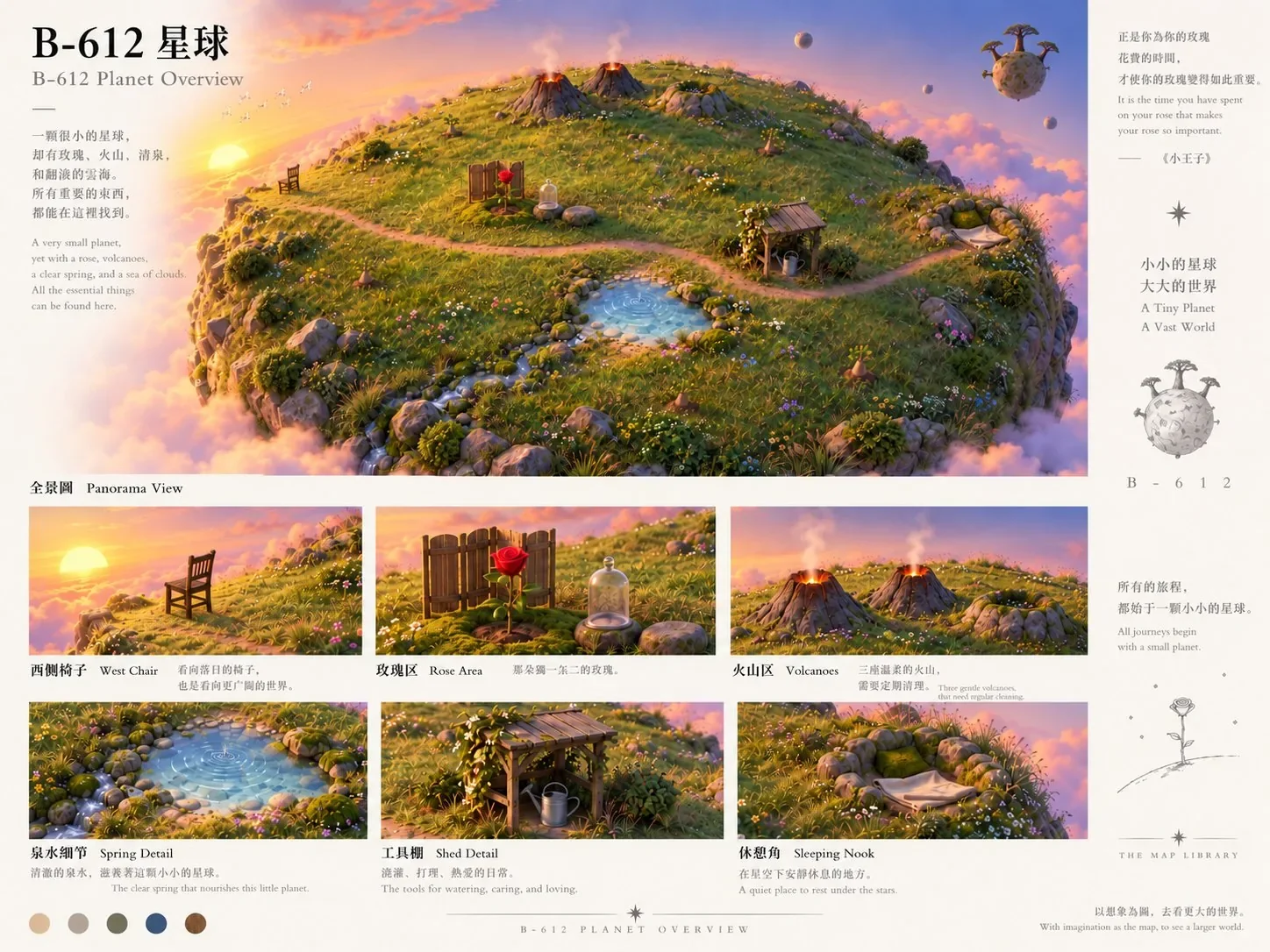
On B-612, grass, wildflowers, rocks, and little volcanoes sit above an expansive sea of clouds. The prince's green clothes and orange scarf stand out against the soft light. A shed, a spring, the rose's sheltered spot, and a chair at the edge give this tiny home recognizable destinations.
The opening sequence asks you to care for the flower before leaving. You collect a watering can, carry it to the spring, fill it, and return to water her. Each completed action changes the objective and leads toward the conversation with the rose. These tasks give the relationship a little weight: the flower occupies a particular place, and looking after her requires a short journey across the home you are preparing to leave.
The can is a carried object. Press E once to pick it up, then move toward the next destination. Pressing E again can put it down, so repeatedly tapping the interaction key is less useful than reading the current prompt and letting the action finish. At the spring and the flower, the contextual prompt tells you what the same key will do next.
The farewell continues with the glass globe, followed by an objective to sit at the planet's edge and watch the sunset. The movement between practical work, conversation, and stillness gives this section its character. Players who enjoy quiet narrative scenes have something specific to settle into here.
The theater changes the mood
Chapter three takes the prince to the Conceited Man's planet, Asteroid 326. Its red-and-gold theater makes an immediate change from the open garden of B-612. Curtains frame the entrance, theater masks decorate the facade, and lanterns light the wooden doorway.
You approach the doors and press E to open them, then walk into a room filled with red audience chairs, a star-patterned carpet, strings of lights, and a raised stage. A tall mirror and a man in a top hat help establish the setting before the conversation begins. The contrast between all those seats and the man's solitary presence makes the scene's subject visible through the room itself.
Walking close enough reveals the talk prompt. The exchange then shifts into framed dialogue scenes. After the conversation, a C prompt lets the prince clap. Holding Q when the departure objective becomes available fills a ring and triggers a starry transition back to the journey map. Completing this encounter unlocked the fourth chapter during testing.
A quieter stop at the tavern
The fourth chapter brings another visual change: the Tippler's planet and its tavern. Stonework, ivy, timber, and warm lamps give the exterior a worn character. Inside, bottles, mugs, barrels, crates, seating, and a staircase make the room feel more inhabited than the theater. Opening the door and stepping inside preserves the feeling of arriving somewhere, rather than selecting an isolated conversation from a menu.
A nearby chair supported sitting down and standing up through its contextual interaction. That seat did not complete the displayed tavern objective during this session. Exploration stopped before the Tippler's conversation, so the room's visual detail can be assessed here, while its full narrative payoff remains outside this review's coverage.
Controls and getting oriented
The desktop interface lists WASD or arrow keys for movement, Shift to run, Space to jump, E to interact, Tab for objectives, and Esc to pause. It also lists mouse look after clicking the scene and a held Q command for setting off. Walking, contextual E interactions, the objective display, pause navigation, the theater's C clap action, and Q departure were exercised during this session. Running and jumping were listed in settings but were not separately evaluated.
For the opening tasks, the most useful habit is to check the objective after an interaction. A filled can, a completed watering action, and a finished conversation belong to different steps. Follow the new instruction instead of repeatedly activating the object from the previous one. Gold markers and interaction prompts help identify destinations and usable objects.
The journey map presents the trip as a sequence of illustrated planets. Completed chapters can be revisited. The test session began with existing progress that had already unlocked chapter three, so this review does not establish how long a fresh journey takes or what every later chapter contains.
The language menu lists English, French, Spanish, German, Portuguese, Chinese, Japanese, and Korean. English was used for the hands-on passages described here; translation quality across the other languages was not evaluated.
How Sac says the game was made
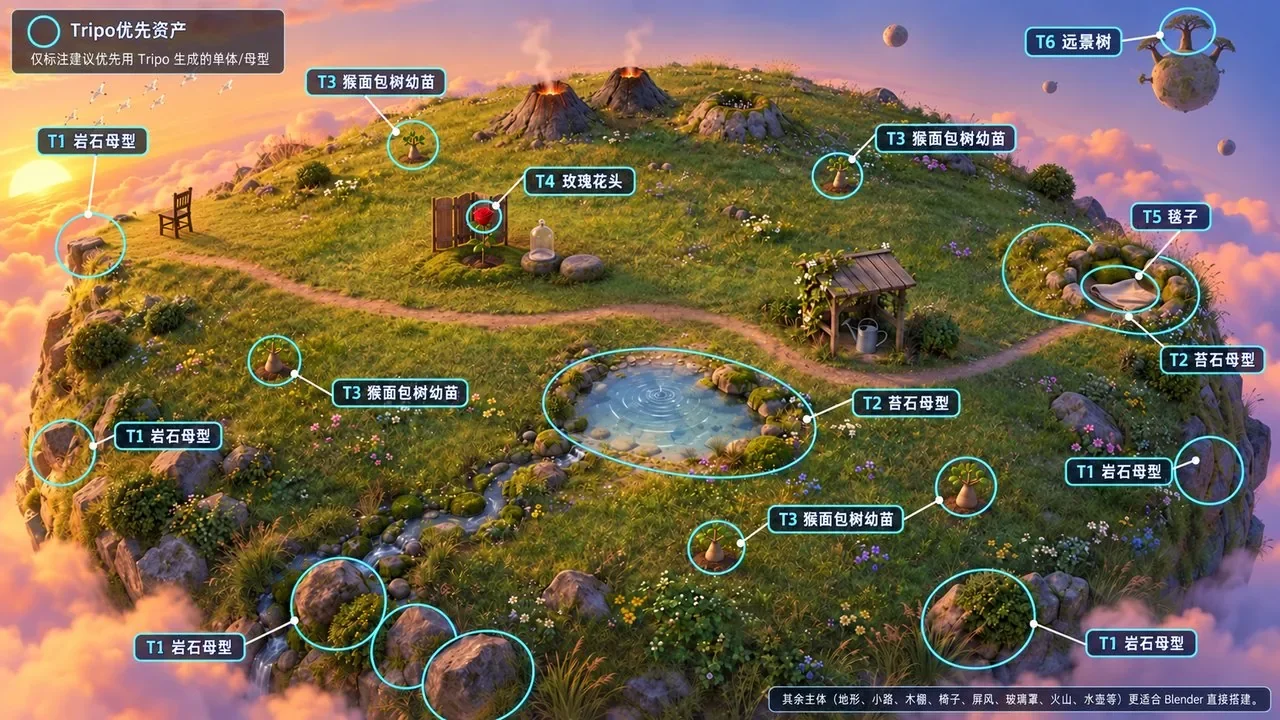
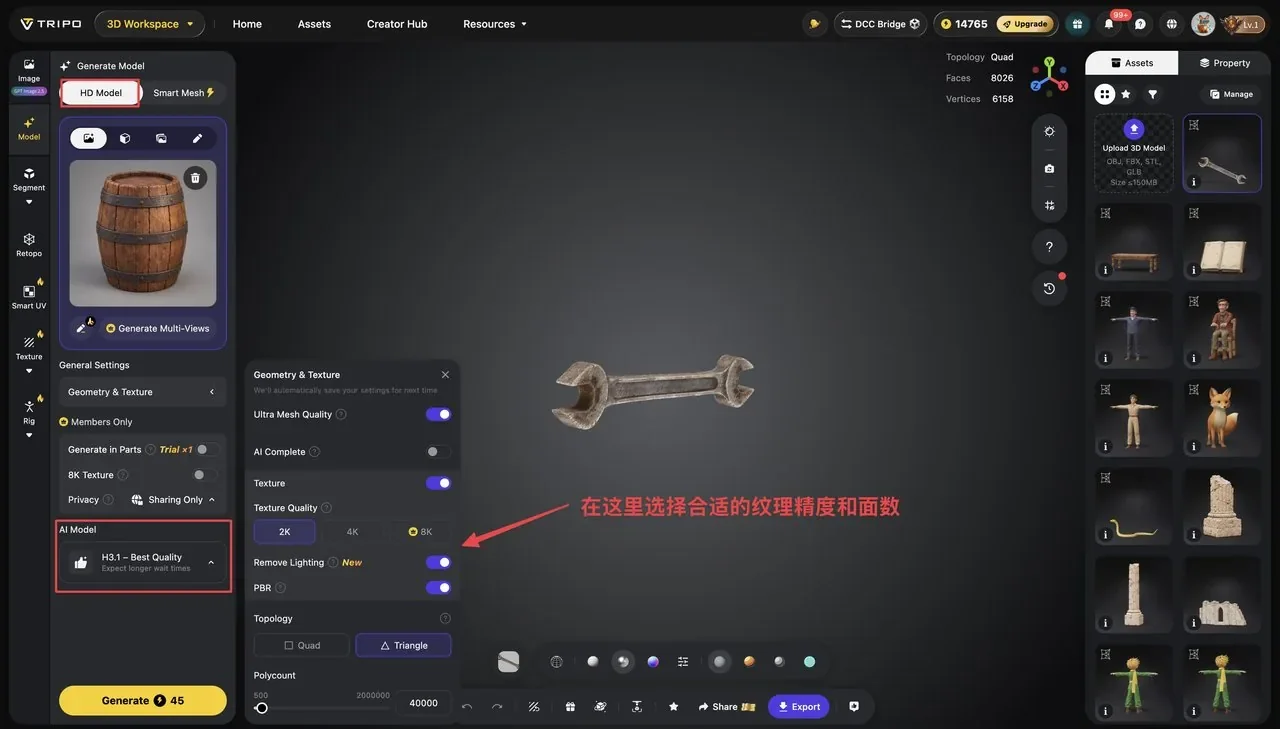
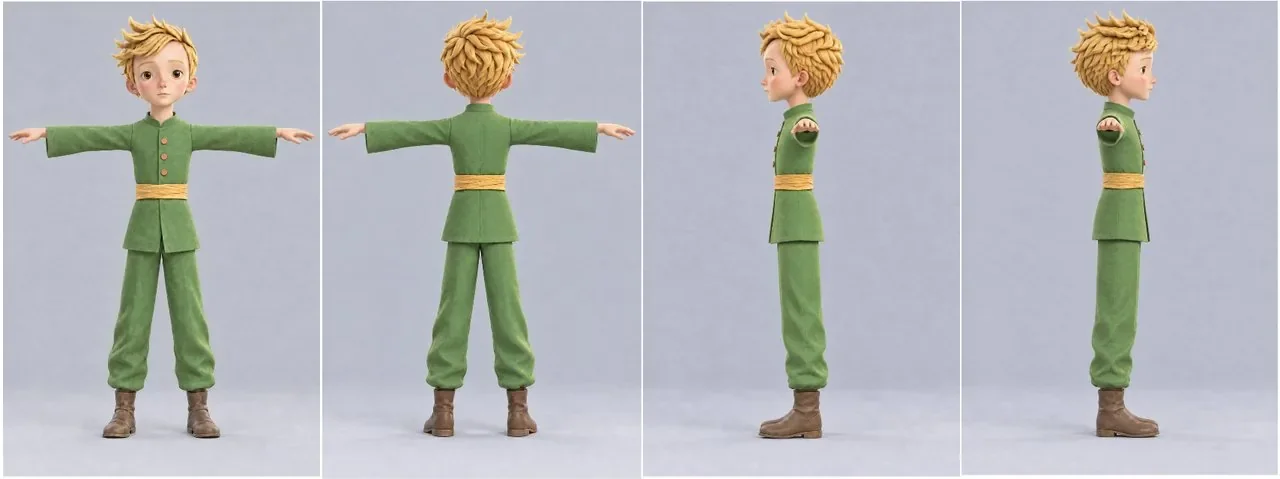
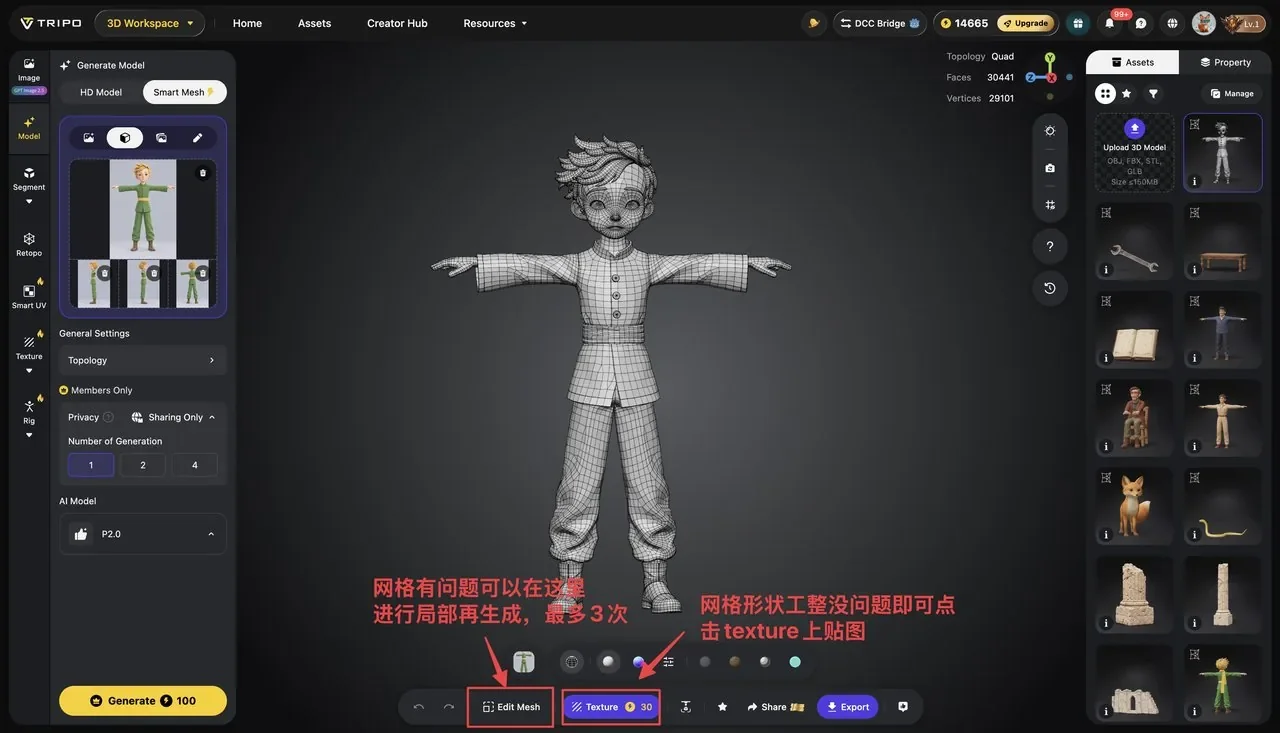
Sac describes a 16-day production process using several AI tools alongside conventional 3D software. In the creator's detailed production article, Fable 5.1 handled the requirements document and the outline of scenes, characters, and story. GPT Image 2.5 supplied visual references, Tripo generated core 3D assets, Opus 5.5 built the core code and helped assemble scenes, and Astra handled further iteration and bug fixing.
The supporting tools matter too. Sac describes Blender work for asset cleanup, scene construction, and animation adjustments; Auto-Rig Pro for character rigging and skinning; Mixamo for base motion; and Unity as the game engine. The article specifically discusses refining the prince's hand position and the watering can's placement for a convincing carrying action.
Those details describe an iterative production process involving reference selection, asset preparation, visual checks, and animation corrections. The tool names and development duration are the creator's account, rather than an independent audit. For players, the result is a coherent visual world with recognizable props and small actions that carry the story forward.
What the launch figures show
Sac's production article reports nearly three million views across platforms. Separately, a website analytics screenshot shared by the creator shows 1.56 million requests, 8.72 TB of data transferred, and 97.87 thousand visits. The screenshot does not show the reporting period or establish a count of unique players. These figures document reported attention and site activity; requests, visits, and social views measure different things. They cannot establish how many people finished the journey or how satisfied they were.
Who will enjoy the journey?
This is a good fit for readers of The Little Prince and players who enjoy atmospheric exploration, expressive environments, and straightforward story tasks. The garden and theater show a clear interest in turning a literary encounter into a place you can walk through. Carrying the can and opening the theater door provide small but useful points of participation.
The tradeoff is the measured pacing. Much of the sampled play consists of moving between prompts and giving dialogue or an animation time to unfold. The interactions are accessible, while the rewards come from the setting and emotional context. Players looking for demanding systems or constant action should judge that slower rhythm before committing to the journey.
This assessment covers the B-612 care-and-farewell sequence, completion of the third chapter's theater encounter and departure, and partial exploration of the fourth chapter's tavern. It does not claim a complete playthrough, a verified ending, mobile performance results, or a measured completion time.
![AY in Noggin's RL, GL Game Redux [ 40 Players ] game cover](https://fortcade.com/wp-content/uploads/2026/10/ay-in-noggin-s-rl-gl-game-redux-40-players-225x300.webp)