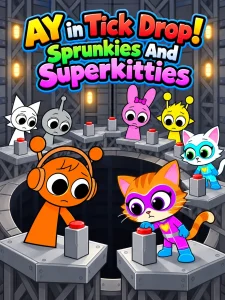
Forty cartoon contestants crowd onto a narrow wooden boardwalk while barrels plummet from above, roll across the platform, and knock unlucky participants into the ocean below. In AY in Barrel Extravaganza: 40-Player Summer Survival, the viewer takes a completely hands-off role: every single entrant runs, jumps, takes damage, and reacts without any direct player input. Pressing the green flag triggers an automated last-character-standing tournament where the goal is simply to watch the crowd navigate hazards until a single survivor reaches the golden winner's podium.
Originally titled AY in Barrel Extravaganza: Summer Edition!, the simulation created by @KamariCampbell317 stems from Scratch’s "Add Yourself" remix community, associated with the broader project archive maintained under BarryFans. Despite the chaotic setup, this is not an online multiplayer game, and there are no movement keys or character selection menus. Viewers exercise zero physical control once the match starts; agency begins and ends with launching or restarting the simulation. The appeal rests entirely on choosing a favorite participant from the crowd and seeing how long their automated logic survives the escalating chaos.
 3 Game Screenshots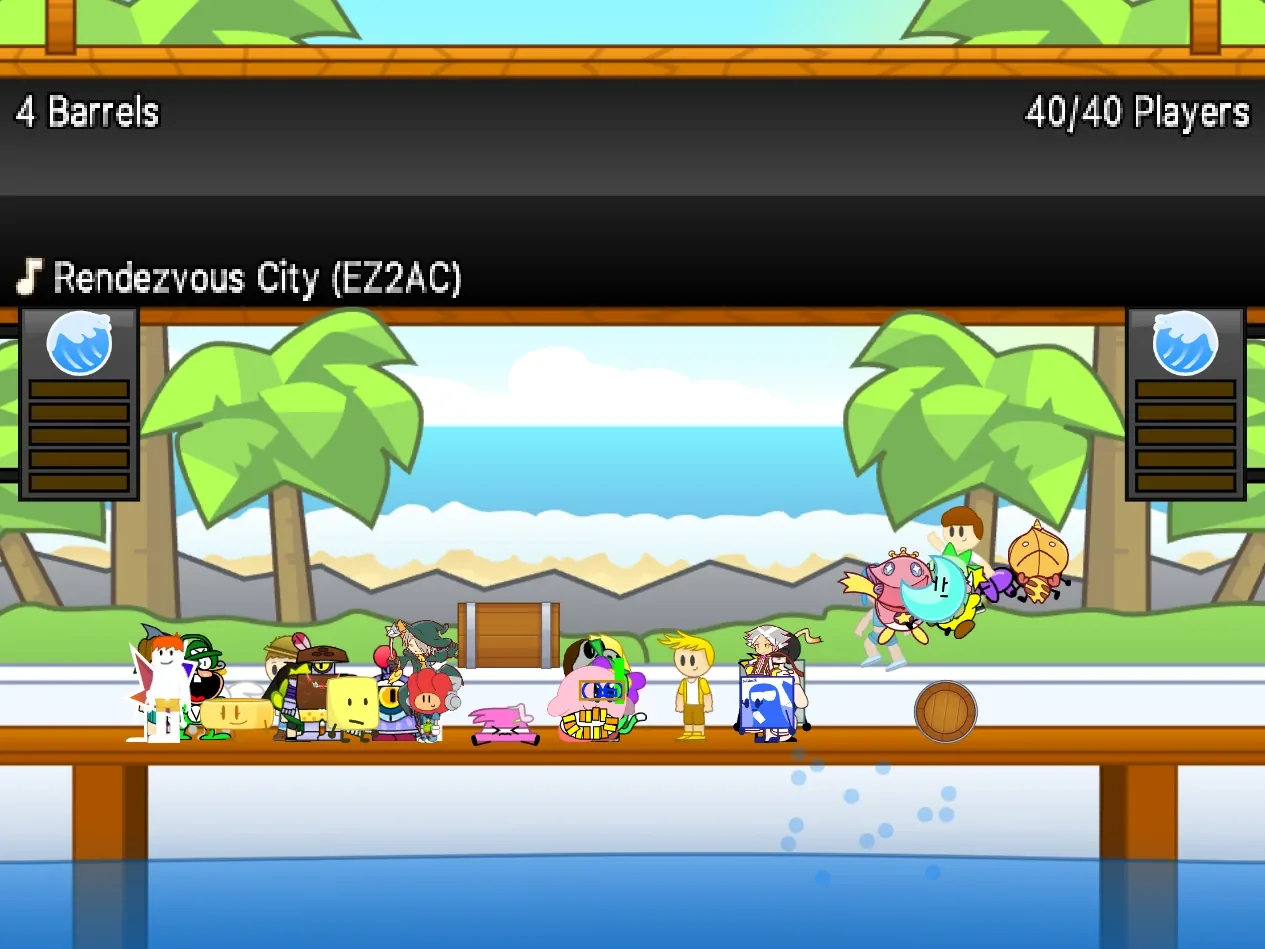
A Packed Forty-Character Roster
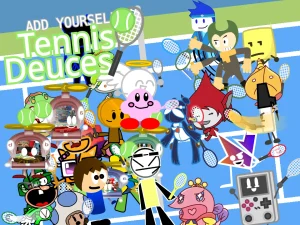
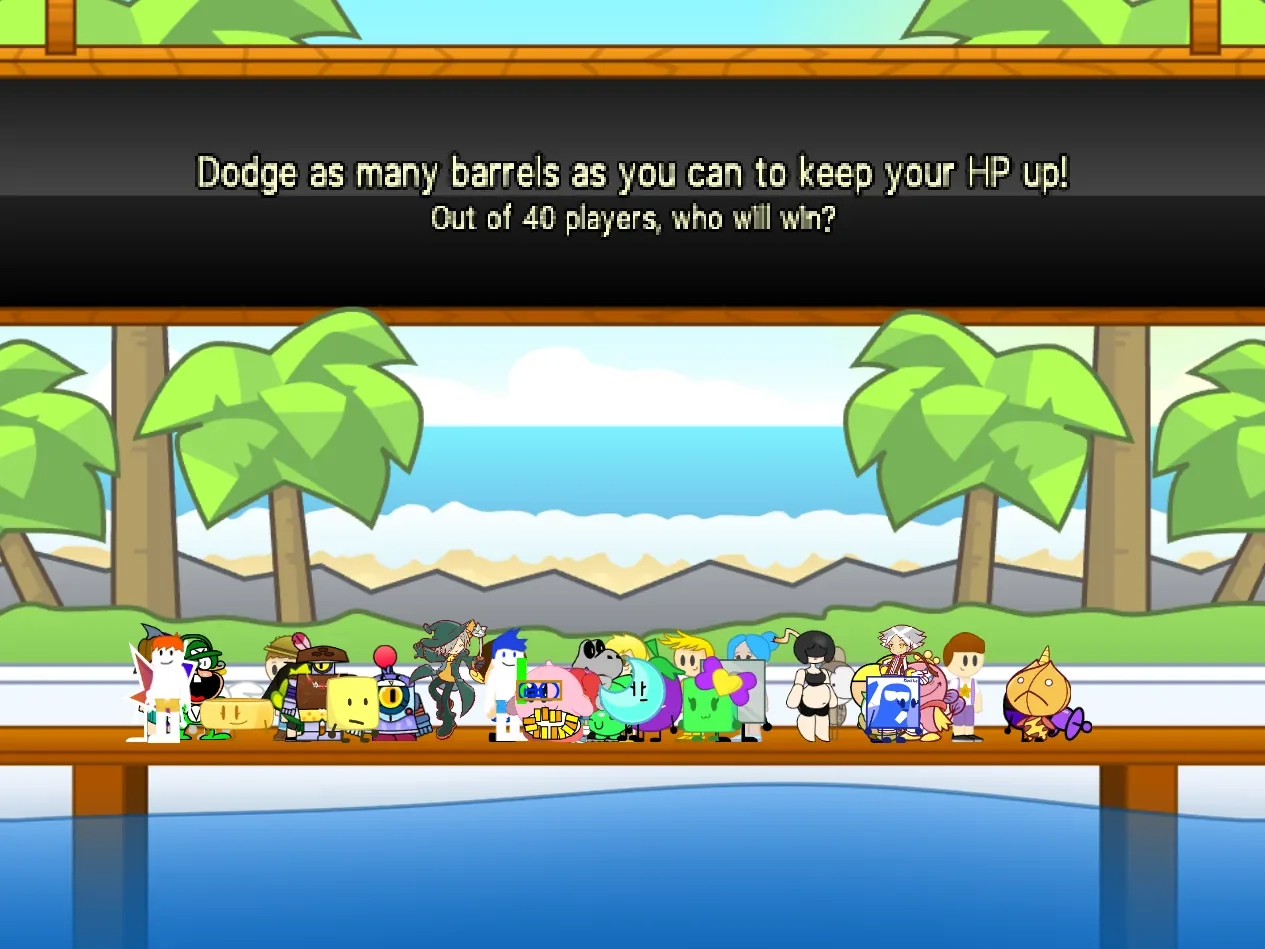
The starting lineup features forty visually distinct entrants ranging from classic pop-culture figures to original community creations. The full roster includes Kijoblue, Kirby, Maxwell, Ex, Lemres, Onion Pixie, Ocean Prince, Donguri Gaeru, Colton, Nama, Fifi, Goobert, Eggplant, Melody, Yellow, Ringy, Noah, Nani, Darryl, Zeler, RDash75, Shelley, Zac, C1, DarkBoi, SharkBoi, Jason, ? Box, The Noive, Barry, Nanobross, Skylar, ZYellow, Alex, ZYella, Isabella, Black Olive, Evan, Angely, and Moony. Each character possesses individualized running animations, voice clips, hurt states, squished reactions, and knockout behaviors, ensuring that impacts feel tailored rather than generic.
During the opening seconds, the narrow tropical platform is so densely packed that smaller entrants overlap, obscure each other, or disappear behind larger neighbors. Tracking an individual contestant requires concentration until the first major waves of hazards clear out the crowd. As eliminations mount and characters tumble off the boardwalk, the visual clutter subsides, naturally shifting the experience from an unreadable mob scene into a readable elimination duel.
Escalating Hazards and Environmental Triggers
Barrels form the primary threat, but they are far from uniform. The simulation deploys standard vertical drops alongside rolling barrels, while light, heavy, pause, and bouncy variants drastically alter impact physics. Collisions may shave off health points, temporarily immobilize a character, flatten them on the spot, or launch them flying toward the arena's boundary.
As the match progresses, additional environmental hazards expand the threat level beyond falling wood. Beach balls bounce across the boardwalk to disrupt foot traffic, while full-sized palm trees can suddenly sprout directly onto the floor, choking off safe paths and forcing surviving contestants into narrow hazard zones. Geysers, giant ocean waves, and heavy knockback effects further threaten anyone standing near the platform edges. Side-mounted gauges and warning symbols provide brief visual cues before these environmental spikes occur, allowing attentive viewers to anticipate major wipeouts. Player reactions highlight strong enthusiasm for these thematic hazards, particularly the dramatic arrival of giant waves that sweep across the platform.
Pacing, Endurance, and Resolution
The interface tracks two primary statistics throughout the match: remaining active players and a running barrel tally. Located in opposite corners of the screen above the active music title, these counters turn the barrel count into an effective pacing system. The opening dozens establish baseline movement patterns, but once the counter crosses into the hundreds, accumulated obstacles consistently squeeze survivors into impossible positions. Matches do not operate on a fixed timer; they end only when health loss and knockouts reduce the field to a single contestant.
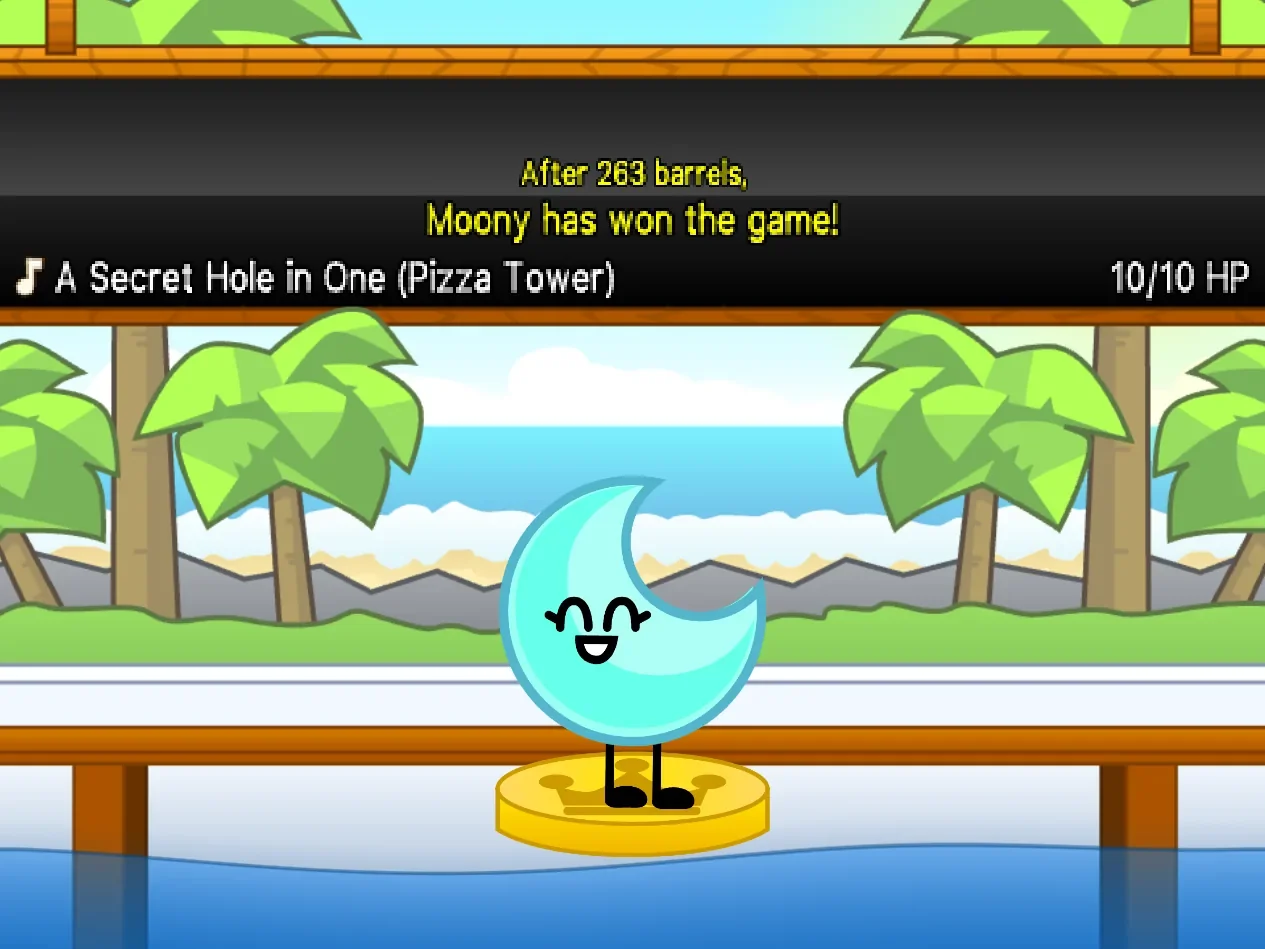
Because hazard spawn patterns and character collisions rely on variable physics, match lengths vary wildly. In one full test run, the elimination process required 558 barrels before Moony emerged as the sole survivor with 10/10 health remaining. Once the final contender is determined, the simulation shifts from the crowded beach arena to a clear result screen, placing the champion on a golden podium alongside their name, remaining HP, and total barrel count. Watching these automated tournaments unfold on Fortcade highlights how simple physics objects and a diverse custom lineup can turn a passive simulation into an engaging spectator event.
The game's primary limitation stems from its complete lack of interactive depth. Viewers seeking direct platforming controls, betting systems, or tactical inputs will find no mechanics to master. Furthermore, prolonged standoffs can occasionally drag when two healthy survivors repeatedly dodge incoming barrels in a quiet pattern. Nevertheless, for those who enjoy randomized character tournaments and watching unpredictable elimination mechanics play out, the varied hazard types and forty-character roster deliver genuine replay value with every fresh run.