A giant digital counter ticks away inside a crowded gray-stone arena while 39 contestants wait to see who will be eliminated next. AY in Tick Drop! Sprunkies but It Was Chiara Remember Stay Strong takes the familiar premise of a button-roulette elimination match and turns it into an automated crossover spectacle. Players initiate the project with the green flag, setting off a randomized turn sequence where characters arranged around a circular platform are highlighted, repositioned, or eliminated one after another.
The tension comes from uncertainty rather than mechanical combat or direct manual maneuvering. Once launched, the experience moves forward without confirmed keyboard or mouse movement controls for individual characters. Instead, the focus remains on watching the shifting roster, tracking the digital player counter, and seeing which contestant survives each cycle. This setup gives the project the feeling of an animated party-game results screen or a watchable elimination show rather than a traditional arcade challenge.
The 39-Character Cast and Chiara Remix Additions
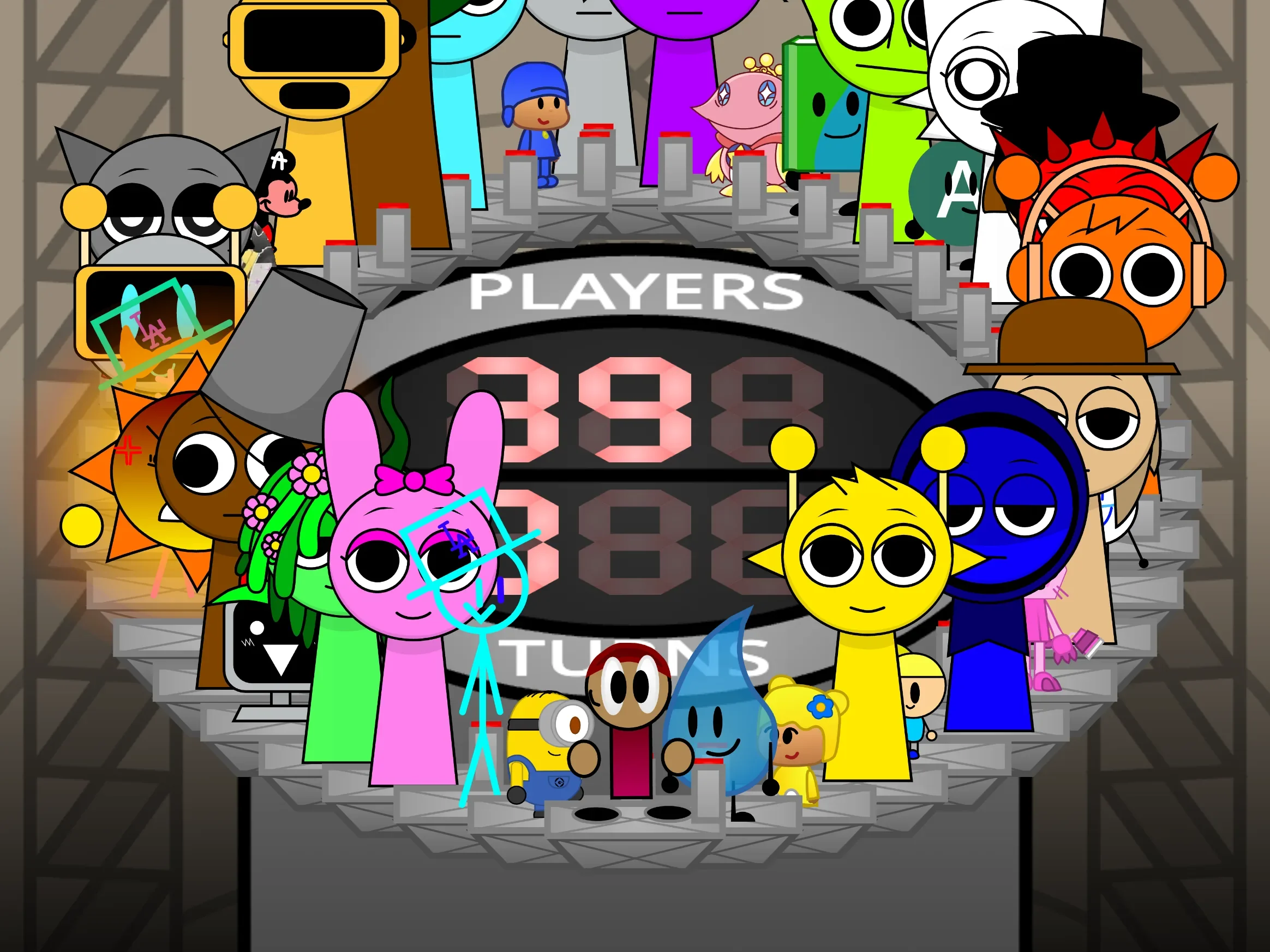
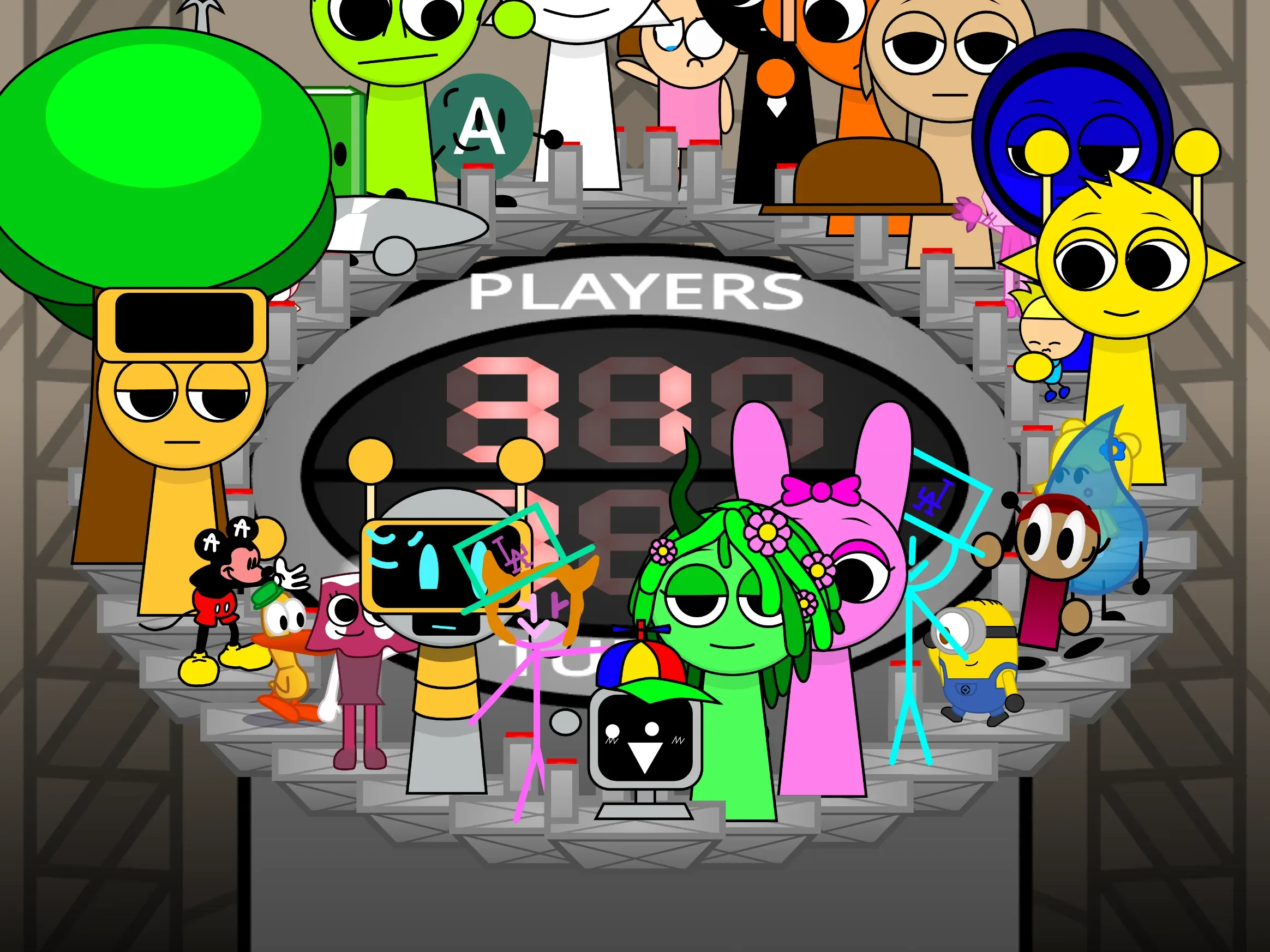
The character roster combines familiar Sprunki figures with crossover additions and creator-submitted contestants. Standard Sprunki cast members such as Oren, Raddy, Clukr, Funbot, Vineria, Gray, Brud, Sky, Mr. Sun, Wenda, Pinki, Jevin, and Black share the stage with outside guests including Teardrop, Pocoyo, Goobert, and Scrapziez. Sprite scaling across the circular arena is deliberately varied: a tiny crossover character can stand directly beside an oversized Sprunki body or a towering tree-like figure, filling the screen with constant activity.
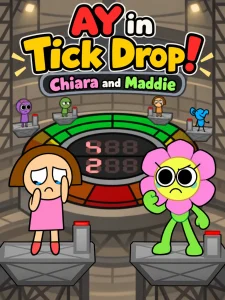
The headline addition by creator @ChiaraCarrion is Worried Chiara (Grassy). This character brings a more personal presentation to the lineup, accompanied by custom text lines and scenes featuring encouraging phrases such as “Remember Stay Strong,” “You Can Do This,” and “Water Drop Splash.” These unique additions give the remix an individual identity that goes beyond a standard character swap. For players interested in custom edits, the project source code structure even accommodates sprite duplication for adding custom sprites while adhering to basic remix guidelines.
 3 Game Screenshots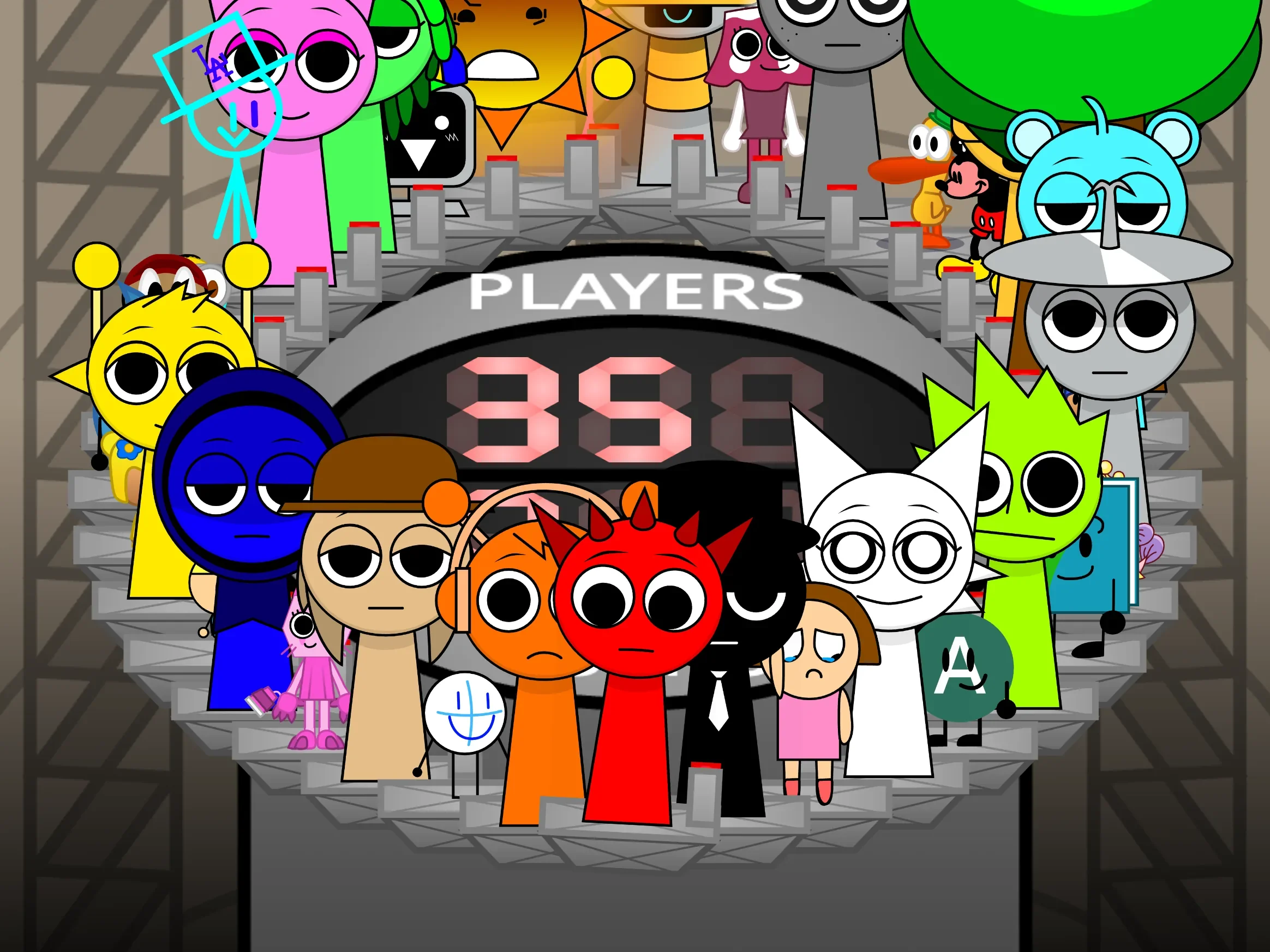
Audiovisual Cues and Match Presentation
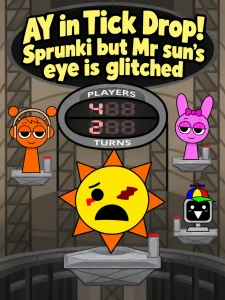
The arena layout is structured like a broadcasted game-show stage. A prominent "PLAYERS" sign hangs over a circular gray-stone platform fitted with rows of gray buttons topped with red caps. At the center, a segmented digital counter continuously updates as characters take their turns. Because characters overlap and frequently shift positions across the crowded stage, tracking exactly which contestant was selected or dropped in a given second can prove difficult.
Sound design plays a crucial role in maintaining event momentum. Rather than looping a single background track, the project features a varied audio library with distinct music for start, turn, result, and victory phases. Tracks draw inspiration from fighting games, racing titles, party games, and animated game shows, with a visible "Now Playing" panel identifying the active song title. Sound effects further emphasize each phase of the contest:
- Mechanical button presses and heavy metal clanks mark turn transitions.
- Teleport sounds, crunches, and vocal character reactions signal roster eliminations.
- Confetti bursts and dedicated victory themes highlight major outcome milestones.
Tracking and Playability Boundaries
While the overall flow is simple—start the green flag, assemble the cast, and watch the turn logic resolve—the exact rules governing selection order remain unstated. The project instructions prompt "Press the button, or not? Will it stop at you? Hope not!", yet no active timing bar or selection logic is exposed to the player. When observing the project on Fortcade, players cannot manually target contestants or force specific movement inputs after the sequence starts.
The absence of a persistent progress panel showing who is safe and who has fallen makes long-term match tracking tricky. Because a full match involves numerous elimination steps and can run long enough that a complete winner screen is difficult to reach during a typical session, the project works best as a randomized simulation to rerun for different audiovisual combinations. Clearer elimination feedback and more direct player agency would transform this lively spectating show into a more structured interactive game.
![AY in Noggin's RL, GL Game Redux [ 40 Players ] game cover](https://fortcade.com/wp-content/uploads/2026/10/ay-in-noggin-s-rl-gl-game-redux-40-players-225x300.webp)