Twenty characters hang suspended by vertical ropes over an open pit, waiting for a countdown to reach zero. When the display triggers the prompt to drop, every contestant plunges downward under randomized gravitational force. Some characters pull back just in time and bounce into the upper screen area, while others cross the lower boundary and disappear from the competition entirely. Originally titled Bungee Jumping 2 but every 2here friends are there and created by @BfdiaBBQSauce1243, the Scratch project AY in Bungee Jumping 2: 20 Sprunkies operates as a fully automated survival tournament rather than an interactive platformer.
Players do not steer, jump, or balance any of the characters during a match. The entirety of the project relies on simulated physics and automated round progression, placing the viewer in the role of a spectator. Before the first jump begins, players pick a favorite contestant from the lineup and watch how far randomized physics carries them through consecutive elimination drops.
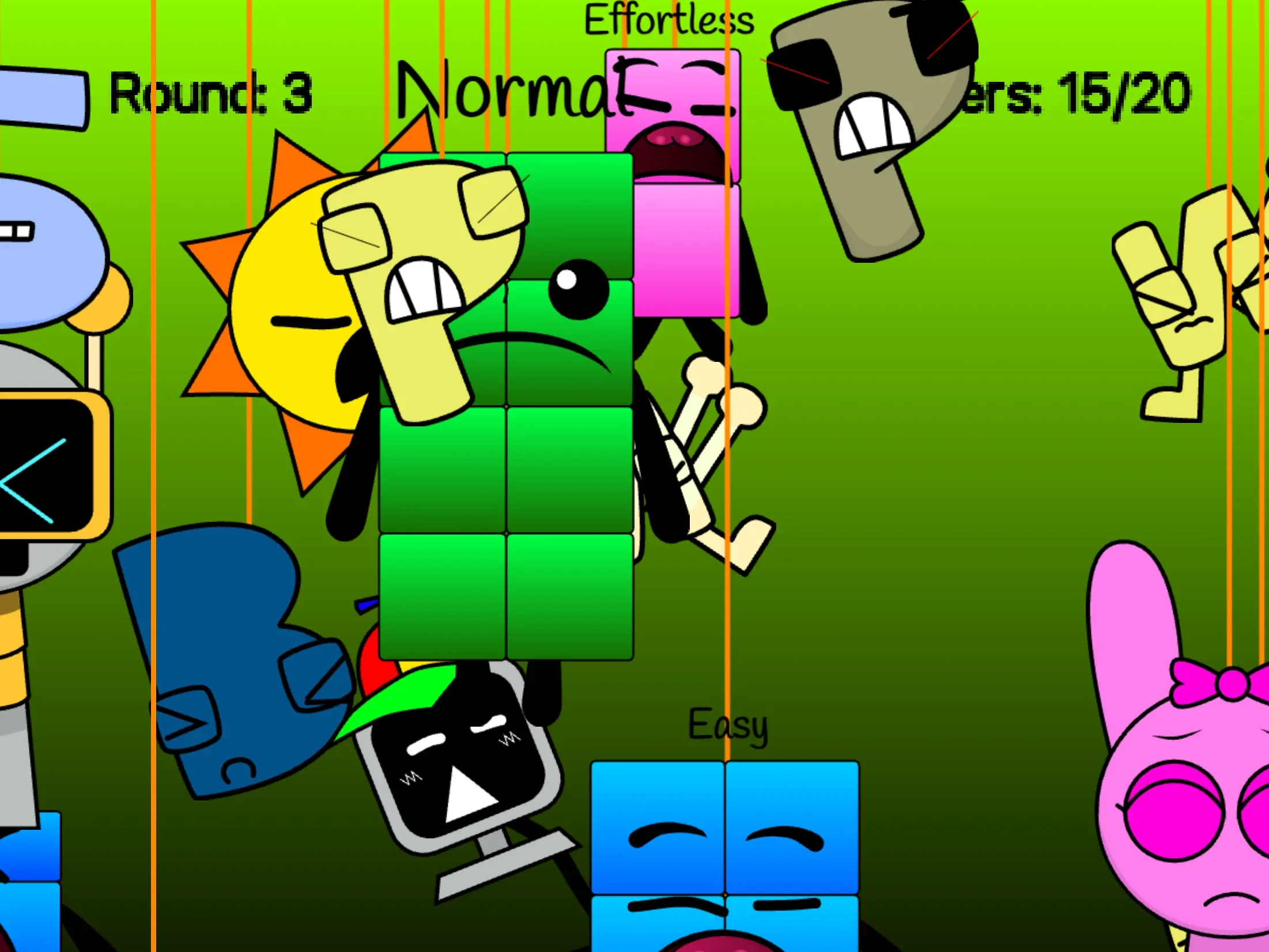
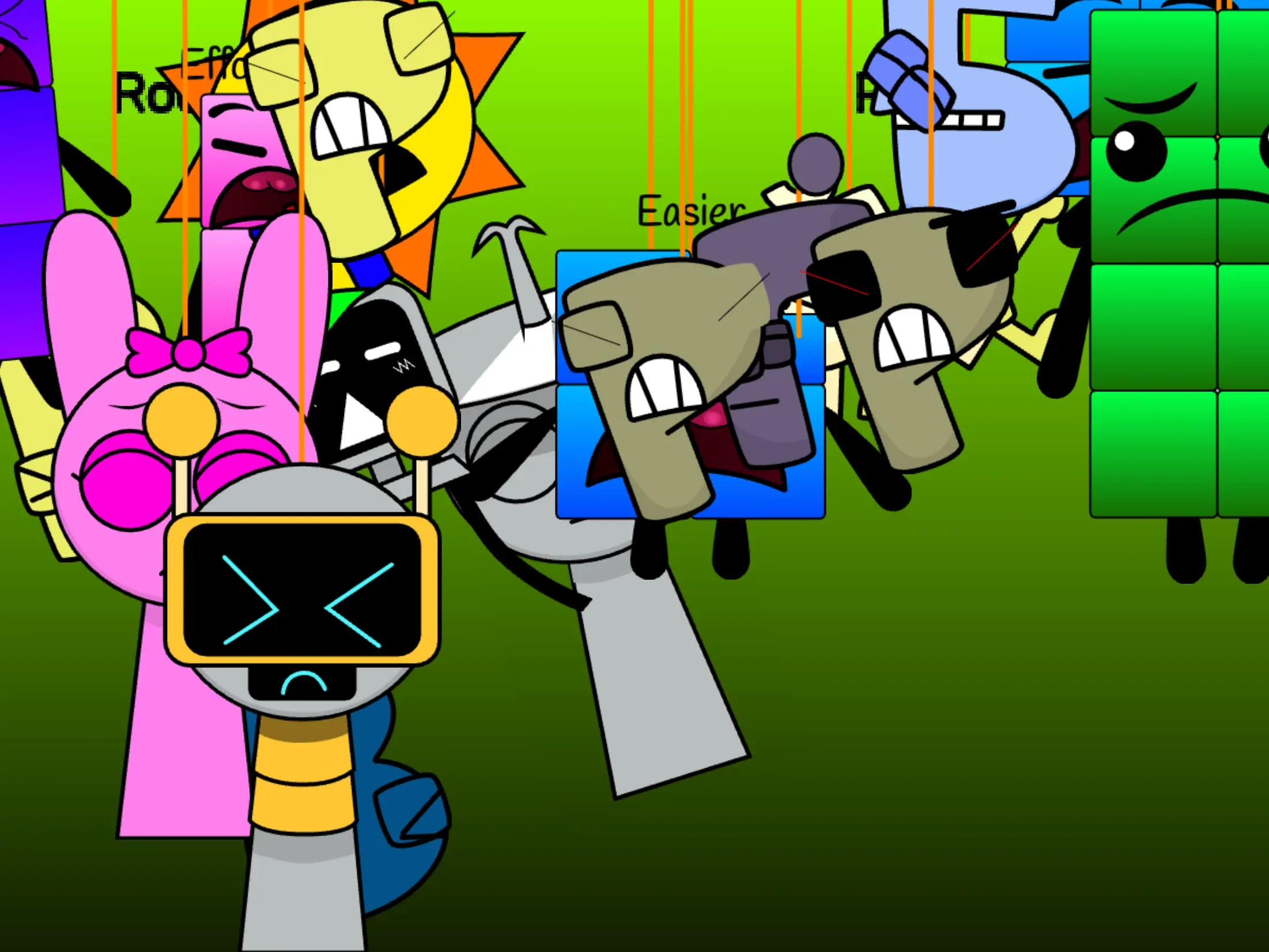 3 Game Screenshots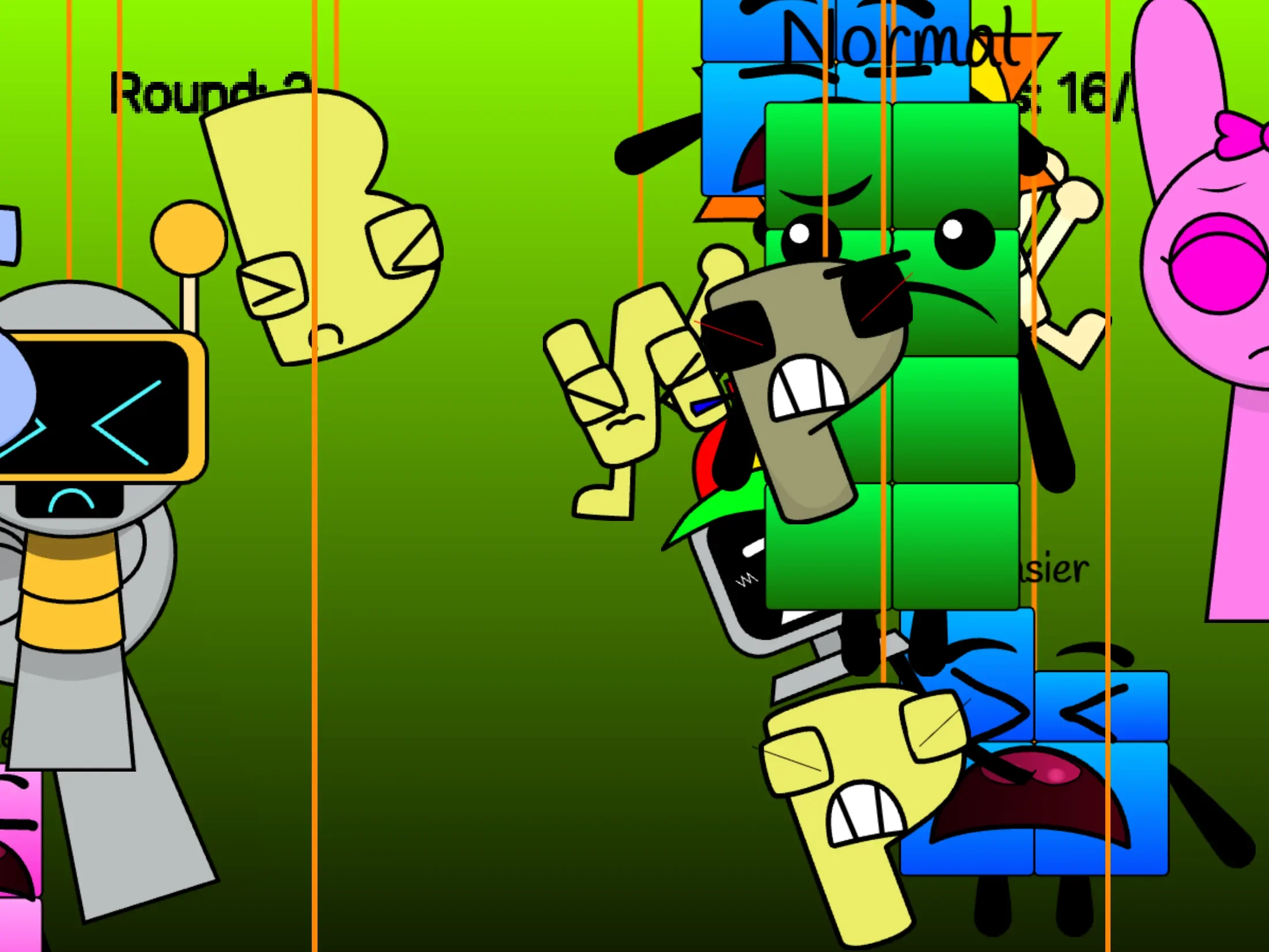
Automated Tournament Mechanics and Round Sequence
Every match follows a fixed round sequence driven by automated code. The top of the screen displays the current round number alongside a counter tracking how many contestants remain active. A large text prompt executes a "3, 2, 1, JUMP!" countdown before triggering the drop physics.
When the jump executes, the project applies a newly randomized downward force value to each active sprite on the field. The result of each jump falls into distinct physical outcomes:
- Elimination: Characters that travel beyond the bottom edge of the viewable stage cross the elimination boundary. They are permanently removed from the active roster for the rest of the game.
- Survival: Characters whose downward momentum stops before reaching the boundary execute multiple bounce animations. They react to their proximity to the pit and return to the top assembly area.
- Draw State: If every character remaining in a round crosses the bottom boundary on the exact same drop, the system resolves the match as a tie rather than declaring a single winner.
Once the surviving characters regroup above the pit, the current round counter ticks upward, a new countdown initiates, and the contestants drop again under fresh randomized calculations. This loop repeats until only one character remains standing or a universal fall triggers a draw screen.
Because the downward momentum applied to each sprite varies unpredictably every round, match lengths are variable. A complete playthrough featured in the review documentation lasted approximately 13 minutes, but individual matches can finish much faster or drag on depending on how many contestants survive each drop.
The 20-Character Roster and Visual Groupings
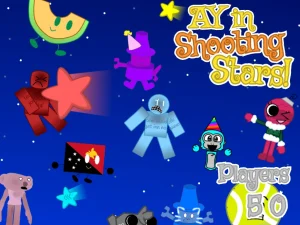
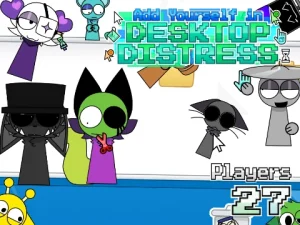
The project features 20 distinct contestants at the start of a match. The lineup mixes recognizable Sprunki-inspired figures with customized variants and community additions:
- Er
- Evil Er
- Beh
- Fun Bot
- Pinki
- Yellow Er
- Geh
- Normal
- Joyful
- I
- Easy
- Mr. Fun Computer
- Effortless
- Easier
- Mr. Sun
- Clukr
- Veh
- Mustard Veh
- Ekrat Kaye
- Mustard Eee
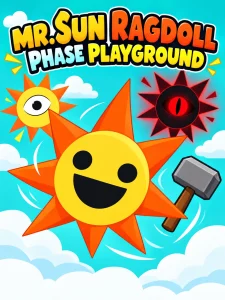
Several entries in the lineup belong to clear character families based on their names and visual design. Easy, Easier, and Effortless form a three-part progression, while Er, Yellow Er, and Evil Er provide color and thematic alterations on a single baseline design. Sprunki inclusions such as Pinki, Clukr, Fun Bot, Mr. Sun, and Mr. Fun Computer connect the project directly to broader Scratch community character trends.
In the opening rounds, having 20 large character sprites on screen alongside overhead text tags creates heavy visual overlap. Characters obscure one another during the initial plunge, making individual sprites hard to track until early drops eliminate several contestants. As the active roster thins out across later rounds, spacing improves, giving clear sightlines to the final contenders.
Custom Animations, Audio Cues, and Reaction States
Despite the absence of manual steering, each contestant includes tailored visual expressions and audio assets. Every active character possesses specific sprite frames corresponding to their movement status throughout a round:
- Plunging: Dedicated falling costumes display as characters descend toward the pit.
- Near-Miss Panic: Characters that stop just short of the bottom boundary switch to worried expression costumes.
- Relief and Bouncing: Sprites that land safely higher up display relieved or neutral bounce animations.
- Celebration: Surviving contestants execute victory poses upon returning to the upper assembly zone.
- Winner Sequence: The final remaining character performs an individual victory animation accompanied by custom audio.
Audio implementation plays an equal role in structuring the tournament atmosphere. Whistles and audio cues build tension during the numeric countdown. Mechanical or elastic boing sound effects play when characters bounce back upward, while distinct falling noises signal an elimination. The soundtrack switches between separate audio tracks for the pre-game introduction, the main elimination rounds, and the final results display.
Many contestants carry personalized sound clips for falling, worrying, landing safely, and winning. These expressive details provide context to players tracking individual performance on Fortcade, turning a simple physics script into a clear character showcase.
Scratch Remix Architecture and the AY Framework
The prefix "AY" stands for "Add Yourself," a collaborative template format on Scratch where creators invite players to fork a project and add custom characters. AY in Bungee Jumping 2: 20 Sprunkies operates as part of an ongoing remix chain, which explains its combination of core Sprunki figures, altered variants, and original creations.
The underlying project structure provides a systematic workflow for remixers seeking to append new contestants to the roster:
- Users duplicate a designated template sprite labeled "Player0."
- Every costume in the duplicated sprite is replaced with custom character art corresponding to the drop, worry, bounce, and win states.
- The default sound clips in the sprite's "Voice" category are replaced with custom character vocalizations.
- The character name string is updated, and optional additions can be placed on the thumbnail or musical track options.
- Project rules require contributors to maintain the integrity of existing scripts and credit creator @-Rex- for the Pen Text Engine++ asset used to render textual elements.
This open remix design gives the project clear utility within Scratch community spaces, even if its mechanical depth as a playable game remains light.
Mechanical Limits and Spectator Appeal
The game's primary limitation stems from its total reliance on automated randomness. Players cannot influence character trajectories, trigger emergency bounces, or alter falling speeds. There are no alternative stages, environmental hazards, power-up items, or selectable difficulty modifiers. Once the green flag is triggered, the simulation follows identical rules from the first round to the last.
For players seeking active control, timing tests, or movement inputs, this lack of agency may feel uninteractive. However, as an automated prediction game, it offers clear entertainment. Picking a contestant at the start of a match and watching whether random momentum drops them into the pit or bounces them to safety creates genuine tension, making it well-suited for casual group spectating.