Despite advertising a six-player battle in its title, AY in Hot Bomb: 6 Player runs a fully automated elimination tournament for five active contestants. Built in Scratch by @67KidIsBackNo61, the project carries on the community tradition of "Add Yourself" (AY) hot-potato remixes. In these projects, creators insert custom characters into a shared template, following earlier community builds that scaled the concept to eight or fifteen participants. However, this specific release features a clear development gap: while the title promises six participants, the internal logic only runs a five-player tournament.
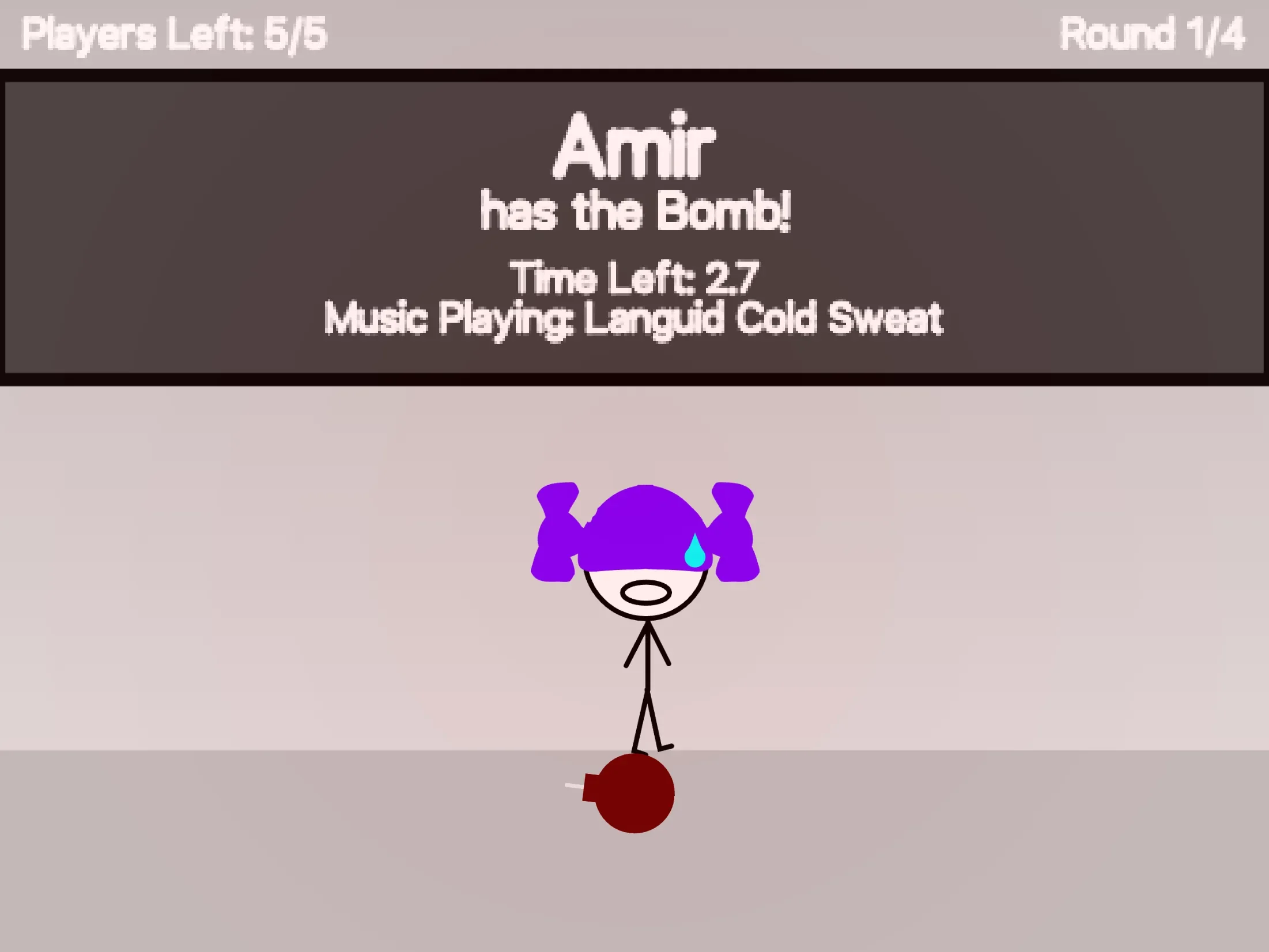
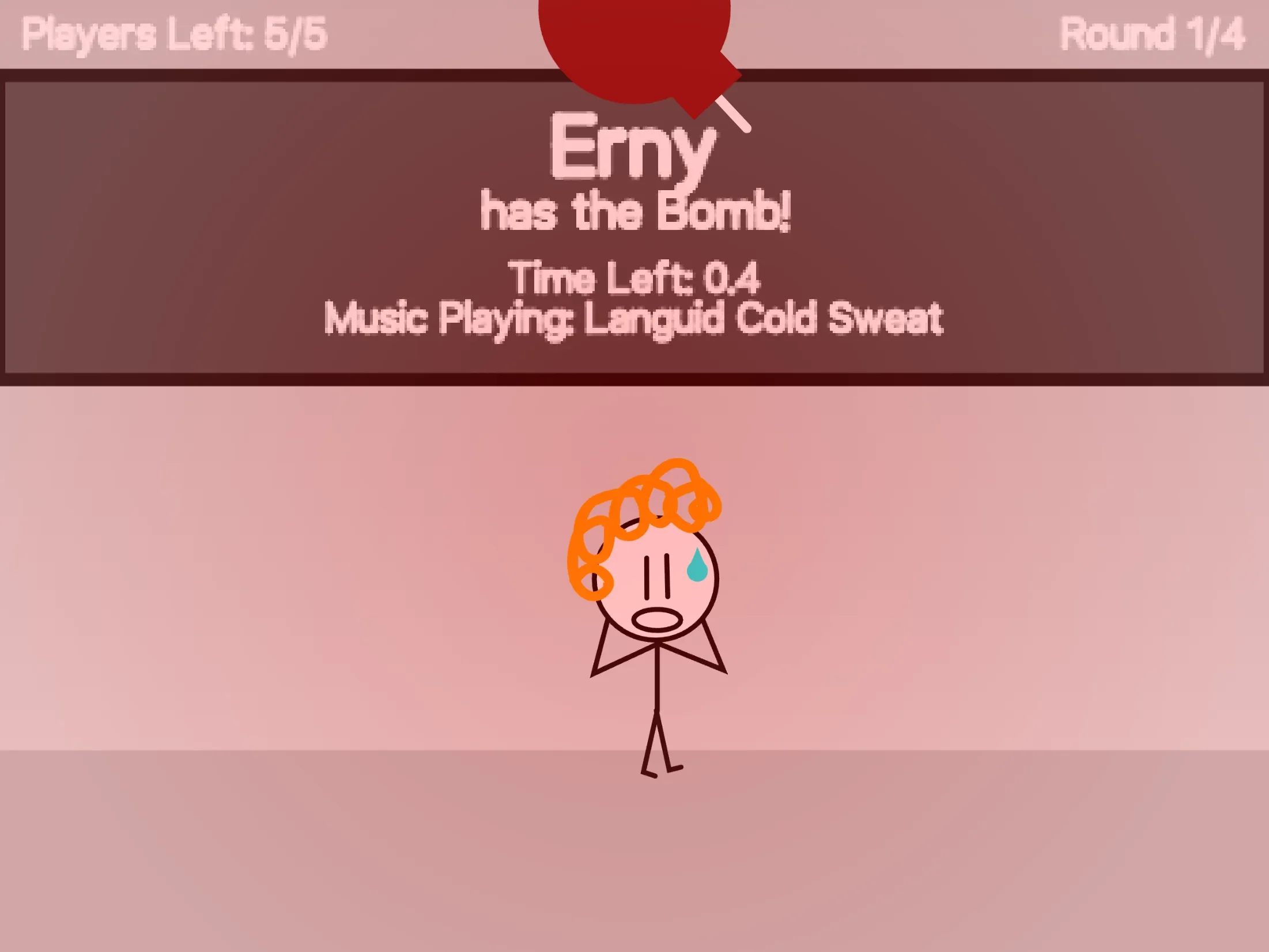
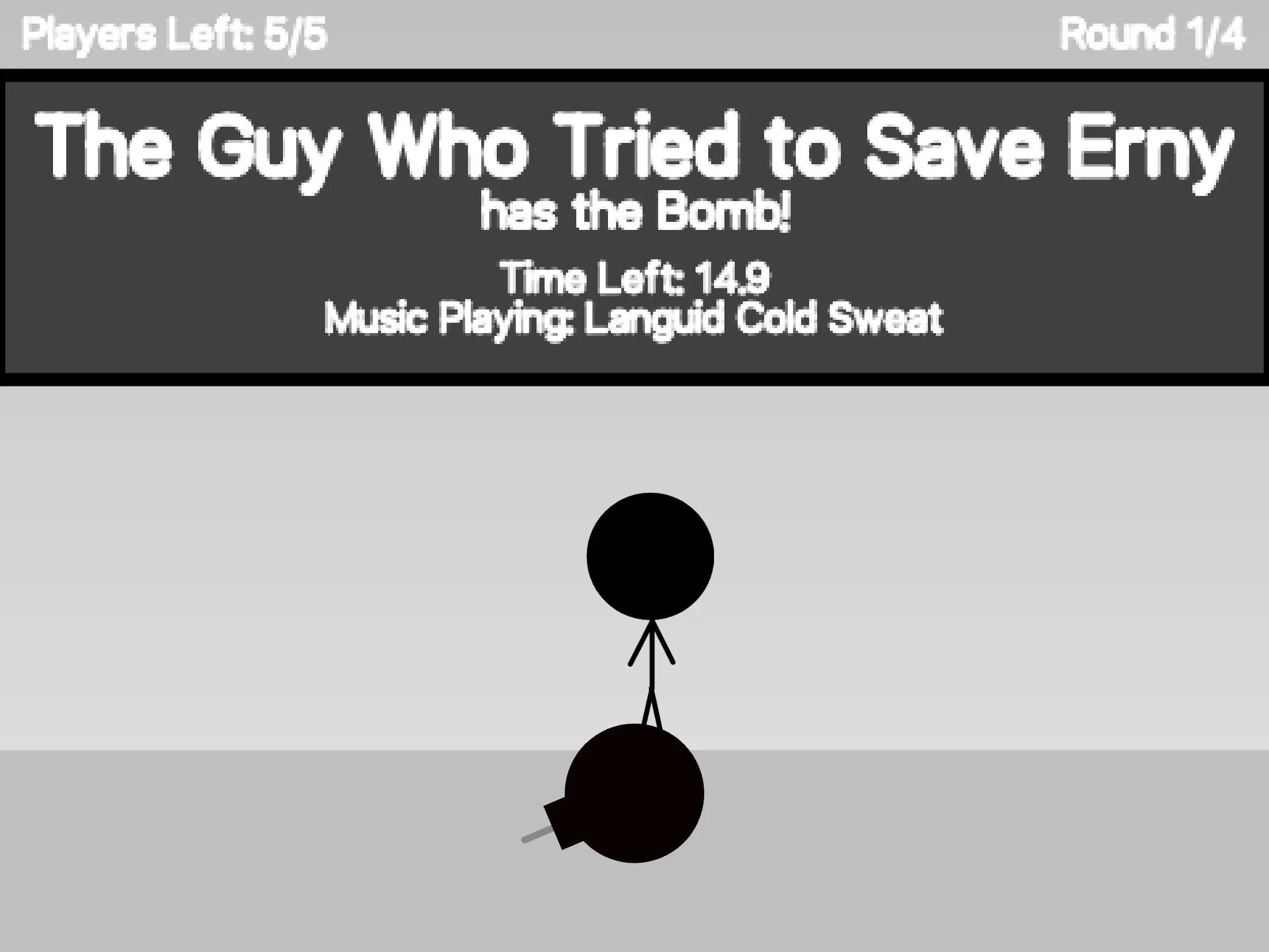 4 Game Screenshots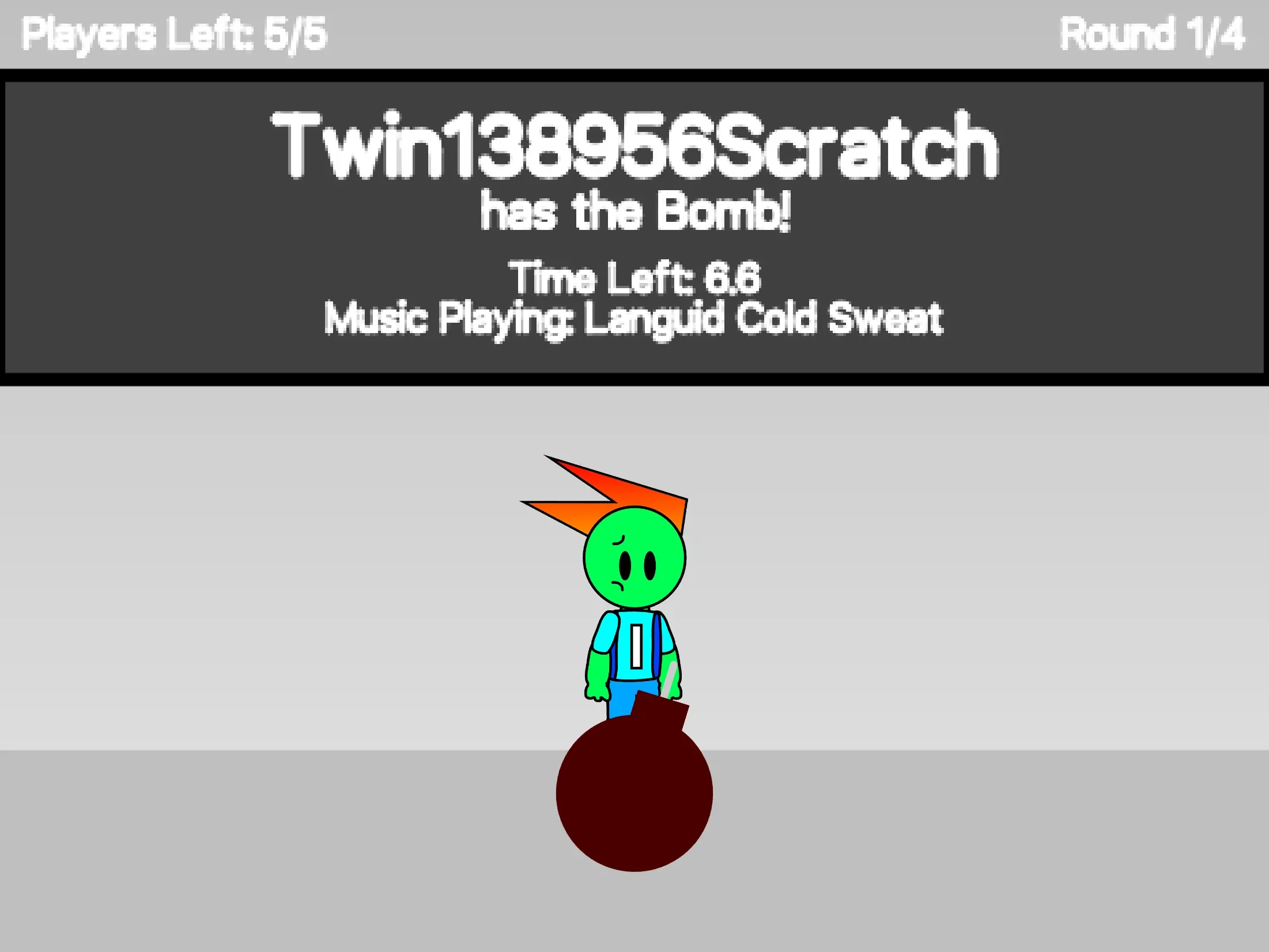
Five Contestants in a Six-Player Slot
The mismatch between the title and the gameplay becomes obvious as soon as a match begins. The interface displays "Players Left 5/5" and sets up four elimination rounds rather than the five required for a true six-person match. The active roster consists of Twin138956Scratch, Paul, Erny, Amir, and The Guy Who Tried to Save Erny.
A sixth character, Pico, exists inside the project assets complete with idle, throwing, shocked, knockout, and winning costumes. However, Pico is never hooked up to the main event scripts. He cannot receive the bomb, is omitted from the turn order, and is ignored during elimination and victory checks. Until Pico or another contestant is integrated into the code, the unfinished tag attached to community listings remains accurate.
Automated Bomb-Passing Mechanics
Watching a match unfold requires zero player input. There are no keyboard controls, quick-time events, or strategic choices to make. Instead, the project acts as a randomized cartoon simulation. At the start of a round, the five active contestants are assigned a random sequence. A bomb drops from above, the initial holder's name is announced, and a visible countdown begins. The system pauses for randomized durations before automatically tossing the explosive to another surviving character.
The interface keeps every stage of the round clear through a structured information panel. Positioned over a flat gray background, a large black panel displays the current bomb holder's name, the time remaining, the number of active contestants, the current round counter, and the title of the active background music track. The bomb itself features detailed motion graphics. As it moves between characters, it follows a curved arc while rotating in mid-air. When the timer gets close to zero, the bomb changes color, pulses with increasing visual intensity, and sounds an alarm effect moments before the final blast.
Eliminations carry distinct character reactions that give each round visual punch. When the timer hits zero, the current holder takes the full force of the explosion. The character sprite instantly swaps to a knocked-out expression, triggers a distinct voice clip, and flies off the edge of the screen. A text box simultaneously generates a randomized exit phrase announcing that the contestant "is out," "blew up," or met another sudden end. This cycle repeats across four rounds until only two contestants remain, triggering an explicit Final Round banner. The ultimate survivor receives a full victory sequence complete with a winning costume, a triumphant voice line, and oversized animated "WINNER!" text across the screen.
Visual Poses and 22-Track Audio Selection
Despite the simple hand-drawn stick figure style, individual contestants are easy to distinguish. Each character features distinct silhouettes and hairstyles, allowing players to track who holds the bomb even without checking the name display on the interface. Each completed character includes a full set of throwing, shocked, knockout, and victory sprites accompanied by custom reaction audio. These expressive assets prevent the simulation from feeling like a generic statistical toss.
Audio variety is another strong point of the presentation. The project includes a randomized library of 22 music tracks, selecting one track at the start of each match and listing its title on the status board. Players might hear selections such as "Lazy Day Lollygag," "Heartbeat," "Pretender," "Balloon Boppers," or "Slow and Steady." Because track selection, turn order, pass timing, elimination messages, and round outcomes are all driven by random variables, repeated watches remain entertaining.
Spectator Appeal and Replay Limits
At the same time, the complete lack of direct player interaction establishes a clear boundary on its long-term replay value. You cannot select a main character, control pass directions, or attempt last-second throws. For viewers exploring animated Scratch elimination brackets on Fortcade, the appeal relies entirely on sitting back and watching character reactions play out across unpredictable match outcomes. Fixing Pico's logic scripts would deliver the advertised six-player count, and adding basic player controls—such as manual passing or character selection—would turn this expressive spectator project into a fully fledged interactive game.