A spring pad flashes beneath a crowded arena floor, catching one of 62 wandering figures and launching them toward the ceiling. Competitors tumble into one another, launch values climb, rotating power-ups drop onto the stage, and the dense crowd slowly thins out. AY In Springy Of DOOM! (The Fun Show Party) (62 Players) turns that physical chain reaction into an automated elimination spectacle.
Rather than controlling a fighter directly, players act as spectators watching an ensemble cast move independently. Created by @Keyethewizard44, the simulation relies on automated movement and random trap placement to generate constant collisions. While the lack of direct movement controls distances it from traditional action titles, the escalating momentum of its elimination rules gives the match a distinct structural arc.
 3 Game Screenshots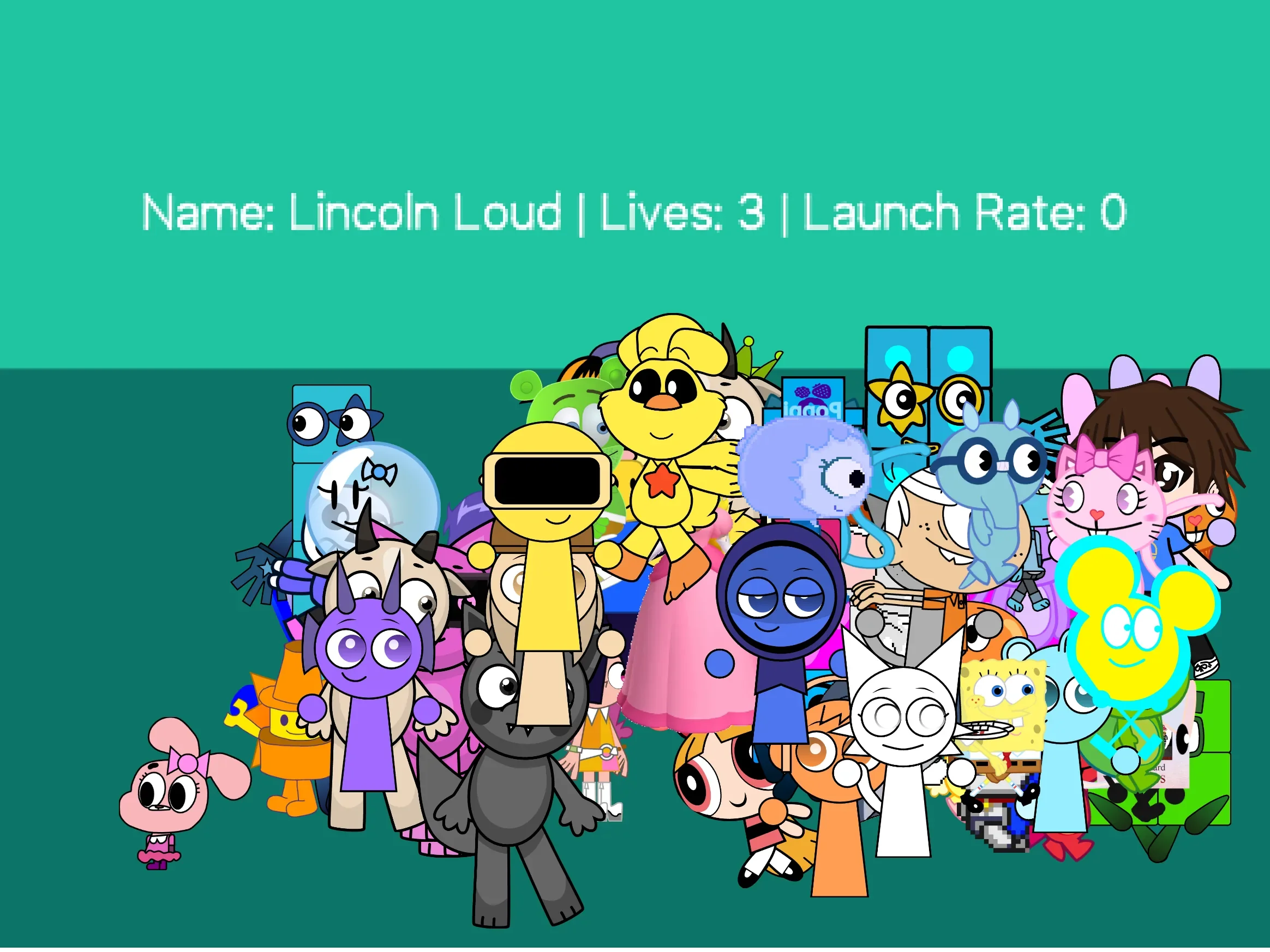
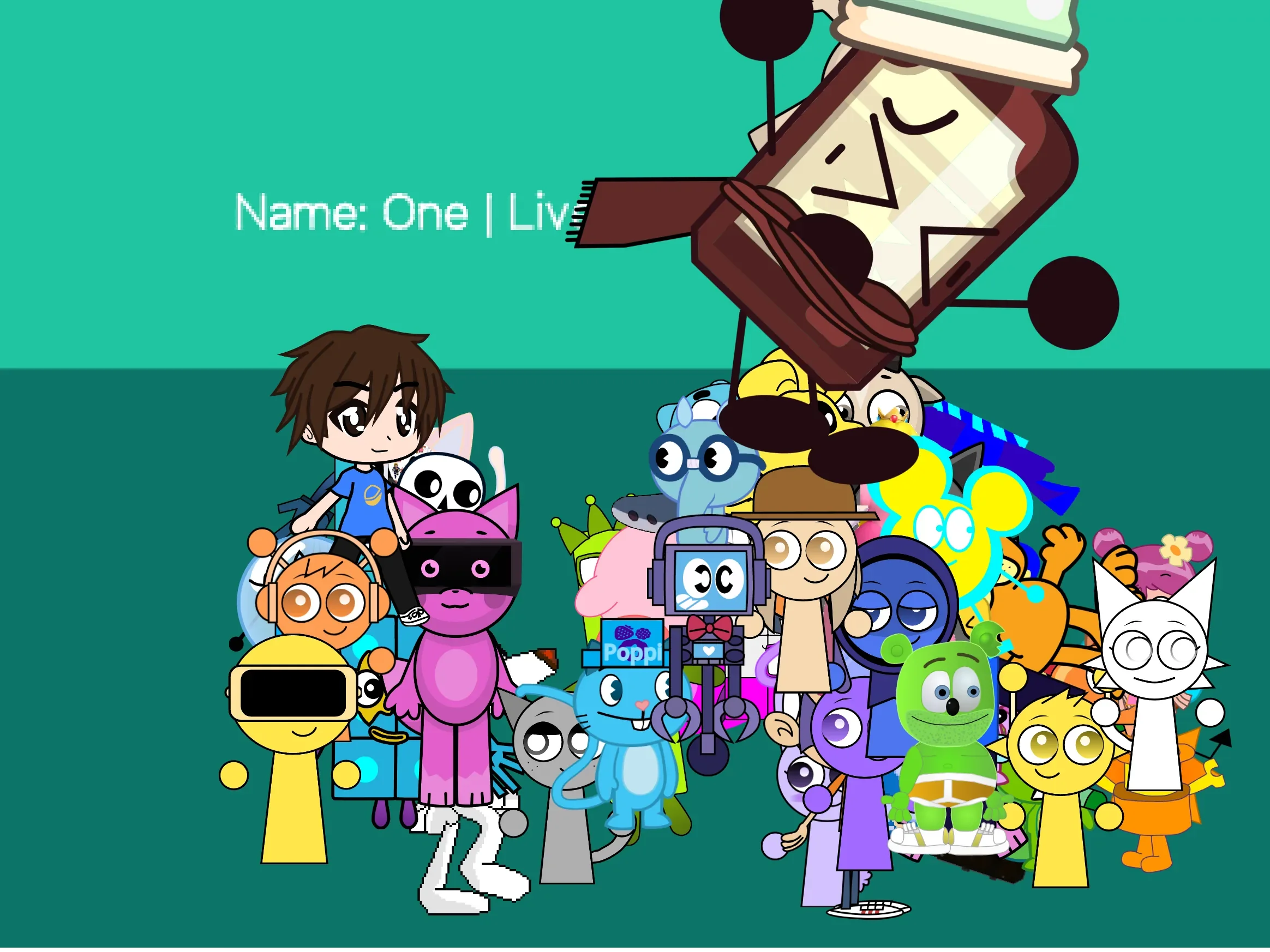
Escalating Launch Mechanics and Arena Dynamics
Every match begins with 62 competitors scattered across a compact playing field. Each contestant starts with three lives and a Launch Rate set to zero. Characters walk continuously, frequently overlapping and bunching together due to the dense population within a constrained space.
Springy pads materialize at random coordinates and vanish after a short delay. Walking onto an active spring propels a character upward and increments their personal Launch Rate by roughly three to five points. This metric is strictly cumulative. As a survivor suffers repeated launches, their Launch Rate keeps climbing, ensuring that even a character with full lives becomes far more prone to extreme launches later in the match.
When a launched character lands back on the floor, they execute a falling animation before standing up and resuming their path. If the force of a launch propels a contestant beyond the top boundary of the screen, a knockout sequence triggers. The character may fly directly into the foreground, dissolve into a bright twinkle, or disappear in an explosion. This boundary breach costs the character one life, triggers a respawn, and resets their Launch Rate to zero. Once a character loses all three lives, they are eliminated permanently.
This mechanic fundamentally alters the pacing of a run. What begins as an unreadable mass of overlapping sprites gradually clarifies into a readable arena as eliminations mount. Standard runs last roughly nine minutes, though random movement and spring generation produce varying elimination orders. There is no victory podium or final celebration; the simulation continues until the final survivor loses their remaining lives, at which point a prompt announces "Game Over" and halts all activity.
Crossover Roster and Inspection Features
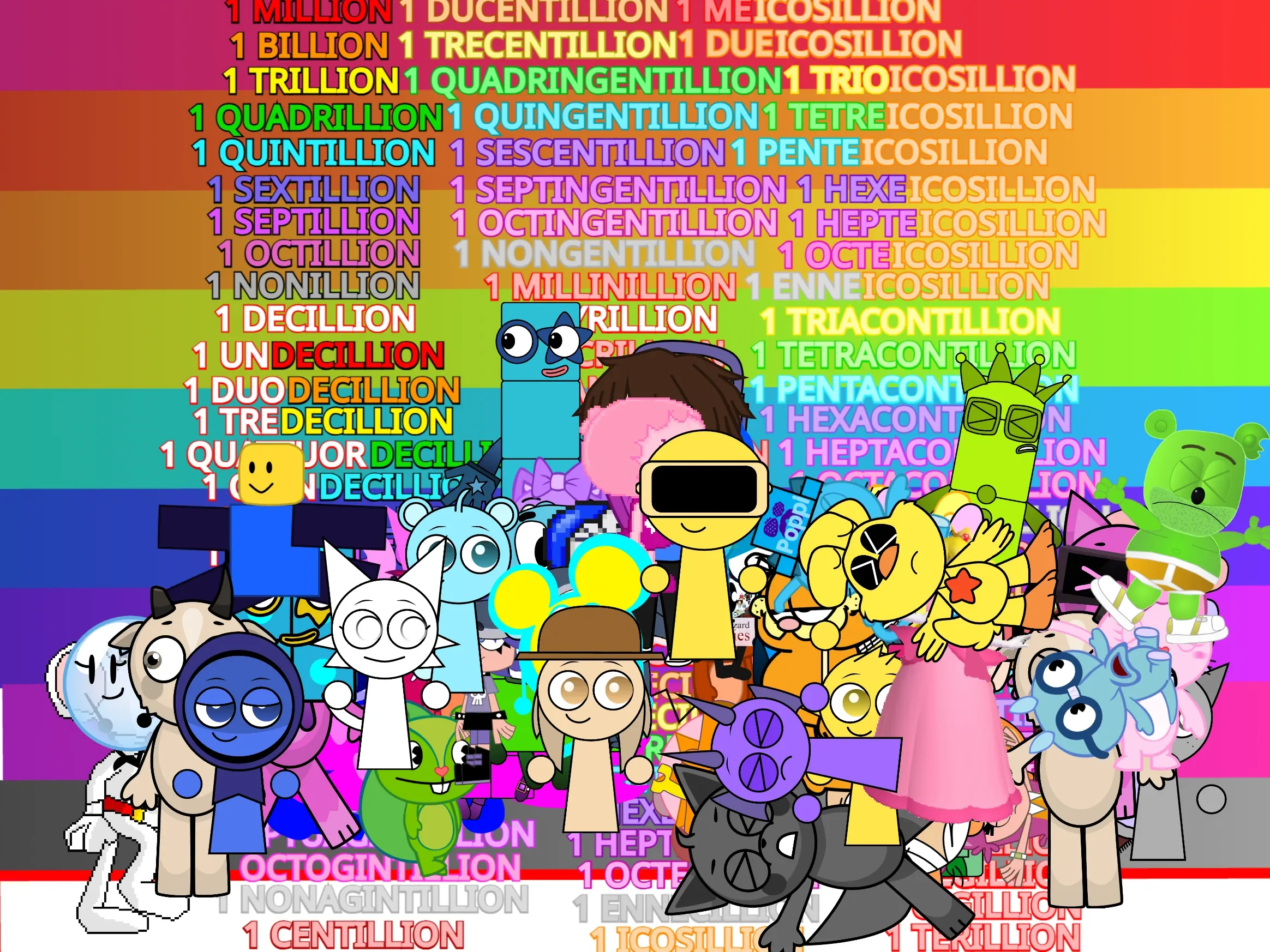
The 62-character roster serves as the game's primary focal point, drawing from established media and online creations. The lineup includes Fandroid, Kirby, Garfield, SpongeBob, Princess Peach, WALL-E, Doraemon, Darwin, Gumball, Blossom, Sans, Danger Mouse, Lincoln Loud, Four, Five, Robloxian, Jevin, Wenda, Garnold, and KeyeTheWizard. While everyone follows identical survival physics, custom walking frames, falling poses, recovery animations, knockout visuals, and individualized voice clips give members of the cast visual distinction.
Because no character possesses special attributes or selectable strategies, their movement follows uniform randomized routines. Players track individual competitors by hovering the mouse pointer over a character, which summons a pop-up display detailing their name, remaining lives, and current Launch Rate. During the opening minutes, however, heavy character overlapping often causes several inspection bubbles to render on top of each other, obscuring both the immediate action and the background interface.
Power-Up Spawns and Stage Presentation
Every five seconds, a rotating power-up item appears at a random location on the stage. Touching an item activates one of seven possible effects, including Launch Rate reductions, size scaling (growing larger or shrinking smaller), electrical shocks, instant teleports, forced upwards launches, or brief periods of complete invisibility. Because movement cannot be controlled manually, characters wander into these items purely by chance, making power-ups an unpredictable hazard or unexpected relief.
Visual settings shift between matches, selecting from five background themes. Matches can feature a bright rainbow-striped floor accented with white geometric shapes or a calmer teal-colored arena. Audio design supports the visual collision with energetic soundtrack rotation alongside distinct sound effects for minor stumbles, heavy launches, respawns, power-up collections, and screen-shattering knockouts.
Player inputs are minimal and focus exclusively on starting the simulation and inspecting contestants:
| Action | Input | Result |
|---|---|---|
| Start or restart match | Click the green flag | Resets match state and initializes all 62 characters |
| Inspect contestant | Hover mouse over character | Displays character name, remaining lives, and Launch Rate |
| End match early | Click the red stop button | Halts all automated character movement and timers |
On Fortcade, this structure emphasizes observation over direct execution. Players cannot save a targeted favorite, divert a character away from an incoming spring, or aim for helpful items. The entire outcome is dictated by automated pathing and environmental spawns.
The appeal of the match rests entirely on watching a crowded arena gradually clear out until only a handful of high-velocity survivors remain. While the absence of manual controls and the sudden end screen limit direct interaction, the compounding launch math and varied knockout presentations turn AY In Springy Of DOOM! (The Fun Show Party) (62 Players) into an entertaining automated survival showcase.