
When an automated social-deduction match breaks its own rules to protect a single character, the usual suspense of finding a killer turns into physical comedy. AY In Sprunki Who Is The Imposter? but Oren never gets eliminated takes a familiar Sprunki elimination setup and anchors it around a deliberate rule break: no matter how many times the game marks him as the next victim or points an accusation in his direction, Oren cannot be removed from the field.
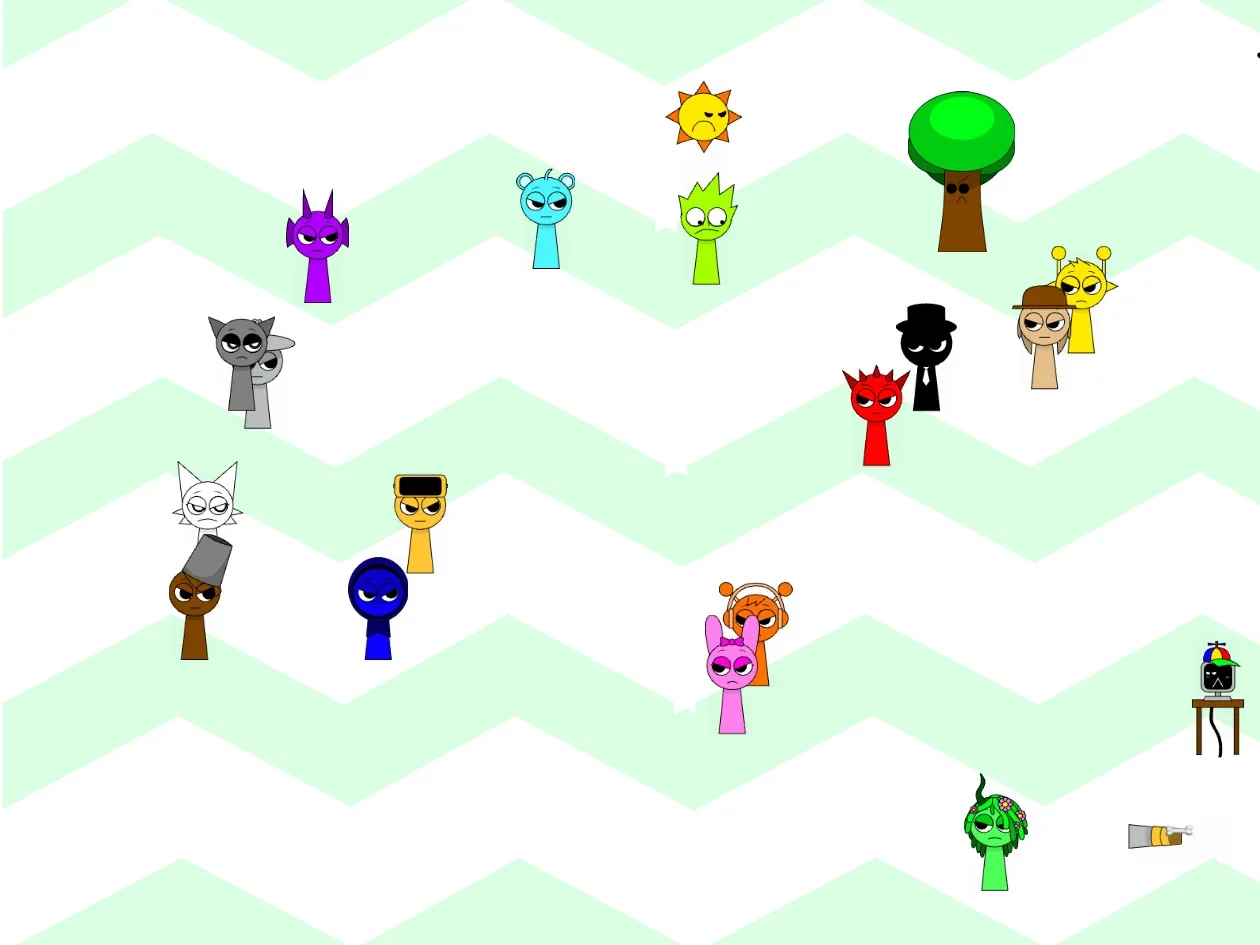
Instead of offering a traditional deduction puzzle where players analyze clues, cast votes, or move sprites across a map, this release created by @OrenTheOrangeSprunki operates as a self-running spectator simulation. Pressing the green flag sets twenty cast members loose in a pale mint zigzag room, where automated movement scripts drive collisions, speech-bubble arguments, and sudden eliminations.
 4 Game Screenshots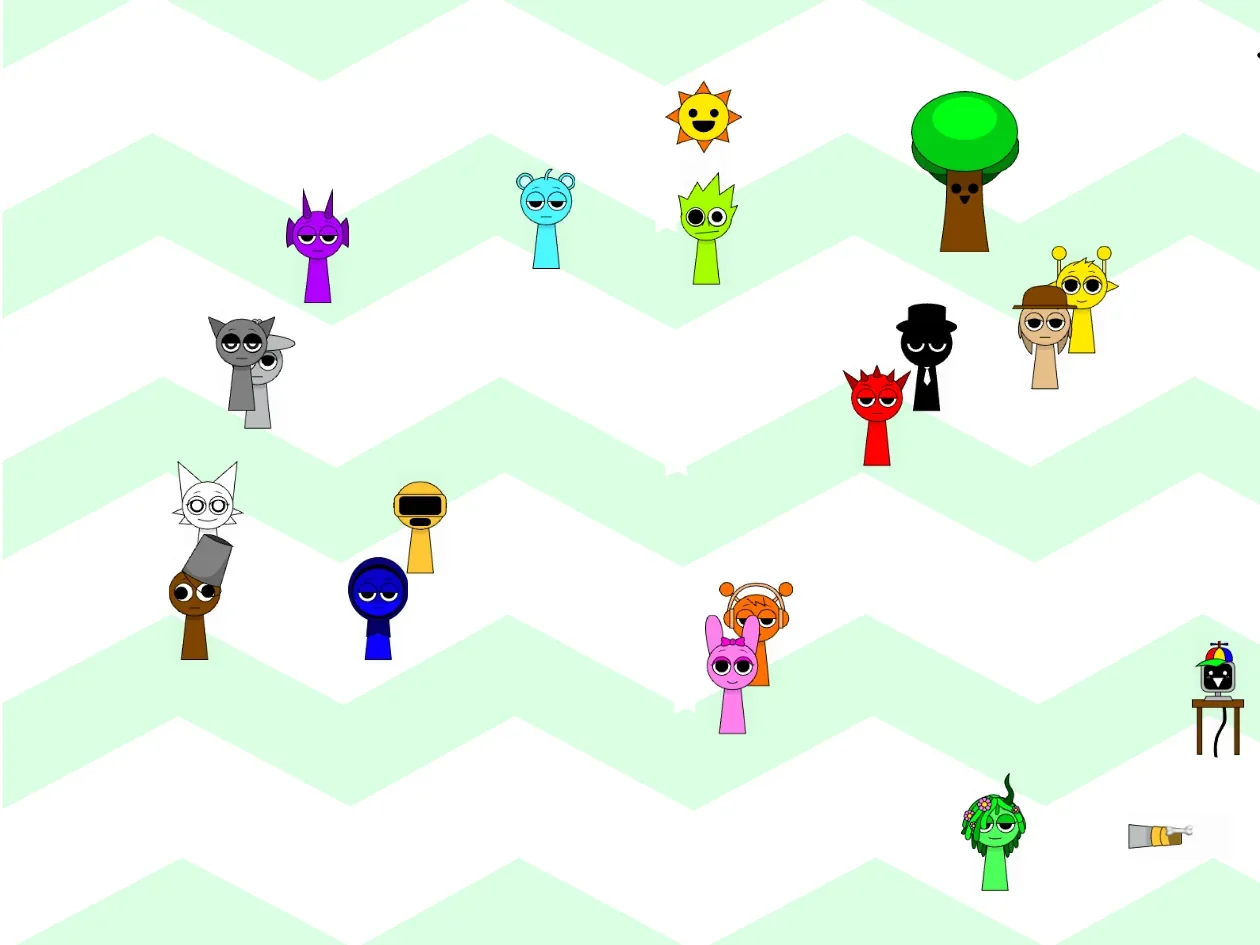
The Mechanics of an Unkillable Contestant
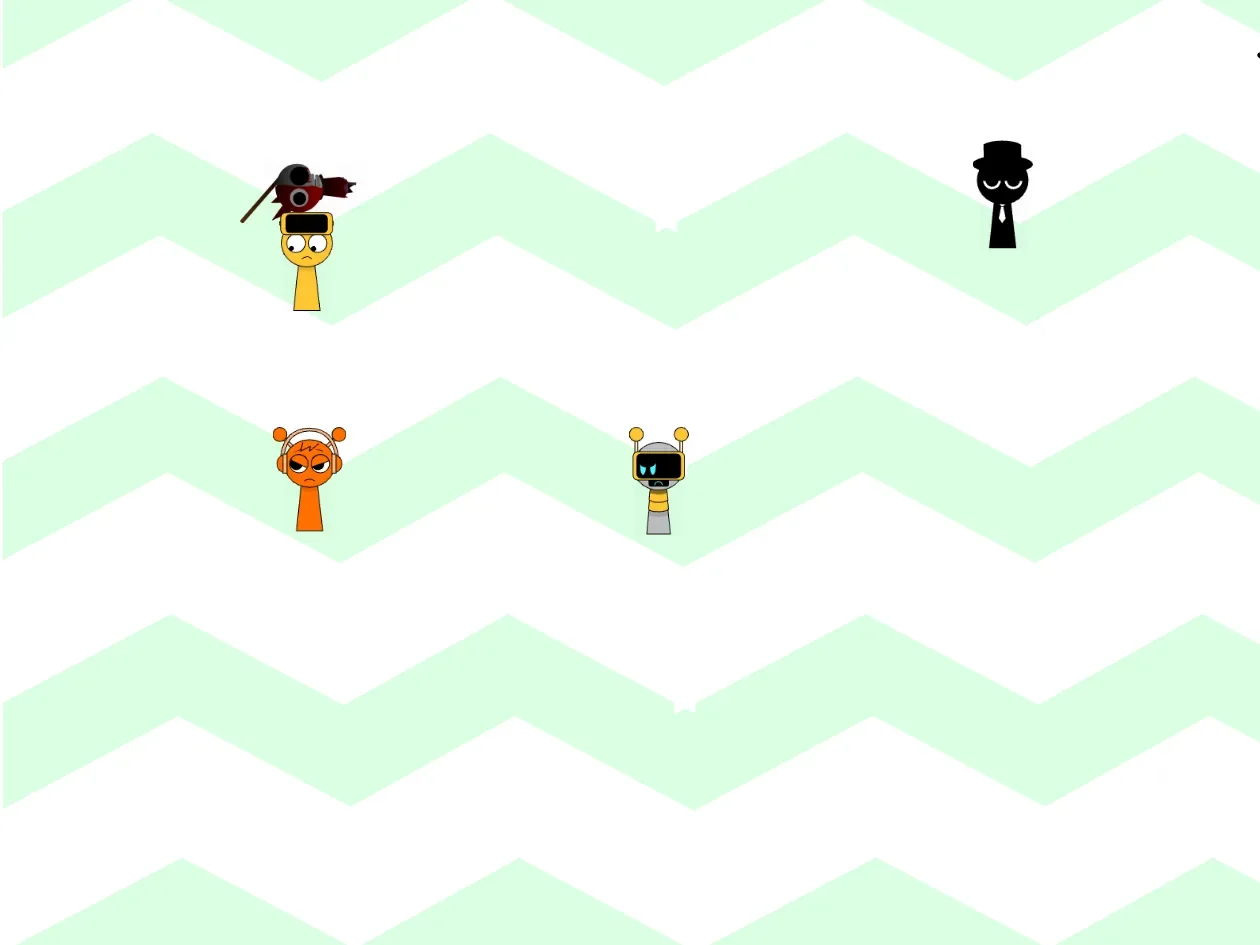
The central premise alters the rhythm of the original impostor framework. In standard rounds, characters removed after a kill event disappear from the active roster. When the underlying logic targets Oren, however, the sprite triggers specific survival routines. He switches into a "Not Dead" costume state, fires off dialogue bubbles like "Haha, i did not die" or "Huh, I did not die," and openly boasts that none of the other contestants can eliminate him because he is invincible.
Because the target never leaves, the match shifts focus from guessing who will survive to watching how many times the system attempts—and fails—to wipe him out. The surrounding cast provides the crowd energy necessary for the gag to land. The roster features twenty named characters: Oren, Raddy, Clukr, Fun Bot, Vineria, Gray, Brud, Garnold, OWAKCX, Sky, Mr. Sun, Durple, Mr. Tree, Simon, Tunner, Mr. Fun Computer, Wenda, Pinki, Jevin, and Black. Specific character names preserve the distinct spelling conventions of this release, such as Clukr, Vineria, and Fun Bot.
Visible Killer Labels and Match Flow
Mystery is explicitly removed from the top layer of play by a visible killerPlayer monitor in the upper-left corner of the stage. Rather than hiding the impostor's identity, the game continuously displays whoever holds the role, such as killerPlayer Durple or killerPlayer Pinki. When a match resets, the setup rearranges the cast across the mint-colored room, assigns fresh roles, and triggers immediate visual reactions, such as speech bubbles declaring "Oh no, not Mr. Tree" when Mr. Tree is shown as a victim.
This clear state reporting keeps the pace fast, though early seconds of a round can become visually crowded as twenty small sprites overlap in the center. While the top-left label clarifies who holds the active role, tracking individual sprite collisions requires careful attention to the speech bubbles and sudden voice-like audio lines that accompany each incident.
PowerUp Objects and Dynamic Stage Modifiers
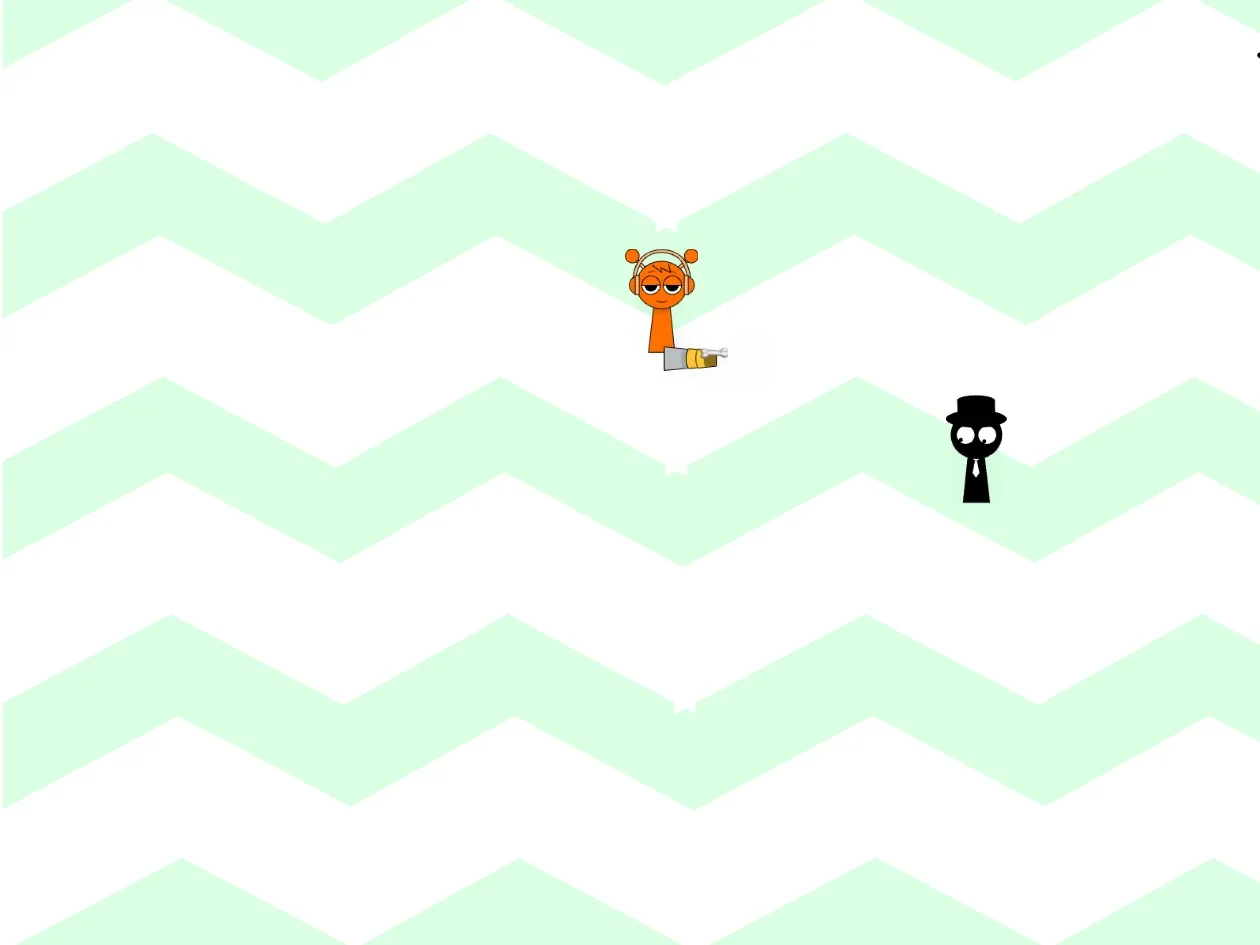
To keep the self-running match from feeling like a static collision loop, a dedicated PowerUp object moves through the room, offering four distinct status effects when triggered by a character:
- Extra Light: Dims the stage into a dark spotlight view, restricting room visibility while the simulation continues.
- Mushroom: Instantly enlarges the character that touches it, making them physically prominent in the crowded room.
- Swap Roles: Reassigns the killer designation on the spot to whichever sprite triggered the item, instantly shifting match dynamics.
- Death: Causes an immediate elimination without requiring a direct killer collision, temporarily changing the upper-left monitor display to
N/A.
These power-ups add unexpected spikes of visual texture. An Extra Light trigger can plunge an entire match into darkness mid-argument, while Swap Roles can instantly turn an accused victim into the active killer. These automated variables ensure that viewers browsing catalog titles on Fortcade can enjoy a constantly shifting slapstick showcase rather than a predictable looping animation.
Presentation and Interaction Limits
The visual presentation relies on clean vector sprites and clear text callouts. The pale green zigzag floor provides strong color contrast against the bright cast members, though heavy sprite overlapping in crowded rounds can briefly obscure who triggered a specific event. Text-to-speech audio, voice-like lines, impact sound effects, and dramatic elimination stingers emphasize each kill and reaction. Players sensitive to abrupt, loud sound effects should adjust their master volume before starting a match.
Interactivity is strictly limited by design. There are no direct character movement keys, manual voting menus, character-click choices, or branching dialogue paths. Player input begins and ends with starting or restarting the simulation using the green flag. Understanding this restraint prevents confusion for players seeking a hands-on deduction game; this title is built strictly as an automated cartoon match centered on a single indestructible joke.




![AY in Tick Drop! [MY uae_flag] game cover](https://fortcade.com/wp-content/uploads/2026/10/ay-in-tick-drop-my-uae-flag-225x300.webp)