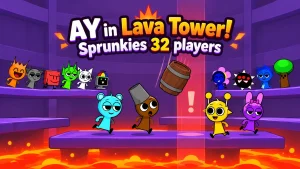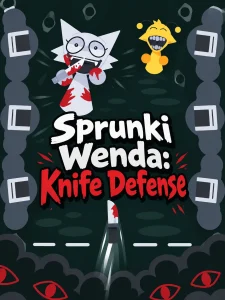
Starting AY In Sprunki Who Is The Imposter? presents a complete automated spectator showcase rather than an active multiplayer investigation. Despite server-style labeling in its raw project description, launching the game immediately initiates a self-running elimination tournament. Twenty distinct Sprunki characters wander across a single room until an accidental collision triggers an attack, followed by an automated trial where contestants voice generated accusations.
Because the player has no movement keys, voting buttons, dialogue choices, or protective actions, the session functions entirely as a randomized cartoon. Viewer involvement is strictly passive: the simulation handles movement, item collection, suspect selection, and eliminations automatically. Enjoying the experience requires accepting it as an unpredictable animated elimination show rather than an interactive social-deduction game.
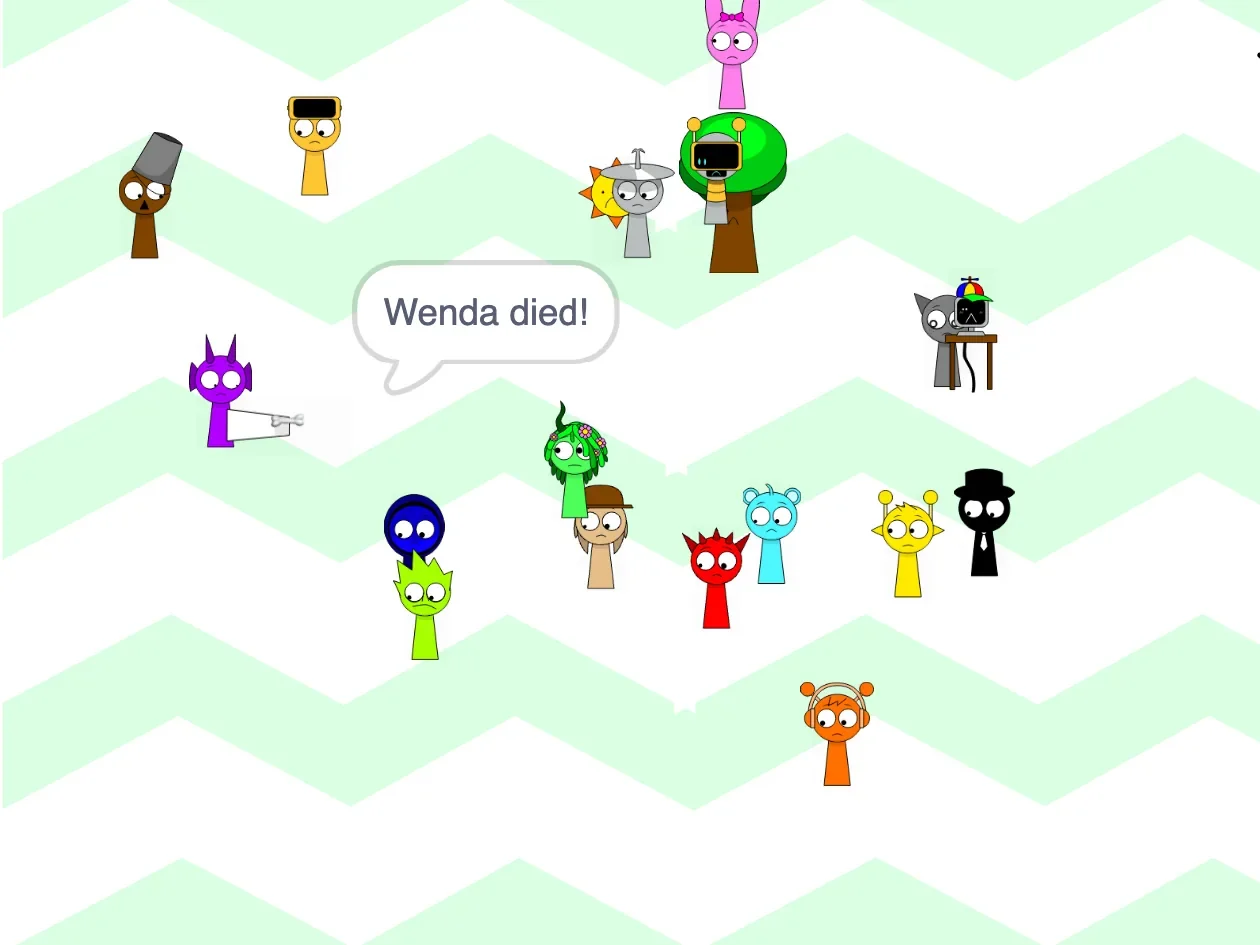 3 Game Screenshots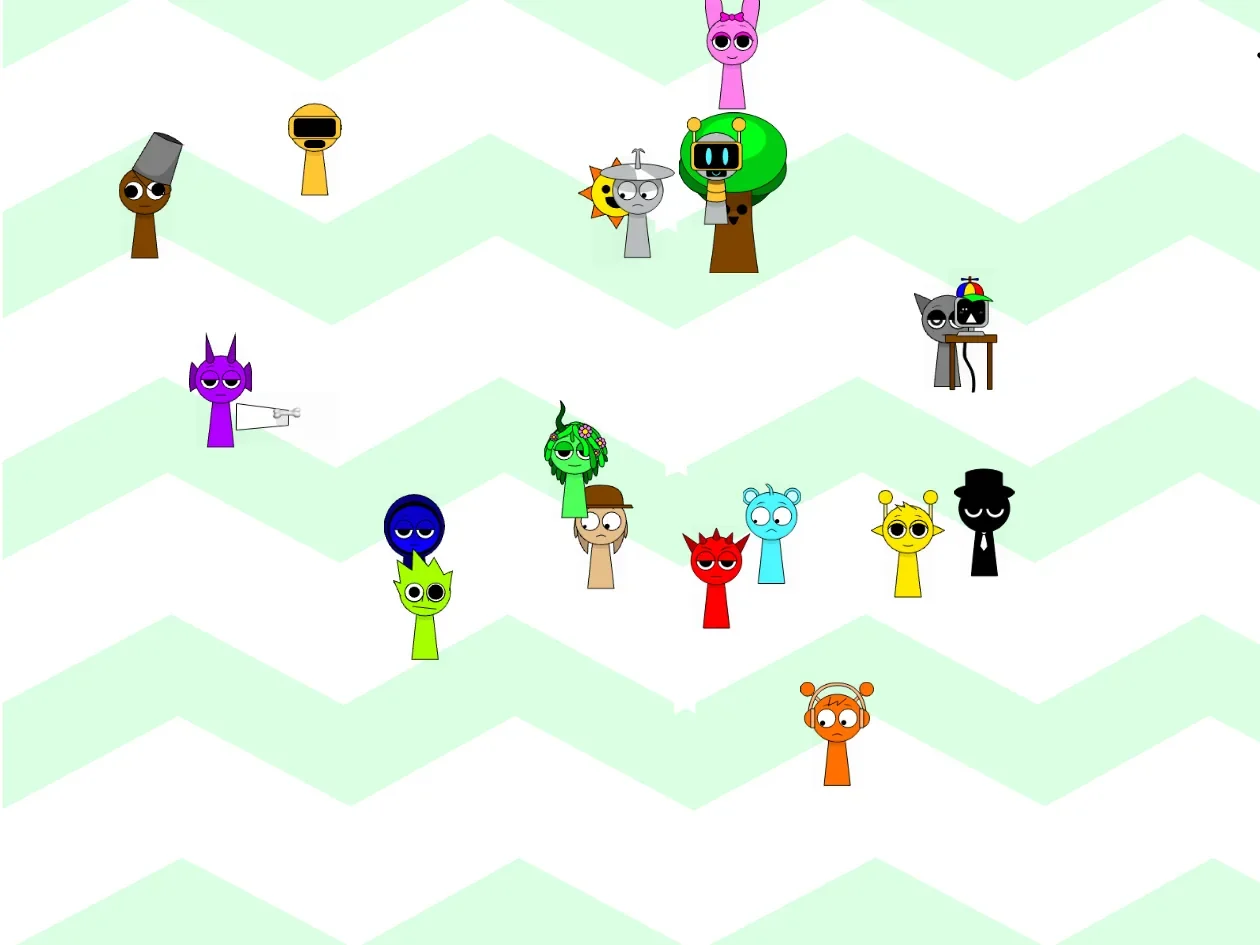
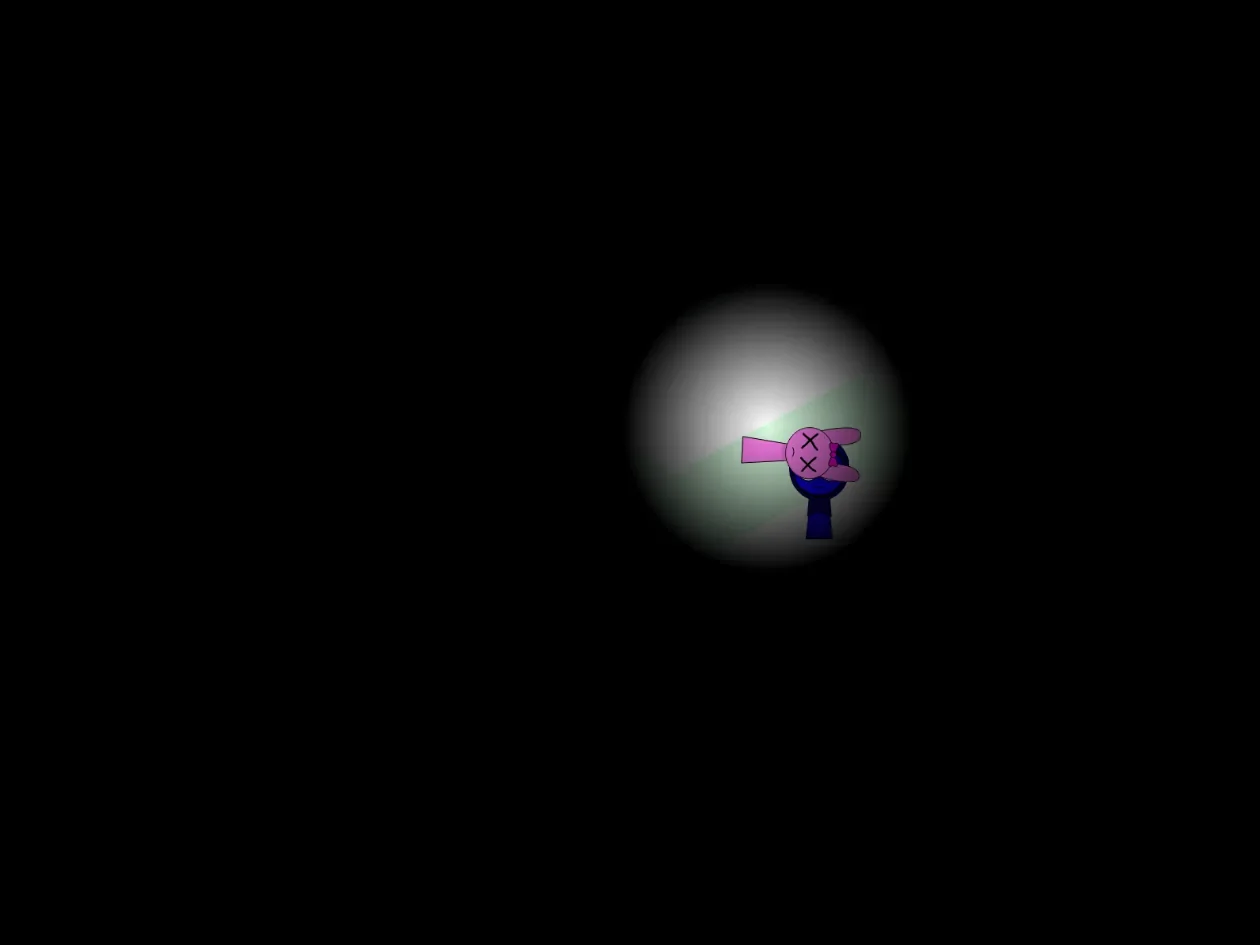
Automated Accusations and Character Animations
The primary appeal of the match rests on its broad 20-character cast: Oren, Raddy, Clukr, Fun Bot, Vineria, Gray, Brud, Garnold, OWAKCX, Sky, Mr. Sun, Durple, Mr. Tree, Simon, Tunner, Mr. Fun Computer, Wenda, Pinki, Jevin, and Black. Each character features dedicated art states for standing, walking, surprised reactions, angry outbursts, defeat poses, and offensive maneuvers. Specific figures like Mr. Sun, Mr. Tree, and Mr. Fun Computer contain additional movement and talking frames, while Wenda, Pinki, and Vineria display customized facial reactions during dramatic confrontations.
Following each elimination, living survivors gather to debate who committed the act. Robotic text-to-speech voices read out generated dialogue lines as characters take turns pointing fingers. The targeted suspect routinely responds by denying responsibility and explicitly naming the true killer, though some voting phases are skipped entirely without a trial. Because these exchanges follow automated scripts rather than circumstantial evidence, the trial logic rarely forms a coherent mystery.
Suspense is further reduced by a variable monitor at the top of the screen that constantly reveals the designated killer's identity. Creator @maximus_2115 focuses the game on slapstick animated interactions rather than hidden-role tension. Watching the trial unfold feels like viewing a stylized web short where recognized characters blurt out absurd claims before being ejected from the arena.
Power-Up Spawns and Slapstick Knockouts
Four items spawn periodically throughout the room, altering the trajectory of each match when contestants walk into them:
- Extra Light: Temporarily broadens the field of view for whichever character currently holds the camera's focus.
- Mushroom: Instantly inflates the size of the character who steps onto it.
- Swap Roles: Reassigns the killer role directly to the character who picks up the item.
- Death: Immediately eliminates its collector, converting them into the latest victim without waiting for an attack collision.
Among these pickups, Swap Roles creates the most sudden shifts in narrative progression. A survivor who spent several rounds fleeing from danger can instantly become the active killer upon touching the item. Meanwhile, the Death item forces immediate eliminations that bypass normal collision requirements, maintaining steady turnover among the surviving roster.
Eliminations emphasize physical comedy and abrupt audio design rather than realistic violence. Ejected characters are launched across the frame, spun wildly, flattened on the floor, or swept up in sudden explosion-like particle bursts accompanied by screen-cracking graphic overlays. The accompanying sound library pairs these visuals with sharp glass breaks, heavy thuds, sudden impact noises, and loud jumpscare audio cues that can startle sound-sensitive viewers.
Visual Repetition and Pacing Bottlenecks
The visual layout relies on crisp character sprites set against a simple pale mint zigzag backdrop. Bright character color palettes make it easy to track individual contestants during crowded early-game scrambles, while expressive accusation poses clearly signal when a debate has started. However, the environmental design remains static across the entire eight-minute run, missing opportunities for themed background shifts, hazard areas, or dynamic room expansions.
Pacing issues emerge during the later stages of a match. Each living character waits for a randomized delay before delivering their text-to-speech line. When many characters remain alive, these pause intervals extend the trial phase significantly. As the pool of survivors shrinks, repeated variations of identical accusation patterns slow down the rhythm of the comedy. Evaluating these pacing boundaries alongside broader browser entertainment listed on Fortcade reveals how much structural variety affects passive spectator experiences.
Match Resolution and Final Assessment
The simulation concludes when only one Sprunki character survives the continuous cycle of collisions, power-up triggers, and trials. However, the game lacks a dedicated ending sequence. There are no score summaries, victory podiums, rank screens, or ending animations. The final survivor simply stands motionless on the pale mint background as all background scripts stop running.
The simulation functions best as a randomized animated spectacle for viewers who enjoy seeing familiar Sprunki figures placed in slapstick scenarios. Anyone looking for direct character control, clue gathering, voting systems, or true multiplayer deduction will find the experience lacking, as automated scripts handle every choice and the top monitor openly displays the killer throughout the match.

![AY in Noggin's RL, GL Game Redux [ 40 Players ] game cover](https://fortcade.com/wp-content/uploads/2026/10/ay-in-noggin-s-rl-gl-game-redux-40-players-225x300.webp)