A child-sized explorer steps across a tabletop-style landscape where trees have soft, rounded edges and a winding river splits sandy ground from green grass. In Clay Safari, created by @cclank, ten animals wait in the terrain, water, and treetops, each offering a short animated response and a bilingual vocabulary lesson rather than a traditional survival or combat obstacle.
There are no predators to escape, points to tally, or lives to lose. Progress comes from navigating the miniature space and clicking on its inhabitants: selecting a creature reveals its English name, Chinese text, pinyin, and audio clips while adding a sticker to an exploration handbook.
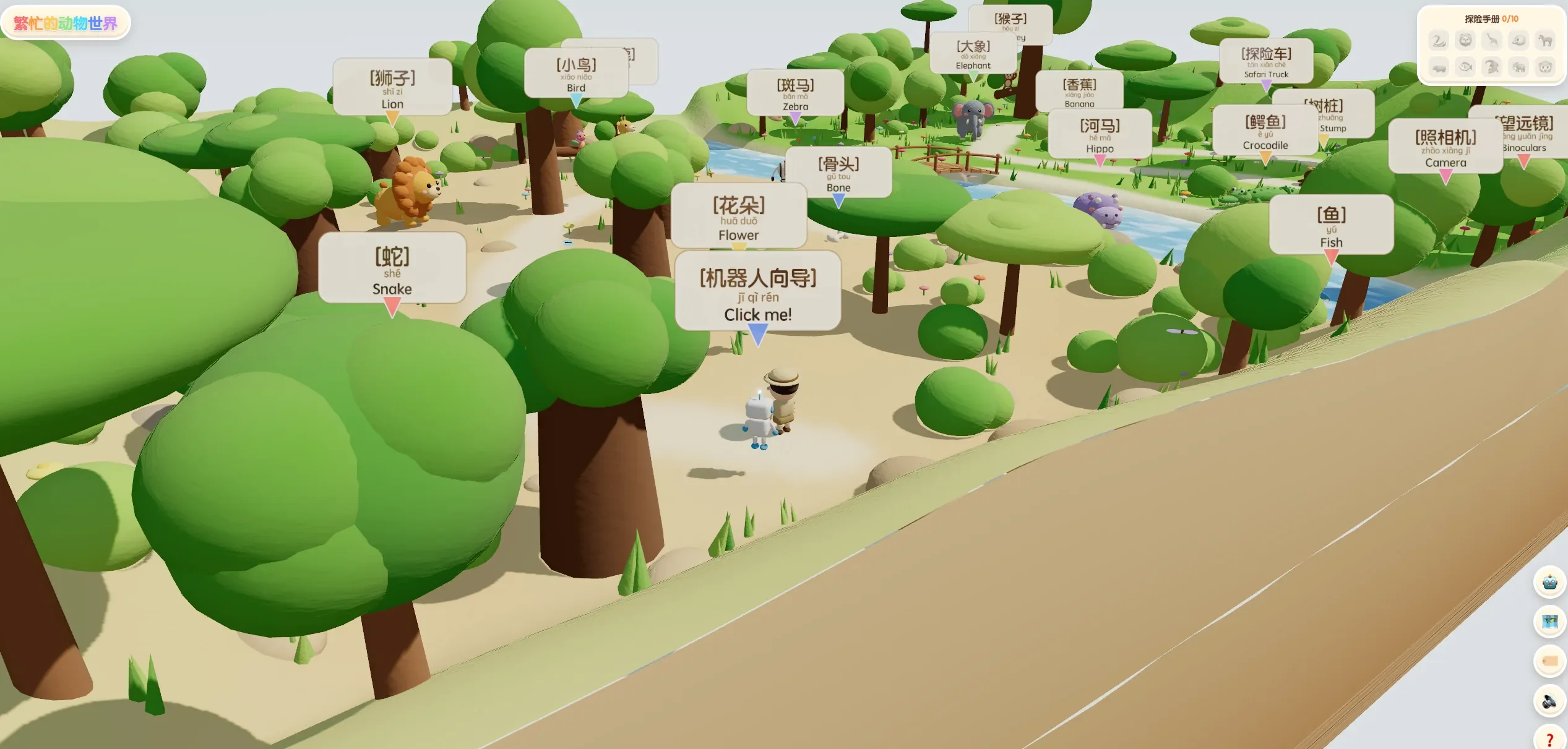 4 Game Screenshots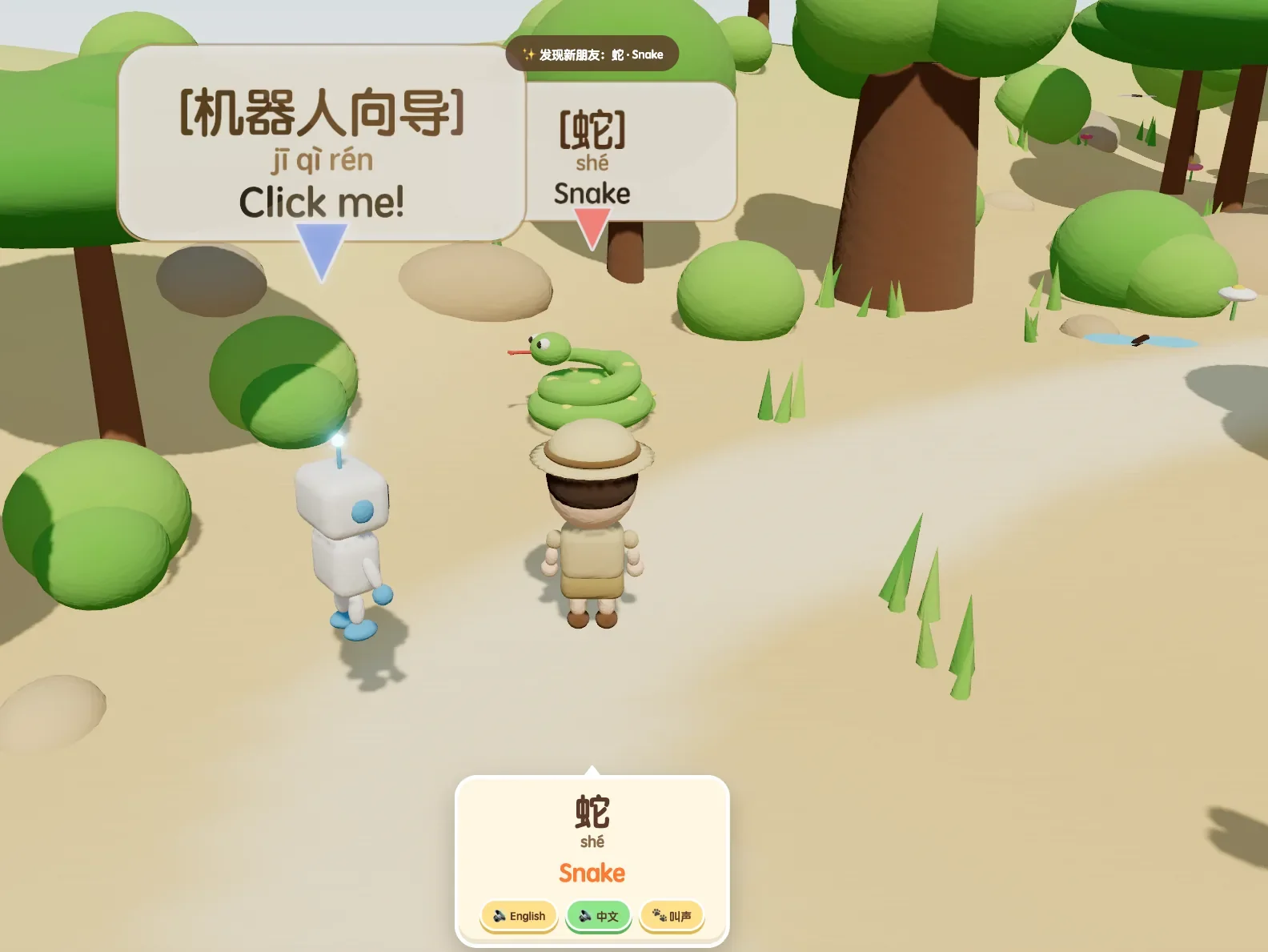
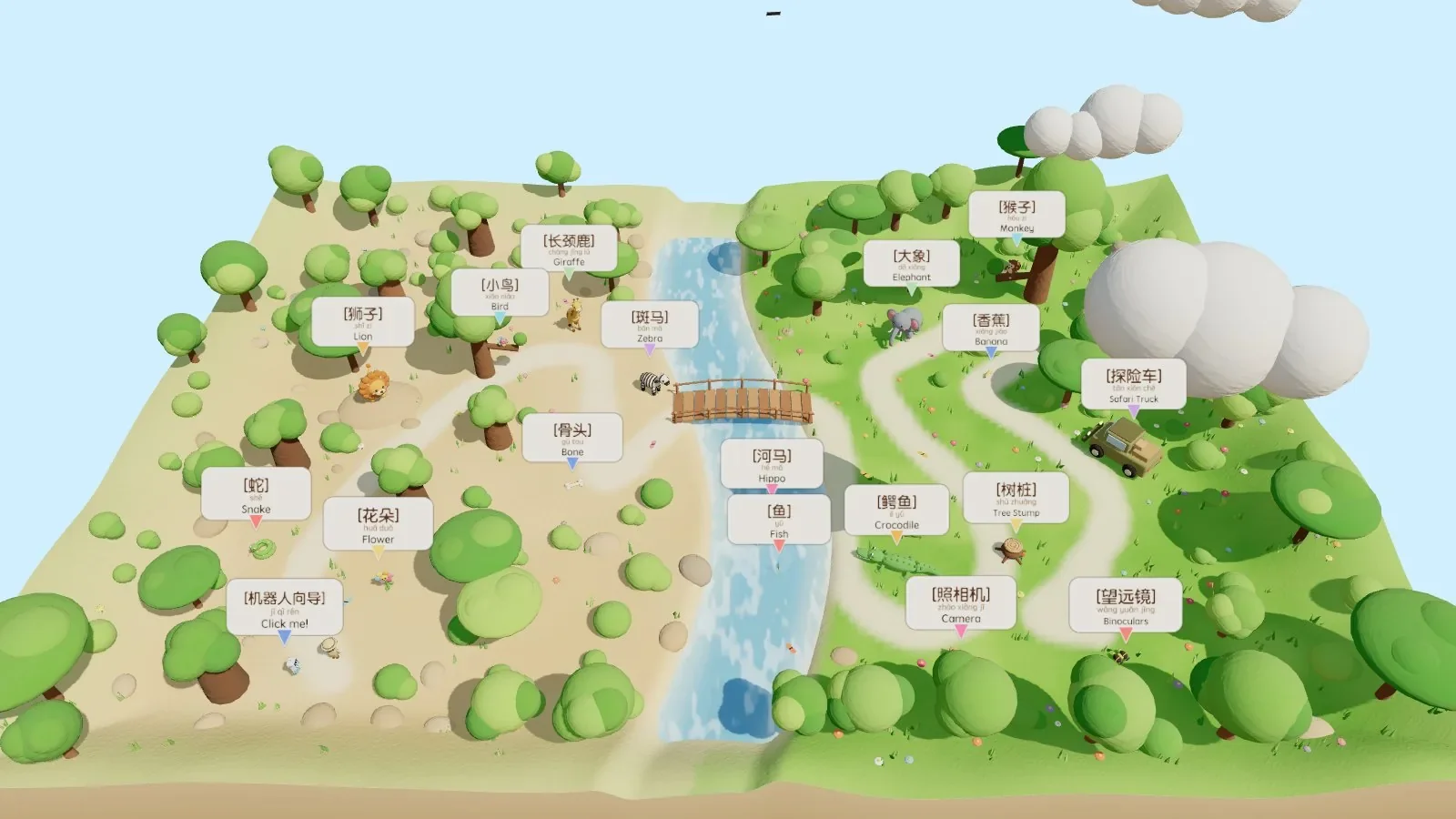
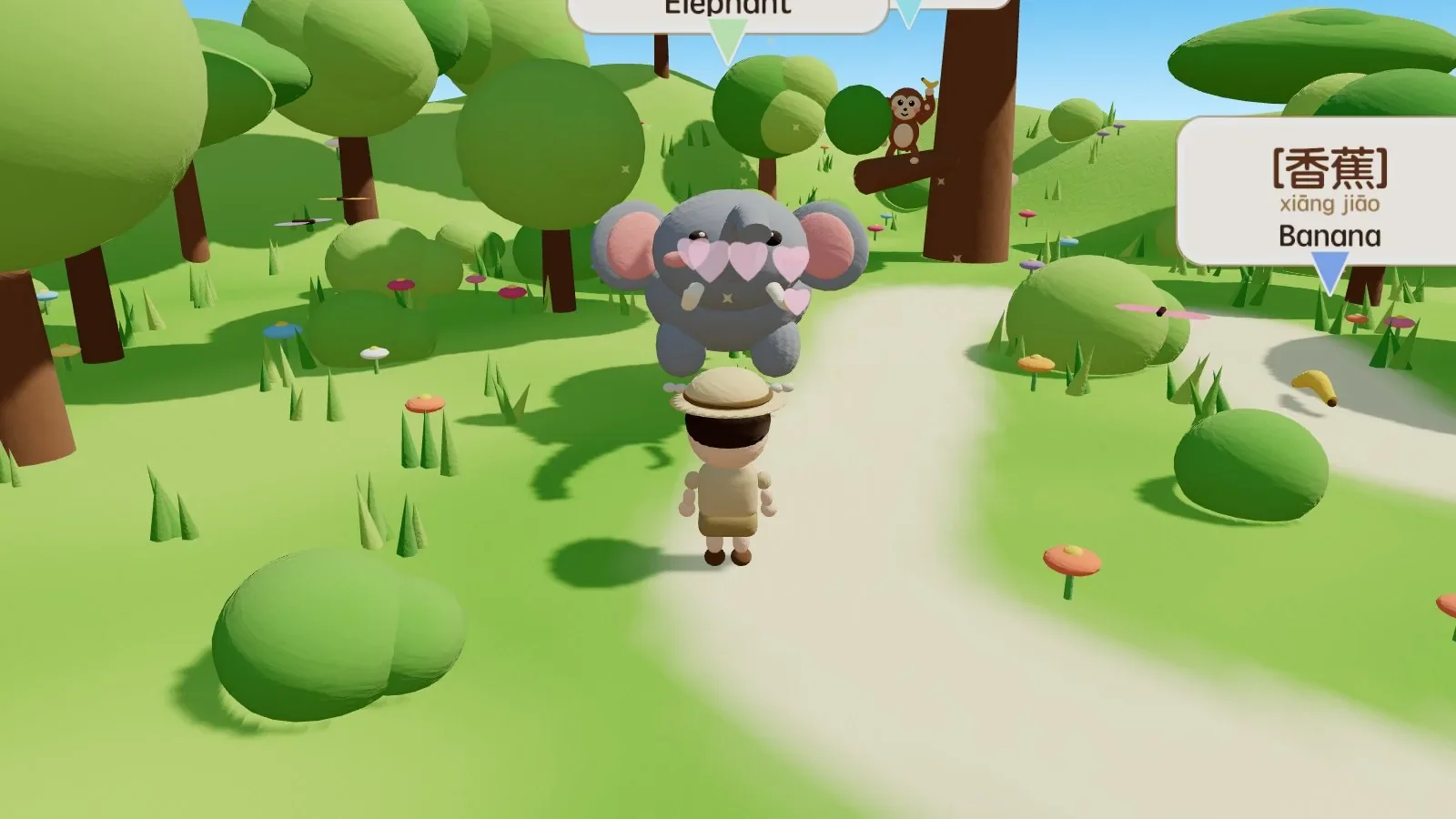
Exploring the Tabletop Landscape
The map is split between sandy and grassy areas by a curving river connected by a wooden bridge. Ten animals inhabit the ground, water, rocks, and trees: a snake, lion, giraffe, bird, zebra, hippo, fish, crocodile, elephant, and monkey. Rounded trees, soft-edged rocks, smiling flowers, and visible clay-like surface textures give the entire map a handmade identity.
Alongside the primary cast, seven vocabulary props sit along the paths: a flower, bone, tree stump, banana, safari truck, camera, and binoculars. Interacting with these props opens the same bilingual cards and animated responses, but only the ten animals advance the completion counter. This distinction keeps the primary goal clear while placing additional vocabulary words naturally throughout the landscape.
Large bilingual labels highlight targets across the terrain. When multiple objects cluster together, these labels can occupy a noticeable portion of the screen. Players can press L or use the screen button to hide or restore the world labels once they are familiar with the map.
Tailored Animations and Guided Navigation
Every animal features a tailored animation upon discovery. Clicking the snake triggers a burst of hearts and sparkles, the elephant raises its trunk and flaps its ears, the crocodile opens its jaw, the bird flies in a short circle, the fish leaps out of the river, and the monkey spins while waving an arm. The card interface presents three audio options: English pronunciation, Chinese pronunciation, and an associated sound effect or animal call.
Players can move manually using standard keyboard inputs, click the ground for automatic pathfinding across valid terrain and over the bridge, or rely on an automated guide. Activating the robot tour sends a floating robot guide to lead the explorer between key viewpoints, introducing animals and props in sequence and updating the handbook automatically.
| Action | Input | Result |
|---|---|---|
| Walk | WASD or arrow keys | Moves the explorer through walkable terrain |
| Move automatically | Click the ground | Sends the explorer toward that location |
| Run | Hold Shift while walking | Increases movement speed |
| Discover something | Click an animal or prop | Plays its reaction and opens a bilingual card |
| Rotate or zoom | Drag or use the mouse wheel | Adjusts the third-person camera |
| Start the tour | Click the robot button or press T | Begins the guided route |
| View the full map | Press M or select the map button | Switches to an overhead view |
| Toggle labels | Press L or select the label button | Hides or restores bilingual world labels |
Learning Structure, Completion, and Limits
Every discovery follows a precise sequence: the player identifies the target, hears its English name, hears a generated call or sound effect, and then hears the Chinese name. Pinyin remains displayed on the card to support word recognition and pronunciation practice alongside picture matching.
Finding all ten animals fills the handbook from 0/10 to 10/10 and triggers a confetti celebration confirming that all animal friends have been located. The celebration overlay can be dismissed to allow continued free movement across the map without a failure state or forced reset.
The game does not include persistent saves across reloads, secret animals, branching endings, scoring systems, or interactive quizzes. Features like an animal-sound quiz, extra languages, and a day-night cycle remain unreleased ideas rather than active systems. Exploring interactive scenes on Fortcade that rely on direct spatial learning shows how simple movement and clear feedback can create an accessible educational space, provided players expect a short recognition exercise rather than a long-form adventure.