Choosing between a cheerful cartoon creature and its pitch-black, stretched horror counterpart takes only a single click, yet it forms the core rhythm of I BECAME A DOCTOR FOR THE SPRUNKIS. Despite a promotional title that suggests a medical clinic simulation, this browser game—originally built on the Left or Right: Spranki Beats framework—is actually a four-mode minigame collection centered on visual comparisons, audio challenges, and cosmetic character styling.
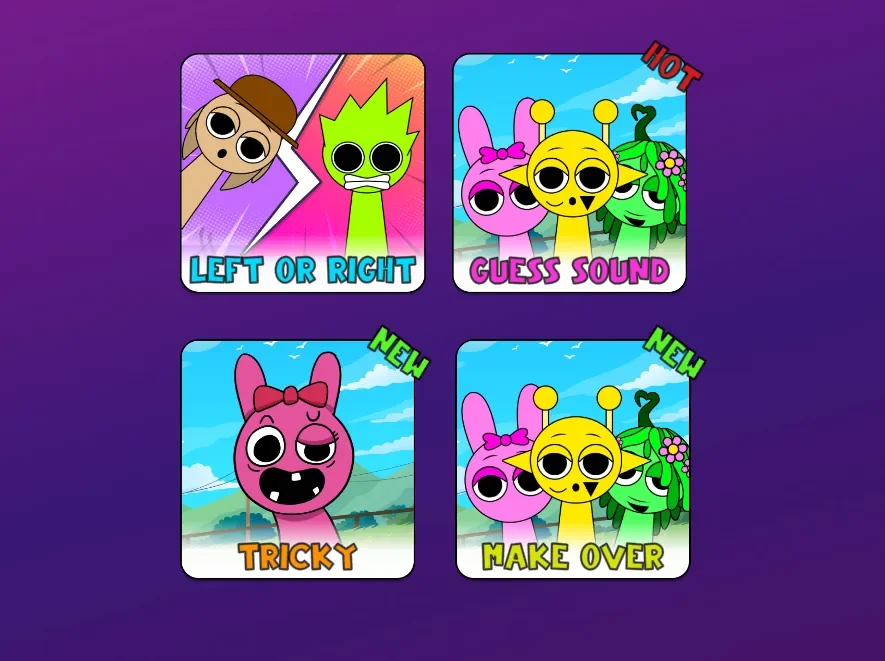 4 Game Screenshots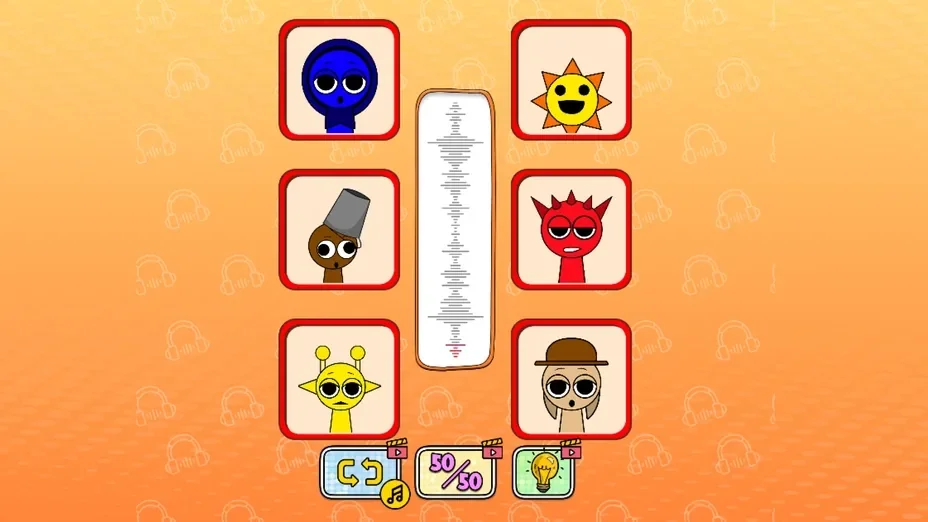
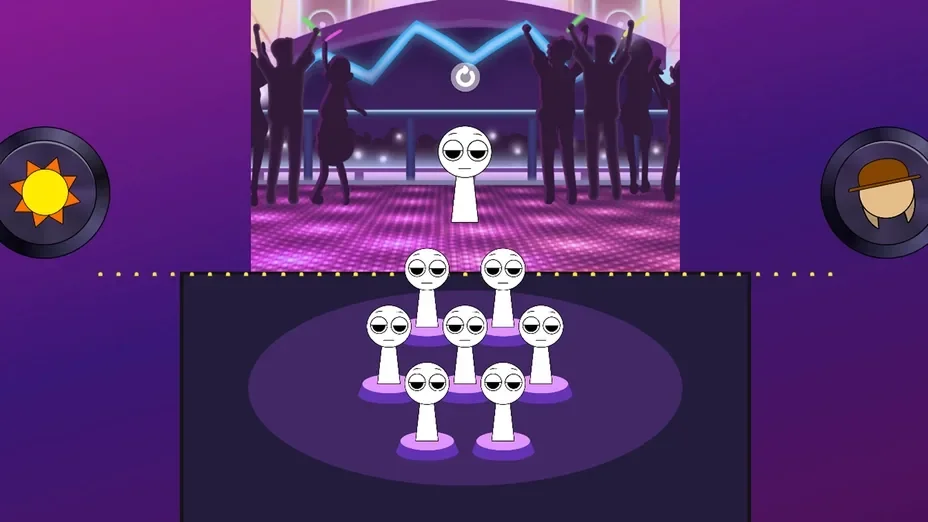

Rapid Binary Choices in Left or Right Mode
The clearest and most direct entry point is the Left or Right mode. Each round presents two large visual choices side-by-side: a bright, familiar Sprunki design on one side and a darker or horror-styled variant on the other. Clicking or tapping either card triggers an immediate result, serving up score pop-ups and "Congrats!" feedback screens before advancing to the next numbered stage, such as Levels 3, 13, 14, 17, and 18. This simple structure creates a fast arcade loop where players can continuously push through transformations. The immediate visual distinction between the two options keeps early rounds readable and responsive. However, because every interaction is strictly binary, extended play sessions can start to feel repetitive, especially since the exact rules governing score calculations are left unexplained.
Audio Guessing and Unexplained Mode Rules
Navigating the main menu reveals a purple gradient backdrop that highlights two additional options: Guess Sound, tagged with a "HOT" badge, and Tricky, labeled "NEW." These modes move beyond visual matching by introducing sound-based interaction, supported by a dedicated "CHOOSE SOUND?" selection interface. Underneath the surface, the game incorporates separate normal, horror, and tricky audio assets alongside win, lose, and bonus mechanisms. While these modes offer welcome variety beyond standard image matching, neither mode provides upfront tutorial text. New players are left to experiment through trial rounds to decipher what sets each mode's scoring and win conditions apart.
Cosmetic Customization in the Make Over Suite
The game's promotional "doctor" theme comes almost entirely from its Make Over mode, which acts as a cosmetic redesign suite rather than a medical treatment simulator. Opening to a pale cream-and-yellow interface topped with a home button and category icons, the suite defaults to a "HEAD CARE" tab. Here, cosmetic items line a grid featuring colorful hair pieces, hats, ears, and helmets, many tagged with red play-style markers. Swapping categories opens additional grids, including a "MOUTH" section with alternate facial features. This editor provides a slower, creative break from the fast-paced visual quizzes, though its dense presentation suffers from a lack of clear selection feedback. The interface leaves it unclear whether specific accessories are unlocked, animated, or purely static until selected.
Visual Contrasts and Audio Variety
Visual variety remains the primary driving force across all four modes. Character transformations range from friendly figures to exaggerated monster forms, bright magenta silhouettes, stretched anatomical shapes, and gray-scale horror designs. Complementing this visual range is a full audio layer containing normal and horror sound effects, tricky audio files, interface cues, and background tracks. Despite this thematic breadth, the experience lacks long-term progression systems; no persistent save feature, public leaderboard, or formal accomplishment tracking was observed.
For players exploring casual browser games on Fortcade, I BECAME A DOCTOR FOR THE SPRUNKIS is best approached as a light visual playground. Its core strengths rest on instant accessibility, striking horror-versus-normal visual contrasts, and quick arcade rounds, even if the doctor motif remains purely cosmetic and the core binary loop remains relatively simple.