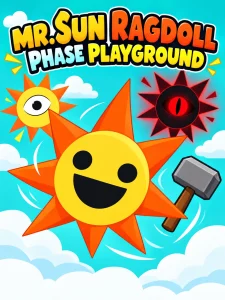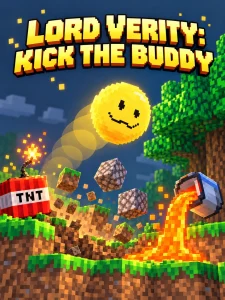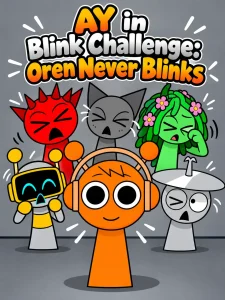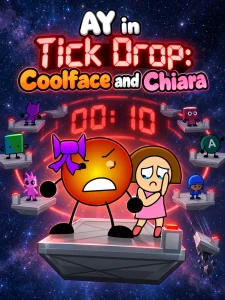
Oren's Sprunki Merge Mix begins in a bright meadow with a grid dominated by question marks and only two unlocked performers: Oren and Fun Bot. Tapping a character's portrait drops them directly onto the grassy field, where they immediately begin playing a repeating audio loop. Unlike conventional music soundboards that offer a complete set of audio tracks from the start, this browser sandbox treats every sound as a hidden character waiting to be uncovered. Building a song requires players to reveal the cast step by step, transforming a wall of locked slots into an active, multi-layered musical performance.
Created by @ItsBuddha, the experience blends beat-making with character collection, but it replaces standard fixed stage positions with loose physics. Unlocked performers drop from above, bounce, tip over, and collide on the grass. Instead of standing in neatly arranged rows, the cast frequently forms a rolling, colorful heap across the screen. This physical freedom gives the game a playful, toy-box atmosphere, though it also introduces unpredictable movement that can make precise arrangements delightfully messy.
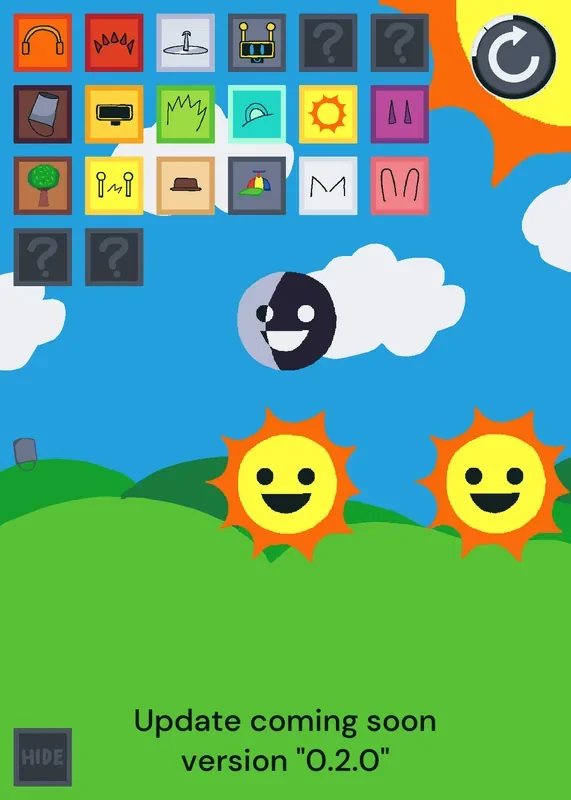 4 Game Screenshots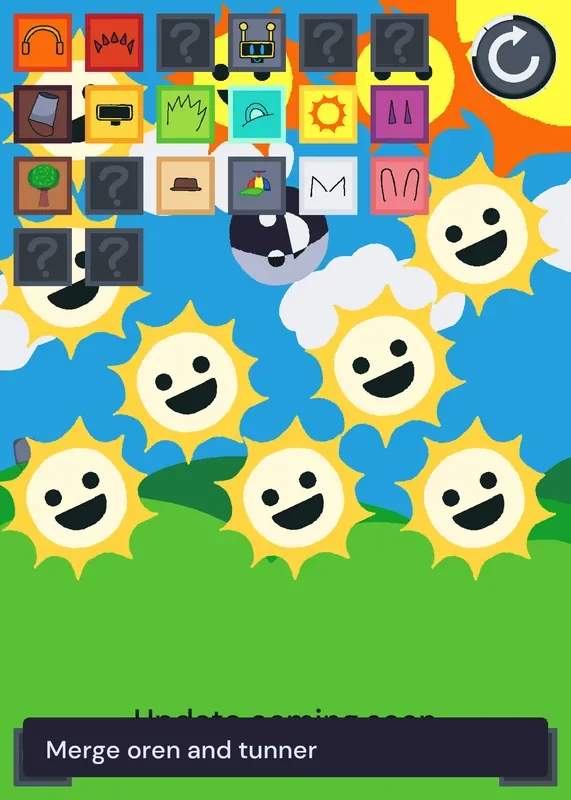
Unlocking Characters Through Direct Taps and Merges
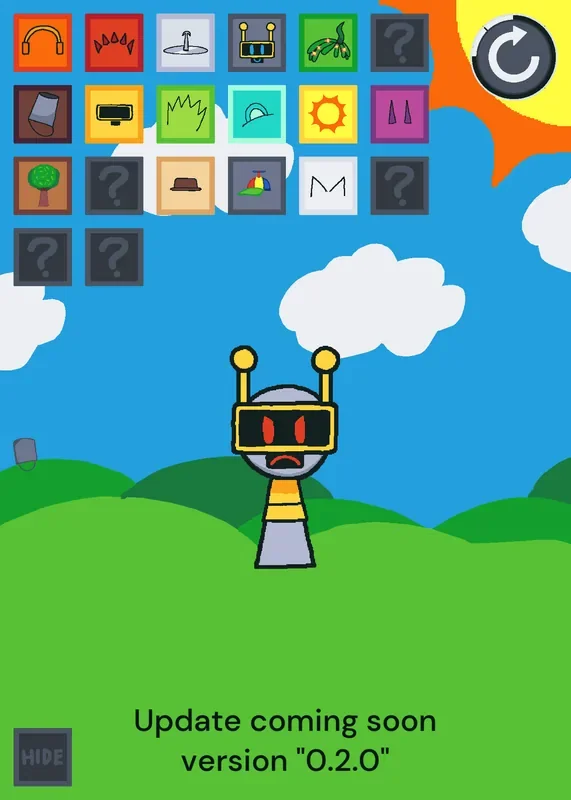
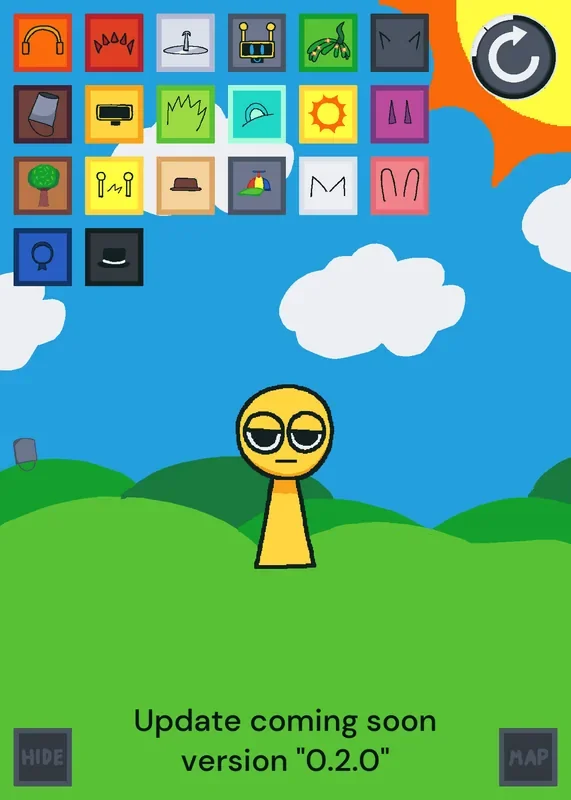
Progression follows two distinct interaction methods: single-character tapping chains and two-character merging combinations. The initial sequence demonstrates the basic rhythm of play. Dropping Oren into the field and tapping his character model reveals Garnold. In turn, Garnold leads to Durple, and Durple opens Raddy. Following another chain starting with Fun Bot unlocks OWAKXC. Each newly revealed portrait adds another reusable audio loop to the selection grid and serves as a potential ingredient for future character combinations.
Combining performers requires dragging one active character directly into another. When a valid pair touches, both performers merge into an entirely new Sprunki. For instance, dragging Fun Bot onto Garnold creates Mr. Fun Computer. Pairing Oren with Tunner produces Simon, combining Wenda with Clukr yields Gray, and bringing Sky together with Gray unlocks Jevin. Locked portrait slots often display recipe-style clues, allowing players to deduce valid combinations rather than relying strictly on blind trial and error. As players explore these variants, they may also encounter visual surprises, such as uncovering a maskless or "bald" Garnold among the character iterations.
| Action | Input | Result |
|---|---|---|
| Add a performer | Tap an unlocked portrait | Drops character into the field and starts its loop |
| Remove or advance a character | Tap character in the field | Stops that instance and can reveal the next portrait |
| Test a combination | Drag one character into another | Valid pairings merge into and unlock a new Sprunki |
| Change versions | Tap MAP, then choose an available entry | Opens another playable phase or roster variant |
Sound Stacking, Physics Chaos, and Onboarding Friction
Every character contributes a specific sound layer to the mix. Oren provides the baseline beat, Fun Bot adds electronic vocal sounds, Clukr delivers metallic percussion, and background elements like Mr. Sun fill out the visual and auditory landscape. Because players can spawn multiple copies of the same character simultaneously, audio layers stack directly on top of one another. Doubling or tripling a performer intensifies the beat, but repeatedly spawning dense audio loops—such as multiple copies of Clukr—can lead to sudden high volume spikes and ear strain during longer sessions.
The open physics engine drives much of the game's visual humor, but it also creates mechanical friction. Falling characters roll across the terrain, sometimes drifting away from their intended positions or tumbling over the lower portrait interface. Additionally, unlock feedback can be easy to miss when attention is focused on moving characters below rather than watching the portrait grid update. Because there is minimal onboarding guidance, players frequently experience initial confusion when learning how to merge performers or transition between game modes. Finding this balance between experimental chaos and musical structure forms the primary appeal for players exploring sandboxes on Fortcade.
Map Expansion, Horror Transitions, and Retake Modes
Accessing the map allows players to move beyond the sunny starting field into alternate versions. The game includes the original Sprunki mode, a completed Phase 2 horror variant, Phase 3, and a Sprunki Retake mode. Phase 2 replaces the cheerful backdrop with dark scenery and altered, sinister variants of the familiar cast. Phase 3 maintains the same collection and mixing mechanics while introducing a new visual and musical style.
Transitions between modes are tied directly to character discovery rather than traditional menu switches. Unlocking and summoning Black acts as the trigger for the horror transition, shifting the environment rather than functioning as a standard background performer. In Retake mode, the roster expands with unique figures including Parker, Bailey, Aurelia, Mr. Teddy Bear, Lario.exe, and Sonic.exe.
The map screen also displays several additional mode labels—such as Phases 4 and 5, Phase 2 Retake, and Pyramixed—which are explicitly marked as coming soon. While these unreleased labels have generated strong community interest and player requests for future updates, they remain preview entries that cannot currently be played.
Oren's Sprunki Merge Mix functions best as an experimental character-collection sandbox rather than a structured music editor. Its most rewarding moments occur when a recipe hint pays off, two tumbling performers collide, and a newly unlocked voice suddenly changes the rhythm of the entire meadow.