Waking up in a deceptively cheerful pastel neighborhood where simple objects conceal absurdly lethal outcomes sets the tone for Sprunki ENDGAME.EXE (REMAKE). Developed by @ItzSkyCastle, this short, single-player exploration game drops players into a compact hub where progress is measured not by overcoming enemies or solving intricate puzzles, but by unearthing four darkly comic endings. Version 0.5 opens with an explicit warning covering horror imagery and blood. While that notice is most justified during a dark subterranean expedition, the overarching experience relies more on corrupted-computer visual unease, sudden tonal shifts, and immediate, fatal punchlines. The central draw lies in taking a bright playground map and systematically turning every available interactive object into a catastrophic mistake.
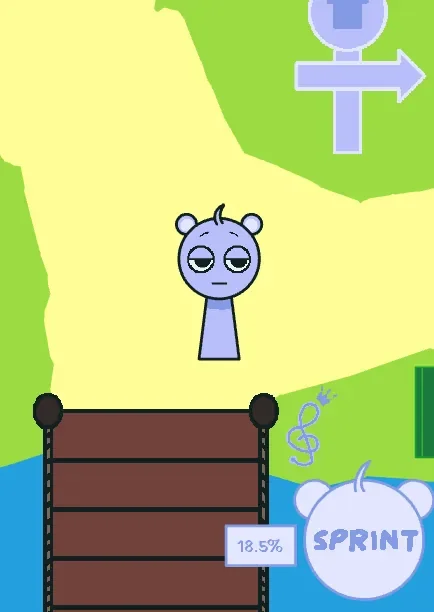 3 Game Screenshots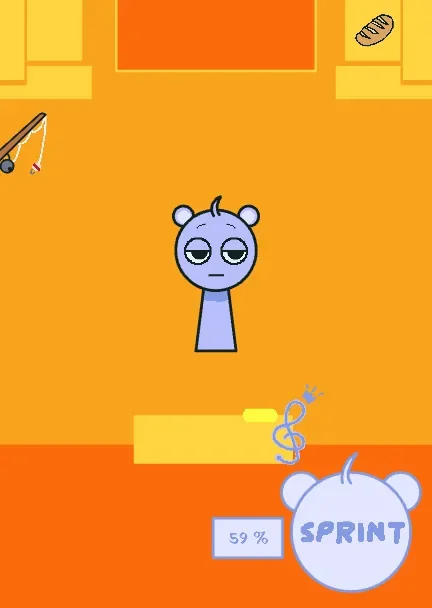
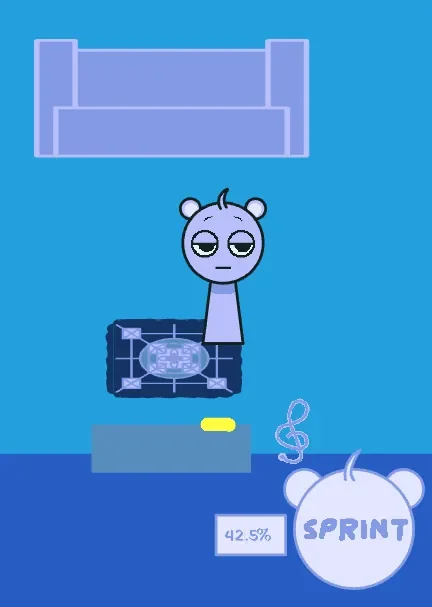
Exploring the Hub and Master Movement Controls
After dismissing the initial content warning, the game places Sky in a small outdoor hub. This central area houses Sky’s home, Oren’s home, a playground set, an old bridge, and a trapdoor leading underground. Sky moves through interiors and outdoor paths using a portrait-oriented interface with visible touch controls that can also be operated using a mouse in a browser window.
| Action | Input | Result |
|---|---|---|
| Move Sky | Drag on-screen analog stick | Walk in any direction through outdoor paths and room interiors |
| Sprint | Tap SPRINT button | Increase movement speed while draining percentage meter |
| Interact | Tap object or on-screen choice | Read dialogue, open computer interface, or trigger an ending |
| Room Transition | Walk into doorway | Cross between outdoor hub and interior locations |
| Reset Map | Tap Back button | Return directly to main Sprunki area after an ending card |
Sprinting raises Sky’s movement speed while a displayed percentage meter drains from 100. Disabling the sprint toggle allows the meter to gradually refill. While simple, this mechanic minimizes the downtime associated with walking back and forth across the hub or revisiting interior rooms after triggering a reset.
Exploration largely takes the form of a hotspot hunt. Certain key interactive points—such as the trapdoor, the desktop computer, the baguette, and a massive weapon inside Oren’s house—are visually obvious. Other elements blend into the hand-drawn environment, and interaction prompts only appear after an object is tapped. Optional interactions pepper the area: Sky can inspect his old swings, question the structural integrity of the bridge, examine a box of memories, criticize his doormat, or decide against watching television. These optional lines do not alter the ending routes, but they grant Sky personality beyond acting as a passive icon on the screen.
Three Navigation Routes and Four Fatal Endings
The four reachable outcomes are spread across three distinct locations within the compact world map:
- Error Ending: Sky enters his own house, agrees to operate Mr. Fun Computer, opens the
python.txtfolder, and launches the Python file. The corrupted file crashes the computer, bringing up an explosive error screen. - Discovery Ending: Sky opens the outdoor trapdoor and descends into a dim cave system. Navigating through torch-lit stone tunnels leads him to a body, prompting him to call the other Sprunkis to report the finding.
- Orbital Ending: Sky visits Oren’s house and interacts with the Orbital Strike Cannon. A chaotic sequence results in Sky breaking a fishing rod and accidentally calling down a nuclear strike on Sprunki City.
- Bread Ending: Also located inside Oren’s house, Sky accepts an offer to eat a baguette. The mundane snack concludes abruptly when Sky receives a fatal medical diagnosis.
Each route delivers a completely different payoff. The Error route transforms the game into a short computer terminal sequence, the Discovery route builds legitimate horror tension, and Oren’s residence serves up two separate comedy setups. Once an ending triggers, a black-and-red result card presents a short narrative summary alongside a Back button. Tapping this button instantly returns Sky to the main map without forcing a full title screen restart, encouraging continuous experimentation.
Visual Contrast, Audio Cues, and Interface Delivery
The outdoor hub relies on bright blocks of lime green, yellow, blue, and orange. Houses and landmarks feature oversized, easily recognizable silhouettes tailored for narrow screens, with the camera continuously tracking Sky as his walking animation shifts direction.
This vibrant upper world contrasts sharply with the cave route. Below ground, restricted lighting, dark walls, isolated torches, and obscured corridors slow down movement. While no monsters actively chase Sky through the cavern, the reduced visibility provides genuine suspense that supports the opening horror warning. When playing on Fortcade, the sudden shift from pastel streets to pitch-black subterranean passages demonstrates how lighting alone can establish tension without complex survival mechanics.
Ending screens discard the colorful environmental art entirely, substituting black backgrounds stamped with rough red lettering. These outcome cards recount each disaster in brief, cautionary sentences. Although the presentation features occasional awkward grammar and unpolished edges, the sheer variety of outcomes—from corrupted scripts to lethal baked goods—gives the experience a memorable voice. Background music loops continuously across playable areas, complemented by concise electronic clicks when tapping objects or selecting dialog options.
Mechanics, Constraints, and Single-Player Scope
Because Sprunki ENDGAME.EXE (REMAKE) centers strictly on finding narrative secrets, it omits traditional game systems. There are no health bars, enemy combat encounters, inventory management puzzles, or precise platforming challenges. The cave requires light navigation, but the remaining endings rely primarily on walking up to an object and accepting a Yes/No choice prompt.
Because interaction prompts do not appear until an object is tapped, players can occasionally circle a room without knowing whether they missed a tiny interactive hotspot or simply inspected an unfinished corner. Furthermore, the game operates entirely as a single-player experience without online leaderboards, score tracking, or an on-screen completion checklist. Including a four-slot ending gallery would make tracking discoveries more structured, as players currently must mentally track which outcomes they have uncovered.
Despite its brief runtime, the game succeeds as an efficient collection of bizarre discoveries. Finding all four endings takes only a single short session, making it a focused search for players who enjoy unexpected horror twists and absurd humor embedded in an innocent-looking world.