Choosing one of twenty brightly colored Sprunki figures, grabbing a short sword, and making a fast horizontal swipe through the center figure does not start a duel or trigger a survival mode. Instead, Sprunki EXE: What’s Inside? turns every cut into an immediate visual reveal, splitting the character into animated layers to expose a staring eye, a corrupted symbol, a computer virus, or another surreal image hidden within.
Published on Castle by creator @babygamer under the initial title Sprunki Sword Spin: Everyone Killed, the experience promises a chaotic battle that never actually materializes. No characters fight back, the sword does not spin on its own, and there are no lives or health bars to manage. The interactive experience functions far more like a compact horror toy and digital gallery, centered entirely on opening all twenty roster entries to inspect their corrupted interiors.
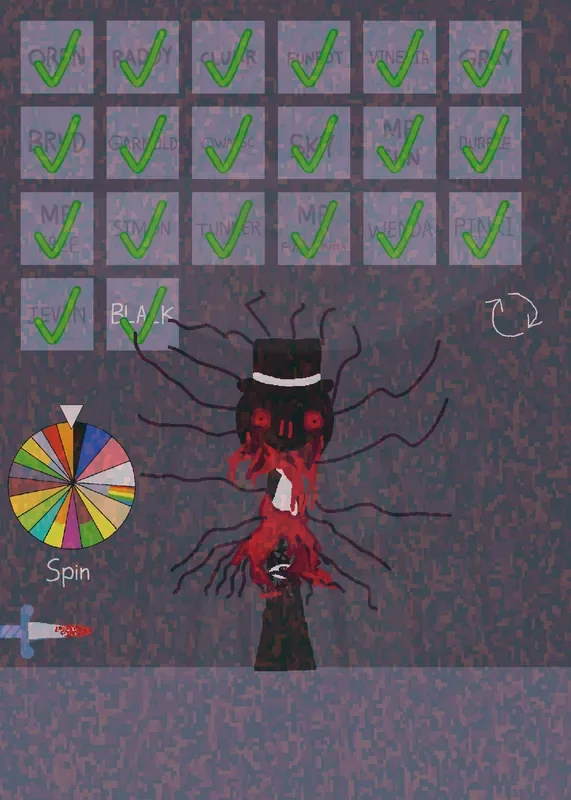
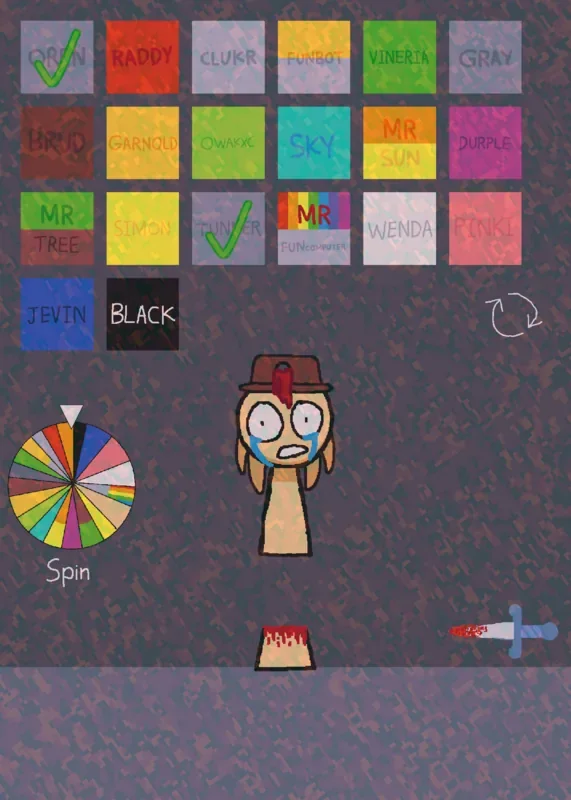
Navigation across the cast is straightforward, managed by a row of colored name tiles set above the main stage. A constantly spinning wheel sitting beside the play space offers random suggestions for who to inspect next, though players can easily bypass the pointer and click directly on roster favorites such as Oren, Wenda, Black, Pinki, or Jevin. When selected, the chosen character stands beside a draggable sword, waiting for a single quick strike.
 3 Game Screenshots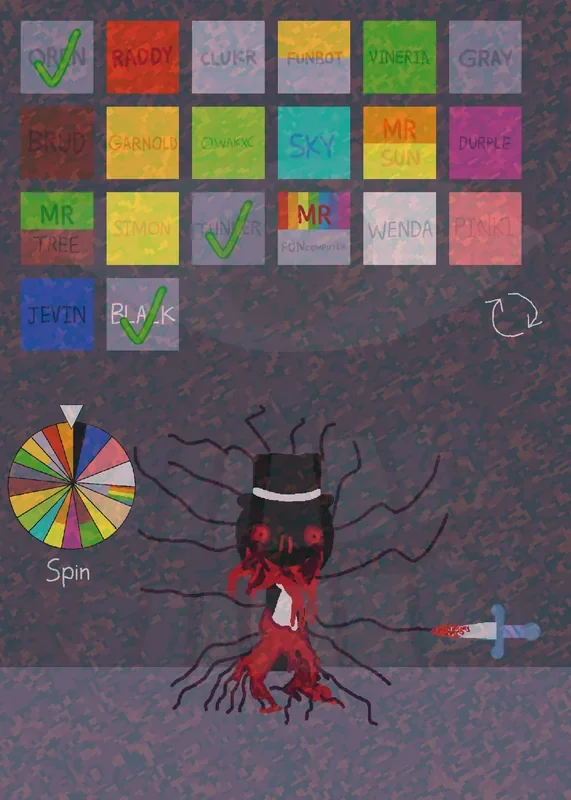
Uncovering the Hidden Cast
Executing the reveal requires dragging the sword swiftly across the target character's torso. While the visual cues—a pointing hand, mouse pointer, and sword sprite—make the basic interaction accessible, the game lacks a written tutorial explaining that a slow drag will fail to cut through, requiring a deliberate, fast swipe instead. Once sliced, the figure separates into distinct sections, exposing an altered expression or interior drawing while marking the character's roster tile with a green check mark. A circular arrow icon sits nearby to clear completed checks and reset the board at any time.
The complete twenty-character roster comprises Oren, Raddy, Clukr, Fun Bot, Vineria, Gray, Brud, Garnold, OWAKXC, Sky, Mr. Sun, Durple, Mr. Tree, Simon, Tunner, Mr. Fun Computer, Wenda, Pinki, Jevin, and Black. Each figure retains its signature silhouette and bright color palette, but their modified faces and distressed poses signal the underlying EXE theme right from the selection screen. Community discussions often highlight the interactive process of checking off all twenty characters, with players actively tracking their progress across the checklist.
The quality of the interior artwork carries the game's appeal, blending creepy transformation with absurd cartoon humor. Oren’s stretched torso contains a massive staring eye, Pinki glitches before exposing an unsettling red pupil, and Wenda splits into a cyclops form. Simon's visual reveal stands out as a particularly memorable moment among players due to its sudden change in expression. Meanwhile, Brud's damaged frame maintains a smile while hiding an image linked to Simon, and Gray harbors a glowing red core inside his chest.
Other characters reinforce the corrupted computer motif or lean into sillier visual gags. Fun Bot displays a brief plea for help before yielding a virus icon, creating a direct thematic bridge between its robotic design and the EXE premise. Jevin presents an inverted red cross, whereas Tunner simply loses his hair, and Durple looks unhinged rather than genuinely possessed. Because the character models remain brightly colored and cartoonish during their separation animations, the atmosphere resembles interactive horror fan art rather than realistic violence. In player reactions, this contrast creates a recurring sense of dramatic or comedic guilt over cutting down figures that offer zero resistance.
Interactive Fan Art with Minimal System Mechanics
A rustic hand-drawn aesthetic supports the playful macabre tone. Uneven lettering, bold outlines, and a muted brick background give the screen the look of an animated sketchpad. A dark, looping background audio track combined with heavy collision sound effects adds momentum to the otherwise static scene, while the elastic stretching animations give each cut a punchy visual impact. On platforms like Fortcade, where short-session web toys thrive on instant gratification, the game succeeds primarily as a brief novelty gallery rather than a deep mechanical challenge.
The primary constraint of the design is its strict repetition. Every single entry follows identical mechanics: select a tile, perform a rapid sword swipe, view the static or lightly animated interior art, and receive a green check mark. The interior reveals do not grant new abilities, unlock extra tools, or branch into story choices. Furthermore, checking off every single character on the board yields no special ending screen or final reward sequence; the satisfaction lies purely in satisfying curiosity.
Operational Controls and Summary
| Action | Input | Result |
|---|---|---|
| Select Character | Click or tap colored name tile | Places character on the central stage |
| Reveal Interior | Drag sword quickly across character | Splits figure to expose hidden drawing |
| Randomize Order | Follow pointer on rotating wheel | Selects next suggested character |
| Reset Progress | Click circular arrow icon | Clears green check marks on all tiles |
For players looking for rhythm mixing, intense combat, complex puzzle solving, or an actual survival scenario, this collection will feel limited. However, for fans of Sprunki character lore who enjoy visual transformations, quick horror remixes, and visual easter eggs, it delivers an entertaining ten-minute detour. Its value comes from individual character details—such as Fun Bot's virus screen and Gray's glowing core—rather than systemic depth, leaving a memorable impression through its creative character art.