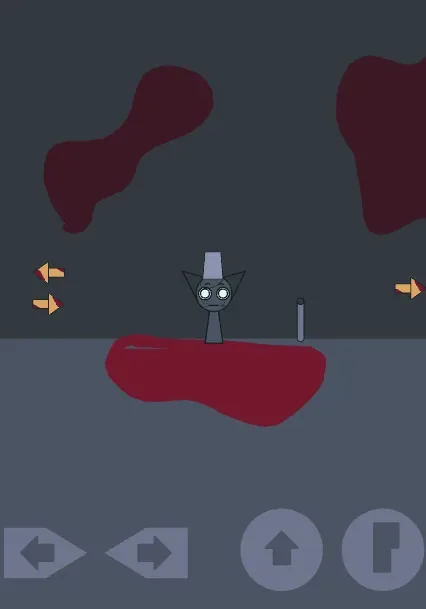
Gray stands in a dim cave with four oversized virtual controls fixed beneath him, surrounded by narrow platforms, hostile Sprunki characters, projectile attacks, and locked pathways. In Sprunki Platformer 2: Infinite Knives, created by @sprunki-yey-fase-10, the titular mechanic takes immediate priority: Gray can continuously throw flying knives across horizontally scrolling rooms without managing an ammo counter, searching for pickups, or waiting on a reload timer.
Movement requires holding down directional buttons rather than tapping them, giving Gray a slight sense of momentum as he decelerates after an input is released. Jumping provides enough height to clear tall ledges and hazardous obstacles, though combining jumping and precise lateral movement on the touch-oriented layout demands careful timing. Because the four virtual inputs occupy a substantial bar at the bottom of the display, desktop players must operate the layout like a touchscreen interface rather than relying on familiar keyboard controls.
The fourth input transforms the pace of combat. Pressing the knife button generates a weapon near Gray that automatically tracks toward active targets across the screen. Because there is no ammunition cap, players frequently experiment by rapidly tapping the button to form dense clusters or "balls of knives" that overwhelm incoming enemies. While this aggressive projectile stream compensates for individual missed attacks, spawning massive projectile clouds can trigger noticeable framerate lag on mobile devices, forcing players to balance raw attack speed with smooth performance.
 4 Game Screenshots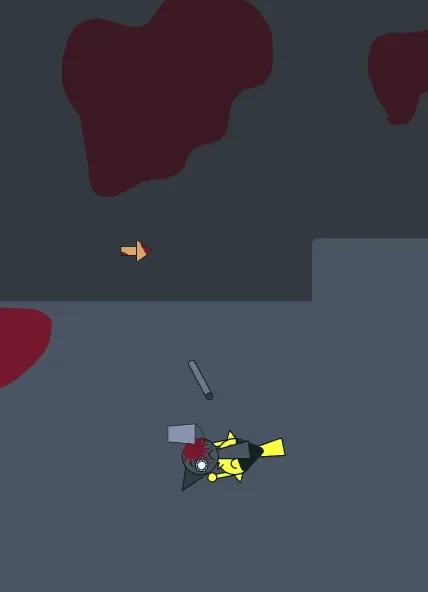
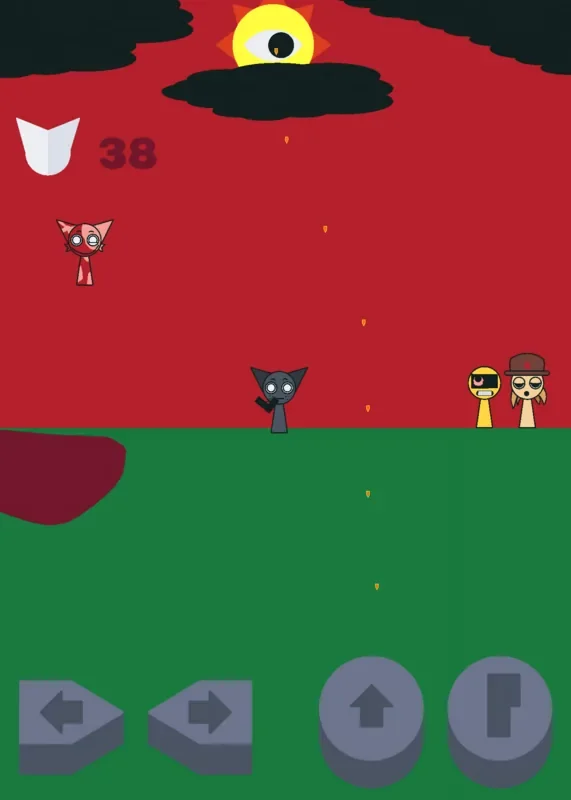
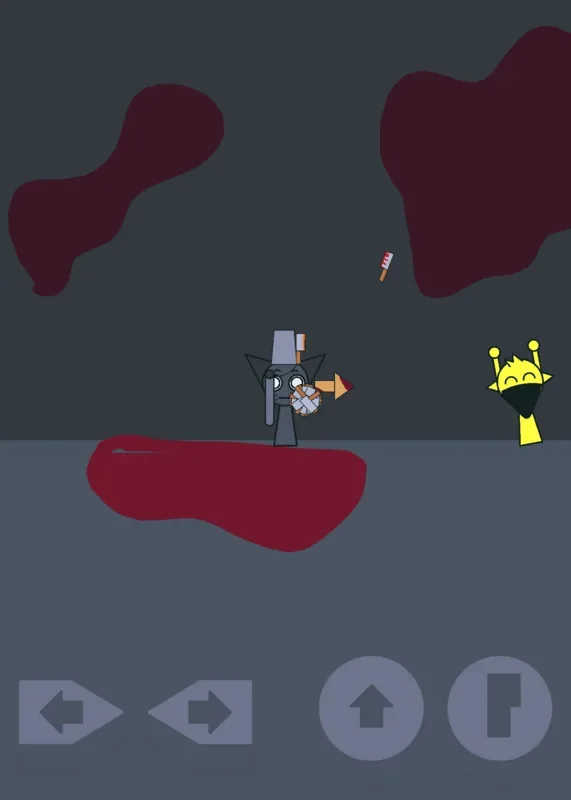
Navigating the Nine-Scene Cave Network
The main adventure unfolds across nine interconnected scenes that function as one continuous cavern rather than a series of isolated menu stages. Arrows painted throughout the environment indicate the intended path across wide side-scrolling areas containing floating ledges, vertical wall climbs, pipe obstacles, and key checkpoints.
Story setup is delivered entirely through Spanish dialogue. Near the start of the trek, Tunner explains that the cavern exit has been locked, directs Gray toward a key located at the far end of the network, and supplies him with defensive equipment. Non-Spanish speaking players often note friction with the untranslated text, though explicit directional arrows and intuitive left-to-right progression allow anyone to navigate the route without translating every line.
Along the path, Gray encounters a diverse lineup of Sprunki cast members, including yellow Simon, Sky, Funbot, Tunner, and sudden hazards like Durple, who frequently catches players off guard by dropping or spawning directly onto Gray from above. Reaching specific boundaries or clearing key enemies transitions Gray into the next room, though certain exits loop back into previously visited areas. The Fortcade browser edition preserves this nine-scene sequence alongside the original Castle release's controls and character cast.
| Action | Input | Result |
|---|---|---|
| Move left | Left arrow button | Makes Gray run left and turn toward that direction |
| Move right | Right arrow button | Moves Gray forward through the side-scrolling level |
| Jump | Up-arrow button | Launches Gray into the air to clear ledges and hazards |
| Throw a knife | Knife button | Creates a new knife that targets active enemies across the screen |
Death occurs instantly upon touching lethal obstacles or hostile characters, shifting Gray into a short defeat animation where he spins across the screen before the active scene reloads. While reloading the current room is far more forgiving than restarting the entire game, dying near the end of a long, wide cavern section creates noticeable friction. Players frequently express a desire for mid-level checkpoints to avoid replaying lengthy platforming stretches.
Wenda’s Boss Encounter and Attack Cycles
The game's primary mechanical test arrives during the showdown with Wenda, an encounter built around a massive 100-point health pool. Each successful knife hit reduces Wenda’s health by a single point, transforming what was previously a casual platforming weapon into an endurance-based rapid-fire attack.
Rather than remaining stationary, Wenda relocates across the arena while cycling through a varied repertoire of attack patterns. These include dense volleys of upgraded knives, pipe-generated hazards, multi-directional shots coming from opposite sides of the screen, and secondary character spawns that crowd Gray's limited safe zones. Survival hinges on maintaining a steady stream of thrown knives while continuously tracking Wenda's movement and identifying upcoming safe spots across the arena floor.
The boss fight's ambition is somewhat tempered by visual clarity issues. Thrown knives, enemy projectiles, Gray, and Wenda frequently overlap on screen, making it difficult to read precise hitboxes against the dark, muted cave background. Additionally, the lack of a prominent health meter or emphatic hit-confirm indicators forces players to infer their progress purely through sustained aggression.
Presentation, Sound Design, and Platformer Structure
Visually, Sprunki Platformer 2: Infinite Knives relies on a muted color palette dominated by dark gray rock textures, burgundy cave formations, and stark geometric platforms. Vibrant character designs compensate for the understated scenery; yellow Simon and distinct variations of Wenda stand out sharply against the dim backgrounds, preserving the exaggerated facial expressions and thin-limbed aesthetic of Sprunki fan games.
Audio design plays an active role in environmental feedback. Dedicated sound triggers accompany running, jumping, throwing knives, enemy collisions, and scene reloads. Furthermore, background music dynamic layers trigger whenever specific Sprunki characters enter or exit the visible camera view, providing distinct musical textures for different stretches of the cavern.
While the rough geometric blocks, wide empty spaces between platforming hazards, and touch-heavy interface reflect its homemade origins, the game delivers a substantially broader combat experience than single-screen fan projects. The combination of continuous knife spamming, long multi-room exploration, and an unpredictable 100-hit boss encounter creates a surprisingly demanding platformer whose mechanical ambition outweighs its visual polish.