Two wide-eyed Sprunki characters peer over a table before asking a simple question: will you take them home? Answering that prompt in Adopt Them! Wenda and Grey immediately splits the experience into two entirely different tones. Accepting the request opens a quiet character-care toy built around household selection, drag-and-drop interactions, and vocal responses, while refusing triggers a sudden escape sequence against an aggressive pursuer. Created by @girly-91011, this browser title relies heavily on expressive fan-art aesthetics while keeping its overall mechanical scope minimal.
 5 Game Screenshots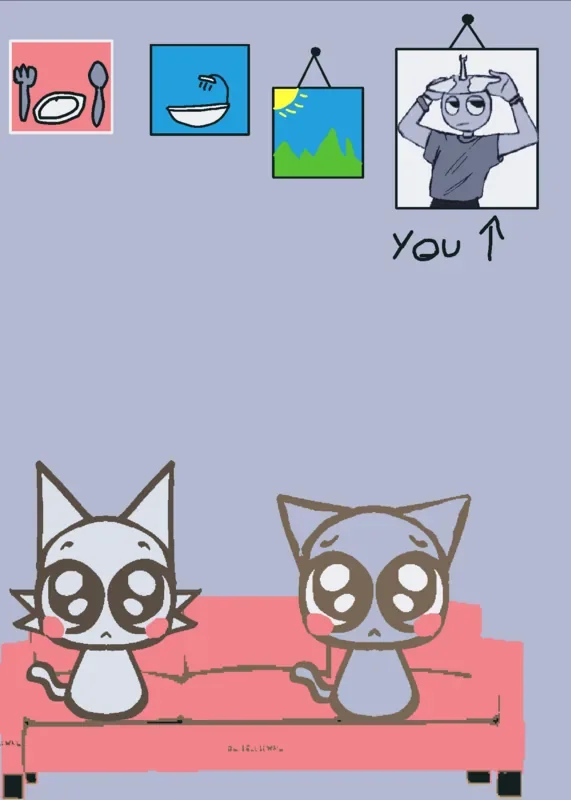
Choosing Your Household and Exploring the Living Room
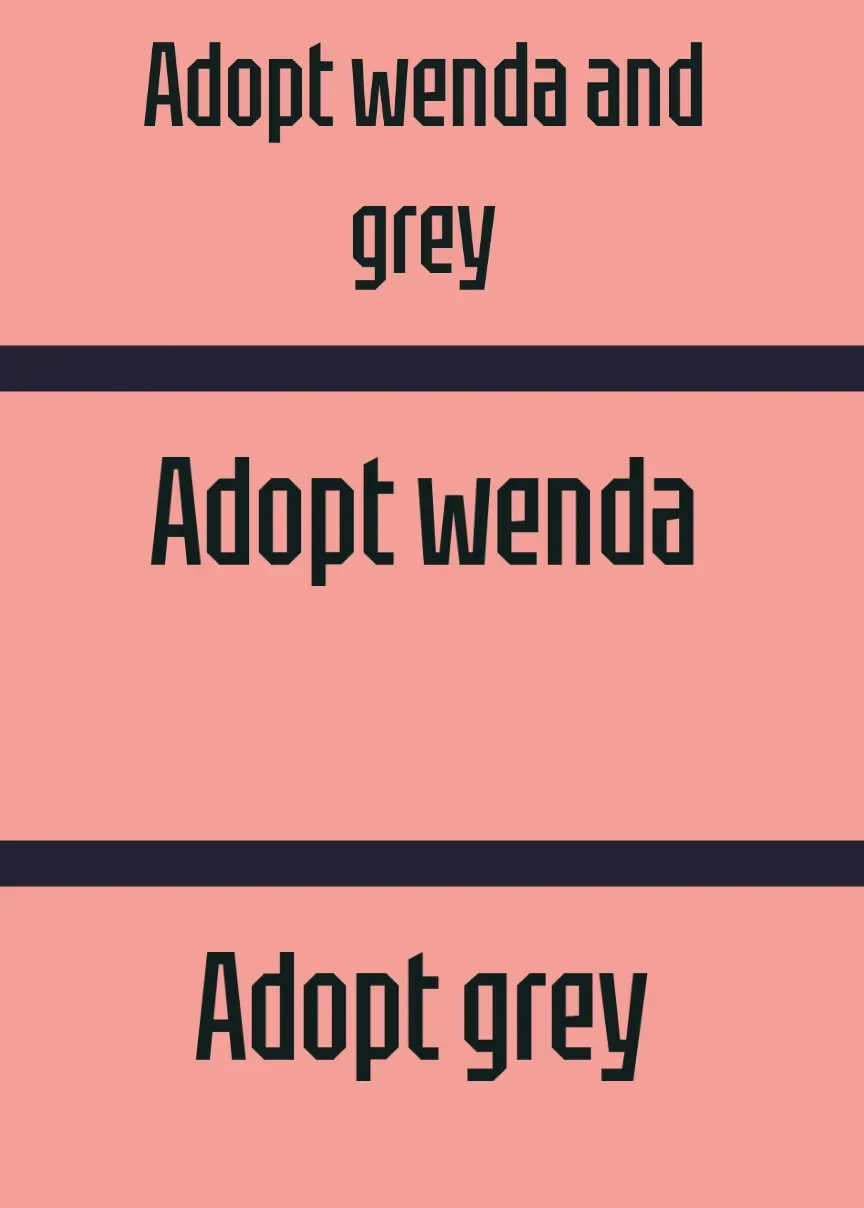
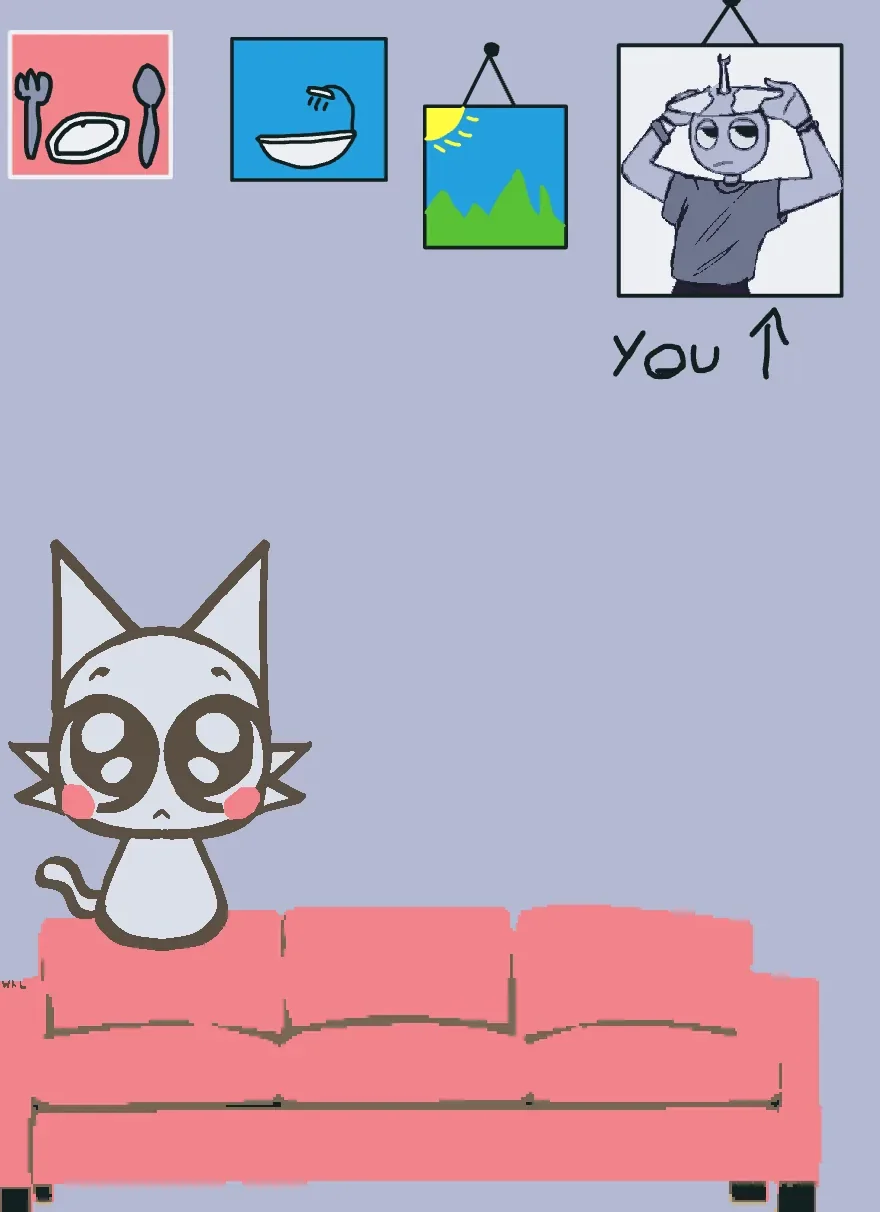
Selecting "Yes" on the opening prompt leads directly to a full-screen adoption menu. Players can pick between three household configurations: adopting Wenda and Grey together, adopting Wenda alone, or adopting Grey alone. Each selection loads a corresponding version of the same pink-sofa living room, instantly removing whichever character was left behind on the solo routes.
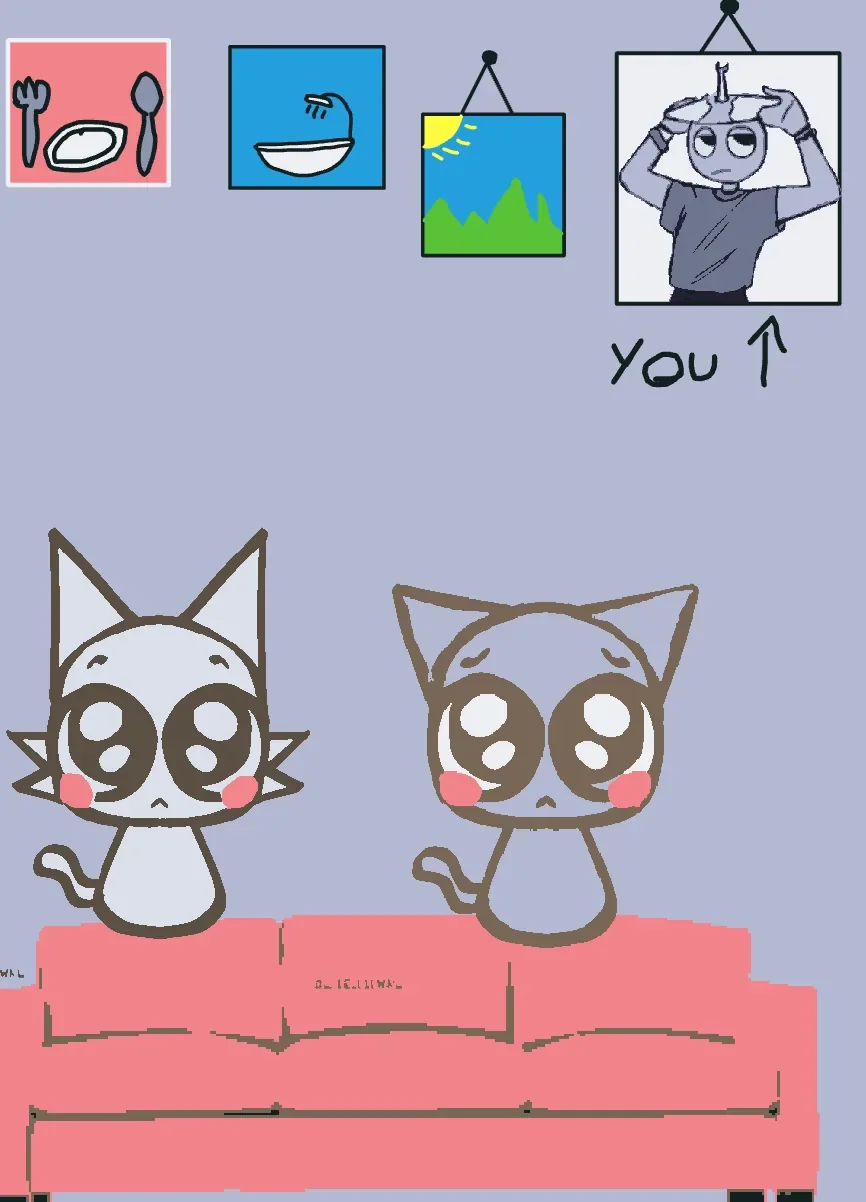
In the joint household scene, Wenda and Grey sit side by side on a pink sofa beneath framed pictures. One frame is explicitly labeled "You," placing the player into the domestic environment without introducing complex narrative dialogue. Tapping either character produces a short vocal response, while framed dining and bathroom symbols on the walls act as navigation buttons intended to lead to the activity areas.
The living room functions strictly as a visual hub rather than a walkable environment. There are no currency systems to manage, relationship meters to raise, or walking controls inside the main house. Choosing to adopt both characters produces a sweeter group dynamic and provides the fullest cast without locking out any specific care activities.
Kitchen Feeding and Bathroom Visual States
The main gameplay takes place across two activity spaces linked to the living room: the kitchen and the bathroom. Both areas rely on simple drag-and-drop mechanics where items or characters are moved across the screen to trigger immediate visual and audio feedback.
In the kitchen, players can feed the characters from a selection of hand-drawn dishes. The menu includes recognizable items like noodles, sashimi, and mochi alongside several other hand-illustrated foods. Dragging a food item directly onto Wenda or Grey consumes the item and prompts a cheerful vocal response of "Yummy." Because there is no hunger bar or required feeding schedule, food consumption serves as an open-ended interaction rather than a resource-management system.
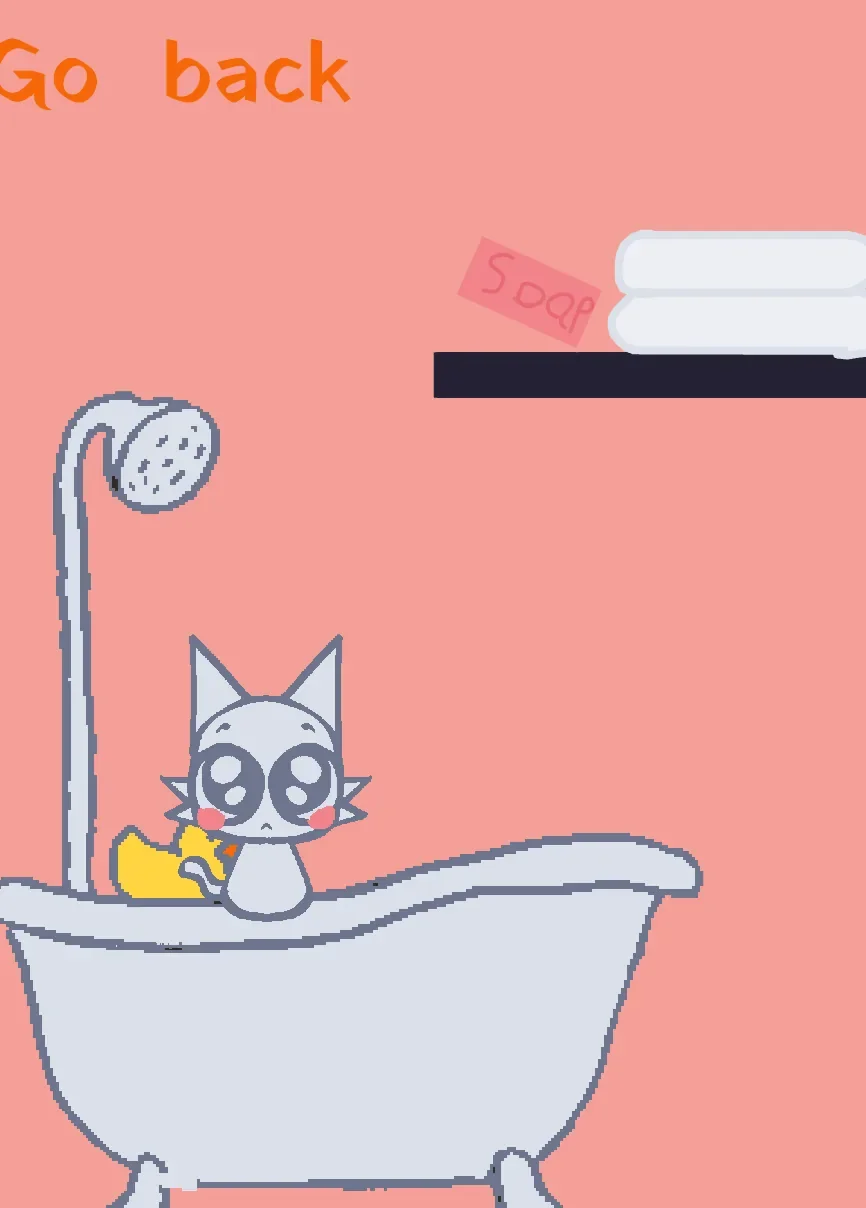
The bathroom offers a slightly more structured visual progression through three specific targets:
- Soap: Dragging a character onto the soap changes their sprite to a soapy state.
- The Bath: Dragging a character into the tub switches them into a bathing pose.
- The Towel: Dragging a character to the towel transforms them into a dried-off state.
These bathroom interactions provide clearer visual feedback than the kitchen snacks, though they can be performed in any sequence. The game does not enforce a strict hygiene routine, deduct points for wrong orders, or track a cleanliness statistic.
Despite these functioning routines, navigating to them in the current browser version presents a notable hurdle. Repeatedly tapping or clicking the visible kitchen and bathroom framed icons on the living-room wall does not consistently transition to the corresponding activity rooms. While the rooms and their interactions are connected properly behind the scenes, these misaligned or unresponsive hub buttons can prevent players from comfortably accessing the main care activities.
The Refusal Route and Escape Sequence
Choosing "No" at the initial prompt completely shifts the tone. Instead of entering the living room, the screen displays a harsh "GET OUT" message and transitions into an escape scenario.
In this rejection branch, the player controls a small character using an on-screen analog movement control while an angry Wenda gives chase. The objective is to guide the player character across the area and reach the safety of the house. If Wenda makes contact with the player, the player character is removed from the screen. Selecting the Retry option resets the sequence and returns to the initial adoption choice, allowing players to reverse their answer without permanent penalty.
While this tonal shift adds unexpected variety, it is also the least stable portion of the hosted browser build. During testing, the escape route frequently passed through abrupt dark screen transitions and reset back to the opening prompt too quickly for the chase to be reliably played through. The idea provides a surprising contrast to the gentle care loop, but its web implementation feels rough and unfinished.
Scene Structure and Visual Identity
The visual appeal relies on its expressive character art and cozy picture-book presentation. Wenda and Grey are drawn with oversized reflective eyes, small catlike bodies, and soft pink cheeks. Wenda's pale design and Grey's darker palette remain easy to differentiate whether they are sitting side by side on the sofa or undergoing bath transformations.
The backgrounds feature flat pastel colors, sketch-like furniture, and handwritten labels that resemble pages from a fan-made sketchbook. Behind this basic visual setup sits a network of 14 connected scenes covering:
- The opening query and rejection branch
- The adoption selection menu
- Three living-room configurations (Joint, Wenda solo, Grey solo)
- Corresponding kitchen and bathroom activity spaces for each cast setup
| Action | Input | Result |
|---|---|---|
| Answer initial prompt | Click or tap Yes / No | Accepts adoption flow or enters rejection route |
| Select household cast | Click or tap one of 3 menu choices | Loads joint, Wenda-only, or Grey-only living room |
| Access activity rooms | Click or tap framed wall icons | Attempts transition to kitchen or bathroom |
| Feed food items | Drag food to character | Consumes dish and triggers "Yummy" sound |
| Wash and dry character | Drag character to soap, bath, or towel | Alters character's visual pose and state |
| Move in rejection chase | On-screen analog control | Navigates away from pursuing Wenda toward house |
Despite having 14 distinct scenes, the overall depth remains modest. There are no saved care statistics, unlockable items, leaderboards, or formal ending cutscenes for successfully caring for the characters. Dedicated players exploring games on Fortcade will find that once all food items and bathroom states have been tested, the primary reason to restart is simply to view the alternative household setups or experience the abrupt rejection sequence again.
Ultimately, the game functions as a gentle, low-pressure character interaction toy. Adopting both Wenda and Grey offers the most complete visual setup, while the bathroom sequence provides its clearest visual transformations—provided the browser navigation buttons respond when tapped.


![AY in Noggin's RL, GL Game Redux [ 40 Players ] game cover](https://fortcade.com/wp-content/uploads/2026/10/ay-in-noggin-s-rl-gl-game-redux-40-players-225x300.webp)