A cardboard box sits outside under heavy rain, its damp lid hiding whatever is trapped inside. Pulling the loose top away reveals Fun Bot sitting wet and miserable beneath two large adoption buttons. Selecting the green check mark rescue option brings the creature inside and opens the primary structure of Take Care of Fun Bot Sprunki, a vertical virtual-pet experience focused on feeding, washing, resting, entertaining, and socializing a small robot.
Created by Ya_and_he_friends, the game replaces Sprunki's standard music-creation focus with a simple caregiving loop. Its narrative contrast relies on the shift between the gloomy opening sequence and the warm home waiting behind it. While individual activities are mechanical and straightforward, Fun Bot’s reactive animations provide immediate physical feedback across each distinct room.
 4 Game Screenshots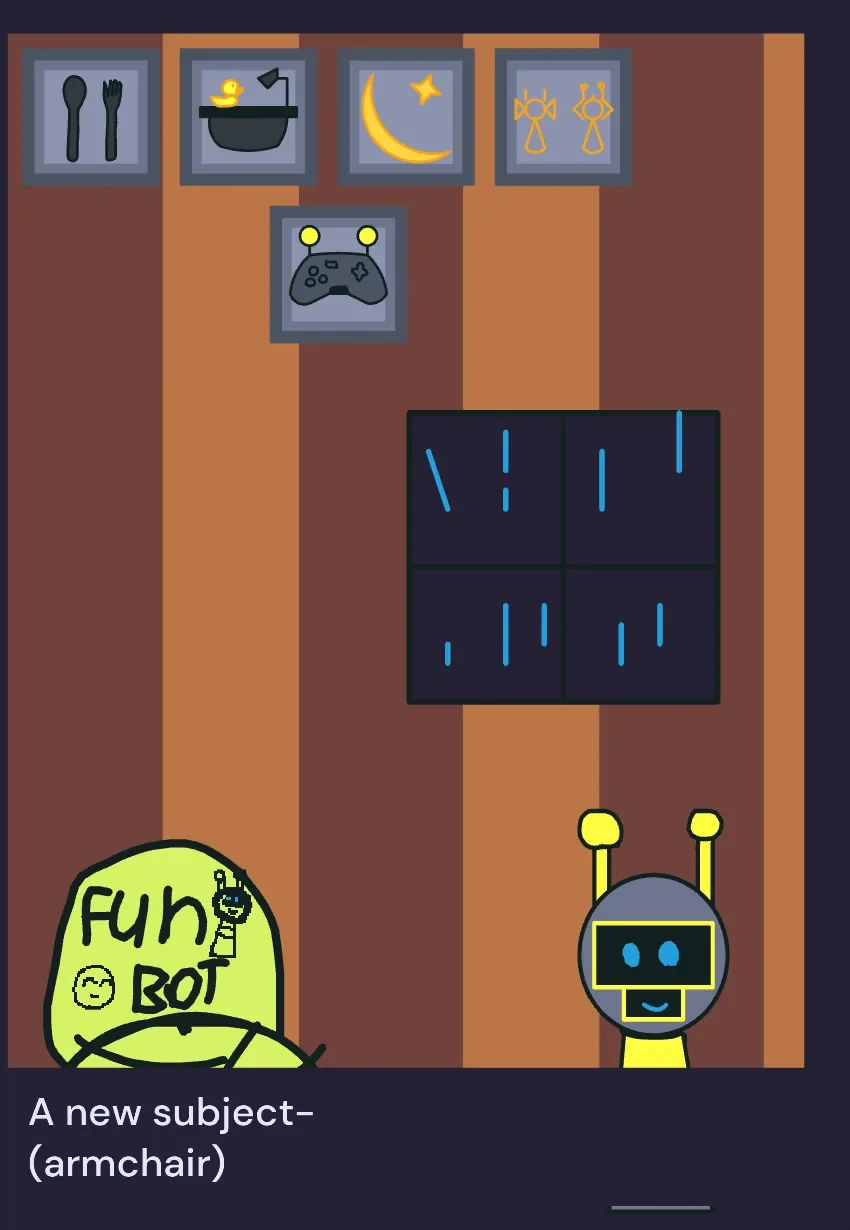
The Central Hub and Icon Navigation
Accepting Fun Bot transfers the character to a main room featuring warm brown and orange striped wallpaper, a cozy armchair, a rain-streaked window, and five framed activity icons hanging on the wall. Instead of relying on text labels, the interface uses visual imagery to communicate where each pathway leads:
| Activity Icon | Physical Input | Target Location or Effect |
|---|---|---|
| Fork and spoon | Tap icon | Feeding room with a hamburger generator |
| Bathtub | Tap icon | Bathroom with a tub and toggleable shower |
| Crescent moon | Tap icon | Bedroom with a bed and light switch |
| Two characters | Tap icon | Shared playroom featuring Garnold |
| Game controller | Tap icon | Room containing six external Castle deck portals |
| Direct character touch | Tap or drag Fun Bot | Triggers facial shifts, sounds, and repositioning |
Fun Bot can be picked up and repositioned freely across the main room. Tapping the robot triggers a quick physical reaction accompanied by shifting facial expressions and short audio cues. Placing the character near or onto the armchair gives the otherwise decorative furniture piece a clear purpose. These physical responses ensure the environment operates like a tactile toy rather than a passive menu screen.
Because the game provides virtually no written tutorial or objective text, understanding the full interface requires manual experimentation. Younger players will likely discover the loop naturally through trial and error, but anyone expecting a structured task list or explicit guidance will need a moment to recognize that self-directed discovery is the intended approach.
Hamburger Tracking and Feeding Mechanics
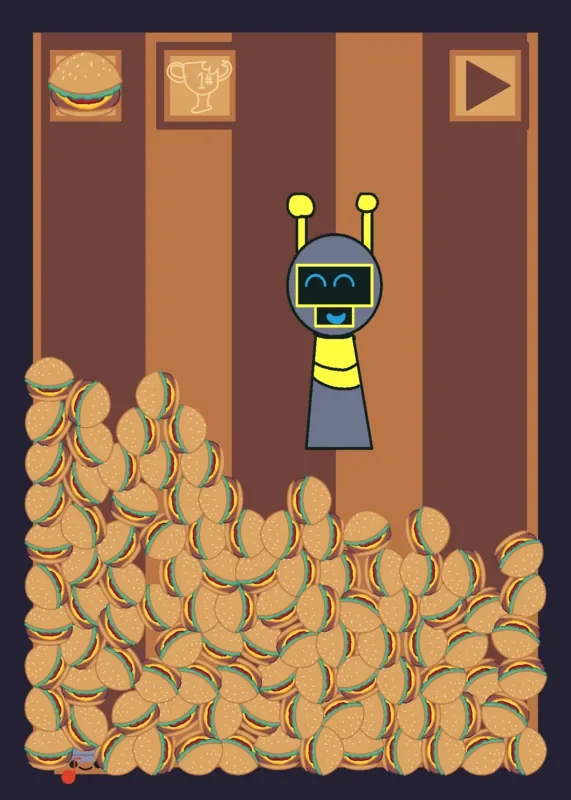
The feeding room offers the game’s clearest repeatable goal. Tapping the food dispenser control generates a single hamburger in the room. Rather than requiring players to drag the food directly into the robot's mouth, Fun Bot automatically detects nearby food and walks toward it, consuming the burger upon contact.
Each consumed hamburger increments a personal feeding total displayed in the room. On the Castle platform, this counter can be saved to a global leaderboard, allowing players to compare their total feeding scores against others after signing into an account.
Watching Fun Bot autonomously pursue spawned food gives the character a degree of independence missing from completely manual pet simulators. Spawning several burgers in succession creates a continuous play rhythm that feels more active than repeatedly tapping the robot in the main hub. However, the experience does not feature a hunger bar, diet system, shopping mechanic, or scheduled care routine. Evaluating how simple counter-based loops operate on platforms like Fortcade shows that short-session character toys prioritize immediate physical feedback over multi-tier progression systems. The score simply records raw repetition rather than measuring overall pet care quality.
Interactive Spaces: Bathing, Rest, and Play
The bathroom scene introduces dynamic water effects alongside direct manipulation. Players can toggle the overhead shower on and off, sending animated water droplets splashing down into the bathtub below. Dragging Fun Bot into different interactive zones within the bathroom produces distinct motion and sound reactions, making the area feel responsive.
Bedtime focuses on atmospheric mood shifts. The room contains a single bed and a wall light switch that toggles the lighting between day and night states. Flipping the switch off places Fun Bot into an immediate sleeping pose accompanied by dark lighting and sleep effects, skipping lengthy wait timers or rigid rest schedules.
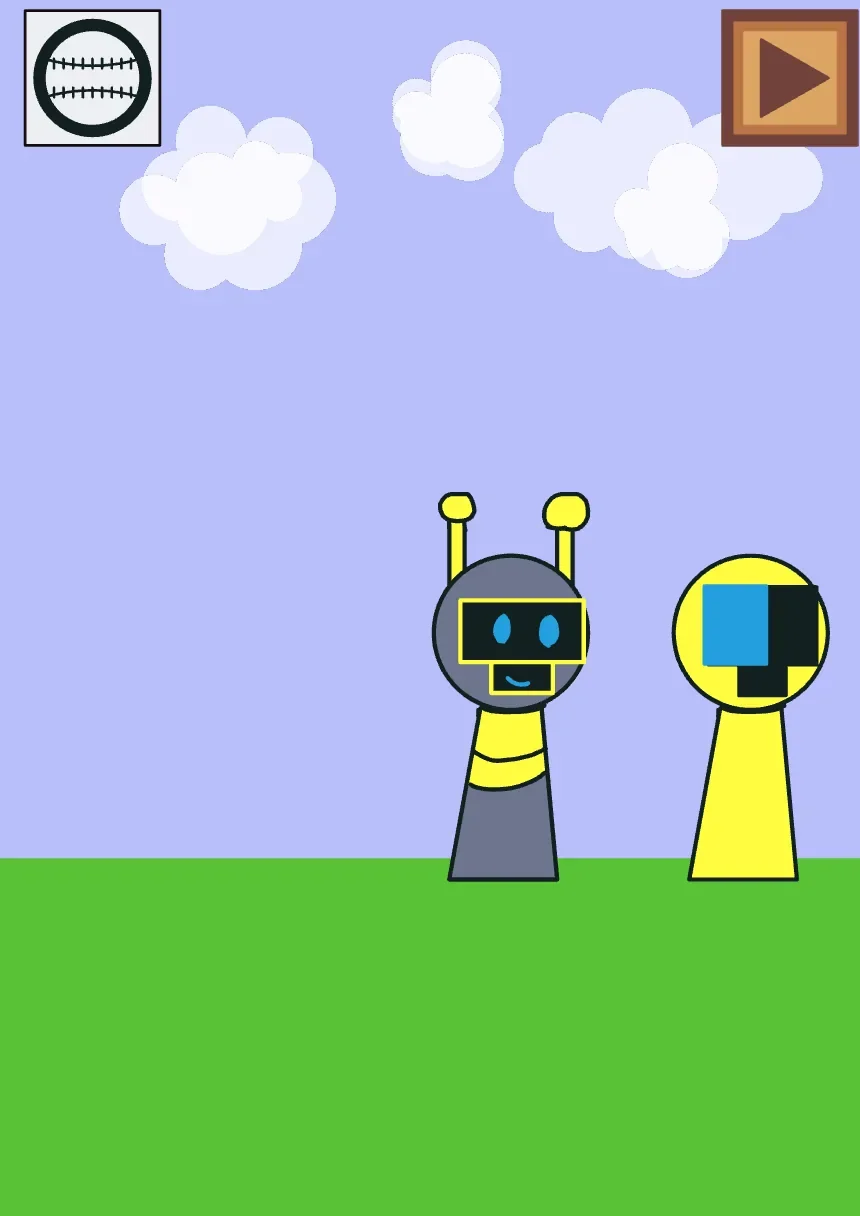
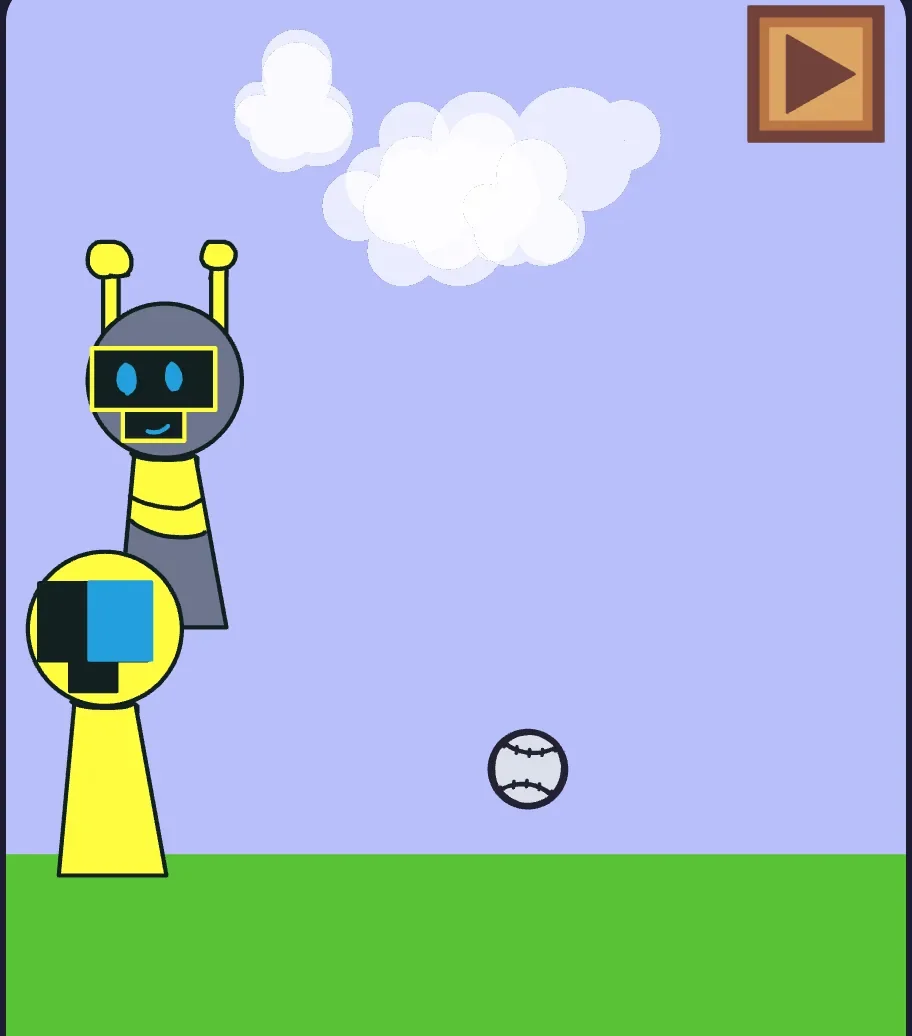
The playroom introduces Garnold as a secondary interactive character. Players can drag or tap both Garnold and Fun Bot, prompting them to approach one another inside the shared physical space. Spawning a ball into the room gives both characters an object to chase, collide with, and bounce around.
Despite their expressive visual and audio feedback, these care rooms operate independently without persistent stats. There are no cleanliness meters, fatigue timers, friendship levels, or unlockable room decorations. The activities exist as interactive sandboxes rather than interconnected simulation mechanics.
External Portals and Deck Layout
Tapping the controller icon on the main wall opens a screen labeled "Games," which displays six portal tiles surrounding a central Back button. These portals do not launch built-in minigames contained inside Take Care of Fun Bot Sprunki. Instead, selecting a portal routes the player outward toward other Castle game decks.
Understanding this layout helps set accurate expectations for the overall experience:
- The core deck consists of seven distinct scenes: the rainy adoption introduction, the central home hub, four interactive care rooms, and the portal directory.
- The game is strictly single-player and does not support cooperative or competitive real-time modes.
- Leaderboard rankings apply exclusively to the hamburger feeding total rather than tracking overall game completion.
Visual Identity and Presentation
The visual style features thick outlines, flat color fills, and intentionally uneven hand-drawn artwork. Fun Bot's design remains readable across every room, defined by bright yellow antennae, a square display head, and blue facial features. The dramatic color shift—from dark purple clouds and falling rain in the opening sequence to warm interior tones inside the home—effectively conveys the narrative of rescuing an abandoned robot.
Sound design reinforces the personality of each room through discrete audio cues. Feeding produces short pickup and eating sounds, the bathroom plays repeating water audio, bedtime lowers the lighting mood, and Garnold’s room features active character movement sounds. Fun Bot’s face changes frequently in response to touch, preventing the robot from looking static or unresponsive.
While some visual elements look like an early prototype, this unpolished aesthetic gives the game an informal, handmade personality. Standardized generic buttons would fit the nervous robot emerging from a wet cardboard box far less effectively than these loose, hand-drawn icons. Take Care of Fun Bot Sprunki works best as an informal digital character toy, offering a short, responsive pet sequence built around simple interactions and physical curiosity.


![AY in Noggin's RL, GL Game Redux [ 40 Players ] game cover](https://fortcade.com/wp-content/uploads/2026/10/ay-in-noggin-s-rl-gl-game-redux-40-players-225x300.webp)