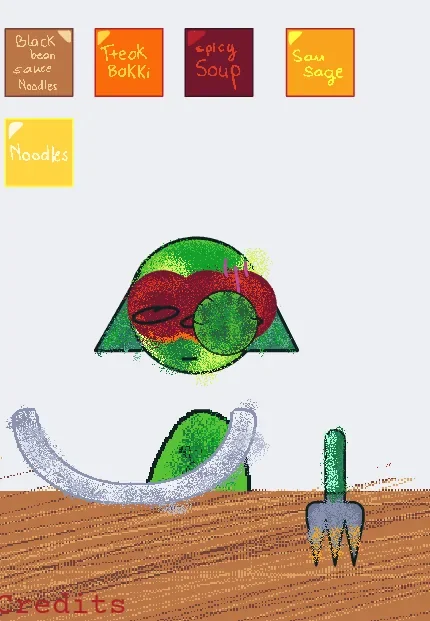
Five handwritten menu cards hang above Three Eyes, a green triangular anomaly with a broad red face and three dark eye openings waiting at a wooden table with its mouth open. Tapping a card drops black bean sauce noodles, tteokbokki, spicy soup, sausage, or a second noodle portion into the scene, where loose physics take over immediately. Getting food into the creature's mouth in Animal Hospital: Three Eyes Mukbang requires navigating gravity, awkward bounces, and a curved plate rather than dragging items directly.
Instead of snapping items straight to the patient's mouth, players manipulate food using a green control orb that follows touch or cursor positions. Moving the orb allows players to nudge rolling noodles or push tteokbokki upward, but food often slips away, collides at unpredictable angles, or piles up at the bottom of the dish. Successful feeding triggers a short eating response—altering the creature's facial frame—and plays a corresponding sound effect.
 3 Game Screenshots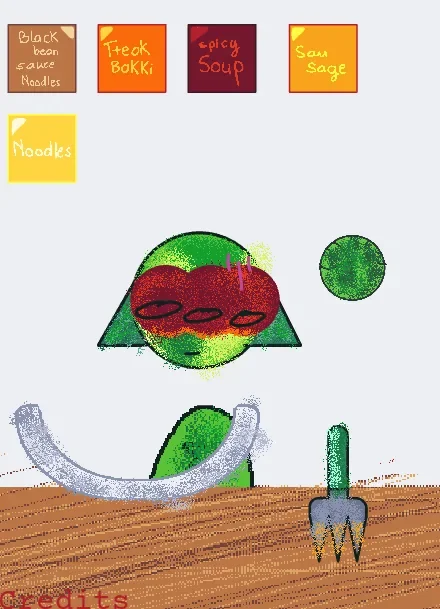
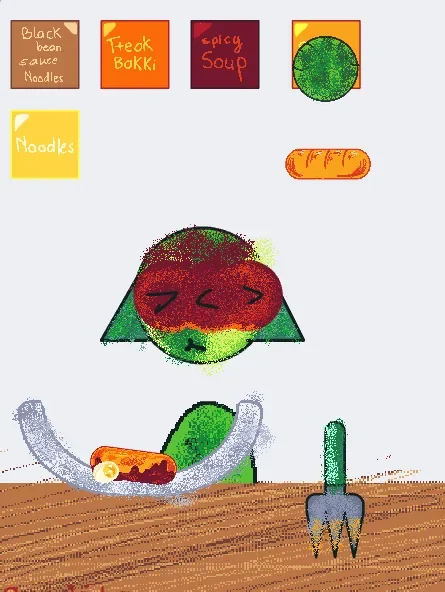
Nudging Loose Physics Across a Scribbled Table
Created by @lonu_yu_animalhospital, this single-scene toy relies entirely on physical interactions rather than structured progression. Spawning multiple dishes at once quickly turns the oversized plate into a cluttered heap. The loose handling can feel stubborn, requiring multiple pushes to rescue a piece trapped in an awkward corner, but watching items tumble into disorganized piles provides much of the visual humor.
For players exploring fan-made anomaly interactions on Fortcade, the main appeal lies in this intentionally unruly, toy-like design rather than a traditional challenge. There are no timers, failure conditions, score targets, health meters, multiplayer options, alternate stages, or secret endings. Once every dish has been served, replay value comes down to spawning overlapping food portions and testing how collision physics react.
Colored-Pencil Aesthetics and Audio Frame
The presentation relies on a rough, colored-pencil art style that gives the scene a distinct, handmade feel. The menu headers feature uneven lettering, the wooden table is covered in dense scribbles, and the oversized fork and plate look intentionally hand-drawn. Subtle animations keep the static setup active: Three Eyes floats gently in place, the green orb traces touch movement, and facial expressions shift briefly whenever food connects.
Audio consists of a looping background music track accompanied by brief eating sounds for each food type. While the limited sound library can feel repetitive during longer sessions, community feedback highlights memorable, humorous player reactions to the repeating music track and sound effects. At the bottom of the interface, tapping a Credits label reveals an additional creator credit, serving as a minor menu extra rather than an interactive mode.
Scope and Playable Limitations
The narrow scope suits brief play sessions, though its limitations are immediate. The five menu options offer modest visual variety, though the two noodle choices overlap significantly in both appearance and concept. Additionally, players expecting precise drag-and-drop movement may find the indirect pushing mechanics stubborn during delicate feeding attempts.
Ultimately, Animal Hospital: Three Eyes Mukbang functions best as an interactive character vignette rather than a goal-driven puzzle. Its rough aesthetic, loose object handling, and quirky Mukbang theme create a memorable feeding scene for anyone who enjoys physics props and unusual fan creations.