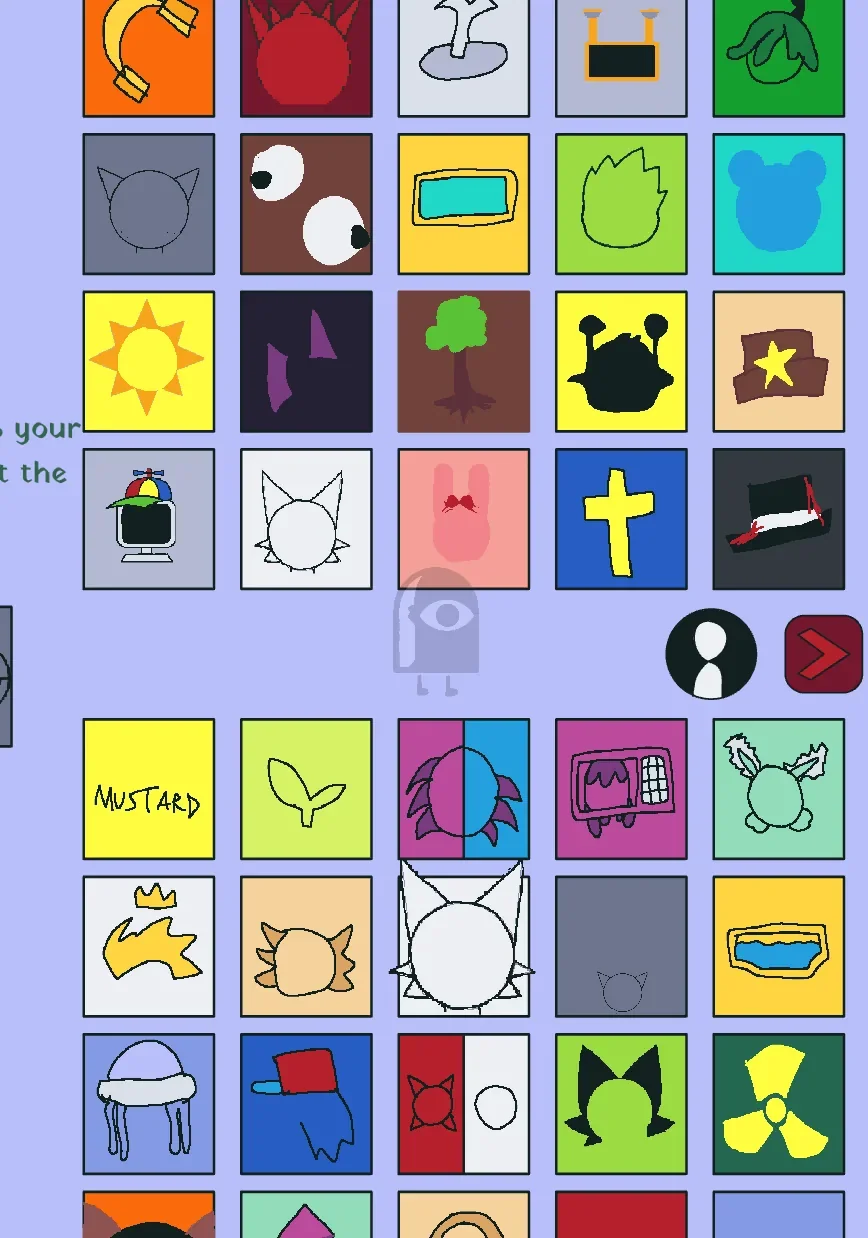
Dropping a steaming bowl of ramen or a glowing mound of molten crystal directly into a creature's jaw is the core driver of Sprunki Mukbang Food Box. Created by @hahu25, the game presents itself as an oversized character-selection grid containing 44 reachable entries rather than a traditional music remix or sequential minigame arcade. Selecting an icon loads a dedicated room where players feed hand-drawn figures, raise a global eating count, and explore bizarre culinary pairings.
The main menu presents a grid of hand-drawn visual clues rather than descriptive labels. Icons showing a sun, a tree, a hat, a pair of eyes, a television, a radiation symbol, an animal silhouette, or an abstract Sprunki head lead to specific feeding scenes that often subvert initial expectations. Navigating the collection relies on curiosity and memory, as there are no category filters, completion markers, or character labels to help players re-locate a specific favorite scene after returning to the selection screen.
 5 Game Screenshots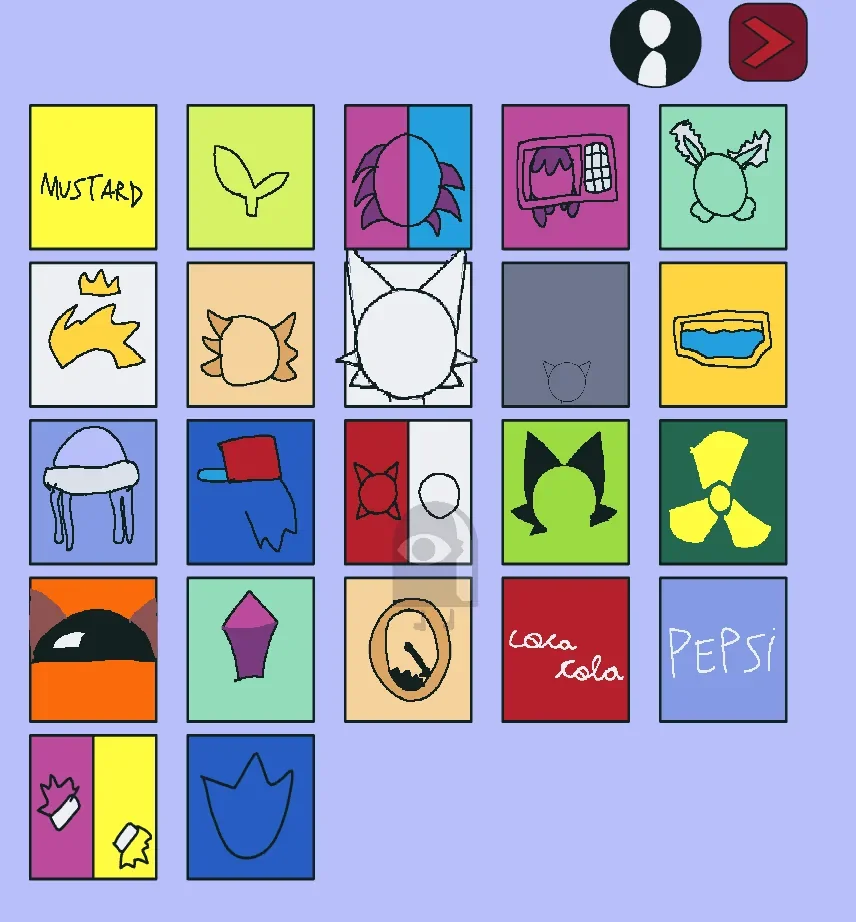
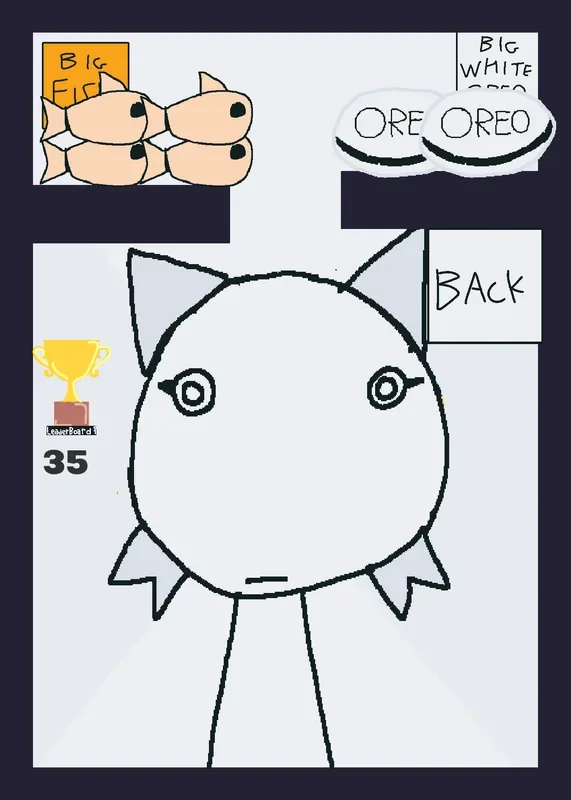
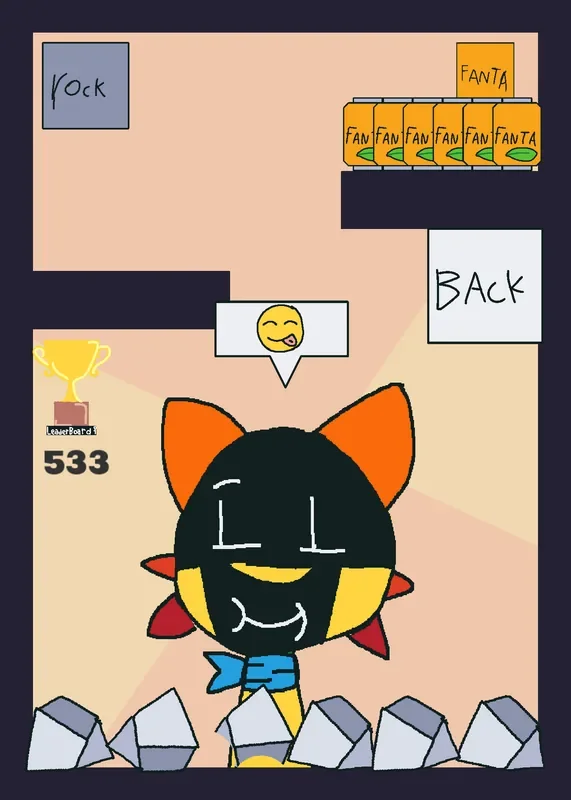
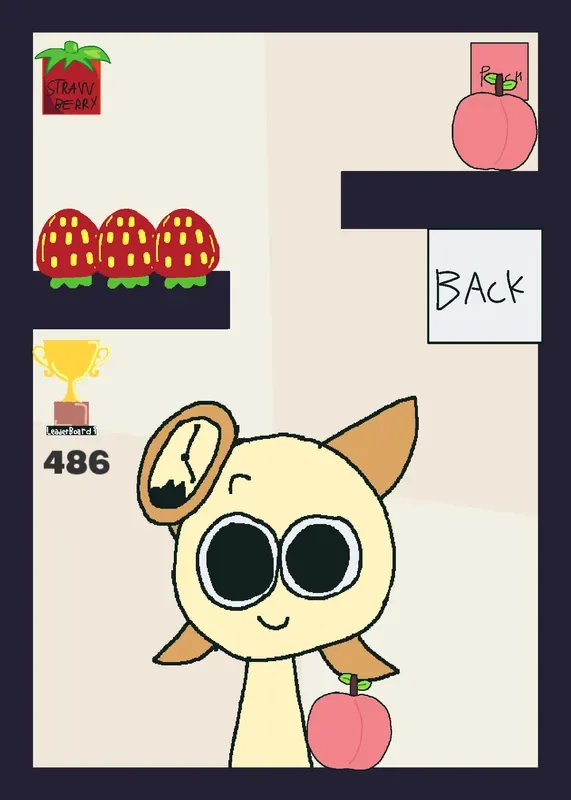
Unlocking Scenes and Bizarre Menus
43 of the 44 grid entries operate around identical drag-and-drop mechanics paired with unique character-and-food arrangements. A yellow aquatic character sits beside bananas and fish food, while a sleepy chef-like Sprunki rests under shelves piled with hamburgers and steak. Other rooms stock boba tea, popsicles, sushi, doughnuts, fruit, rice balls, and soda cans like Pepsi and Coca-Cola, which players frequently stack into tall food towers. Alongside ordinary meals, the game introduces surreal and dangerous items: acid burgers, toxic chicken, dishes of blood, candy planets, candy eyeballs, flowers, and molten crystal. Specific character variants—such as a green Sprunki with a damaged eye receiving bright acid burgers, or a character in a chef's hat flanked by burgers and shrimp—give individual rooms distinct visual humor.
The final entry in the collection breaks away from the feeding template entirely. Selecting this icon opens GALERY, a rough collage filled with hand-drawn character images, jokes, portals, and snapshot-style interactions. Functioning more like a digital scrapbook than a structured game mode, this eccentric extra reinforces the game's loose, unpolished aesthetic.
Mechanics, Scoring, and Interaction Limits
Feeding a character requires dragging items directly into its mouth collision area; simply clicking or tapping a food item does not trigger a reaction. Successful deliveries cause the character to change animation and play a scene-specific eating sound effect, which immediately increments both the local EATS display and a larger cumulative counter. Food items replenish or refresh automatically as they are consumed, allowing players to treat each scene as an open-ended toy rather than a structured challenge with a fixed end state.
| Action | Input | Result |
|---|---|---|
| Start the collection | Click or tap PLAY | Opens the character-selection grid |
| Choose a scene | Click or tap an icon | Enters that character's feeding room |
| Feed the character | Drag food into the mouth | Triggers an eating reaction and adds to EATS |
| View rankings | Click or tap the trophy | Opens the eating leaderboard |
| Return to menu | Click or tap BACK button | Leaves the current feeding room |
A trophy icon in each feeding room provides access to a leaderboard, turning simple dragging gestures into a light score-chasing activity. Players actively track their cumulative EATS totals to climb the rankings and compare scores against the developer's benchmark. On Fortcade, exploring this expansive sketchbook reveals both the appeal of its constant visual variety and the mechanical limitation of its single interaction loop. Without timer pressure, fail conditions, or strategy elements, long sessions in a single room expose the repetition of moving objects across collision zones.
Sketchbook Presentation and Player Audience
The presentation maintains an unrefined, handmade style throughout. Deliberate quirks like the spelling of GALERY, hand-drawn shelves, rough button borders, and varied character proportions make the collection feel like an interactive fan sketchbook. While music and sound effects accompany each room, the experience is strictly focused on feeding animations rather than Incredibox-style audio mixing. Sprunki fans interested in character variants, mukbang animations, and odd food pairings will find plenty to sample, whereas players expecting cooking puzzles or complex timing tests may find the mechanical depth thin.
The appeal of the collection rests on discovering what awaits behind each unlabeled icon. While its single drag-and-feed mechanism offers little mechanical evolution across its 43 eating rooms, the surprising contrast between ordinary snacks and toxic concoctions gives the grid enduring exploratory value for short casual visits.

![AY in Noggin's RL, GL Game Redux [ 40 Players ] game cover](https://fortcade.com/wp-content/uploads/2026/10/ay-in-noggin-s-rl-gl-game-redux-40-players-225x300.webp)