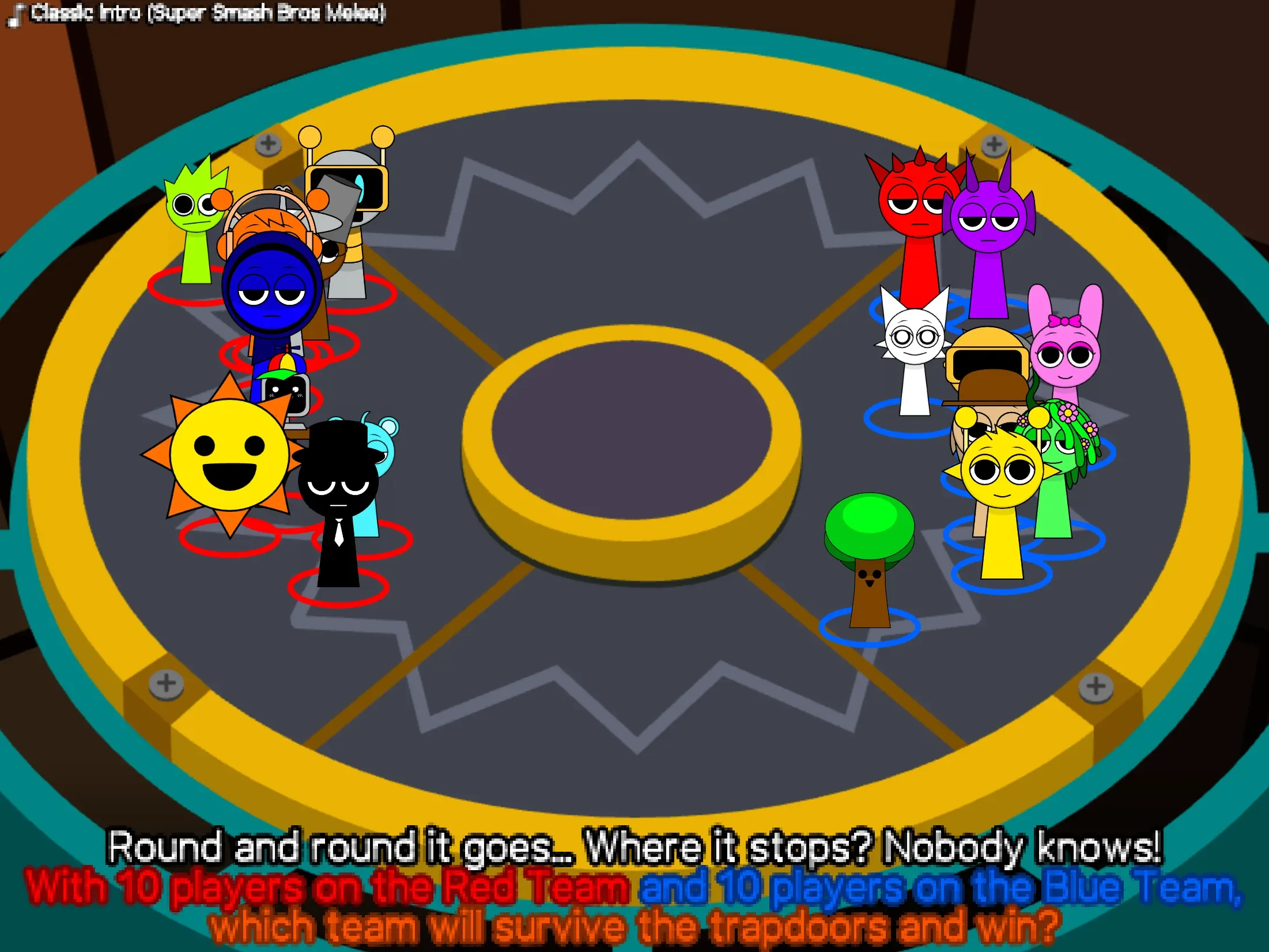
Twenty animated figures circle a central mechanical ring while a glowing hazard panel spins beneath their feet. When the five-second countdown reaches zero, every contestant freezes, marked trapdoors drop open, and anyone caught on the red quadrant plunges out of the match. AY in Roulette of Trapdoors! Sprunkies, created by @SprunkibutralrBackup, turns this sudden-death mechanic into an automated spectator tournament where position, timing, and survival depend entirely on randomized system logic.
Rather than giving players direct steering or button inputs, the project functions as a self-running elimination simulation. Viewers start the match, track team rosters, and watch how automated pathfinding and escalating floor hazards pare down the competing cast.
 3 Game Screenshots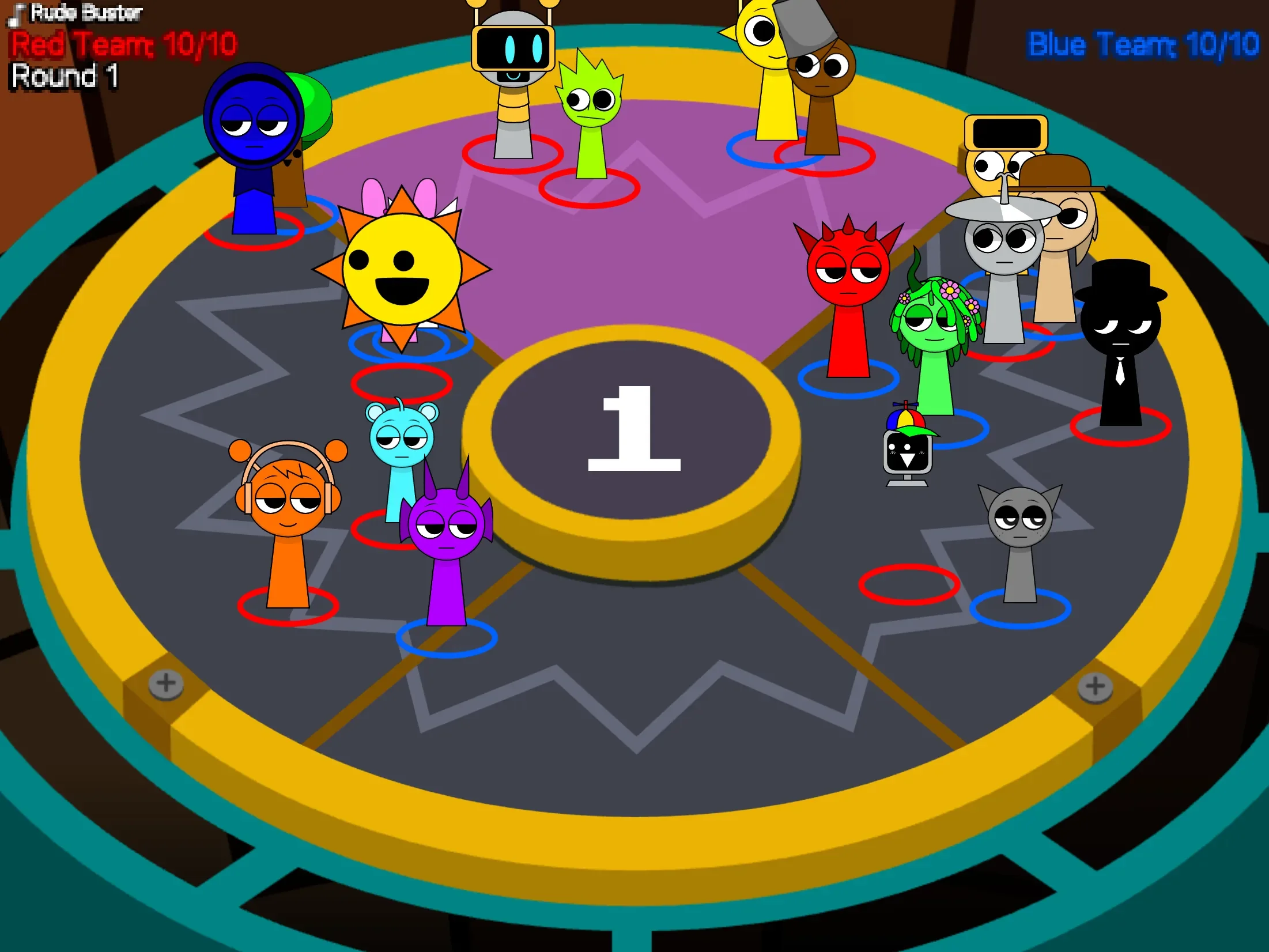
Team Composition and the Twenty-Character Roster
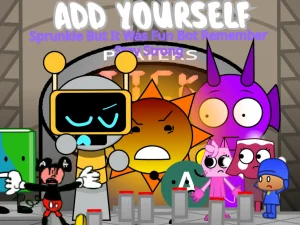
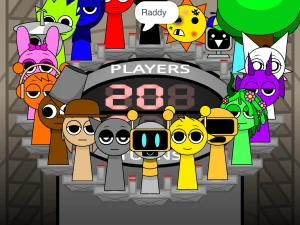
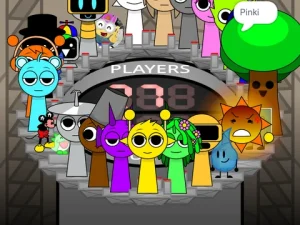
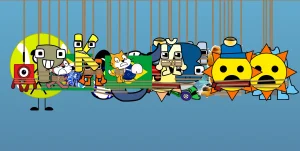
Every match begins by randomly splitting twenty characters into two ten-member squads. Red and blue rings around each character's feet indicate team alignment, while dedicated counters at the top of the interface track remaining members for each side. The cast includes Oren, Raddy, Clukr, Fun Bot, Vineria, Gray, Brud, Garnold, OWACKX, Sky, Mr. Sun, Durple, Mr. Tree, Simon, Tunner, Mr. Fun Computer, Wenda, Pinki, Jevin, and Black.
These figures retain distinct physical proportions and visual silhouettes. Smaller cast members like Gray and Sky contrast sharply against bulkier entries such as Mr. Fun Computer. Because early rounds place all twenty contestants inside the same circular arena, the opening moments can become crowded near safe zones. Hovering the cursor over any sprite brings up a text pop-up confirming that character's name and team color, providing essential clarity when multiple sprites overlap.
Beyond team division, the system randomly appoints four characters as leaders—two for the red team and two for the blue team. Leadership brings no structural advantages, stat boosts, or pathfinding priority during active rounds. Instead, leaders gain visual prominence during the final results sequence, where winning leaders perform a coordinated high-five while their surviving and eliminated teammates gather behind them to celebrate.
Escalating Trapdoor Hazards Across the Rounds
A standard round gives contestants seven to eight seconds to move around the outer circular track. A raised, non-traversable central display forms an inner boundary, causing running sprites to bounce off its edges and the outer perimeter wall rather than cutting across the center of the arena. While contestants run, a red danger indicator rapidly sweeps across the four quadrants surrounding the central display.
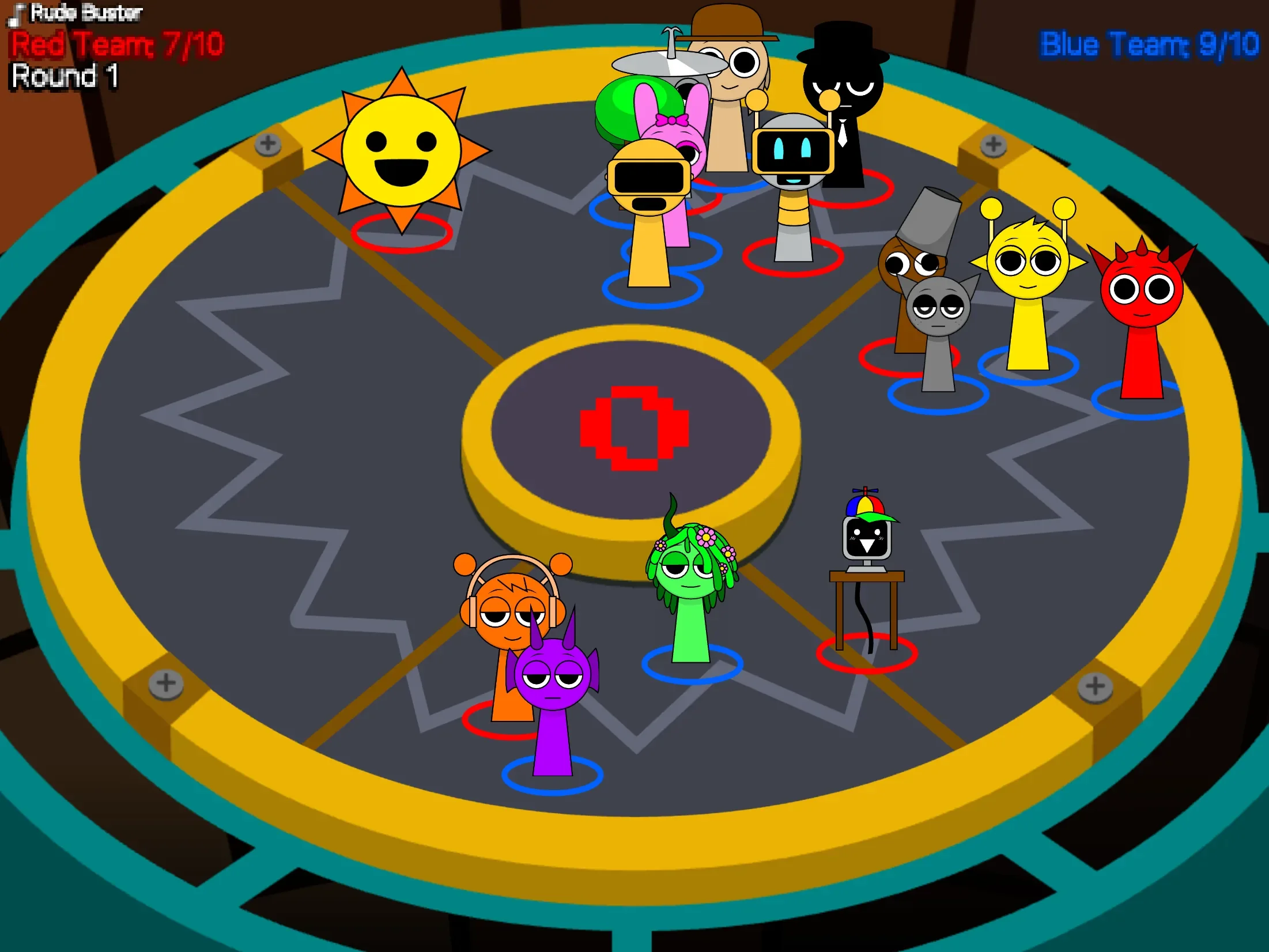
As the movement phase draws to a close, a large countdown timer in the center display ticks down from five to zero. The moment the timer hits zero, all movement immediately halts and characters lock in place. The currently highlighted floor sections open as mechanical trapdoors. Exposed Sprunkies wobble on the brink before dropping through, reducing their team's active count. Surviving characters perform safe animations and play individual voice clips before the arena resets for the next round.
To keep matches from stalling, the arena escalates floor hazards based on round progression:
- Rounds one through three highlight a single red quadrant per drop cycle.
- Starting at round four, two quadrants light red simultaneously, doubling the hazard area.
- Matches progressing beyond round six activate even more restrictive floor layouts that further constrain safe positions.
This rising difficulty creates drastic shifts in momentum. In an observed four-round simulation, the red team lost six members in a single trapdoor drop during the opening round, leaving only four survivors against a full blue roster. By round four, the dual-quadrant hazard eliminated red's remaining contestant, handing blue a victory with seven members intact. Longer matches recorded in reference material demonstrate that survival is never guaranteed; if both teams lose their final representatives during the same drop, the game identifies the match as a draw rather than forcing an arbitrary winner.
Passive Spectatorship and Hover Interactions
Interaction in this project is intentionally limited to setup and observation:
| Action | Input | Result |
|---|---|---|
| Start or restart simulation | Click green flag | Randomizes teams, leaders, and movement paths to start a new match |
| Identify contestant | Hover mouse pointer over character | Displays character name and current team assignment |
There are no keyboard controls for movement, no manual jump actions, no active character selections, and no tactical command prompts. Hints suggesting players watch the floor lights describe the internal logic guiding the autonomous sprites rather than a mechanic performed by the player.
Evaluating AY in Roulette of Trapdoors! Sprunkies within the broader landscape of Fortcade spectator titles reveals a project designed strictly around automated tension rather than active player skill. The primary appeal relies on watching unpredictable elimination sequences, following individual character fates, or running repeated simulations to see if a favorite sprite can survive multiple rounds.
Presentation, Character Polish, and Result Sequences
Visual indicators remain clear throughout the match. The central display keeps the active countdown prominent, red floor highlights give clear advance warning of impending trapdoor drops, and persistent team counters summarize squad health at a glance.
Character animation features individual touches that reinforce the party-game theme. Contestants exhibit distinct running speeds, footstep sounds, and sizing rules. Sprites blink during movement, look shocked when trapdoors open beneath them, wobble before falling, and celebrate when surviving a drop. Sound design supports every state change through footsteps, mechanical trapdoor clacks, urgent countdown ticks, character voice clips, and a rotating music soundtrack announced via a "Now Playing" display label.
When a match concludes, the result screen details the total rounds played and celebrates the winning side with confetti. Eliminated teammates return to join the end tableau, ensuring the full twenty-character roster remains present on screen. Should a match end with both teams eliminated simultaneously, a dedicated draw sequence plays with distinct character poses and announcements, fully supporting the tie outcome.
![Ay in Raining Bomb 2! [ 30 players ] game cover](https://fortcade.com/wp-content/uploads/2026/09/featured_paste_20260917_202246_030632-225x300.webp)
![AY in Balloon Blast! [ 30 Players ] game cover](https://fortcade.com/wp-content/uploads/2026/09/featured_paste_20260915_091103_097385-225x300.webp)

![AY in Noggin's RL, GL Game Redux [ 40 Players ] game cover](https://fortcade.com/wp-content/uploads/2026/10/ay-in-noggin-s-rl-gl-game-redux-40-players-225x300.webp)