

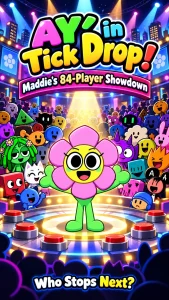
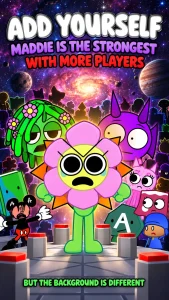

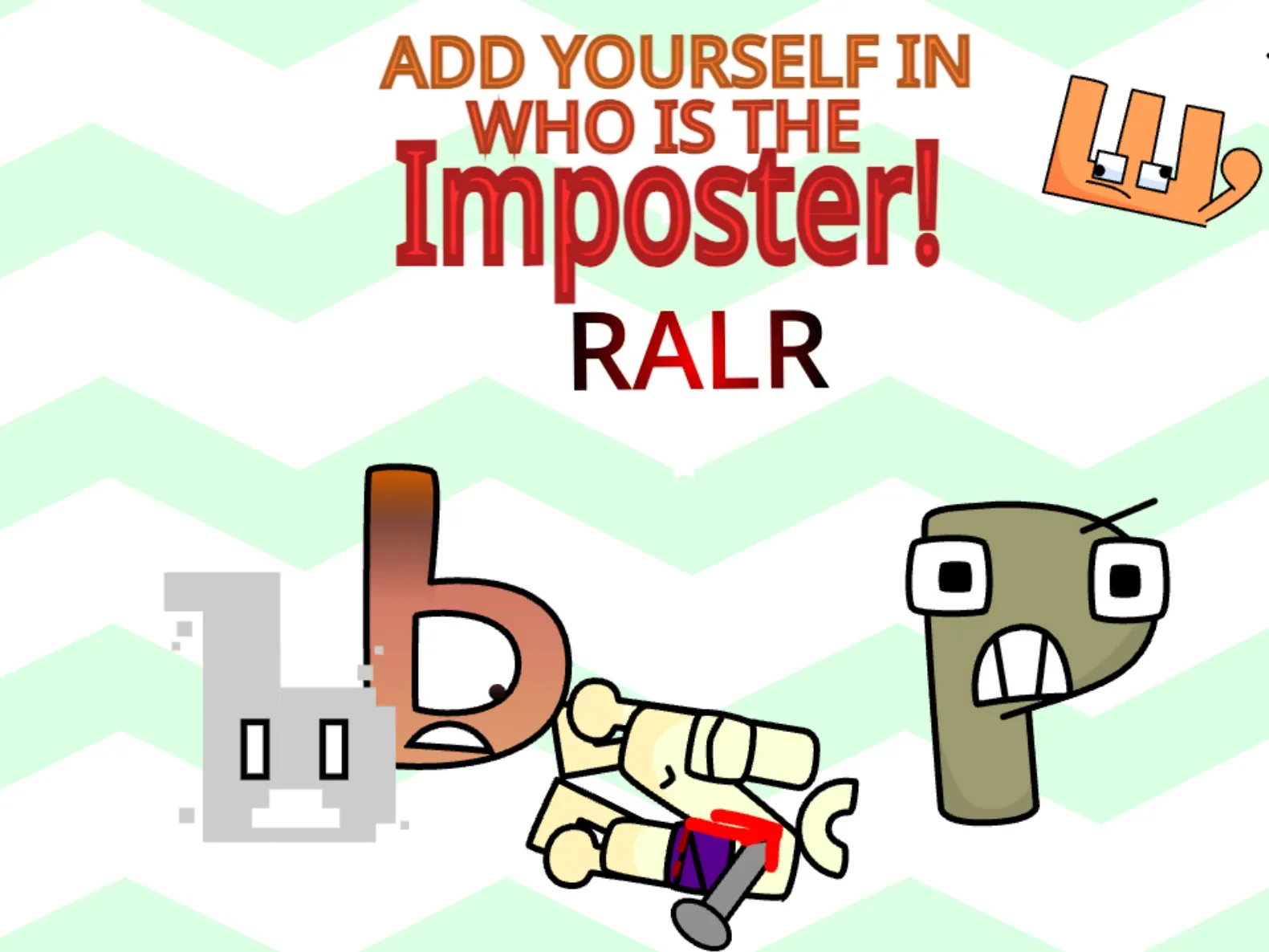
A single spotlight isolates one Russian Alphabet Lore Reloaded character on screen before the room opens, sending a crowd of 33 contestants wandering across a pale green zigzag background. From that opening moment, RALR AY In Who is the Imposter! operates as a hands-off, automated elimination show. Characters glide across the floor, collide, drop into defeated poses, and point fingers at surviving crewmates until only one letter remains.
Despite taking inspiration from social-deduction themes, this is not a game where players gather clues, question suspects, or cast votes. Starting the simulation with the green flag is the only input required. Every event—from who turns killer to who gets framed—is decided entirely by randomized background logic.
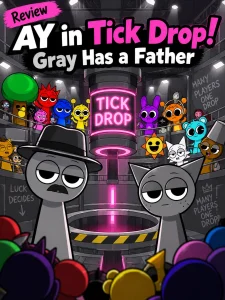
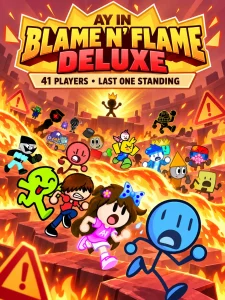
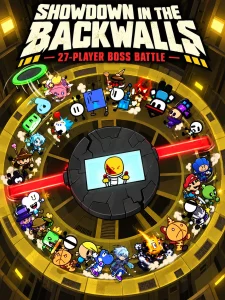
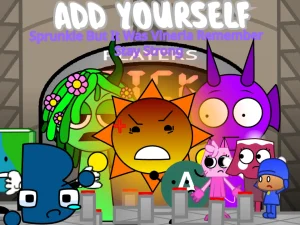
 4 Game Screenshots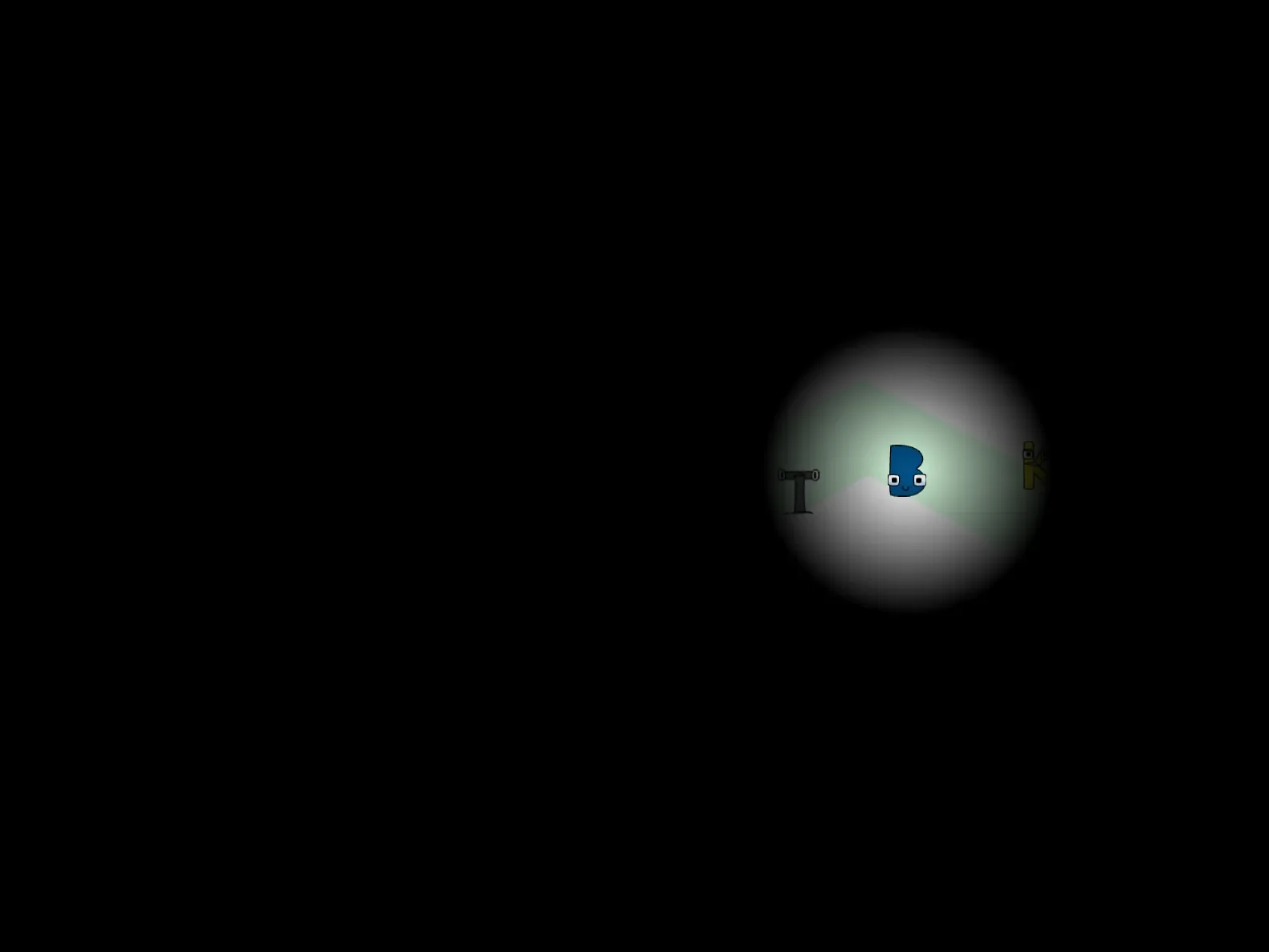
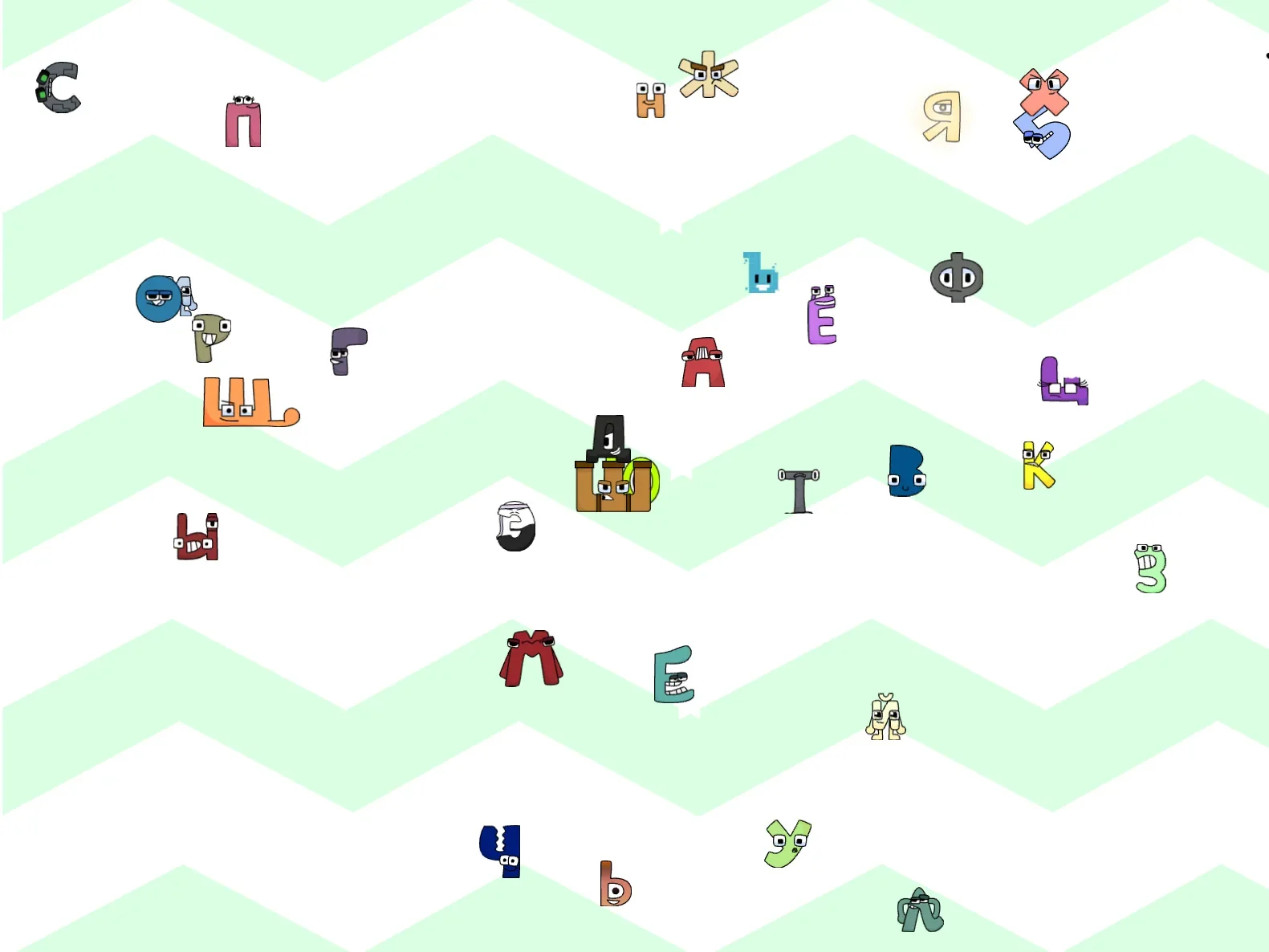
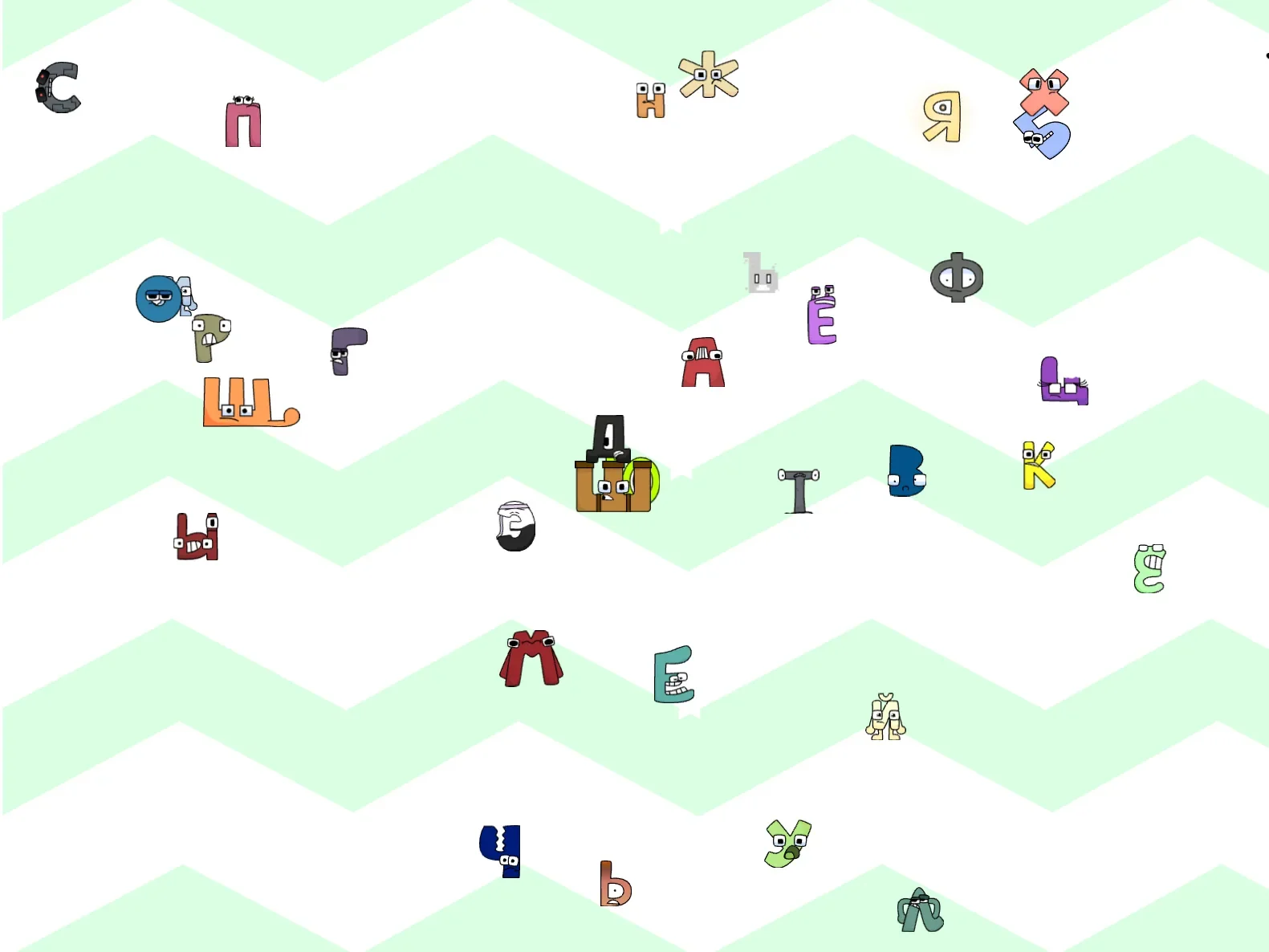
A 33-Letter Roster and Randomized Roles
The game draws its personality from its broad cast of Russian Alphabet Lore Reloaded characters. Its 33-contestant ensemble includes Ah, Beh, Veh, Geh, Deh, Yeh, Yo, Zjeh, Zeh, Eee, Ekrot Kaye, Kah, El, Em, En, Oh, Peh, Er, Es, Teh, Ooh, Ef, Kha, Tseh, Che, Sha, Scha, Hard sign, Yery, Soft sign, Eh, Yu, and Yar. Creator @SprunkibutralrBackup uses the Scratch community's "Add Yourself" (AY) remix framework to swap out standard contestants for this custom cast while keeping the underlying elimination format intact.
No character is assigned a permanent role as hero or villain. Any surviving letter can become the round's killer, victim, or scapegoat, giving figures like Ah, Deh, Er, and Ekrot Kaye different roles across consecutive runs. While the sprites appear tiny when all 33 crowd the screen at once, distinct colors, silhouettes, and expressive shocked or angry reaction poses help track individuals during accusation scenes.
Automated Eliminations and Exaggerated Knockouts
Each round follows a strict automated sequence. The simulation picks a killer at random, and characters float around until one makes physical contact with that killer to trigger an attack. The victim immediately switches to a defeated graphic accompanied by a large death speech bubble. Surrounding letters then turn toward the fallen contestant, delivering line readings through recorded audio clips, speech bubbles, and synthesized voices.
Unless the game triggers a roughly one-in-five chance to skip the accusation phase entirely, the survivors will pick a random non-killer to accuse. Characters turn to face the suspect with lines such as “I know it, get out!” while the accused character protests their innocence. What follows is a dramatic knockout sequence: the framed letter might scale up to fill the display, get launched across the screen, or vanish behind explosion graphics and glass-shattering sound effects. Once the knockout finishes, the remaining letters exit through one side of the room, re-enter from the opposite side, and begin wandering again.
Presentation Spoilers and Structural Limits
While the chaotic contrast between peaceful drifting and loud knockouts gives the visual show its energy, presentation flaws reduce the suspense. The most noticeable issue is the set of visible internal trackers positioned in the upper-left corner of the screen. Labels explicitly displaying the killer, victim, and suspected imposter update immediately, revealing the outcome before the character animations and speech bubbles play out. This transparent UI makes the game useful as an Add Yourself remix template, but it removes the surprise for anyone watching the drama unfold.
Crowding also impacts the visual clarity. With 33 small sprites moving independently across the pale green background, characters frequently clump together or obscure each other during collisions. Random dialogue delays can also cause brief pauses while the spoken lines catch up to the action.
The elimination loop continues until a single letter survives, but reaching the end brings no special victory screen, narrative ending, stats summary, or reward. There are no alternate routes, hidden rooms, or collectible items to discover. Replay value on Fortcade rests entirely on watching how the randomized bracket plays out and seeing which unexpected letter combinations produce the most chaotic knockouts.