Thirty-nine characters assemble around a central segmented display, wait for internal turn counts to calculate, and rotate through an automated sequence of random eliminations. In AY in Tick Drop: Scratch Cat & the 39-Player Country Flag Band, the spectator picks a favorite contender, starts the match, and watches the mechanical arena slowly whittle down its crowded lineup one falling sprite at a time. The appeal relies entirely on passive tension: because every round rotates the roster by an unpredictable number of positions, every momentary pause generates a brief burst of anticipation.
The format stems from the popular Scratch "Add Yourself" (AY) remix tradition, where creators duplicate contestant templates, insert customized sprites and sound effects, and expand existing tournament frameworks. While the experience presents itself visually as a fast-paced game show, it functions as a randomized character tournament rather than a traditional skill-based challenge.
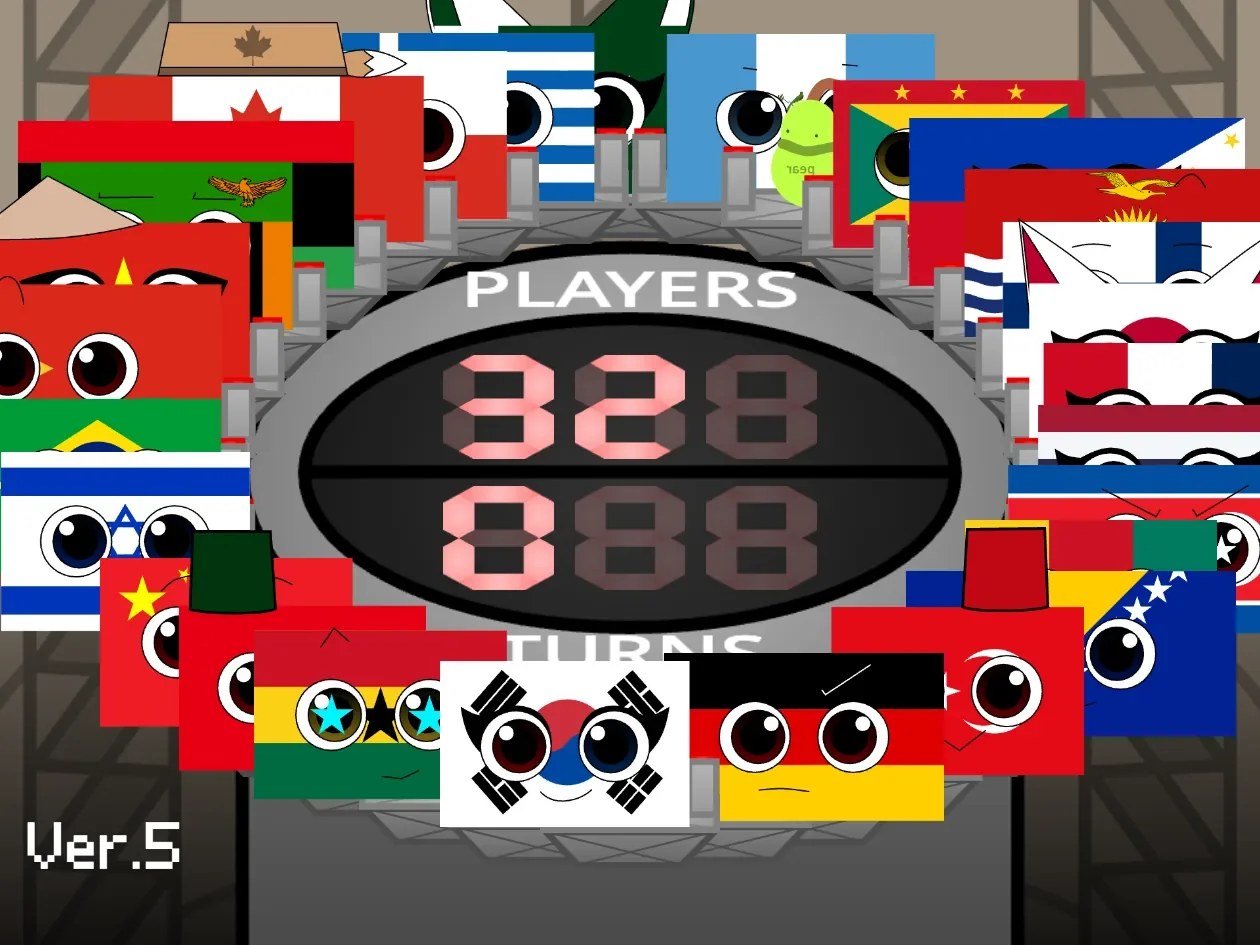
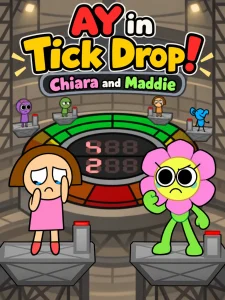
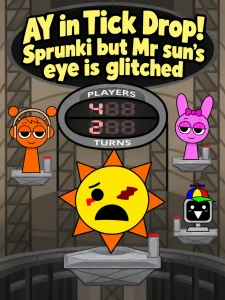
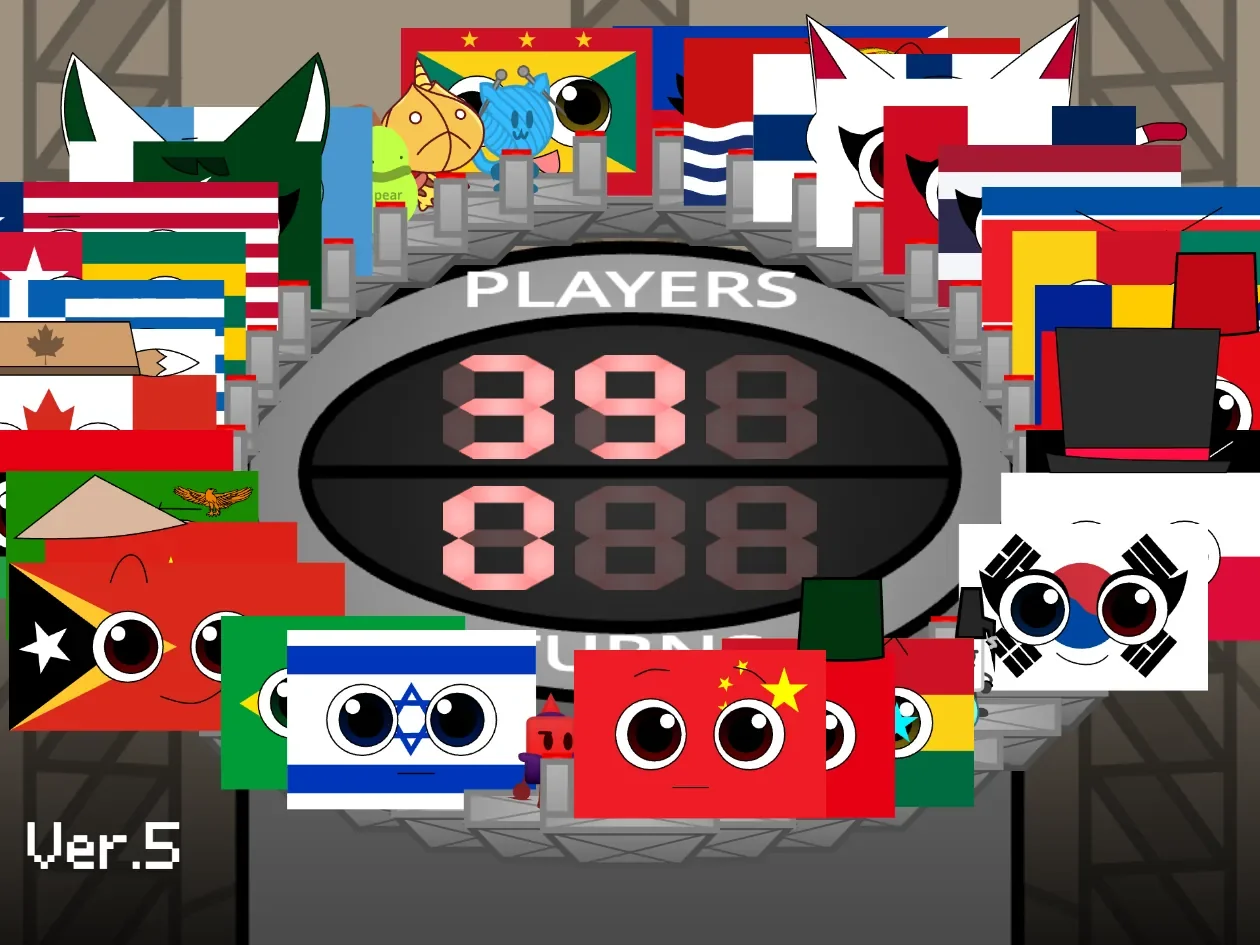 3 Game Screenshots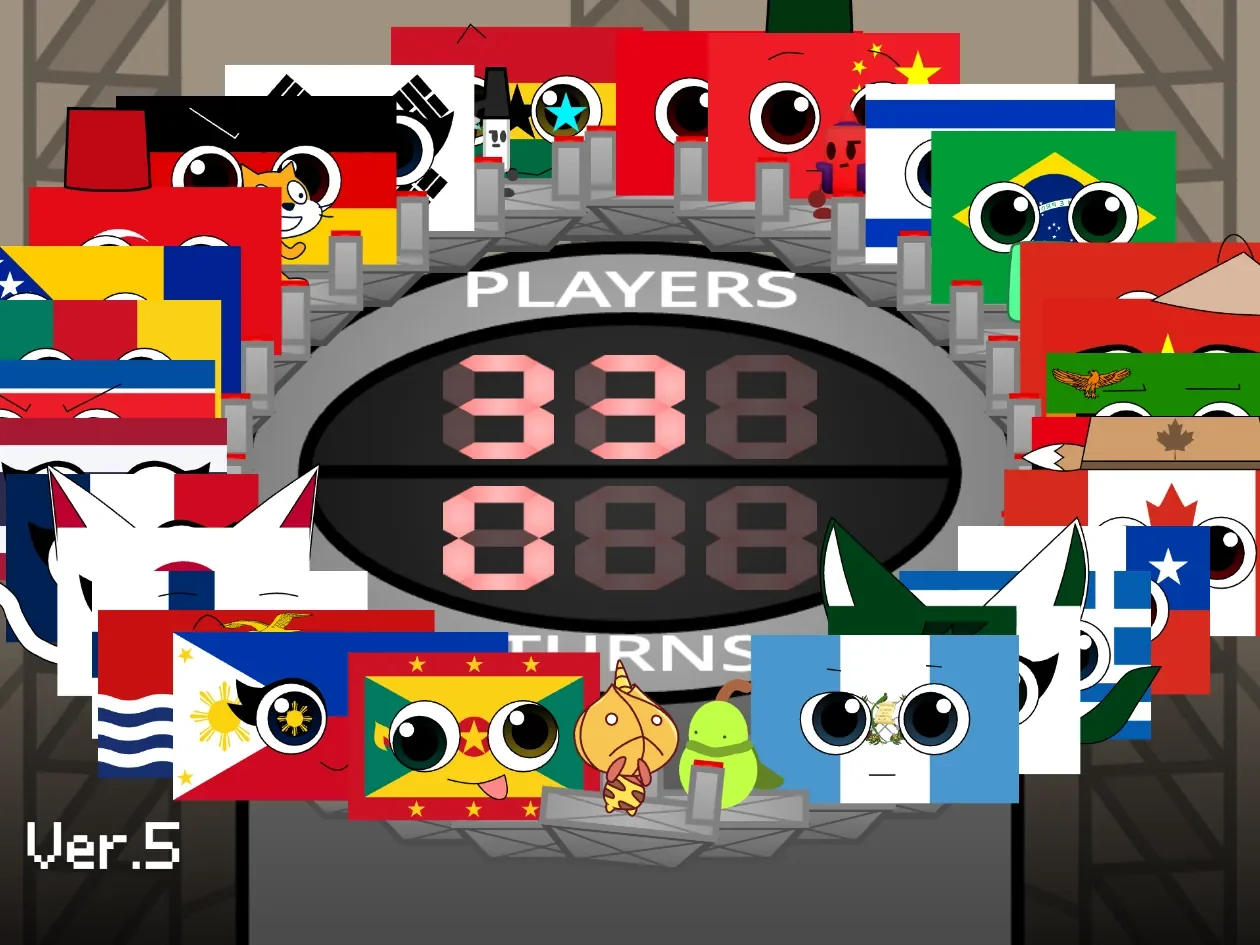
Mechanical Rotations and Automated Eliminations
Every elimination round follows a rigid visual sequence. At the start of a turn, every remaining contestant displays a red button mounted beside its position. Each character independently decides whether to press its button, and the total sum of pressed buttons determines the number shown in the central arena display marked TURNS. Once this number is locked, the entire roster rotates smoothly around the circle by that exact count of positions.
When movement ceases, the contestant landing on the designated losing spot experiences an immediate, dramatic exit. The doomed character reacts in surprise, shakes violently, tumbles out of the arena, and vanishes from the match entirely. The central display's PLAYERS counter decreases by one, and the surviving group resets for the next round. Viewers have no tactical influence over these outcomes; you cannot force a contestant to press its button, shield a favorite flag, or alter the final movement distance.
| Action | Control |
|---|---|
| Start or restart the tournament | Click the green flag |
| Identify a contestant | Hover the mouse over the character |
| Stop the current simulation | Click the red stop button |
Roster Breakdown and Visual Crowding
Despite displaying a legacy "33 Players" title label and an internal Version 5 setup, this edition expands the starting lineup to 39 active contestants. Creator @MrSun126 added six bonus characters without completely updating the game's header text. The resulting roster divides into thirty national flags and nine distinct crossover guests.
The thirty country flag contestants include Ghana, Zambia, Vietnam, Pakistan, Poland, Israel, Japan, Kiribati, North Korea, South Korea, Liberia, Libya, Brazil, Bosnia and Herzegovina, Cameroon, Thailand, Timor-Leste, Togo, Tunisia, Türkiye, Canada, China, Chile, the Philippines, Finland, France, Germany, Greece, Grenada, and Guatemala. They are joined by nine non-country figures: Yarnie, Scratch Cat, Minty, Onion Pixie, King Slime, Yellow, Pear, Ketchy, and Penn. Including Scratch Cat highlights its status as a full contestant rather than a background graphic.
Each contestant is customized with expressive features—oversized eyes, mouth shapes, hats, limbs, and unique accessories that transform flat flag rectangles into distinct personalities. However, packing 39 large sprites into a circular arena creates severe visual crowding. During the opening rounds, characters overlap heavily, making it difficult to select or identify specific flags with the mouse until several eliminations clear up screen space. Detail-oriented viewers will note that Chile and the Philippines receive unique, elaborate winner poses if they manage to survive to the final slot, offering an extra reward for repeat matches.
Presentation, Soundtrack Variety, and Pacing Constraints
The industrial arena design reinforces the mechanical theme. Segmented displays track player counts and turns clearly, while metallic impacts, subtle screen shaking, flash effects, and falling animations make each knockout easy to read. Sound design relies on a surprisingly varied soundtrack drawn from classic gaming series, including Mario Party, Super Smash Bros., Undertale, Mario Kart, Marvel vs. Capcom, and Pump It Up. Hearing energetic tracks like "Together We Ride!" from Super Smash Bros. Brawl during intense rotation phases prevents long sessions from becoming musically stale. Separate musical themes cover the intro, active match, result reveals, and final victory sequence, which finishes with confetti poppers once a single champion remains.
For casual browsers seeking a quick spectator simulator on Fortcade, the main operational drawback is pacing. Watching 38 sequential eliminations takes several minutes, and the interface provides no speed multiplier, round-skipping function, score prediction mechanic, or bracket history tab. Viewers who enjoy automated character lotteries will find the gradual buildup engaging, but anyone looking for direct control or rapid match resolution may find the fixed tempo repetitive after a few full runs.
![AY in Noggin's RL, GL Game Redux [ 40 Players ] game cover](https://fortcade.com/wp-content/uploads/2026/10/ay-in-noggin-s-rl-gl-game-redux-40-players-225x300.webp)