Before you can calculate a trajectory or measure an arc, the opposing opponent is already launching explosives across the gap. Blob VS Dummy Tower Battles places two hand-drawn figures atop opposing block towers—blue on the left, red on the right—and arms both sides with an endless supply of heavy, timed explosives. Victory rarely depends on landing a clean direct hit on the enemy character. Instead, the primary contest takes place in the physics of structural damage, where a single misplaced explosive can shift a tower's balance or send an entire stack tumbling down.
The core mechanic uses an intuitive pull-and-release slingshot motion. Dragging Blob’s bomb away from the target sets the speed and angle of the throw: pulling farther increases launch distance, while altering the angle determines whether the bomb travels along a flat trajectory or climbs steeply before falling. However, the game offers no control tutorial or preparation window. The moment a stage loads, Dummy attacks automatically, forcing players to learn the drag-and-release mechanics while incoming volleys are already knocking blue blocks out of alignment.
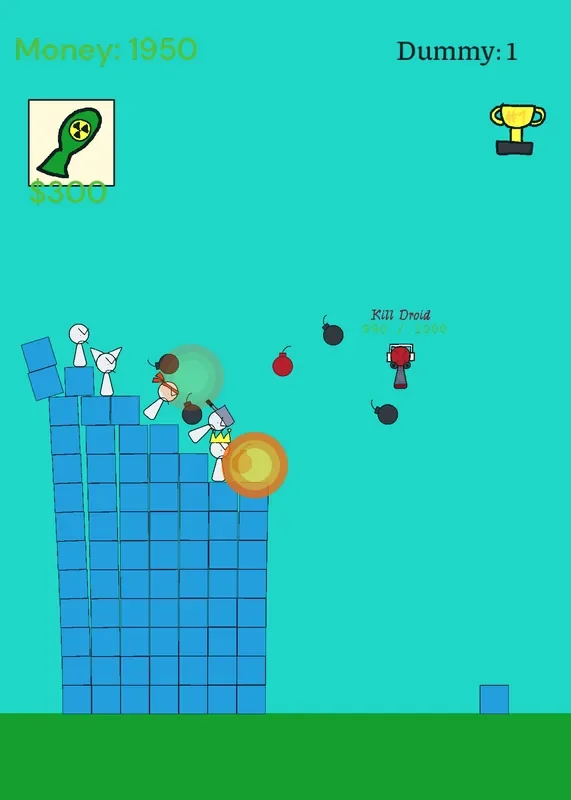 3 Game Screenshots
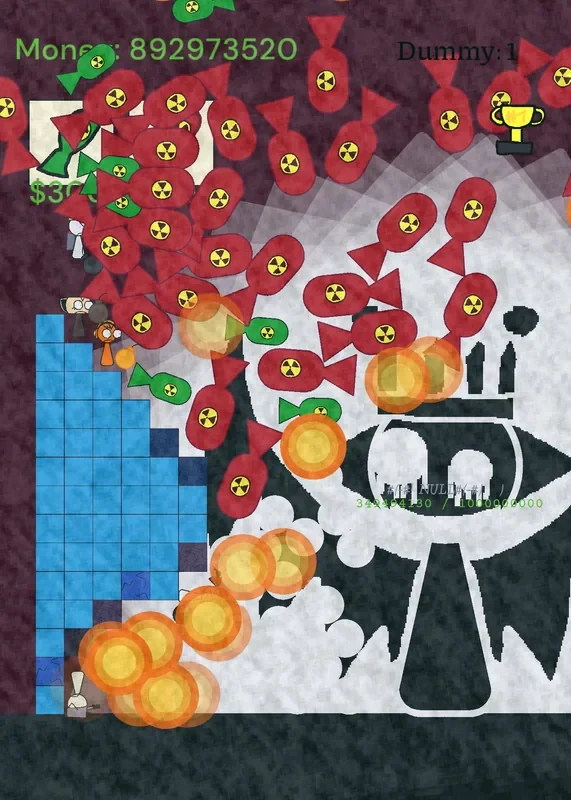
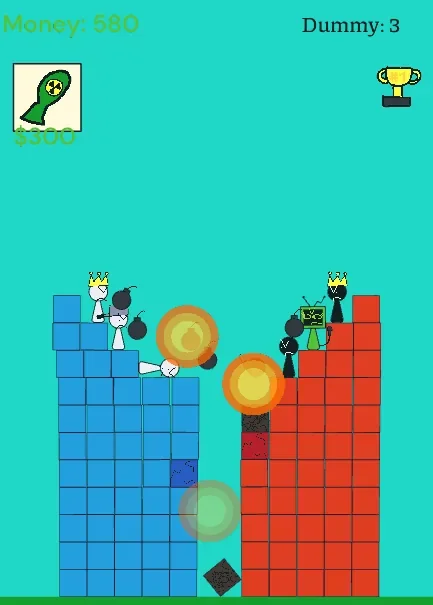
Slingshot Trajectories and Structural Collapse
The destructible towers turn projectile aiming into a physical tactical puzzle. Because bombs carry momentum, weight, and delayed detonations, a shot that misses Dummy entirely can still weaken the red platform's foundation. Removing a critical support block near the base often causes the top section to tilt and slide off, carrying the enemy down with it. Expanding colored explosion circles, sound cues, and immediate physical reactions mark every strike, causing individual blocks to tilt, separate, or tumble across the cyan background.
Because damage is structural rather than based on an abstract health bar, defending your own platform is equally volatile. Incoming volleys from automatic enemy attacks can carve out stairs or destabilize Blob's footing. Community observations note that the violent force of simultaneous explosions can occasionally trigger unusual physics reactions, launching characters high into the sky or leaving them temporarily levitating as platforms crumble underneath. Furthermore, when both structures collapse at the same time under overlapping volleys, players can experience sudden defeats or confusing double-outcome states.
Escalating Encroachments Across 24 Linked Battles
Created by @Cyan_Cube_TH, the campaign features 24 connected battle stages structured as a continuous linear run. Clearing the active Dummy count triggers a "You win (tap to next)" prompt that advances Blob directly to the following encounter. Losing displays "You lose (tap to Retry)" and restarts the current scene, keeping pressure constant without relying on a stage-selection menu. While early levels keep the formula simple by adjusting tower heights and block arrangements, later encounters introduce multi-enemy formations, boss health displays, rain effects, mid-battle showtime animations, and the looming Kill Droid.
Defeating enemies yields cash displayed in the upper corner of the screen, though the pale green text has weak contrast against the bright turquoise backdrop. Players can spend accumulated money between rounds on upgraded weapons. The opening shop offers a $300 explosive weapon, while higher-tier options scale up to $1,500. Attempting a purchase without sufficient funds produces a clear warning message rather than silently consuming cash. Player feedback notes that purchasing and repeatedly launching top-tier explosives—such as high-yield red bombs—can trivialize stage difficulty, allowing players to bypass tower destruction physics and eliminate dense enemy groups in seconds.
A Straightforward Duel with Unforgiving Physics
Reaching the final encounter replaces the standard next-level message with "You win Thank for playing." Continuing from that screen loops back to the first battle, treating the completed sequence as a repeatable run with no hidden alternate routes or secret endings. This looping structure reinforces the game's focus on fast, immediate physical interactions over narrative branching.
Despite its hand-drawn line art and initial lack of guidance, the overall experience delivers a solid mechanical loop around projectile trajectory and structural damage. On platforms like Fortcade, where straightforward physics challenges benefit from immediate feedback, watching a well-placed bomb unravel a tower gives the campaign a dependable payoff.