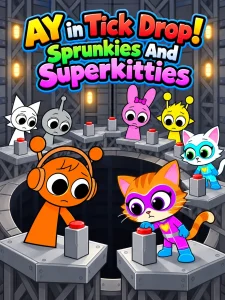
Pulling back on a small golf ball to set up a slingshot shot feels straightforward until the course itself begins rewriting its rules. In Golf BUT You Can Drag The Ball, every stroke increments a strict hit counter, turning simple shot adjustments into tight calculations of power, bounce, and trajectory. While the title suggests unrestricted ball movement from the start, standard play relies on pulling and releasing to launch shots, reserving direct dragging as a special mechanic for a late-stage level.
Created by Castle developer Numtheme_The_Nerd, the game treats its twelve playable stages not as traditional mini-golf fairways, but as a sequence of mutating physics puzzles. Rather than relying on familiar terrain or predictable hole layouts, each stage introduces a distinct mechanic, environmental hazard, or spatial trick. Success requires studying the geometric hazards, firing a test shot, and analyzing the resulting trajectory before excessive hits accumulate on the score counter.
 3 Game Screenshots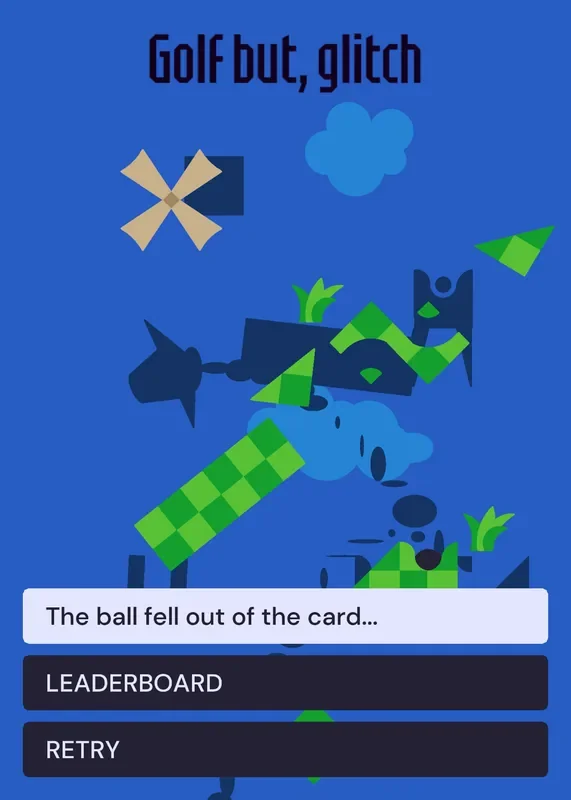
Slingshot Mechanics and Scoring Pressure
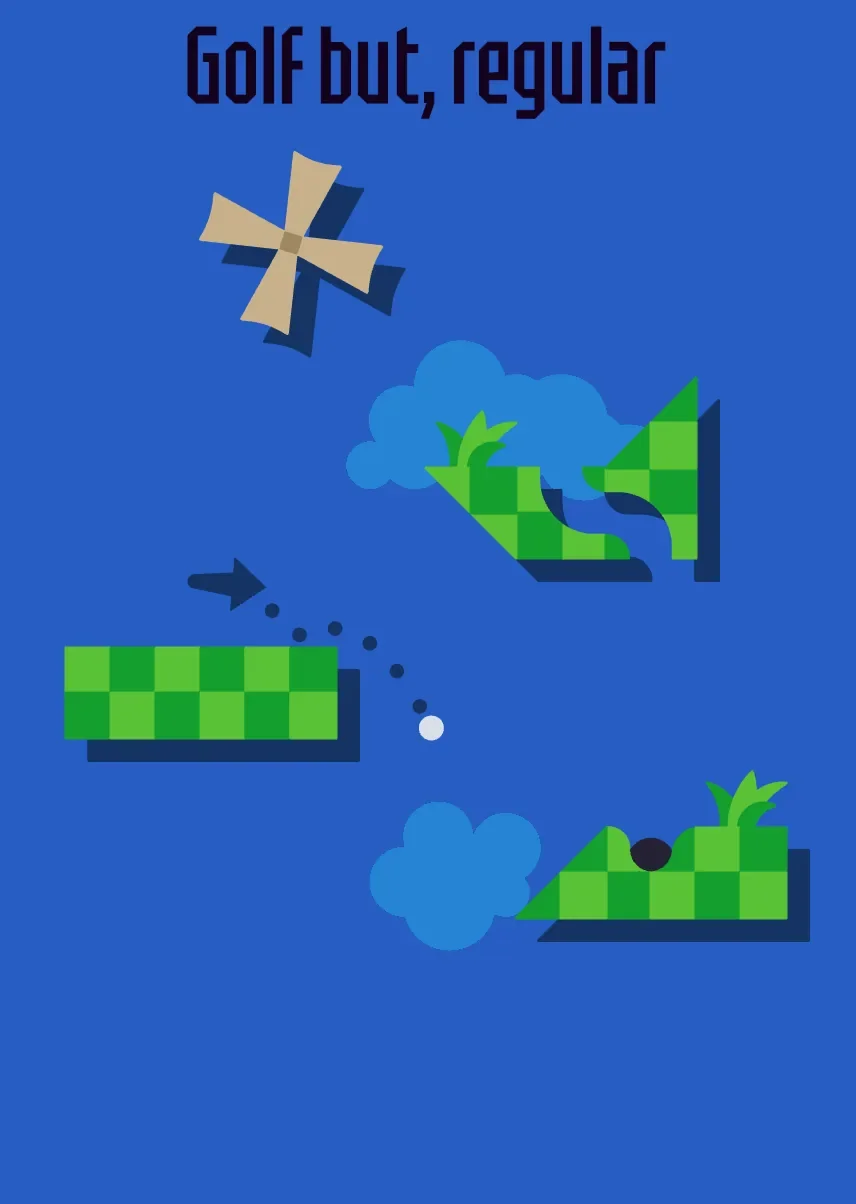
The core movement relies entirely on pointer or touchscreen input, eliminating keyboard requirements. Players touch or click the ball, pull backward to set the desired power and angle, and release to send it rolling across the card. Every release increments the cumulative hit tally, making careless trial and error costly. A faint dotted trail marks the ball's recent path, providing clear visual feedback on how a slope, ramp, or moving mechanism altered its direction.
| Action | Control |
|---|---|
| Aim and shoot | Press or touch the ball, pull backward, and release |
| Move ball directly | Drag the ball across the screen (glitch level only) |
| Restart attempt | Select RETRY |
| Advance stage | Select Next level |
| View records | Select LEADERBOARD |
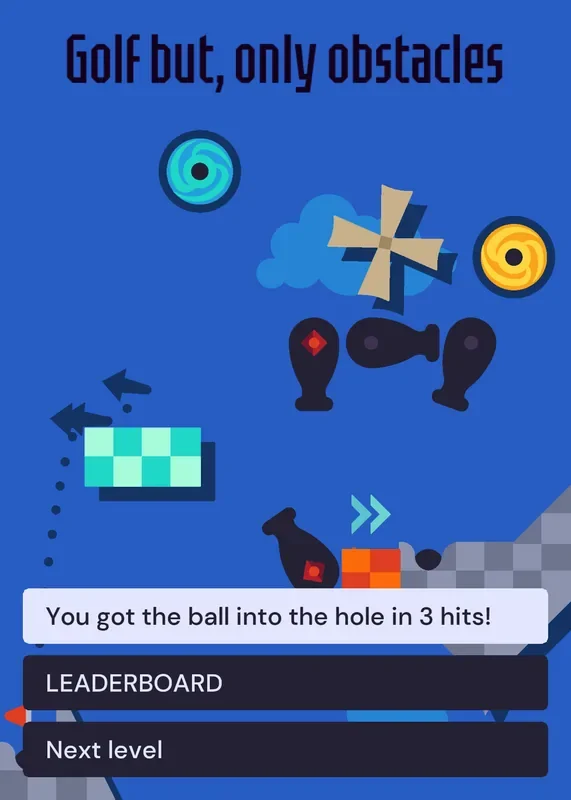
When a ball tumbles off a platform or sinks into lava, failure is handled immediately. The game displays direct messages like "The ball fell out of the card" or hazard-specific alerts, followed by an instant retry prompt. Because there are no life counters or protracted transition screens, restarting a botched hole takes only a single tap. Once the ball comes to rest safely near the hole, sinking it displays either "HOLE IN ONE!" or the exact hit total required to clear the stage.
Twelve Mutating Hole Layouts
The campaign begins with "Golf but, regular," a bright introductory layout featuring blue skies, green checkerboard platforms, basic ramps, and a rotating decorative windmill. This opening hole establishes power control without drowning the player in text instructions. From there, the sequence escalates rapidly through a variety of distinct mechanical shifts:
- An intense obstacle course packed with speed boosts, cannons, slick ice patches, lava hazards, moving traps, and portals.
- A troll-themed stage that uses deceptive ramp angles and awkward geometry to deflect obvious shots away from the hole.
- A volcano-inspired lava level where dropping off a ledge results in immediate failure.
- A layout that alters the ball's default horizontal starting position, forcing unfamiliar aiming angles.
- A glitch level that grants direct dragging controls alongside the normal shooting mechanic.
- A portal-heavy maze containing multiple cup locations and a complex network of linked teleporters.
- A Backrooms level that swaps open outdoor scenery for enclosed, stark geometric hallways.
- A multi-ball stage featuring several 8-balls before looping the route back to an earlier course.
For those browsing Fortcade in search of clever physics challenges, this unpredictable progression prevents the compact campaign from feeling monotonous. However, the visual density in portal-dense and multi-hazard stages can make predicting bounce angles difficult, and the lack of a formal ending screen when the sequence loops after the 8-ball level leaves the final progression feeling somewhat abrupt.
Visual Clarity and Scoring System
Visually, the game uses high-contrast shapes to ensure clear playability. Bright green checkerboard grass stands out against light blue backdrops, while red lava, blue ice, teleporters, boost pads, and holes are clearly color-coded. Environmental touches like clouds, background vegetation, shadows, and themed backdrops lend each card a clean, distinct identity. The vertical portrait orientation fits mobile screens naturally, though desktop players may find the narrow play area demands precise mouse control when navigating small balls around tight corners.
Scorekeeping revolves around per-hole low-stroke records. Players can finish the browser edition anonymously, though saving best scores to the leaderboard requires signing into an account. Refining a messy six-stroke clearance down to a clean two-shot line provides the game's primary long-term replay value.