Behind its original title, How Many Days of Protection Gray Sprunki, Gray Guardian: Sprunki Care Collection presents a surprising reality: there is no visible day counter, no survival target, and no threat to fend off over time. Instead of requiring players to protect a character against accumulating danger, the game gathers a series of lightweight pet-care activities around a central bedroom hub. Feeding, bathing, sleeping, adopting Gray, and experimenting with plush items all branch out from this single room, offering a varied collection of toy-like interactions rather than a score-driven challenge.
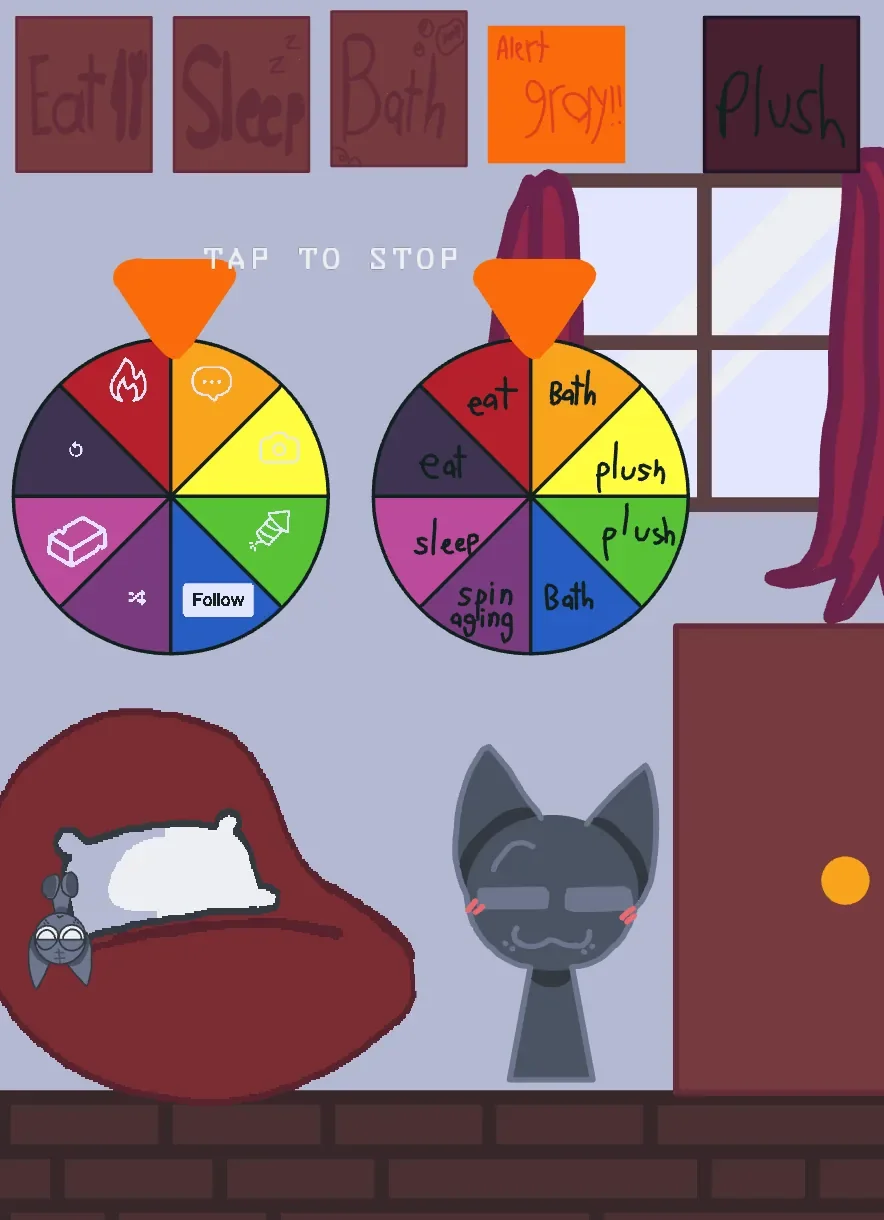
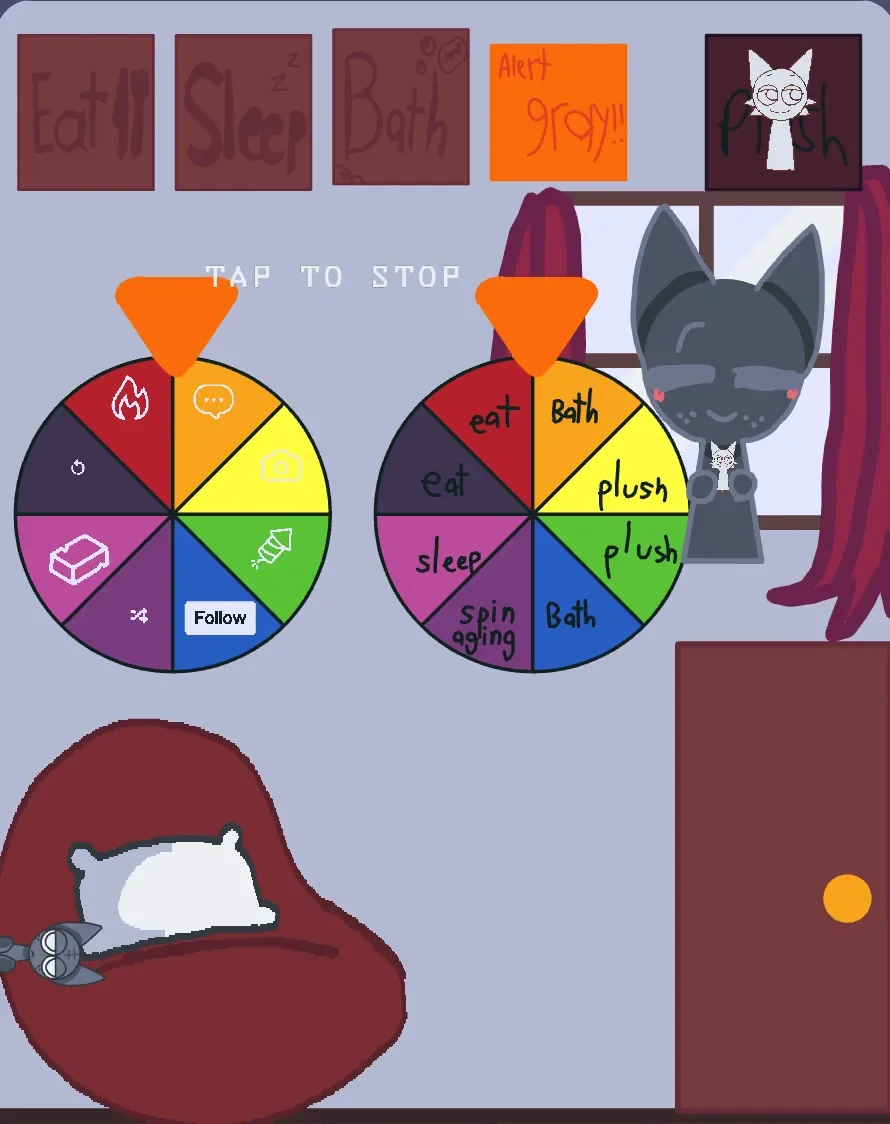
Created by @Slat_674off, the main bedroom functions simultaneously as a playable scene and a functional menu. Gray stands beside a tall brown door, while a small plush-like figure rests nearby on a bright red chair. Suspended above them are two colorful wheels that rotate continuously beneath orange pointers. The left wheel features activity icons such as fire, conversation, photography, and sleep, while the right wheel displays written text choices including eat, Bath, plush, sleep, and spin again. The instruction TAP TO STOP directs the interaction; clicking or tapping pauses both wheels on a random pairing before they resume, functioning as an entertaining fortune spinner with no score penalties or failure screens attached.
 6 Game Screenshots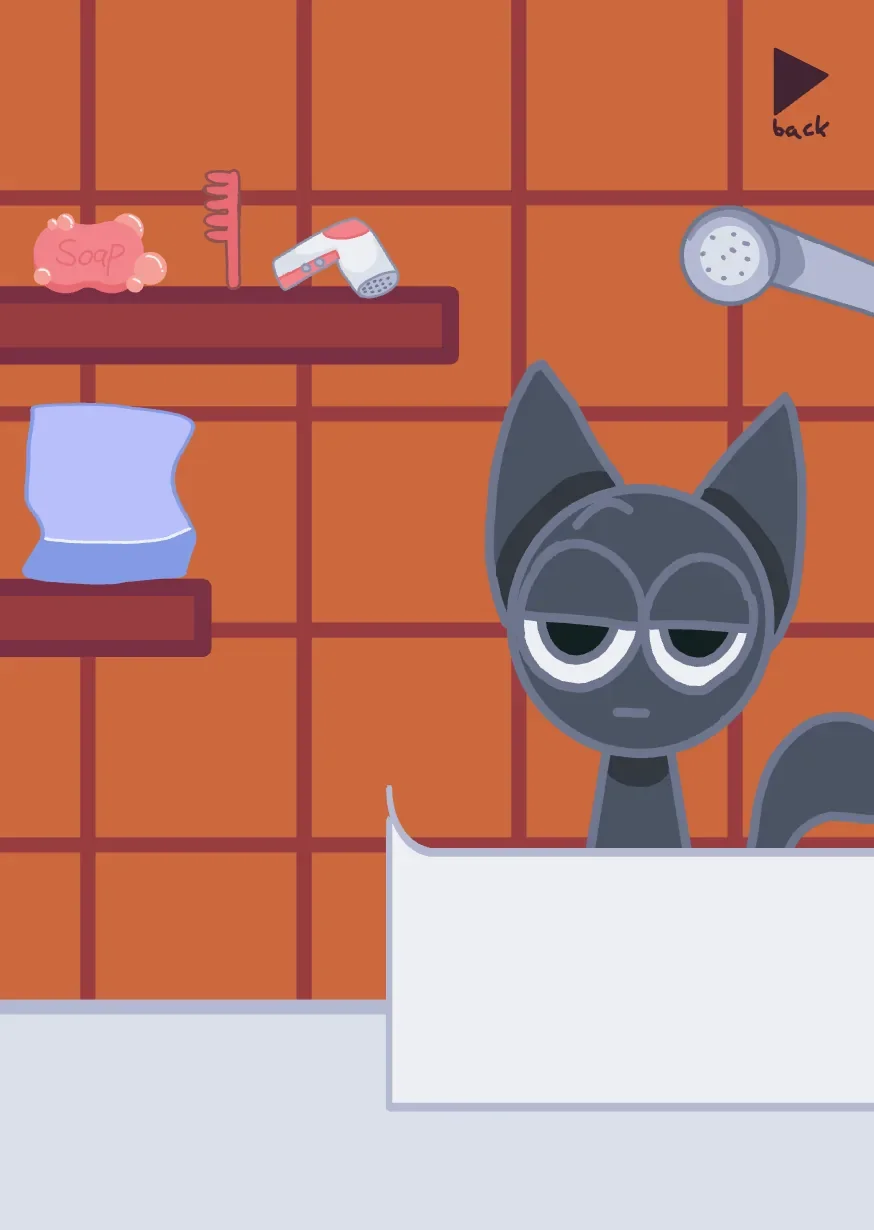
Accessing Care Scenes Through the Hub
Along the top of the bedroom interface, five handwritten cards outline the primary activities: Eat, Sleep, Bath, Adopt Gray, and Plush. Selecting any card transitions out of the main room and opens a dedicated care scene or room interaction. When exploring this release on Fortcade, players will find that these top cards provide a far more structured way to navigate the game than relying solely on the randomized spinning wheels.
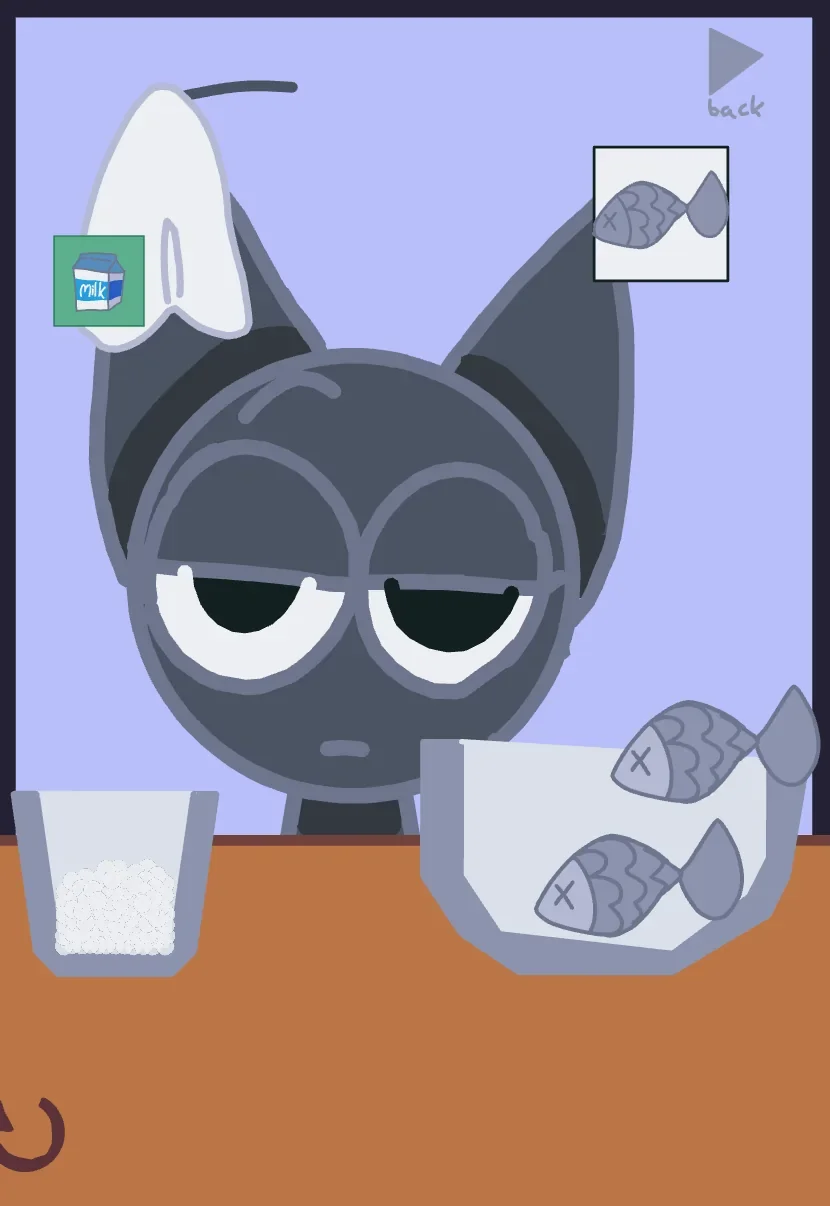
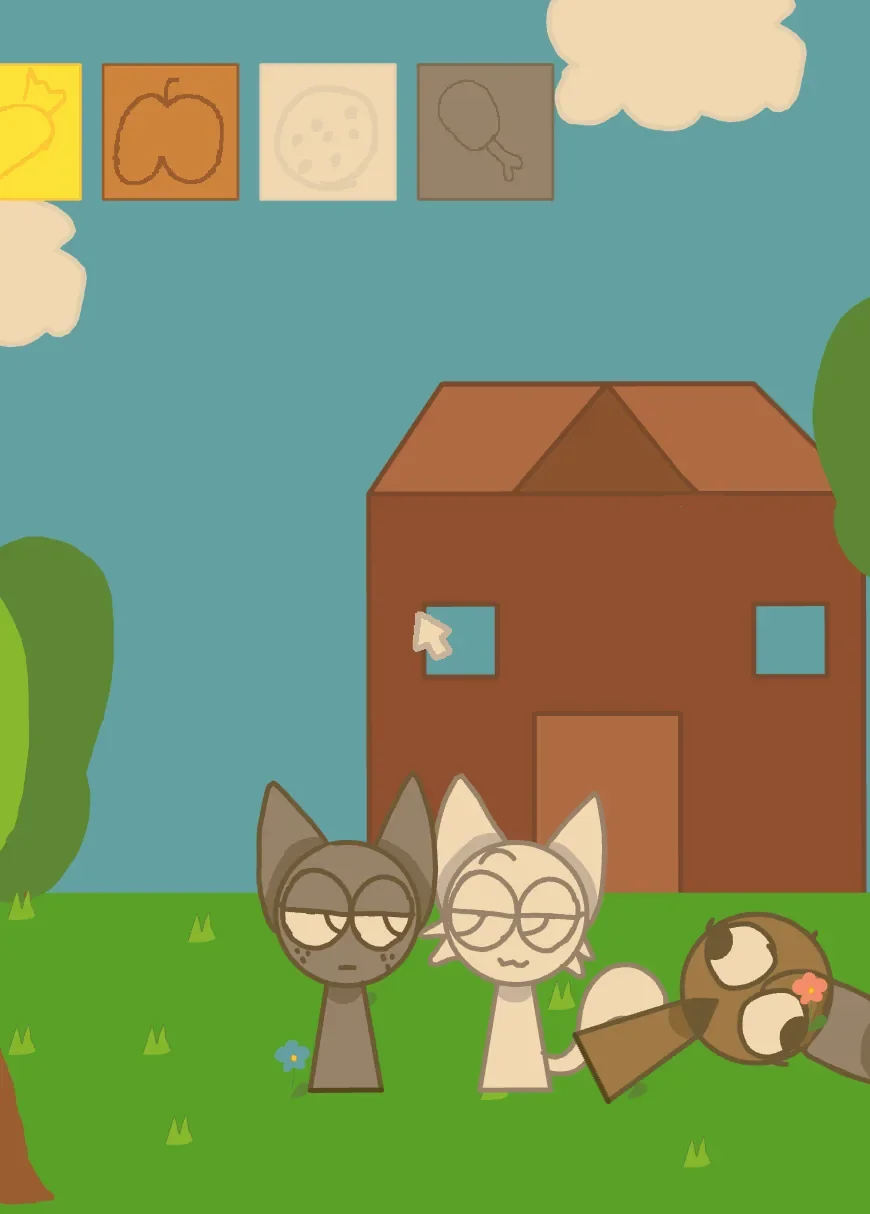
The feeding scene moves the character outdoors to a grassy yard bordered by trees and a small house, where Gray is joined by a pale Sprunki companion. A row of food options along the interface includes a carrot, an apple, a cookie-like snack, and a drumstick. Items can be generated or brought into contact with either character, triggering brief reaction animations and subtle expression changes. While feeding increments activity counters and alters character frames, it operates purely as an interactive animation rather than a strict hunger management system with resource limits.
Bathing, Sleeping, and Special Cards
The bath scene represents the most hands-on care activity in the collection. The room includes water droplets and a selection of draggable grooming tools, specifically a piece of soap, a comb, and a hair dryer. Pressing the dedicated water control generates water in the space, while the grooming tools can be dragged directly onto Gray to alter the character's current visual reaction and appearance.
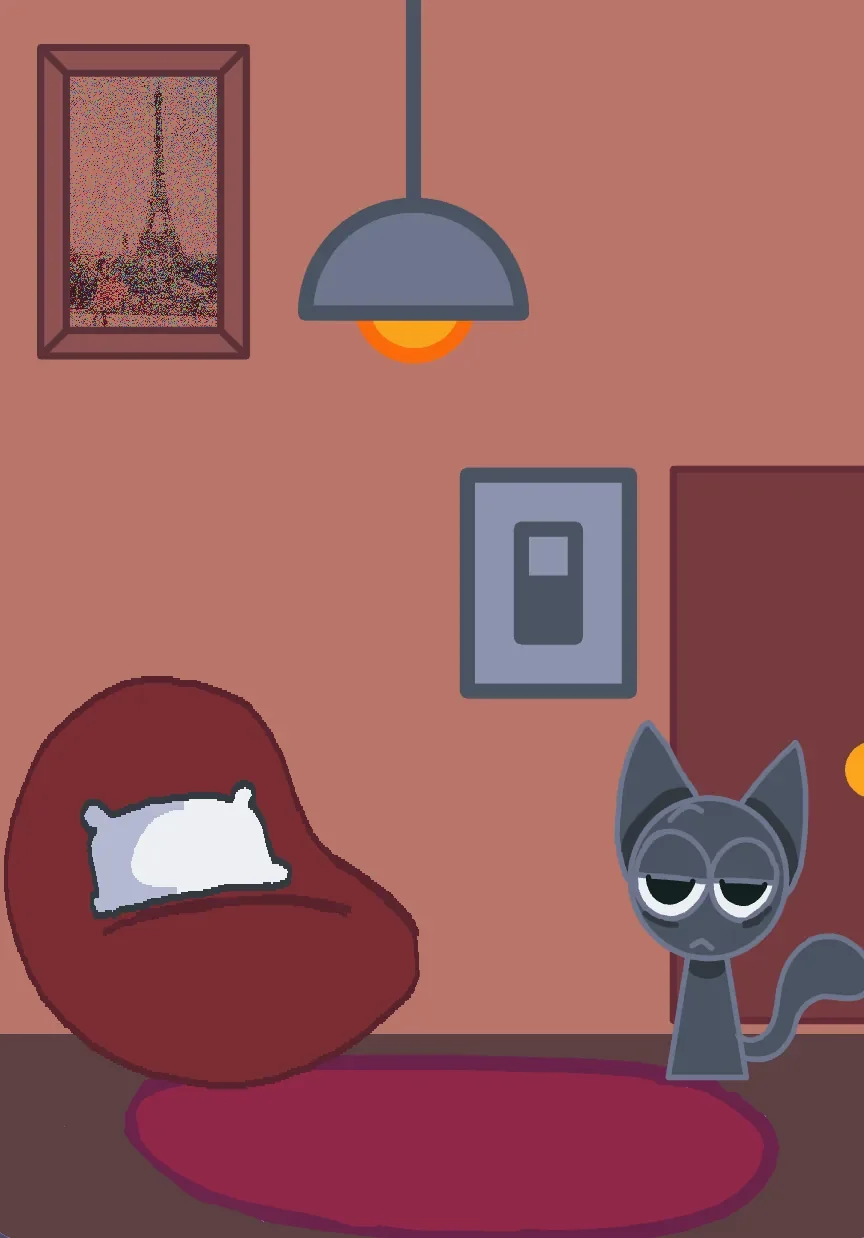
The sleeping module returns to a tranquil interior centered on a bed. Players can drag and reposition Gray within the room, and the character displays distinct sleeping poses when placed against the bed area. This mode emphasizes smooth character animations and relaxed visual feedback over mechanical complexity, fitting naturally alongside the other pet-care activities.
The remaining two cards offer brief, humorous departures from daily care routines:
- Adopt Gray: Opens a brief character status card featuring the text "Gray will capture the hackers," serving as a playful ending frame rather than an interactive mini-game.
- Plush: Allows players to generate or move a plush-related item close to Gray, instantly changing the character's face into a pleased expression.
The Hidden 3D Side Game
The bedroom door provides a gateway to the game's largest surprise, leading entirely away from the flat care rooms into an outdoor movement-based experiment. This mode uses a simulated 3D presentation featuring paved roads, surrounding scenery, projected background objects, and a dynamic tracking camera following a controllable character.
An on-screen analog control allows players to move the character across the landscape, with walking frames shifting dynamically based on movement speed. Surrounding buttons allow players to spawn various objects or obstacles directly into the projected environment, while a dedicated return button transports the player straight back to Gray's bedroom. Although its artistic perspective is rough and its ultimate objective remains unstated, this mode gives curious players a distinct exploration space that expands the experience beyond standard 2D menu screens.
Interaction Details and Practical Guidance
While the core loop is approachable, subtle interface quirks require a bit of patience during play:
| Action | Input | Result |
|---|---|---|
| Stop the wheels | Click or tap while they are spinning | Freezes both wheels briefly on a random pairing |
| Open an activity | Select a top card | Changes to the corresponding Gray scene |
| Use food or care props | Click, press, or drag the visible item | Creates the item or brings it into contact with a character |
| Reposition Gray | Drag the character in supported scenes | Moves Gray and changes the pose or expression |
| Explore outside | Select the bedroom door | Opens the movement-based side activity |
| Move in the outdoor course | Use the on-screen analog control | Walks the character through the projected environment |
| Return to the hub | Select the scene's return control | Restores the main bedroom |
The game's visual presentation carries a distinct handmade charm, marked by Gray's sleepy facial expressions and the vibrant outdoor settings. However, inconsistencies in visual scale appear across different rooms, and certain handwritten labels can be difficult to read against busy backgrounds. Some interactive elements, including the bedroom door and certain buttons, visually blend into the background scenery, requiring direct experimentation to discover. Furthermore, player feedback observations frequently note inquiries regarding the missing "days of protection" counter, highlighting initial friction caused by the title's unfulfilled survival premise. When approached as an informal collection of interactive Sprunki scenes and toy-like modules, the game delivers an engaging variety of secret-filled rooms to explore.

![AY in Noggin's RL, GL Game Redux [ 40 Players ] game cover](https://fortcade.com/wp-content/uploads/2026/10/ay-in-noggin-s-rl-gl-game-redux-40-players-225x300.webp)