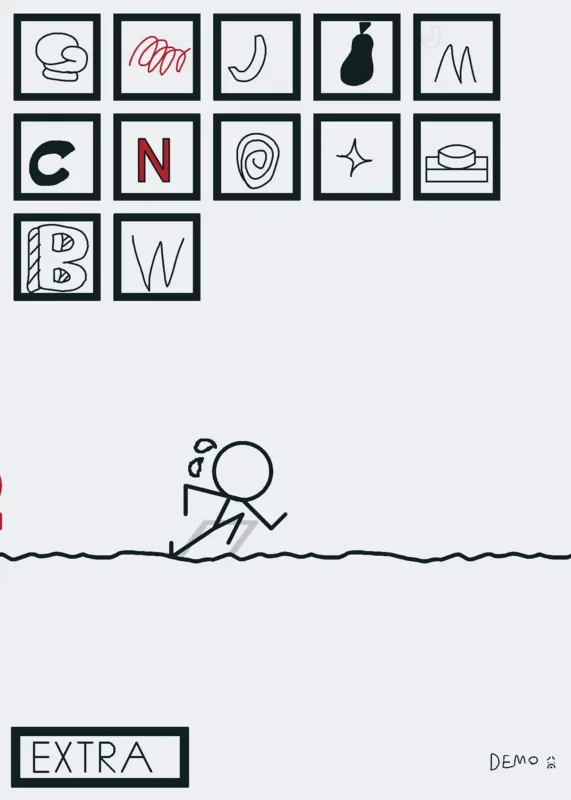
A red stick figure endlessly pursues a black stick figure beneath a grid of cryptic pictograms. Tapping any picture interrupts the chase and immediately opens a short joke, fight, crossover, or disaster scene. Red and Black: Stickman Endings turns a simple chase animation into an interactive gallery of stick-figure outcomes where curiosity drives every transition.
The main selection screen presents twelve unlabeled icons arranged across three rows: five in the top row, five in the middle, and two at the bottom. Symbols like a mushroom, spiral, letter, pear, or button offer no explanatory text before being selected, treating the opening screen like a visual toy box. Selecting an icon breaks the chase loop to reveal a specific named ending.
Leaving the menu untouched reveals a thirteenth outcome. If a player sits on the selection screen without choosing an icon, Red eventually catches Black, triggering the secret Bad Ending. Doing nothing is itself a valid choice, even though the game never announces this rule. Player discussions frequently highlight the search for a missing "Good Ending," though the available outcomes consist primarily of comedic gags, sudden confrontations, and disaster scenarios rather than a triumphant conclusion.
 4 Game Screenshots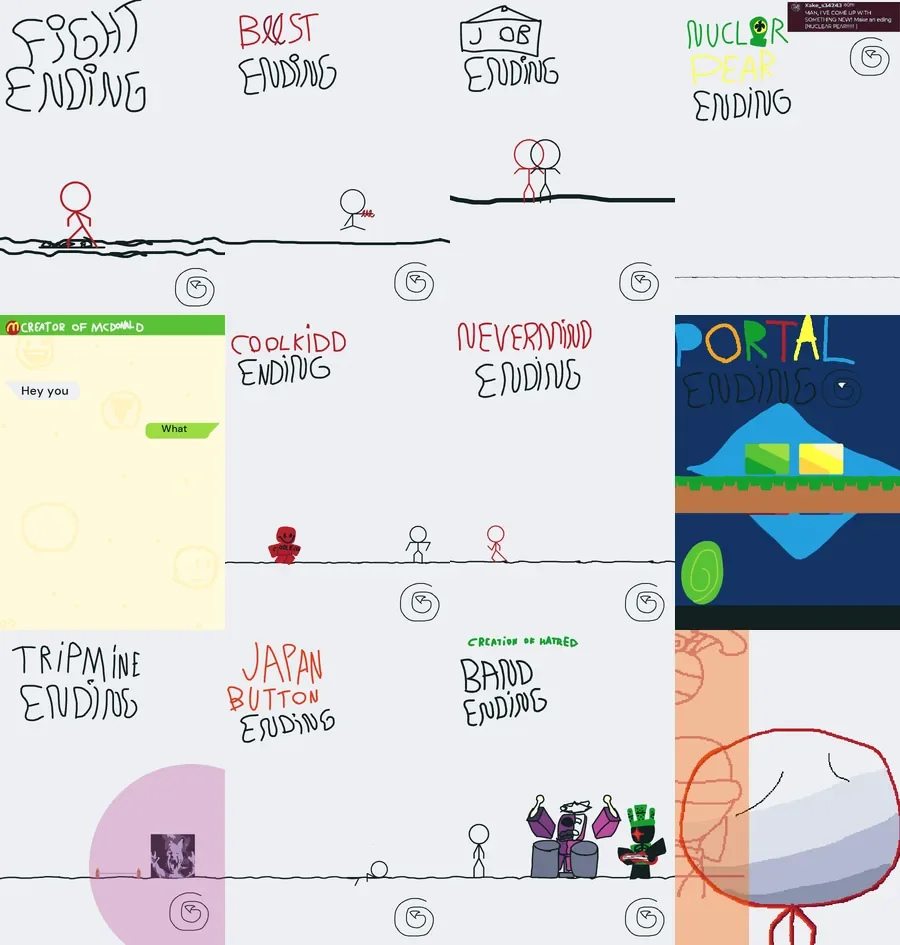
Unlabeled Icons and Vignette Variety
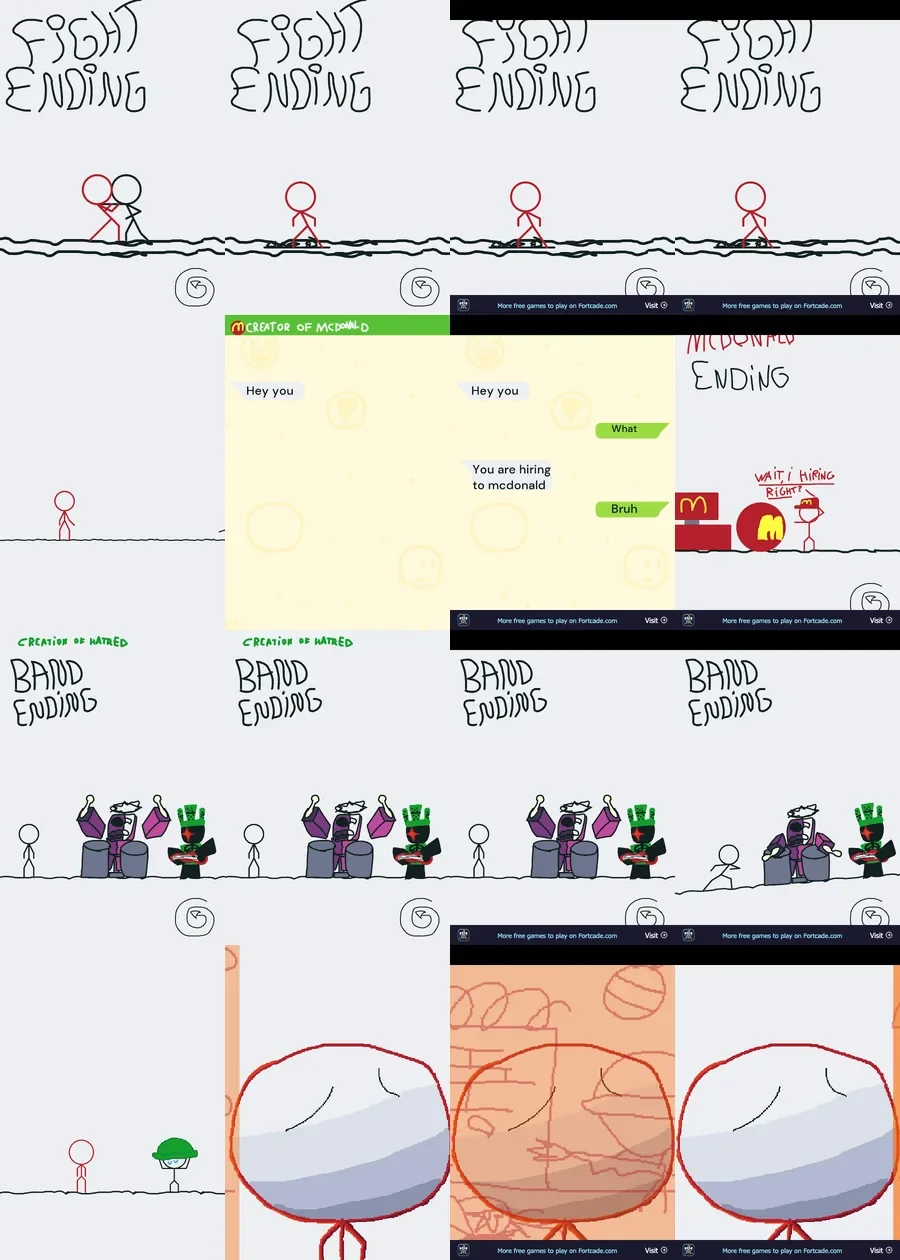
The twelve visible choices span wildly different pacing and visual structures. Quick outcomes like the Fight Ending stage a direct clash on the standard white background, whereas the McDonald route opens with a text message exchange ("Hey you," "What," "You are hiring to mcdonald") before shifting into a restaurant punch line. The War Ending uses close-up cinematic shots before showing the lingering aftermath of a confrontation. Meanwhile, Portal replaces the pale background with a bright blue environment.
The game draws heavily on internet culture and guest creations. Player feedback frequently notes references to classic Roblox items and myths, including the Subspace Tripmine, Speed Coil, c00lkidd, and Noli. Other branches mirror tropes from Alan Becker's Animation vs. Animator series, where stick figures interact with custom environments and familiar designs like The Second Coming. Some outcomes rely on explicit community credits: Nuclear Pear Ending stems from a credited player suggestion, while the Band Ending introduces detailed guest performers created by Marted.
Interaction, Flow, and Hand-Drawn Presentation
Navigating the gallery requires only simple taps or clicks:
| Action | Input | Result |
|---|---|---|
| Choose an ending | Tap one of the twelve picture icons | Opens the corresponding vignette or animation |
| Return to the gallery | Tap the circular back arrow | Restores the main ending-selection screen |
| Find the hidden Bad Ending | Wait without selecting an icon | Allows Red to catch Black and triggers the secret scene |
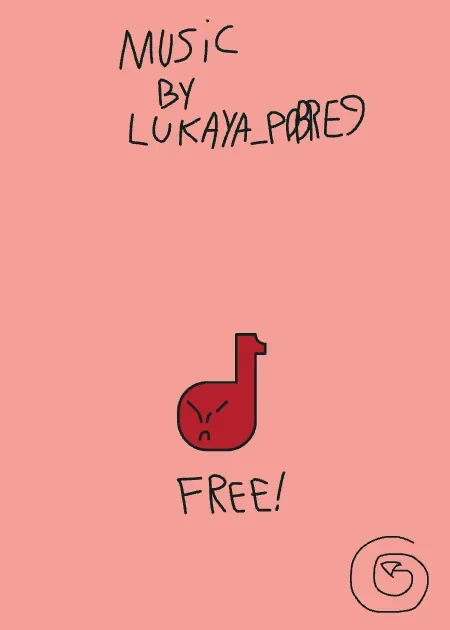
| Open the bonus page | Tap EXTRA | Shows the creator’s music credit page |
Tapping an icon loads the corresponding vignette, and tapping the circular back arrow returns directly to the full grid. Choosing the EXTRA button does not launch another ending; instead, it opens a separate pink credit page detailing music by creator @lukaya_pobre9.
Visually, the presentation relies on thin, uneven line art over pale backgrounds, with Red providing the primary splash of color. Titles like Nuclear Pear Ending and Japan Button Ending use irregular, multi-colored hand lettering. On platforms like Fortcade, this informal sketchbook aesthetic emphasizes a collection of community ideas rather than a structured platformer or continuous runner.
Beyond its reachable endings, the underlying files contain an unused scene and an uninstantiated imported link, though neither functions as a playable ending. There are no leaderboards, multiplayer modes, save files, or competitive scores. Red and Black: Stickman Endings works as a brief discovery game, rewarding players who enjoy clicking obscure symbols to see what strange outcome unfolds next.