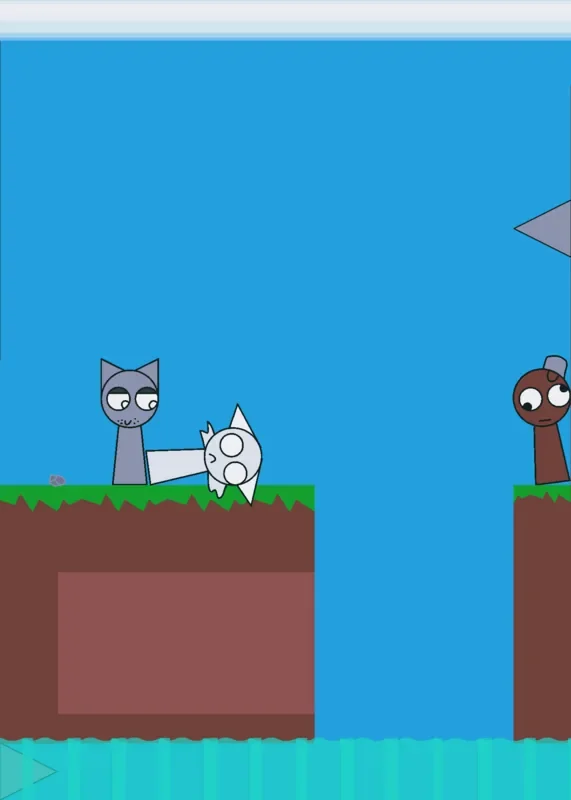
A narrow blue gap divides the platforms, but safety is immediately in short supply. Sprunki: Gray, Wenda & Brud Bad Endings puts players in direct physical control of three flat cartoon figures—Gray, Wenda, and the bucket-headed Brud—in a compact physics scene where every drop, slip, or nudge triggers a tailored disaster. Rather than offering conventional platforming controls or structured levels, this interactive short by @ilikemycheesedrippy3 relies entirely on direct dragging and momentum manipulation.
Doing nothing is enough to prove how unforgiving the space is. Leaving the figures untouched for just a few seconds leads straight to a blunt "Bad ending" prompt followed by a quick restart option. The setup functions like an interactive sandbox of physical failure states rather than a rescue story, establishing a tone where clumsy releases and precise positioning are the primary focus.
 3 Game Screenshots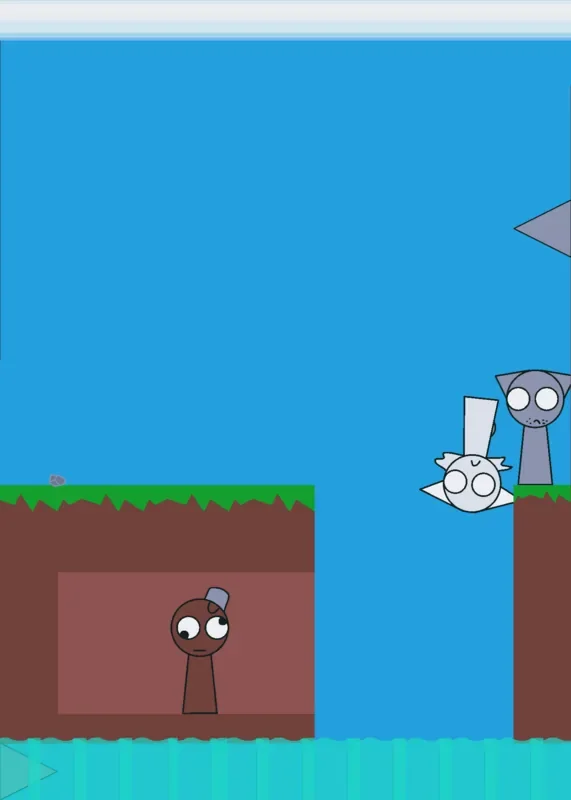
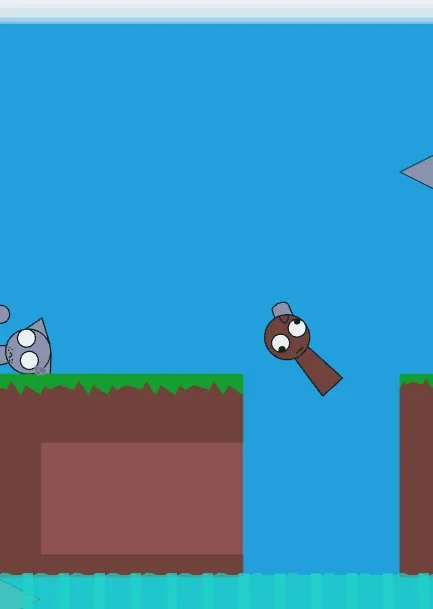
Direct Dragging and Physical Hazards
Without arrow keys, jump buttons, combat abilities, or stage transitions, movement relies on clicking and dragging characters across brown, grass-topped ledges, oversized gray spikes, and off-screen space. Gravity pulls the cast toward the bright water at the bottom or down through the central drop, but the final outcome depends heavily on which character encounters which surface. Dropping Wenda onto a hazard produces a different reaction than sliding Gray off the edge, while Brud’s distinctive bucket silhouette adds more variations to every collision.
Community observations highlight how much of the appeal comes from informal testing rather than solving a fixed puzzle. Players frequently experiment with stacking figures on top of each other, noting subtle visual details such as Gray smiling when Brud is placed directly onto his head. Others treat complete cast destruction as an amusing personal goal or engage in roleplay jokes involving Gray and Wenda. For players discovering the title on Fortcade, these unprompted physical interactions demonstrate how much personality is packed into a minimalist canvas.
Failure Labels and Structural Limitations
Replay value stems from hunting down specific outcome labels scattered across the scene's collision zones. Players can discover results such as Space ending, Out ending, Sad ending, Accident ending, Space ending 2, Space ending 3, WEE ending, NO ending, WHY ending, and IT WAS AN ACCIDENT ending. Because each figure responds distinctly to gravity and geometry, reaching every message requires testing different trajectories and character combinations across the same small set of obstacles.
The downside of this open sandbox design is the complete lack of tracking tools. The game provides no ending gallery, achievement counter, goal marker, or clear signal that every failure outcome has been uncovered. Once all the blunt text prompts have been seen, there are no additional stages or hidden mechanics to maintain momentum. It remains a quick two- to five-minute experiment—a brief, amusing interactive short that trades traditional progression for immediate cause and effect.
![AY in Noggin's RL, GL Game Redux [ 40 Players ] game cover](https://fortcade.com/wp-content/uploads/2026/10/ay-in-noggin-s-rl-gl-game-redux-40-players-225x300.webp)