
Wenda & Friends: Sprunki Ragdolls trades combat mechanics for an interactive gallery of floppy figures. Instead of dodging strikes or monitoring health meters, players choose a character from a grid, enter a compact mint-green stage, and pull the figure's head or body to a looping audio track. Wenda herself forms the primary centerpiece with her white cat-like head, pointed ears, eyelashes, and long torso, remaining recognizable even when stretched into awkward, off-balance positions.
Despite lingering UI labels like "attack," the environment contains no weapons, health bars, damage counters, or hostile encounters. Everything revolves around direct manipulation and watching cartoon joints stretch across the screen. Players frequently describe extreme pulls as "breaking bones" or distorting the character model, though the underlying system remains entirely passive. That contrast between lingering aggressive phrasing and pure physics posing occasionally creates confusion for players expecting combat, though the toy never shifts into an action game.
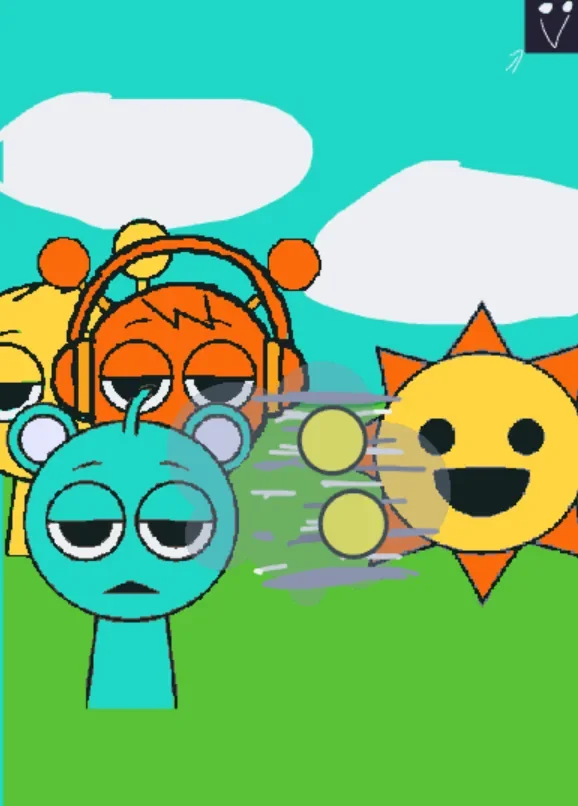
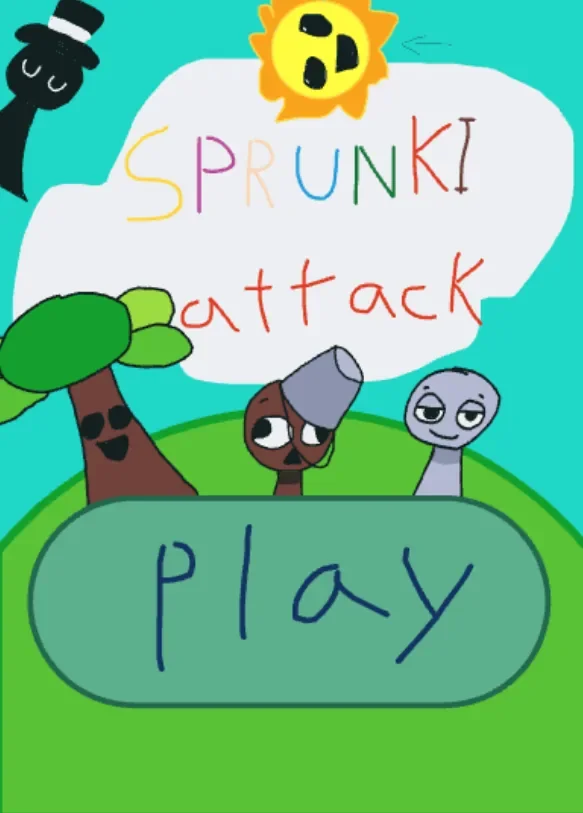 4 Game Screenshots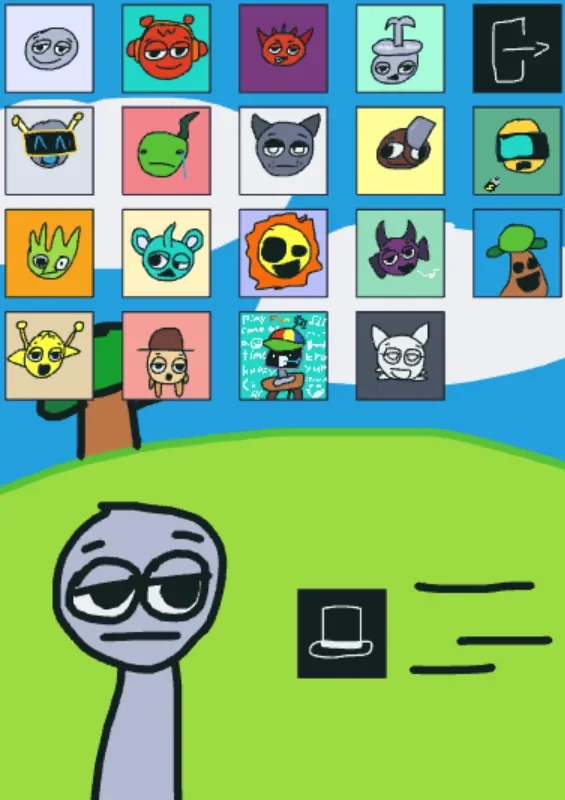
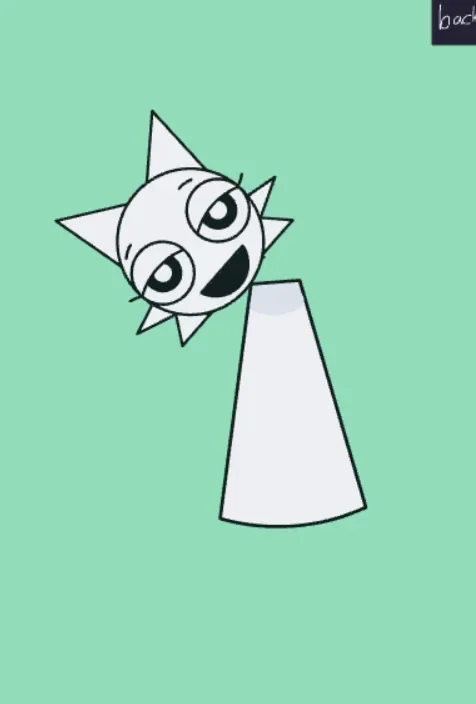
Drag Controls and Stage Isolation
Navigating the menu is immediate. Selecting a portrait loads an isolated stage built around that single design, accompanied by its own background track and drag interactions. Moving Wenda by her head tilts her face while her torso lags behind, giving her movement a sense of weight rather than feeling like a static image slid across a screen.
| Action | Input | Result |
|---|---|---|
| Open the character menu | Tap Play | Displays the Sprunki portrait grid |
| Select a character | Tap a portrait | Opens that character’s individual scene |
| Manipulate the ragdoll | Drag the head or body | Pulls and rotates the connected body sections |
| Return to the roster | Tap Back | Reopens the character selection screen |
Because every figure occupies a separate scene, characters like Wenda and Gray cannot collide, perform together, or be arranged into group scenes. There are no scoring systems, failure states, or conventional endings. A play session simply continues as long as pulling joints and testing poses remains amusing before returning to the main menu to choose another cast member.
Title Screen Extras and Visual Limits
Creator @astaro brings a distinctly handmade look to the collection. The roster screen presents a colorful board featuring recognizable faces such as Gray, Oren, Mr. Sun, and Brud. Tucking away unlabelled discoveries on the main menu adds brief moments of exploration: tapping the word "Black" in the corner opens a dark, red-hued stage, while selecting "Mr. Sun" leads to a bright multi-character sequence with a busier animation effect. Because neither option is explained by the interface, players who tap "Play" immediately will bypass these alternate scenes entirely.
The rough linework and slightly uneven facial expressions give each figure individual character. When stretched, Wenda’s head can pivot sharply away from her body while remaining tethered at the narrow neck joint, providing immediate visual feedback to every drag input. However, the toy’s scope remains intentionally narrow. There are no collectibles, pose challenges, stage hazards, or combination mechanics, and the roster icons lack text labels. For players browsing Fortcade in search of a quick tactile toy, the collection functions as a brief visual demonstration, provided they expect floppy ragdoll posing rather than an active game.





![AY in Tick Drop! [MY uae_flag] game cover](https://fortcade.com/wp-content/uploads/2026/10/ay-in-tick-drop-my-uae-flag-225x300.webp)