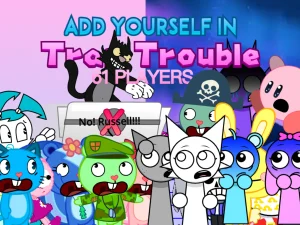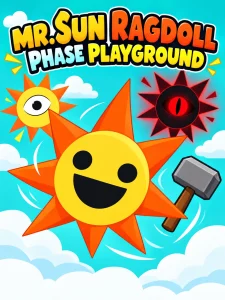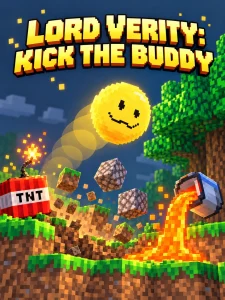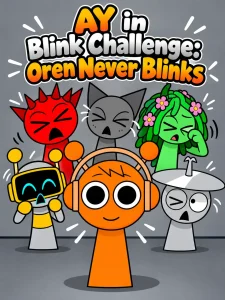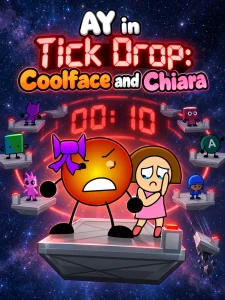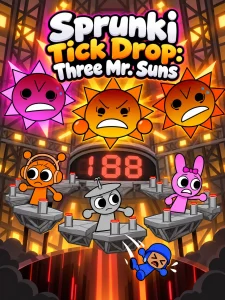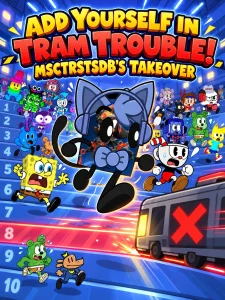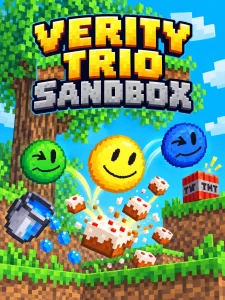
Fifty-five crossover characters squeeze onto six numbered pastel platforms, wait through a fifteen-second countdown, and watch a roulette indicator cycle before dropping one platform into the abyss. Anyone caught standing on the chosen color falls out, while the surviving characters shuffle into new positions for the next round. Despite calling its cast players, AY In Color Loops Of Fate 55 Players is an automated elimination show rather than an active party game. Pressing the start button sets off the entire tournament, leaving the audience to watch the randomized spectacle unfold without keyboard, mouse, or touch controls.
Creator @russellhtf presents the game as a hands-off crossover tournament where every outcome hinges on pure chance. Because contestants move and pick platforms autonomously, the appeal relies on guessing which familiar faces will last and watching the giant crowd shrink. On platforms like Fortcade, where players often look for quick playable challenges, this title serves a distinct niche: a randomized cartoon simulator that functions more like an animated game show than a hands-on survival test.
 4 Game Screenshots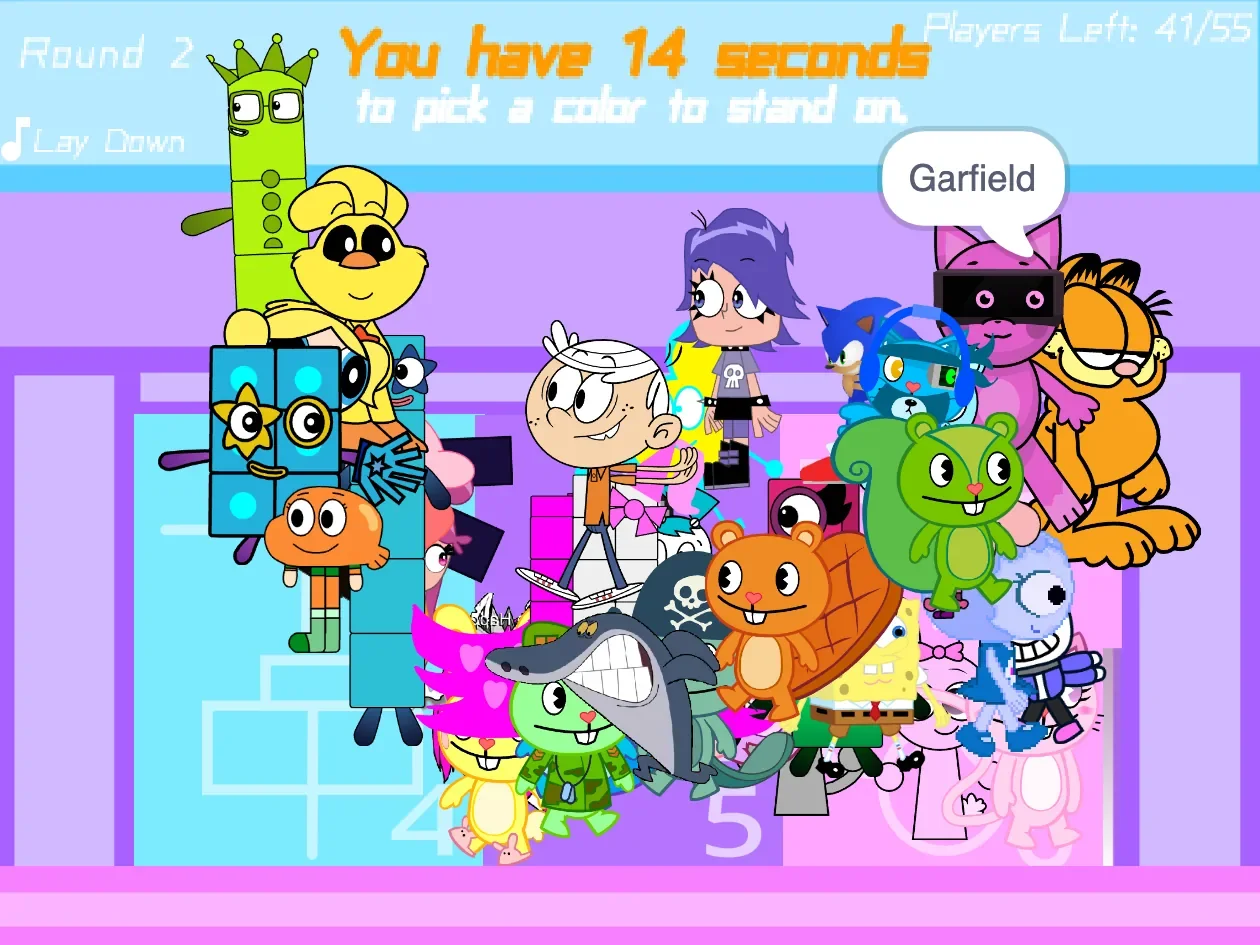
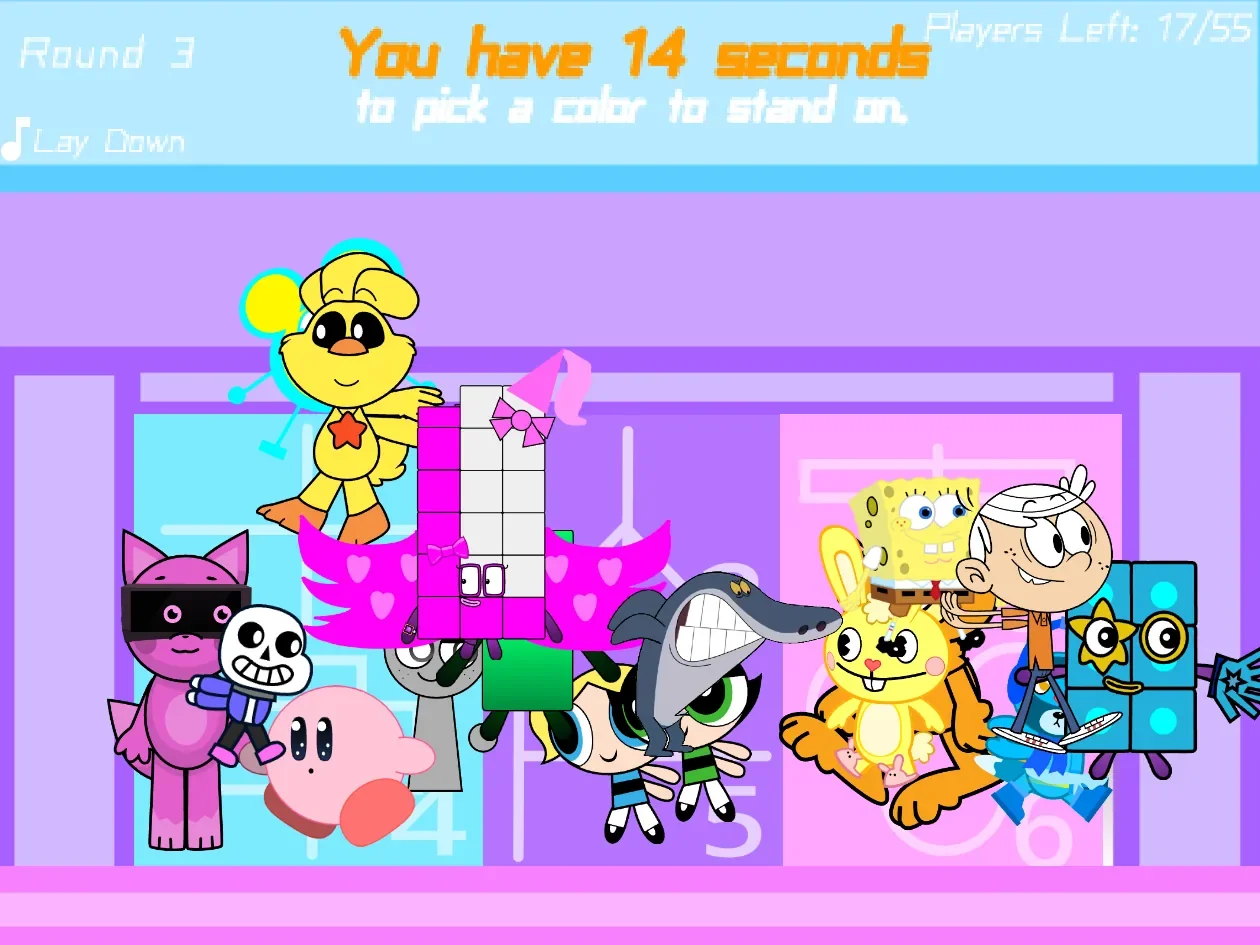
Automated Elimination and Platform Mechanics
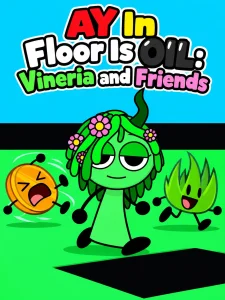
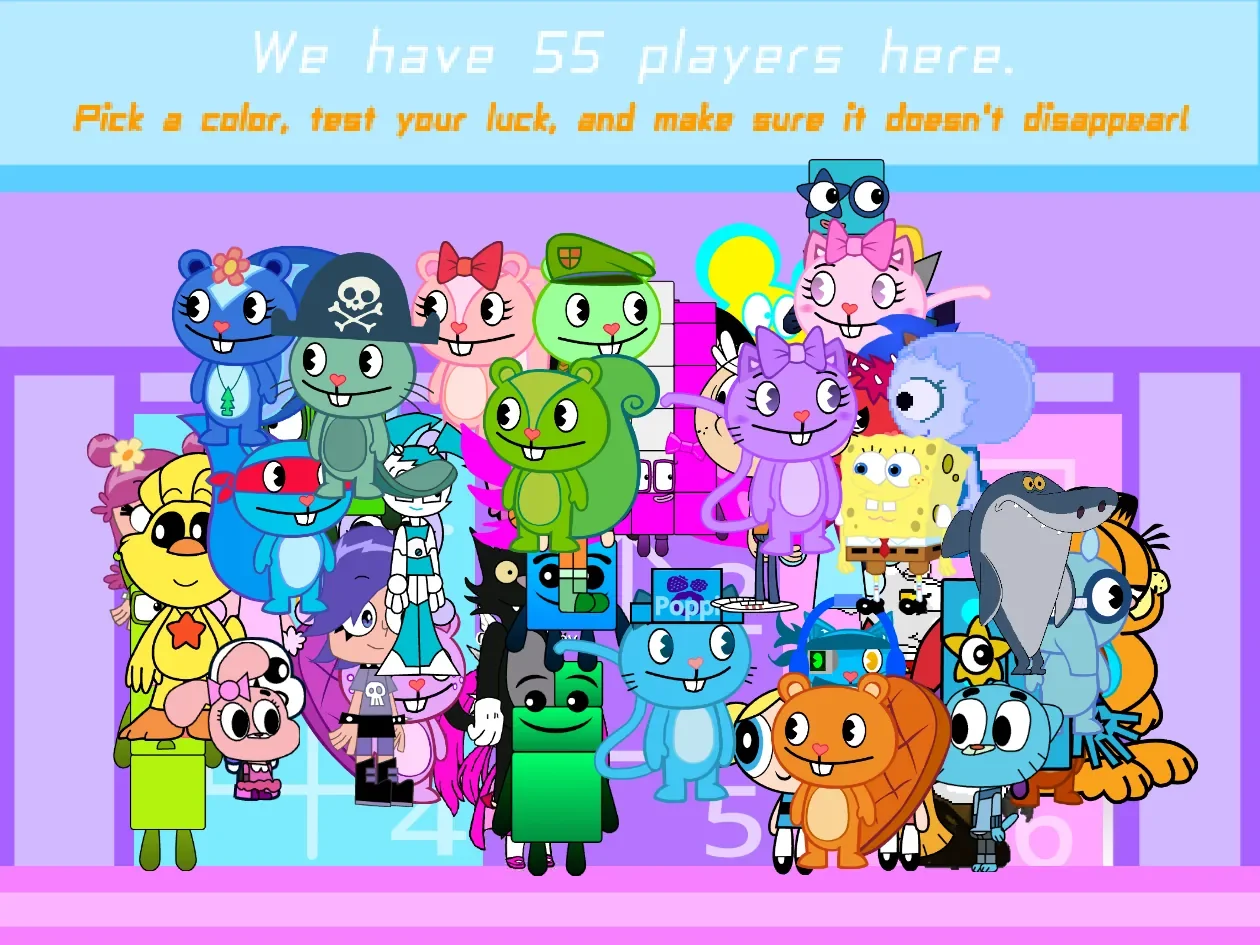
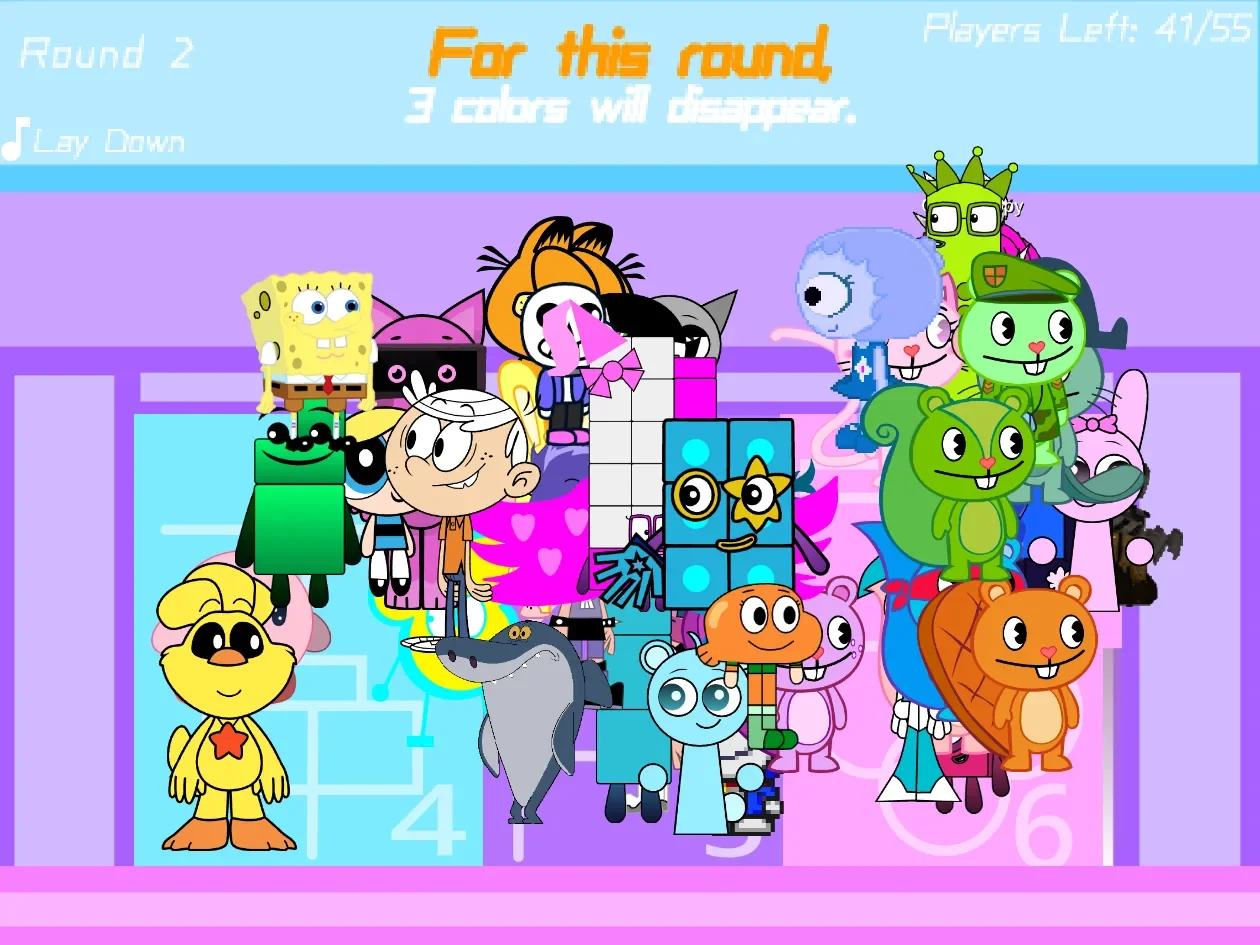
Each round follows a strict rhythm. A whistle blows, initiating a 15-second timer while 55 contestants move across the stage. The six floor tiles are marked with distinct pastel colors and numbers, keeping the platform layout readable even when the opening crowd covers most of the ground. When the timer expires, a roulette indicator rapidly cycles through the six choices before stopping on one. The chosen platform fades away, triggering falling animations and vocal clips from the trapped characters, while the on-screen display updates the remaining count.
Because movement and platform removals are randomized, every run creates a unique narrative. A famous pop-culture icon can plunge into the void immediately, while an unexpected contestant quietly survives deep into the match. In one test run, the purple second platform disappeared during round one, cutting the field from 55 down to 46. By round nine, only 12 contestants remained, giving the survivors enough open space to show off their movements before a final collapse eliminated everyone together in a draw ending. If a single character survives, the game displays a dedicated victory presentation with celebratory audio and confetti.
The massive volume of active sprites on screen during early rounds drives much of the spectacle. However, player feedback notes that processing so many animated sprites simultaneously can cause performance lag or frame drops before the contestant field thins out.
A Massive Crossover Roster
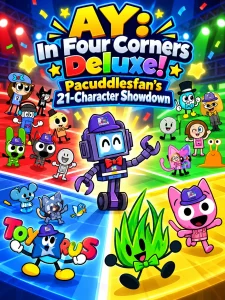
The central attraction is the 55-character lineup, combining figures from television, video games, internet culture, and original community designs. Popular contestants like Sonic, Kirby, SpongeBob, Garfield, Sans, WALL-E, Lincoln Loud, Gumball, Darwin, Anais, Blossom, Bubbles, Ami, and Yumi share the stage with characters from Happy Tree Friends, Numberblock-style figures, and object characters. They are joined by original and community contestants including Liam, Jovanny Cruz, Jayden, Rito, Vurr, Pinki, Purpi, Sky, and Gray.
Rather than using static images, the game gives contestants personality through custom animation frames and audio clips. Different characters use different numbers of walking frames, so a blocky Robloxian, a floating Kirby, and a tall Numberblock silhouette each possess distinct movement styles across the arena. Contestants feature dedicated idle poses, shocked expressions when a platform disappears, falling animations, and victory appearances. Custom vocal clips, footsteps, countdown whistles, and elimination screams reinforce the television atmosphere. Among franchise fans, this sprite work frequently draws close visual scrutiny, including recurring feedback over details such as the visual accuracy of Giggles' tail.
Visual Chaos and Mechanical Limits
While the wide roster provides strong variety, early overcrowding creates clear presentation issues. Larger characters frequently cover smaller ones, and the dense crowd obscures both the platform numbers and the status interface. Additionally, certain display text uses thin white lettering against a pale blue background, reducing contrast and making readouts harder to read while the stage is fully populated.
The structural limitation is that the core loop never changes across a match. Later rounds use the same 15-second selection period, six platforms, and random elimination as the opening round. The game introduces no hazards, power-ups, alliances, or shifting rules to alter the pacing. While watching the field shrink creates genuine suspense, the experience remains strictly passive. AY In Color Loops Of Fate 55 Players delivers a lively crossover elimination simulation, best suited for viewers who want to root for a favorite character in an automated cartoon tournament.