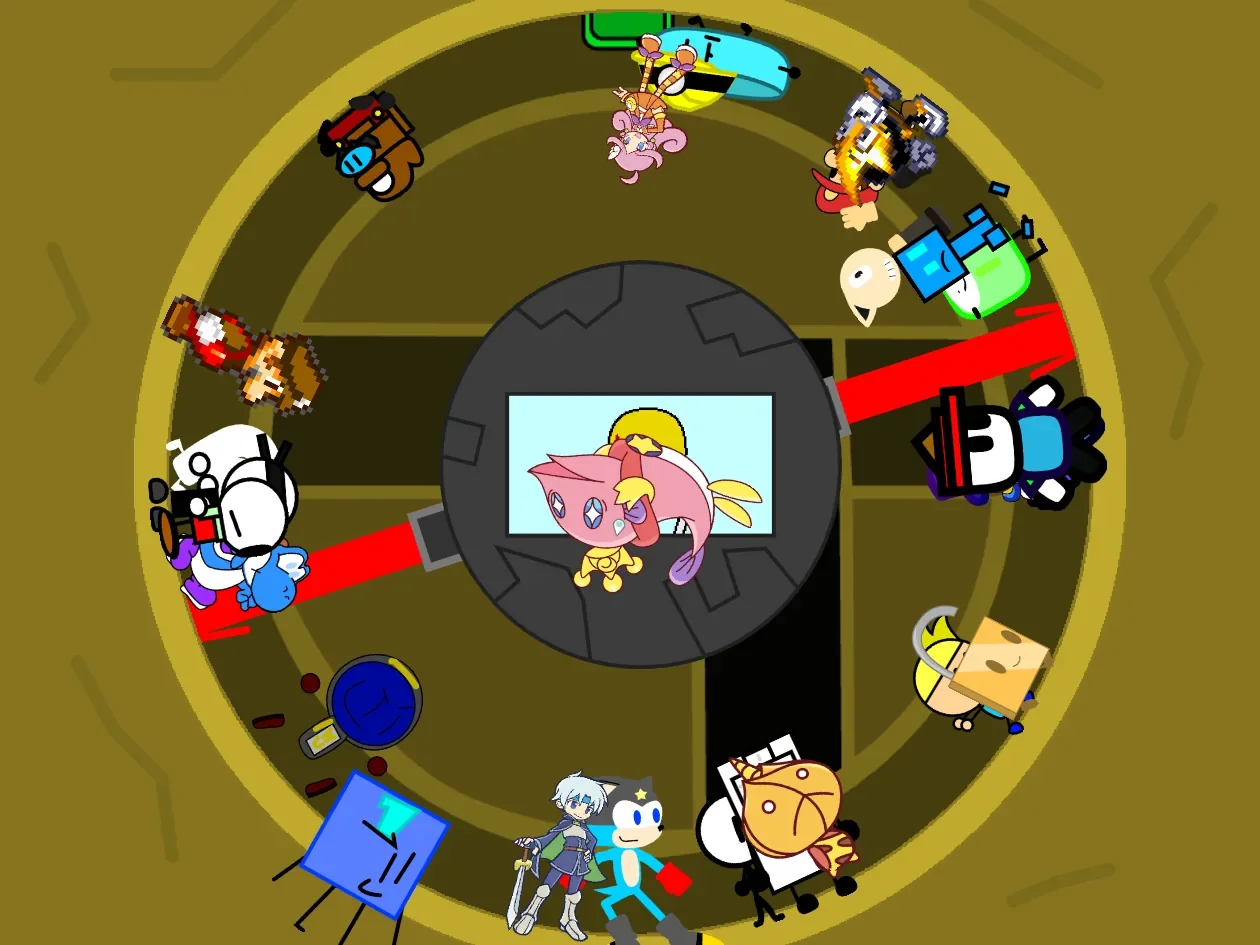
Twenty-seven fighters circle a mechanical arena while two red laser arms sweep across their path, jumping off a green trampoline to strike a boss in the center. AY in Showdown in the Backwalls 27 players turns this arena setup into an automated team boss battle where viewers watch an entire crossover roster struggle for survival. Once the simulation begins, every character acts independently without requiring movement or attack inputs from the audience.
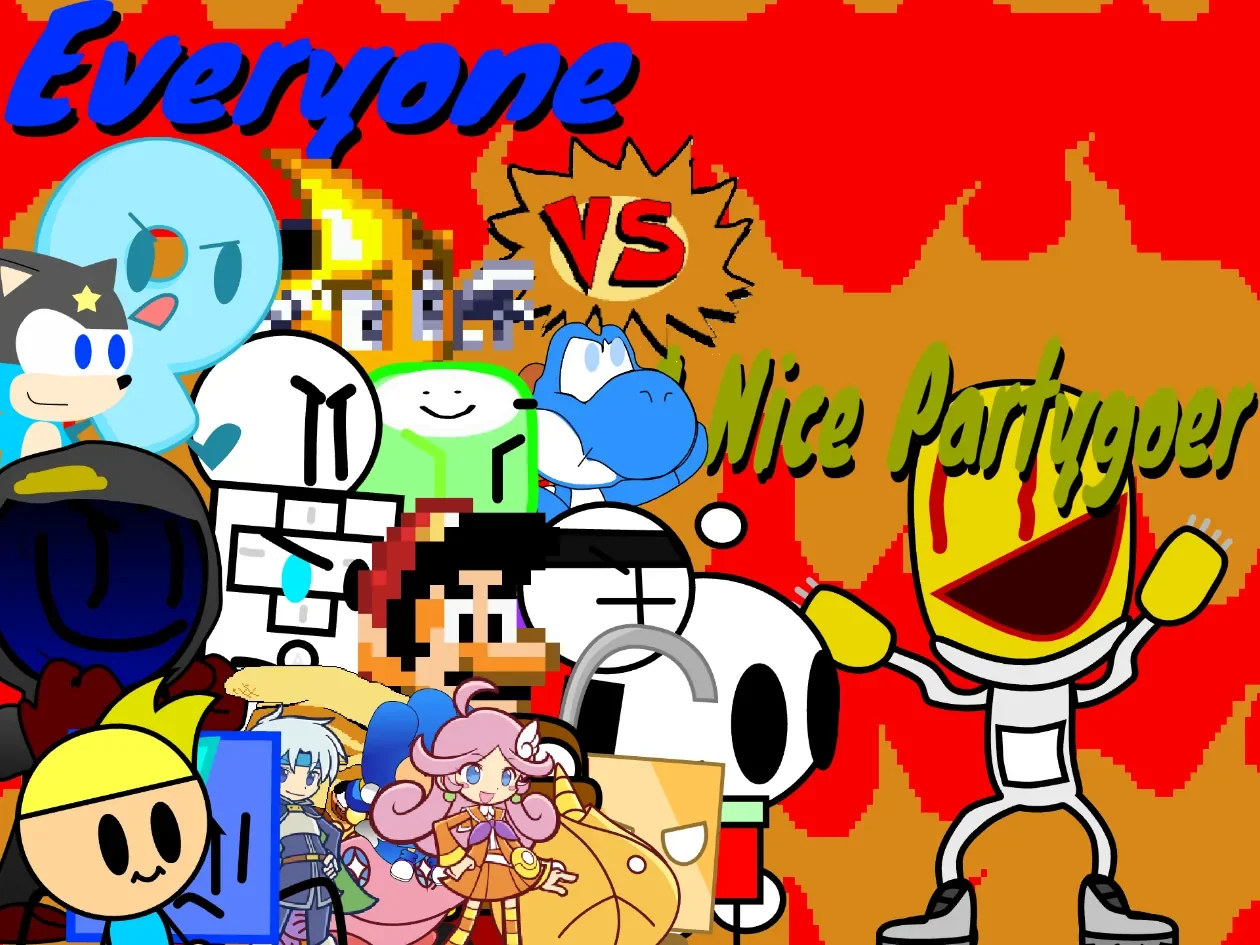
Each combatant starts at the middle of the arena with seven health points and a randomized facing direction. The fighters run outward until they spot the green section of the ring, leap toward the central boss—a character named the Nice Partygoer—and land a strike before falling back to the outer platform. Successful hits reduce the shared Boss Health counter by one point. Although public instructions describe a 100 HP target, the active game starts the counter at 150 HP, turning the match into a prolonged race between team damage output and steady roster attrition.
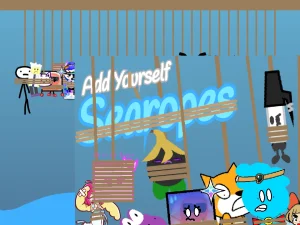
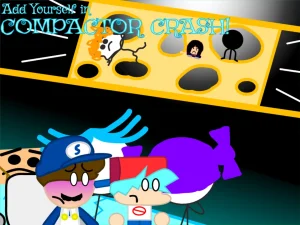
 4 Game Screenshots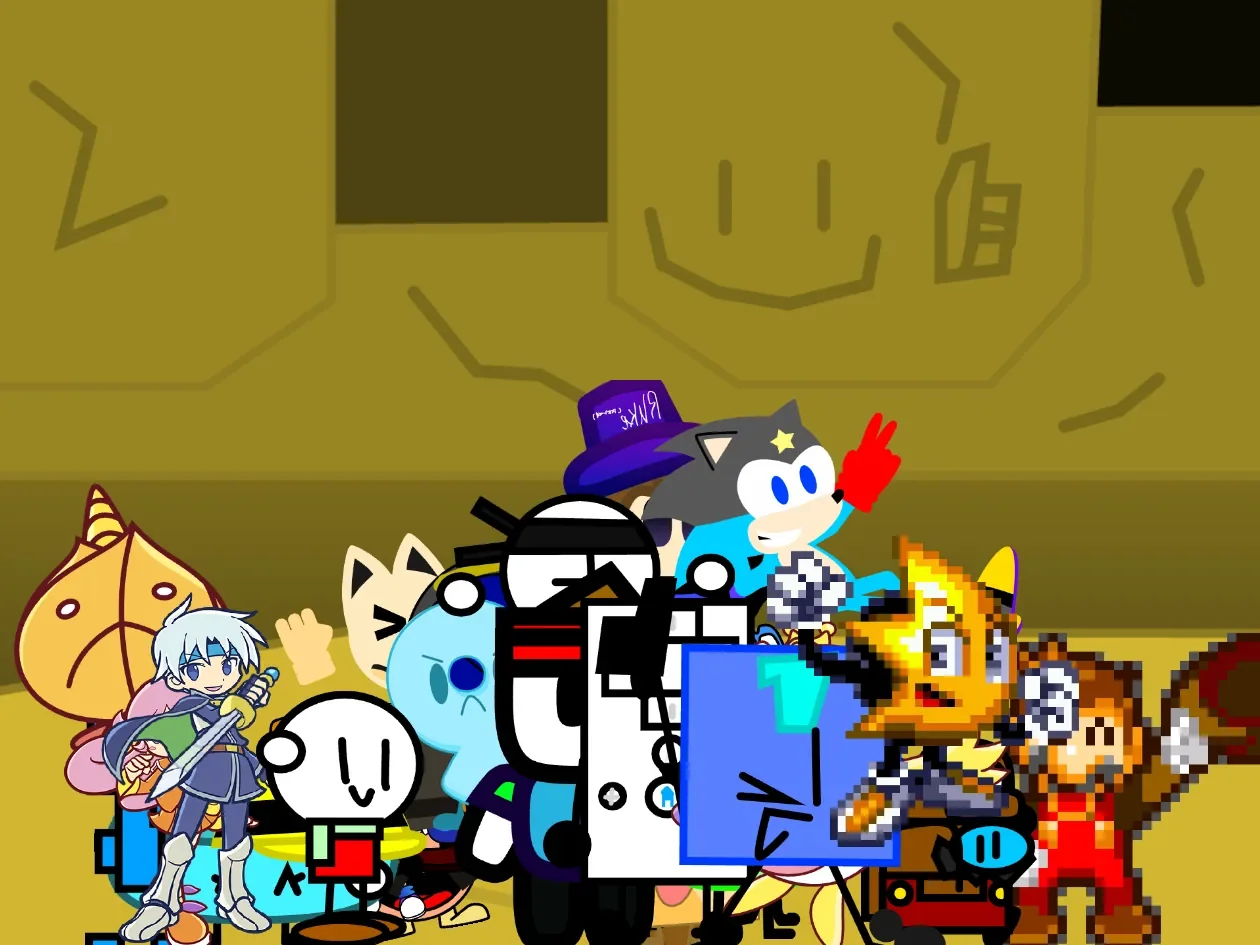
Phase Shifts and Visual Hazards
A rotating red laser continuously sweeps around the brown Backwalls environment. Touching the beam drains a fighter's health, flashes their sprite, and eventually sends defeated combatants spinning completely off the arena. Every knockout permanently reduces the active team count, and if the final contestant falls before the boss reaches zero, the battle halts on a blunt "Bruh you all lost. :|" screen. The opening stretch proceeds predictably as characters establish a circular movement rhythm, but dropping the boss below 101 health triggers pulsing blackouts accompanied by a fan-like sound effect. These dark flashes teleport surviving fighters back to the central starting point with fresh facing directions, disrupting established traffic and forcing characters to relocate the green trampoline.
The encounter escalates further when the boss drops below 25 health, altering the laser's visual design for the final stretch. Striking the decisive blow causes the floor platform to vanish while a fighter near the boss triggers an enlarged final-hit animation against a dramatic backdrop. A bright white flash and explosion then transition into a victory screen set to upbeat music. The game welcomes every contestant back for the win display—even those eliminated earlier in the match—showcasing all 27 fighters at double their normal scale, though this team-focused choice creates significant visual overlap on screen.
Crossover Roster and Hidden Elements
The 27-fighter lineup created by @Cyanwisp79 brings together an eclectic mix of sprites: ANP, A Despicable Partypooper, Noisey the Camera Noisey, Jason, Bracey Crafter, Key Lock, Nine, MNL, Sprite MNL, cris, combat cris, ice dream, Wii remote, block boi, Ruke, RamaTheGa, Ocean Prince, Onion Pixie, Flowey, Flowshey, Raffina, Schezo, J, Ristar, One in ice form, Stardust, and Randy. While most characters share identical functional movement cycles, they feature distinct artwork for running, leaping, taking damage, and celebrating. Background lore connects ANP to the enemy boss, A Nice Partygoer, though this context remains light background material rather than stopping the action for dialogue.
Specific characters also display unique animations. Noisey the Camera Noisey features an extra finishing flourish, while One in ice form hurls visible ice-ball attacks. However, because One's freeze signal is not connected to the boss counter, those ice projectiles deal no actual damage to the boss's health pool. Looking deeper into the game's assets reveals leftover fragments from development, such as an inactive "Noah KO" signal and unused winner messages that cannot be triggered during normal play. Playing on Fortcade reveals how the interaction between independent mechanics—sweeping hazard beams, randomized pathing, blackout reshuffles, and incremental damage—creates real tension despite the total lack of player control. While heavy crowding can make individual small sprites hard to track in dense traffic, the varying knockout patterns on each replay provide a distinct automated spectacle.
![AY The Crumbling Tower of Pizza [37 Players] game cover](https://fortcade.com/wp-content/uploads/2026/09/ay-the-crumbling-tower-of-pizza-37-players-225x300.webp)
![AY in Whack-a-Player! [ 24 Players ] game cover](https://fortcade.com/wp-content/uploads/2026/09/ay-in-whack-a-player-24-players-225x300.webp)