Dozens of portrait-covered marbles pour onto a hand-drawn obstacle course while an enormous crowd watches from behind the track rails, creating a noisy automated spectacle that never reaches a final winner. Adapted from himesakura’s earlier MARBLE RACE project by creator @kaojones2017, Poppy Angela’s Endless Marble Race turns a gravity-driven physics track into a continuous simulation. Instead of crowning a champion at the end of a round, the simulation continuously adds new contestants into the mix, prioritizing perpetual motion over formal competition.
The important distinction in this build is its endless structure. A standard run begins with 40 initial marbles dropping into the track, but background loops continuously introduce fresh racers at random intervals. While every marble that reaches the bottom earns an individual celebration sound and takes a spot in a results column, the overall match never closes. Watching the marbles bounce through obstacles provides passive amusement, but players looking for a definitive outcome will find that the race is engineered to run indefinitely.
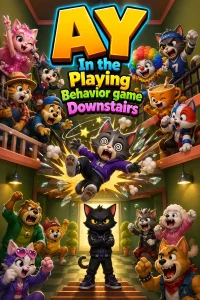
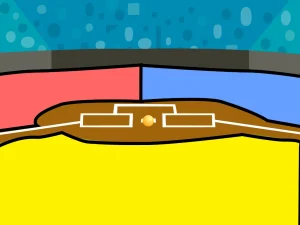
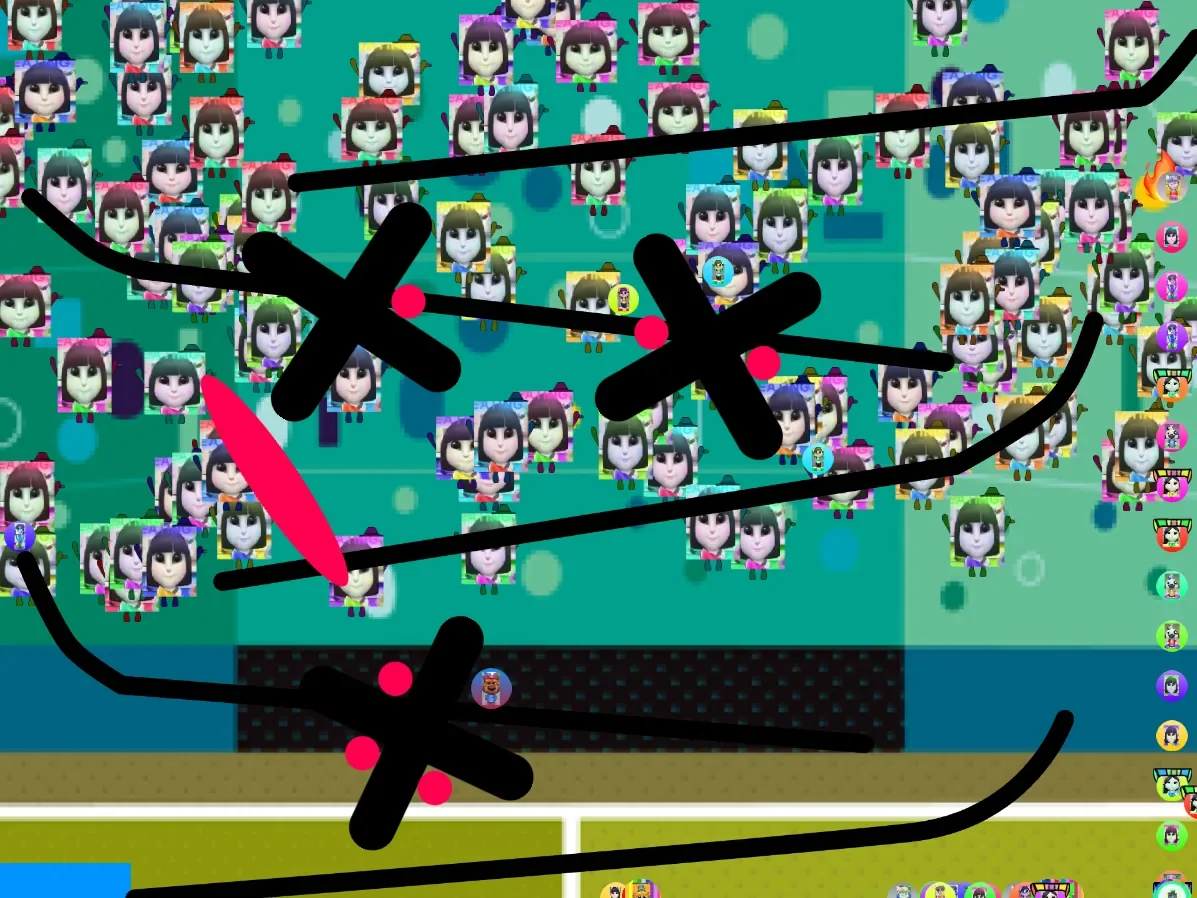 4 Game Screenshots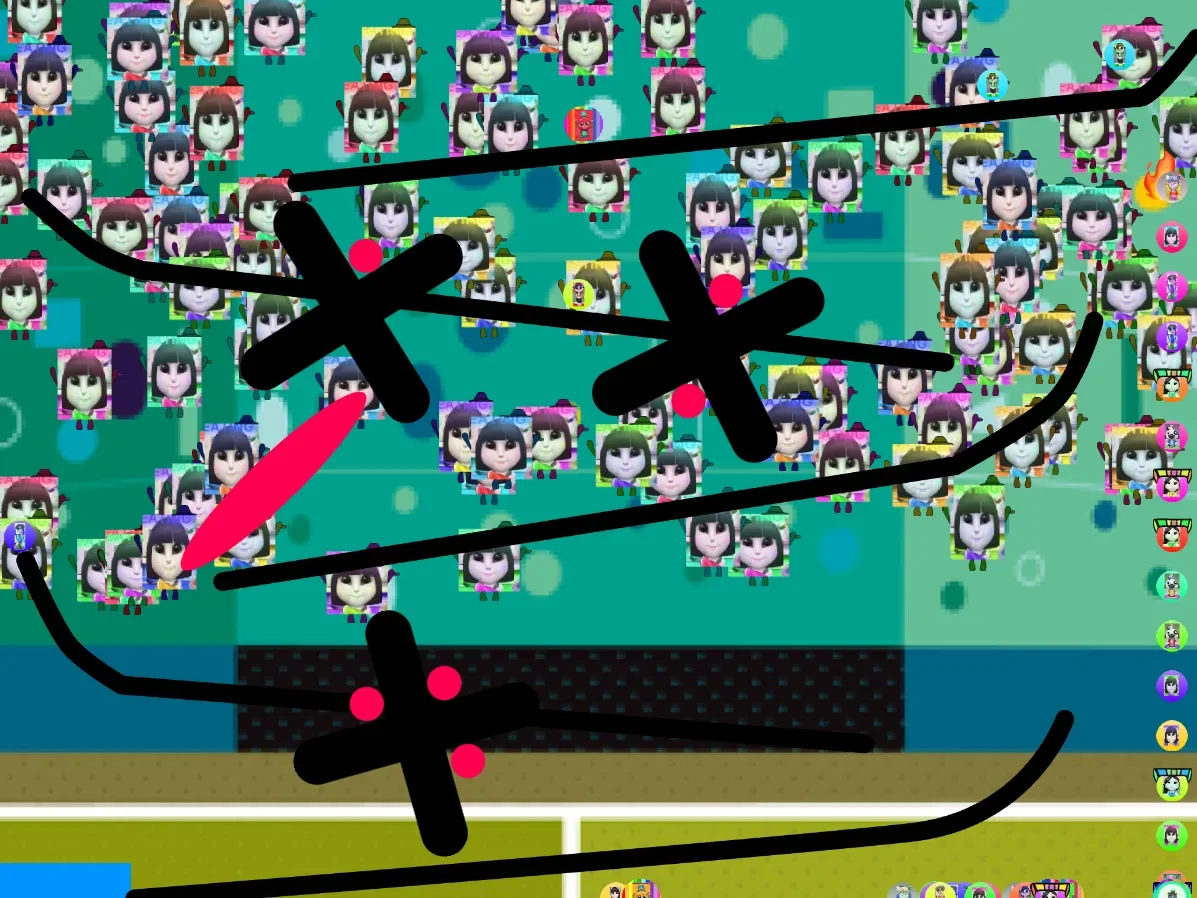
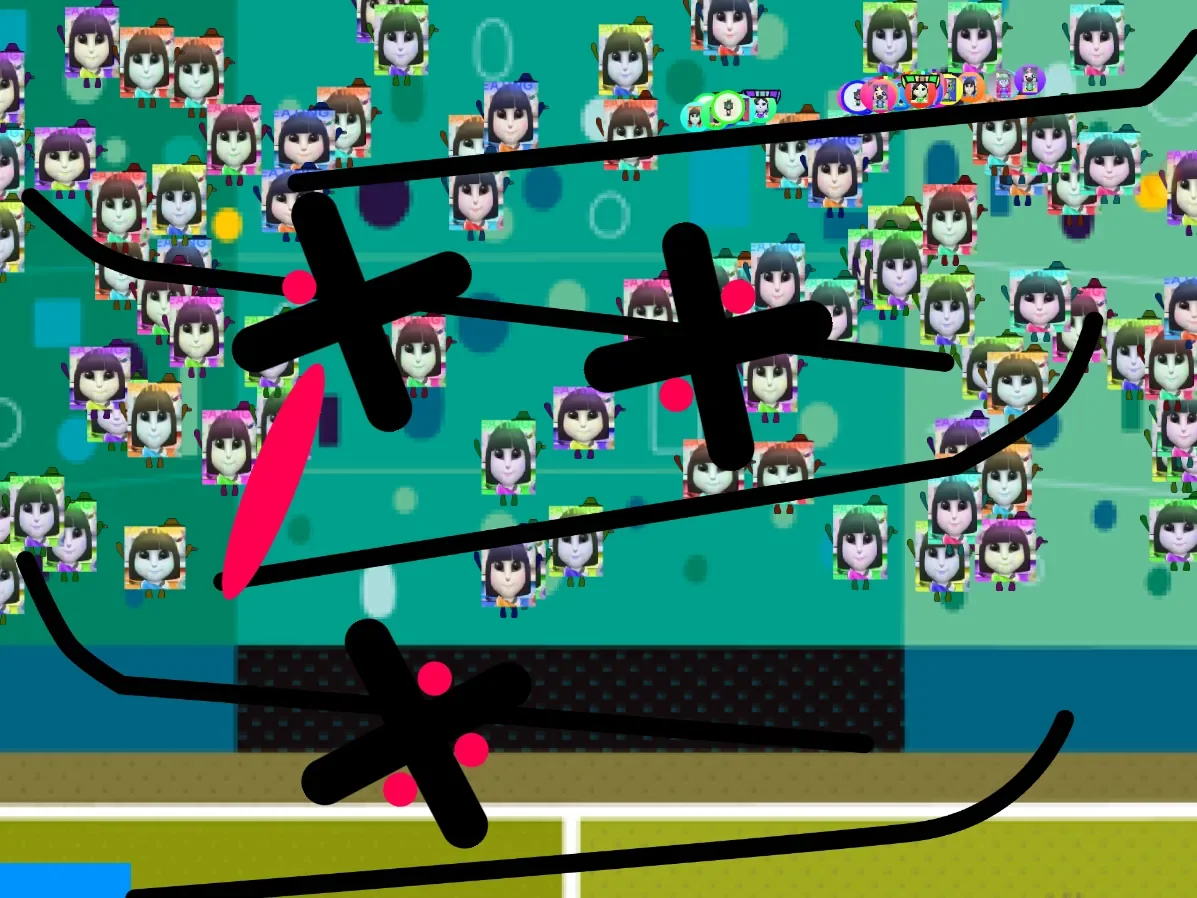
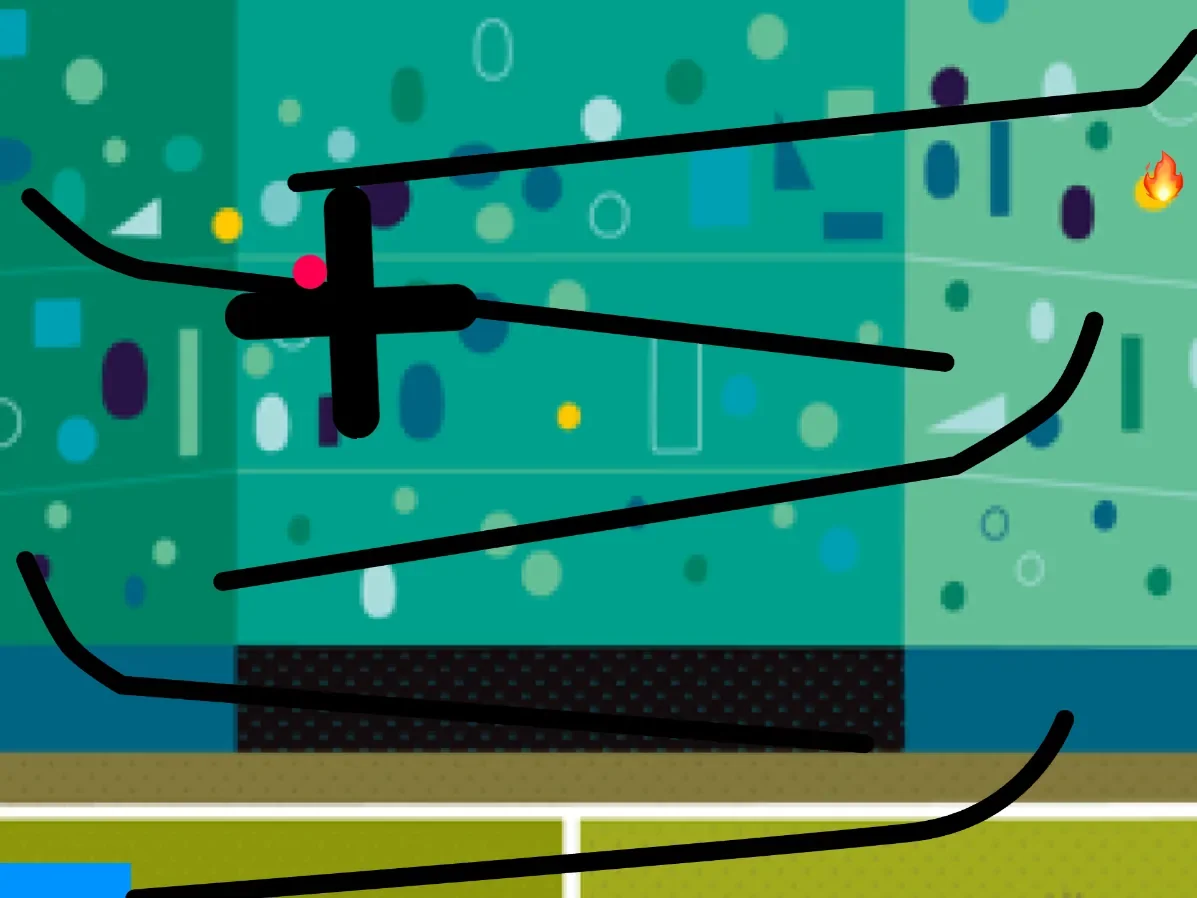
Navigating the Four-Gear Stadium Course
Every racer enters the single stadium course near the upper-right corner and travels leftward and downward toward the exit. Thick black hand-drawn lines form the slopes and outer barriers, interrupted by four rotating obstacles that actively redirect the falling marbles. Three obstacles resemble large propellers with bright central hubs, while the fourth acts as a narrow spinning arm.
The simulation uses a loose physics model for gravity and collisions. Upon striking the black track boundaries or spinning gears, a marble's horizontal and vertical movement changes unpredictably. Contestants frequently bounce, stall against flat surfaces, reverse direction, or slip past a gear at unexpected angles. Because each cloned marble receives randomized movement parameters upon spawning, two racers with identical costumes can take noticeably different routes.
Ten visual costume designs are available: Poppy, Student, Farmer, Fitness, Clown, Non-toxic, Cup, Cap, Cuba, and BlueWhiteRed. Randomized color tinting creates additional visual variations, making the field look larger than the ten-costume list suggests. These labels serve purely as cosmetic designs; none provide verified advantages in speed, weight, or collision survival.
Reaching the lower-left corner of the course counts as a finish. Crossing this point plays a victory cue, reduces a shared ranking counter, and moves the marble into a vertical results column along the right edge of the screen. Multiple finishers accumulate inside this column over time, but the board omits conventional first-, second-, or third-place labels.
Hazards, Strikes, and Disrupted Knockouts
Surviving the course requires avoiding several hazards that trigger a strike penalty. A marble gains a strike and loses one point whenever it touches red danger surfaces, collides with roaming hostile objects, or falls into defined failure areas. Upon taking a strike, the racer returns to the upper starting zone with fresh movement values. Points also increase automatically at random intervals, acting more as a running activity counter than a measure of racing skill. Hovering the pointer over a marble displays its costume name, strike total, and points, though tracking individual racers is difficult amidst the crowd.
Hostile moving objects regularly enter the course and issue threats like "You're Fired!", "You're Cooked!", and "I'm going to catch you..". Delivered through recorded voices or text-to-speech, these hazards send any marble they touch back to the start with an added strike.
Accumulating more than 14 strikes triggers a knockout routine involving explosions, airborne movement, impact sounds, defeat speech, and removal from the board. However, because specialized knockout pose and sound assets are missing from the active sprite files, this elimination sequence occurs less consistently than the standard collision-and-respawn cycle. The overall soundscape remains dense, combining looping crowd ambience and finisher cheers with explosions, glass effects, body-fall sounds, and taunts.
Stadium Crowd Dynamics and Controls
Poppy Angela is most prominent as an audience member. Starting the simulation creates a stadium crowd of up to 190 animated spectators behind the rails, rapidly alternating between four poses with randomized color tints. However, this crowd frequently overlaps the rails and moving marbles in the upper and middle sections. Combined with thick black lines, spinning gears, stacked finishers, and speech bubbles, visual clarity is severely reduced.
The public instruction field simply reads "Don't report!", offering no gameplay guidance. In practice, playing requires almost no direct input, though two undocumented keyboard controls exist.
| Action | Input | Result |
|---|---|---|
| Start or restart | Green flag | Creates initial 40 racers, spectators, obstacles, and spawn loops |
| Inspect racer | Hover mouse pointer over marble | Displays costume name, strike count, and points |
| Spawn extra marble | Press A key | Clones and drops an extra racer into the starting area |
| Reset active field | Press Space key | Clears active marble clones and resets part of the ranking display |
For visitors exploring casual simulation titles on Fortcade, knowing these hidden shortcuts explains why accidental key presses alter the race layout.
The Continuous Loop Without a Winner
The defining limitation of the simulation is its complete lack of resolution. Three separate background loops continue spawning new marbles at random intervals, even after the original 40 racers complete their run. Because the game lacks selectable contestants, manual steering, prediction mechanics, round timers, or championship brackets, there is no payoff for waiting until the end. It remains an unpredictable marble spectacle best enjoyed in short bursts.