Attempting to reject the abandoned cat-eared character sitting in a cardboard box at the start of Take Care of Sprunki Gray immediately reveals the game's mischievous sense of humor. Clicking the red "Ew. No." button does not close the game or send the stray away; instead, the rejection button simply vanishes, leaving the enthusiastic "Yessir" option behind. Gray remains in his box until you agree to take him home. This illusion of choice sets the tone for a compact virtual-pet simulator that combines cozy care routines with sudden shifts into absurd behavior.
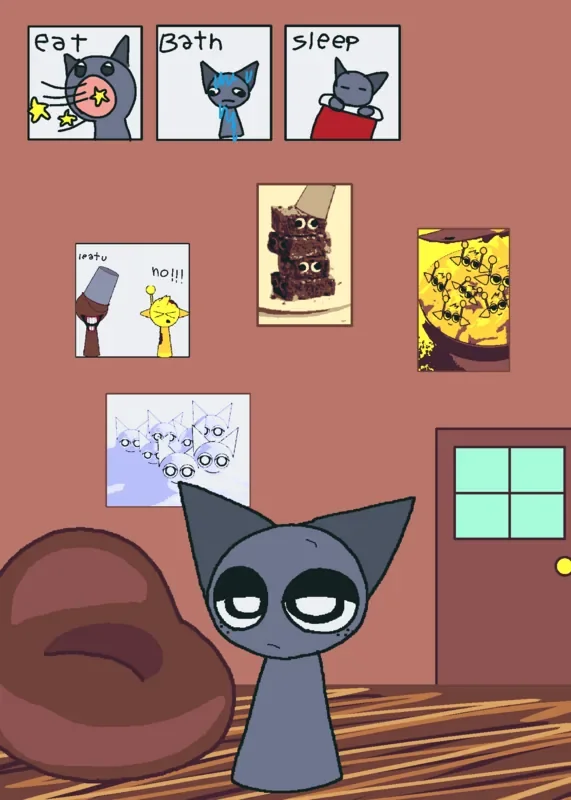
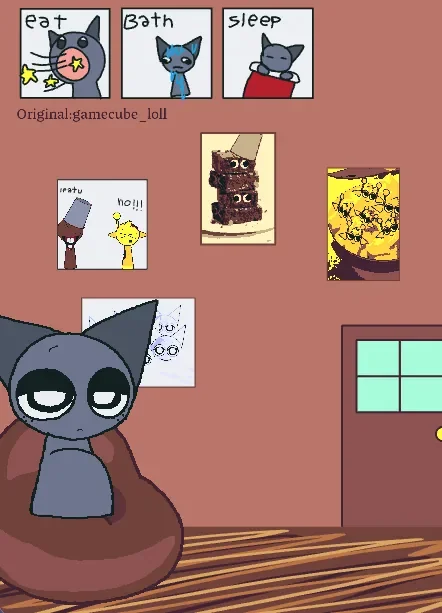
Once adopted, Gray moves into a central bedroom hub decorated with uneven floorboards, a beanbag chair, hand-drawn posters, and subtle creator nods from gamecube_loll. Navigating the home relies on interactive wall art rather than traditional menu buttons. Tapping three distinct framed pictures on the dusty brown bedroom wall opens dedicated activity rooms for feeding, bathing, and bedtime, while a door leads outside. Each room features a back arrow to return to the hub, establishing a predictable layout across its four main locations.
 8 Game Screenshots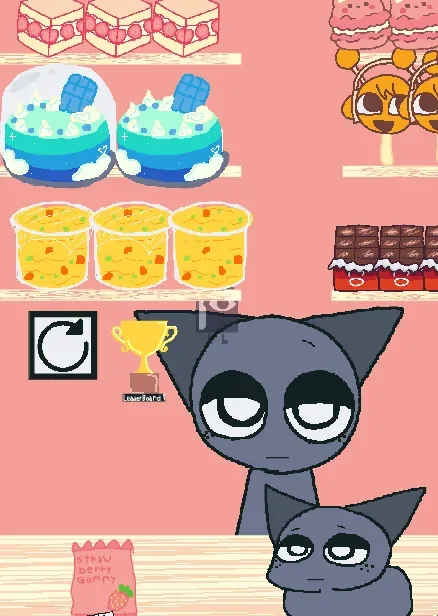


Feeding Sweets and Tucking Gray to Sleep
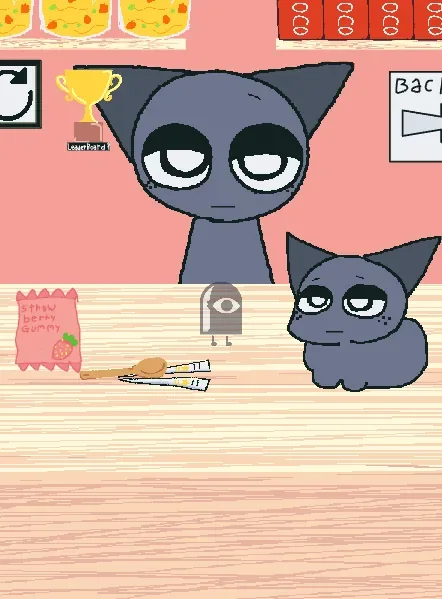
The pink-toned kitchen serves as the busiest activity hub in the game. Gray stands behind a food counter alongside a smaller version of himself, facing a wide spread of snacks ranging from cakes, macarons, and ice treats to hamburgers, eggs, and steak. Opening packaged items, such as a box of strawberry gummies, scatters edible pieces across the surface that can then be dragged toward Gray or repositioned around the table. A leaderboard display and score system track activity in the room, though the game leaves the exact mechanical impact of specific foods on your overall point total unexplained.
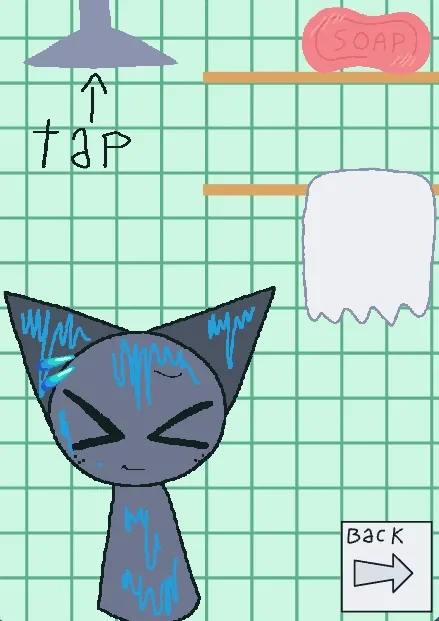
The remaining indoor routines offer contrasting levels of feedback. In the mint-green shower room, players drag a towel across Gray and interact with unlabeled environmental controls to wash him, though the lack of explicit prompts means finding the correct sequence requires experimentation. By contrast, bedtime provides the most immediate visual confirmation in the simulation. Tapping the wall switch in the dark blue-gray bedroom dims the lights, prompting Gray to close his eyes and settle under the covers.
| Action | Input | Result |
|---|---|---|
| Select options or rooms | Tap or click | Adopts Gray, opens an activity room, or activates environmental props |
| Reposition care items | Drag | Moves food, bathroom towels, and interactive room objects |
| Darken the bedroom | Tap light switch | Turns off the light and sends Gray to sleep |
| Return to main hub | Tap back arrow | Exits current care room and returns to the bedroom |
Outdoor Encounter and Cartoon Violence
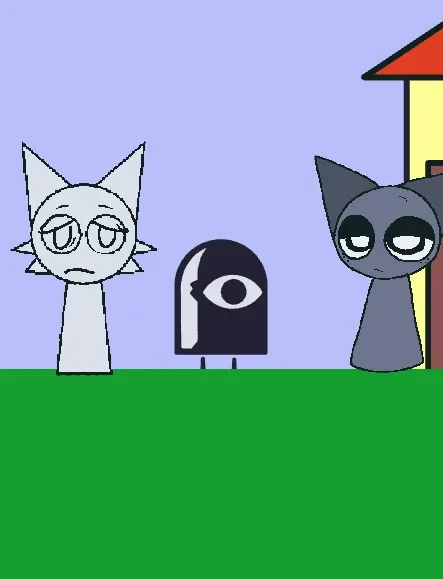
Stepping through the bedroom door shifts the tone entirely, moving from domestic caregiving to an unpredictable outdoor encounter. Outside, Gray stands alongside other Sprunki cast members in a scene designed for experimental poking rather than pet maintenance. Tapping visitor characters inflicts visible red marks and physical reactions while Gray moves in response, triggering confrontational dialogue lines regarding hits against his best friend or girlfriend. This jarring leap from feeding macarons to cartoon violence catches many first-time caregivers off guard.
Player feedback highlights how these subversions contribute to the game's broader appeal. Community observations note that the impossible rejection button at the start serves as an immediate talking point, while players frequently experiment with slapping Gray and outdoor guests to discover hidden dialogue. Additionally, Gray’s weary visual design draws in players who otherwise show little interest in the wider Sprunki cast. Finding these unusual details requires looking past the cozy virtual-pet framework featured on platforms like Fortcade, where unconventional web games balance straightforward interactive mechanics against eccentric character moments.
Interface Limitations and Visual Personality
Visual character is the primary strength of the experience, driven by Gray's permanently exhausted expression across every setting—whether he is waiting inside his initial cardboard box, standing under the showerhead, or sitting behind the food counter. The crude, hand-drawn artwork gives each location a distinct color scheme and informal personality. However, the interface suffers from minor usability flaws on both desktop and mobile screens. Interactive wall icons sit close to screen edges and can appear partially cropped, while handwritten labels offer little guidance on how individual items work.
Despite limited instructions and ambiguous feedback in the kitchen and bathroom, the game provides enough distinct rooms and interactive props to function as a playful pet sandbox. It rewards curious players who explore offbeat outdoor interactions and experiment with unlabeled props rather than expecting a strict, linear care routine.