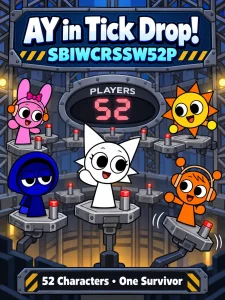
A crowded arena of 148 crossover characters rotates around a single drop chute, but the real twist in AY in Tick Drop! But Pink Cube Prism Is The Cheater comes when the machinery picks a contestant who refuses to lose. Rather than offering a standard reflexes test or an interactive strategy puzzle, this automated elimination show hands full control over to the cast. Every round, the surviving lineup independently chooses whether to hit a switch, sending the entire roster spinning across the arena floor based on the total tally.
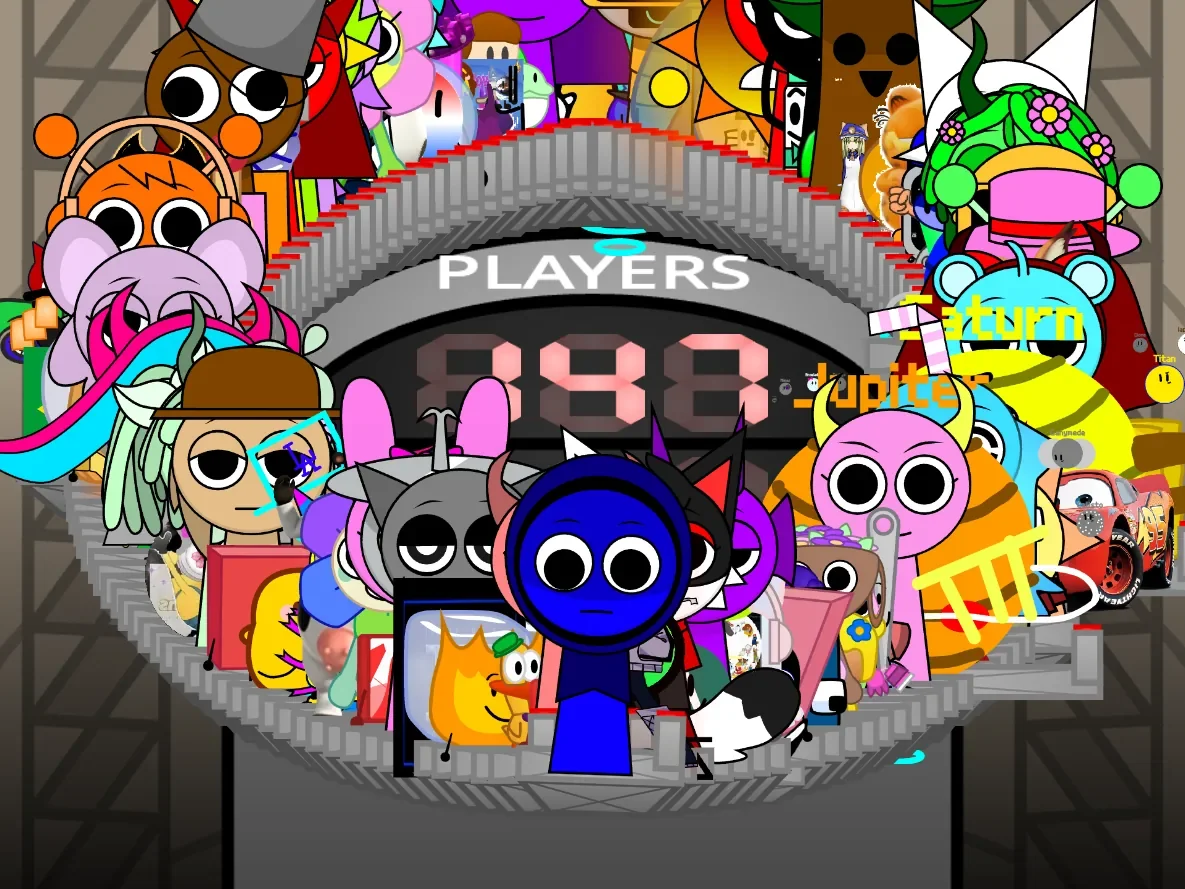
Starting the simulation requires pressing the green flag, after which the viewer becomes a spectator. There is no character selection, timing input, or mechanic to save a favorite figure once the action begins. Each surviving contestant evaluates an independent chance to hit their button during the decision phase. Every button press increments the central counter by one, marked by a brief costume shift, a flash of brightness, and a quick audio cue. Once the decision window closes, the roster revolves around the arena by that exact turn count, placing whoever lands on the central drop mechanism directly in danger.
 3 Game Screenshots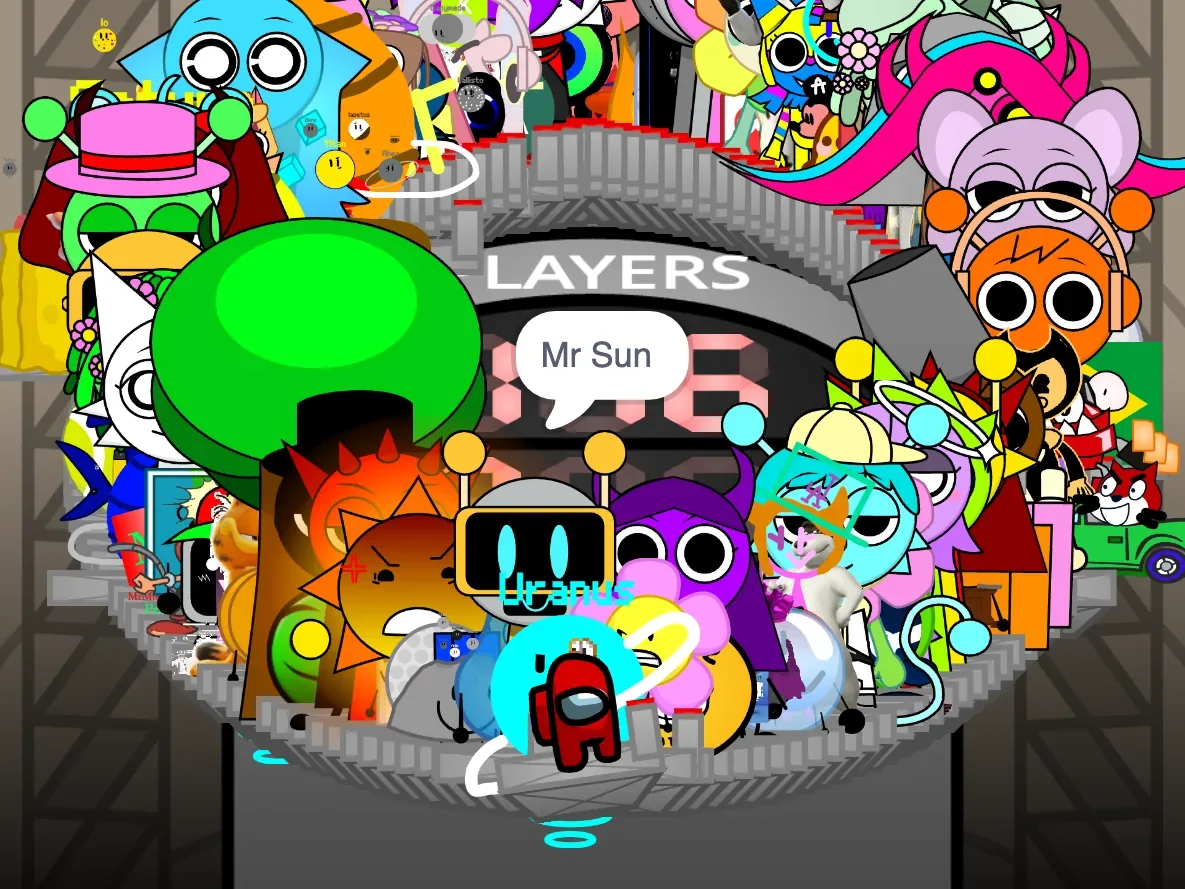
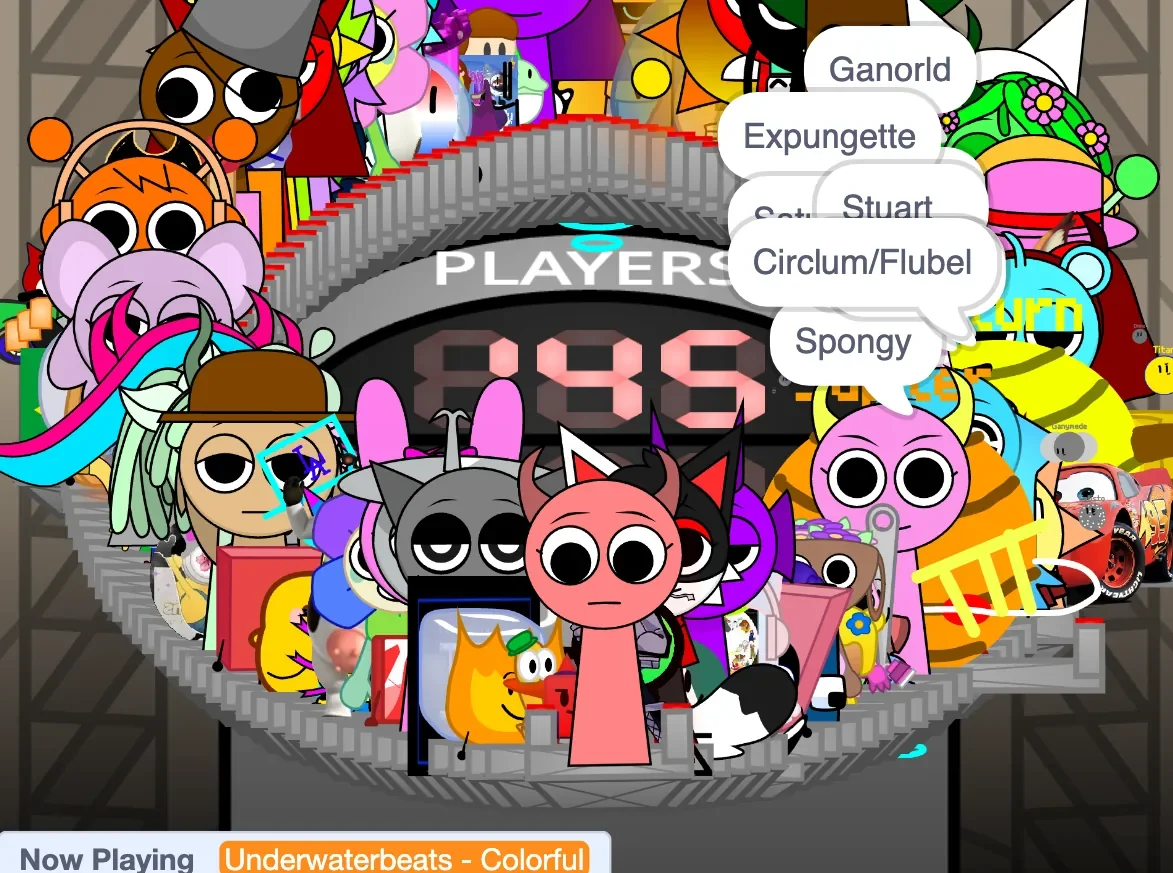
The Mechanics of the Mechanical Elimination
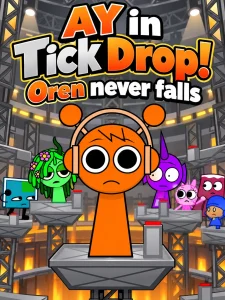
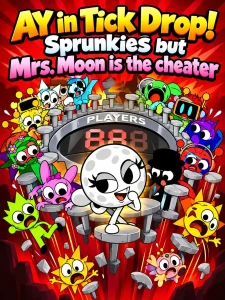
A standard elimination unfolds through a multi-stage sequence. The targeted character reacts to their fate, shakes against the industrial machinery, and drops away through the central chute as the total player counter decreases. After a brief pause, the remaining roster resets for the next round. Because the game starts with 148 contestants—including figures like Oren and Durple alongside various Sprunki avatars, object-show personalities, planets, and original community creations—the opening rounds are visibly crowded. Overlapping character art obscures much of the industrial ring and red-tipped switches early on, but the visual composition steadily improves as the cast shrinks and individual rotation paths become easier to track.
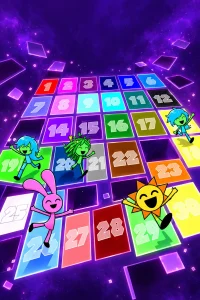
This structure draws its inspiration from the Mario Party 9 minigame Whomp Stomp, forming part of the broader "Add Yourself" (AY) remix chain. The randomness creates natural moments of suspense: a massive combined button count can launch an endangered character clear across the arena into safety, whereas a quiet round with few button presses might leave the lineup virtually motionless. Each event is punctuated by dynamic audio, blending metallic impacts, button clicks, character voice clips, teleportation sound effects, and a looping background music track that leads out from a brief "Get Ready" opening sequence.
Rule-Breaking Characters and the Infinite Stalemate
The central highlight of this edition created by @MixelsXD67 occurs when the central drop mechanism lands on Pink Cube Prism. Instead of undergoing the standard falling animation and removal, Pink Cube Prism triggers a custom reaction chain that halts the elimination sequence entirely. Mr Sun steps in to declare that cheating is against the rules, Scrapziez reacts with anger, and Brightney voices a shocked outburst. Once the argument concludes, Pink Cube Prism simply remains in the arena rotation, entirely immune to ejection.
Pink Cube Prism is not the only contestant protected by special script exceptions. If the drop lands on Veh, an extended sequence plays out involving encouragement, tears, careful breathing, and a defensive plea about the cheat before culminating in the same confrontation scene. Veh is likewise returned to the roster unharmed. This character-specific rule breaking disrupts the repetitive rhythm of standard eliminations, giving the game a clear narrative identity within the Tick Drop chain.
However, these immortal exceptions create a major limitation during end-game play. While the simulation includes victory music, confetti, and a winner pose designed to celebrate a sole survivor, Pink Cube Prism and Veh cannot be eliminated through normal button math. Once every non-protected contestant has fallen, the loop becomes stuck cycling between the two cheaters indefinitely. Though unused game-over reactions and fall actions exist within the game files, they do not trigger during standard play, leaving the promised victory screen unreached.
For viewers tracking automated elimination shows on Fortcade, the appeal lies in watching the unpredictable movement of a massive crossover cast rather than pursuing active gameplay control. While the severe early-screen clutter and the unreachable final winner scene require some patience, the unique confrontation scenes for Pink Cube Prism and Veh make this standard rotation experiment memorable.
![AY in Noggin's RL, GL Game Redux [ 40 Players ] game cover](https://fortcade.com/wp-content/uploads/2026/10/ay-in-noggin-s-rl-gl-game-redux-40-players-225x300.webp)
![AY in Shape Dodge REDUX! [ 10 Players ] game cover](https://fortcade.com/wp-content/uploads/2026/10/ay-in-shape-dodge-redux-10-players-225x300.webp)
![AY in Noggin's RL, GL Game Redux [ 25 Players ] game cover](https://fortcade.com/wp-content/uploads/2026/10/ay-in-noggin-s-rl-gl-game-redux-25-players-225x300.webp)
![AY in Block Party! [ 45 Players ] game cover](https://fortcade.com/wp-content/uploads/2026/10/ay-in-block-party-45-players-225x300.webp)