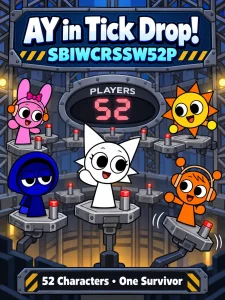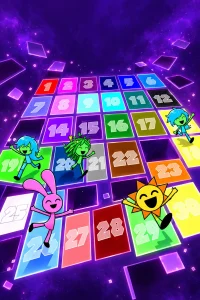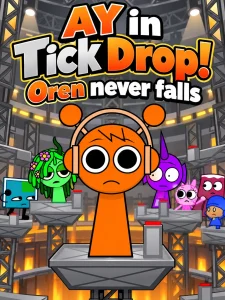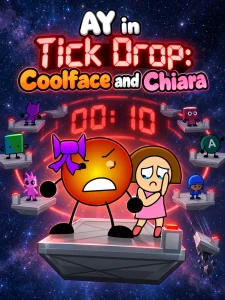
One hundred characters pack onto a circular metal arena, press buttons on their own, and spin toward a single trap position. Every full rotation throws whichever contestant lands in the first spot off the platform, sending them plummeting out of the match with a knocked-around visual effect and a sharp drop sound. In AY in Tick Drop! But Spiffy Is The Strongest—often referred to more descriptively as AY in Tick Drop: Spiffy Pictures Always Wins—the entire competition follows this rigorous elimination cadence, right up until the central selector lands on Spiffy Pictures.
The simulation functions as an automated cartoon lottery rather than a direct skill test. When a round begins, the surviving entrants independently decide whether to hit their individual buttons. Each press increments a central digital counter. Once the inputs finish, the entire lineup rotates clockwise around the arena by that total count, marking every step with a distinct mechanical tick sound. Viewers cannot steer characters, select target positions, or influence button decisions. The only hands-on controls involve clicking the green flag to reset the match, pressing the red stop button to pause the rotation, or hovering the mouse pointer over contestants to display their character names inside floating speech bubbles.
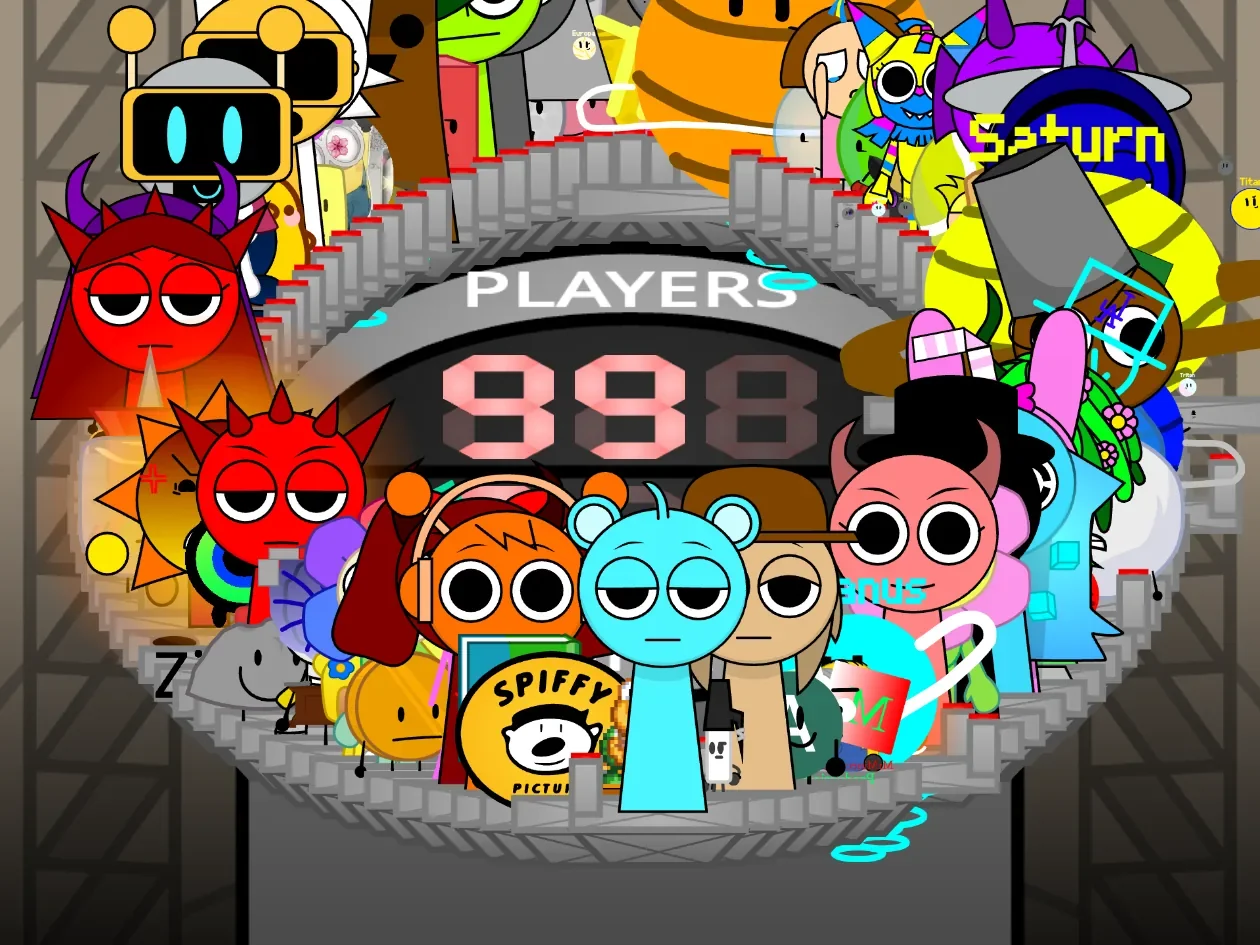
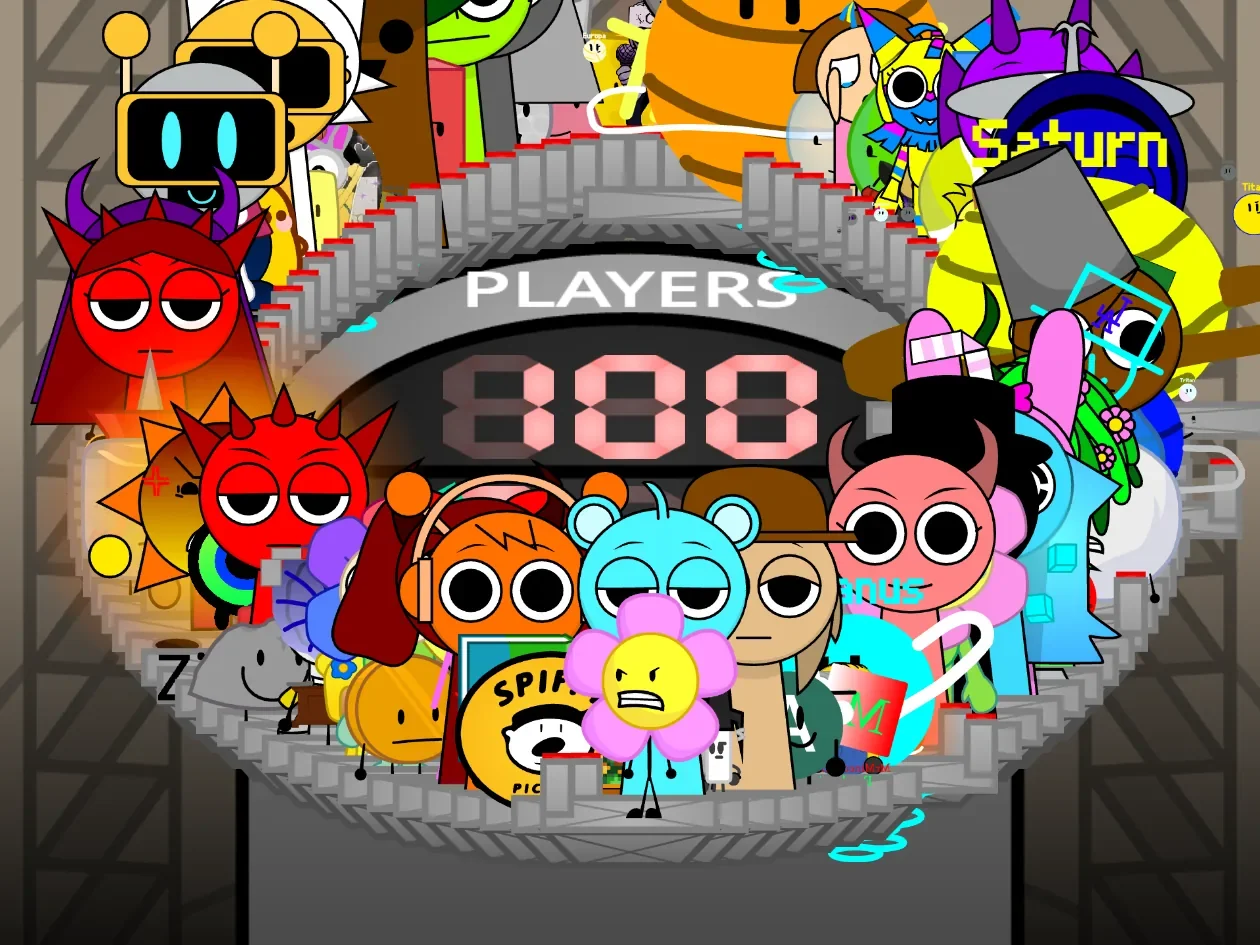 3 Game Screenshots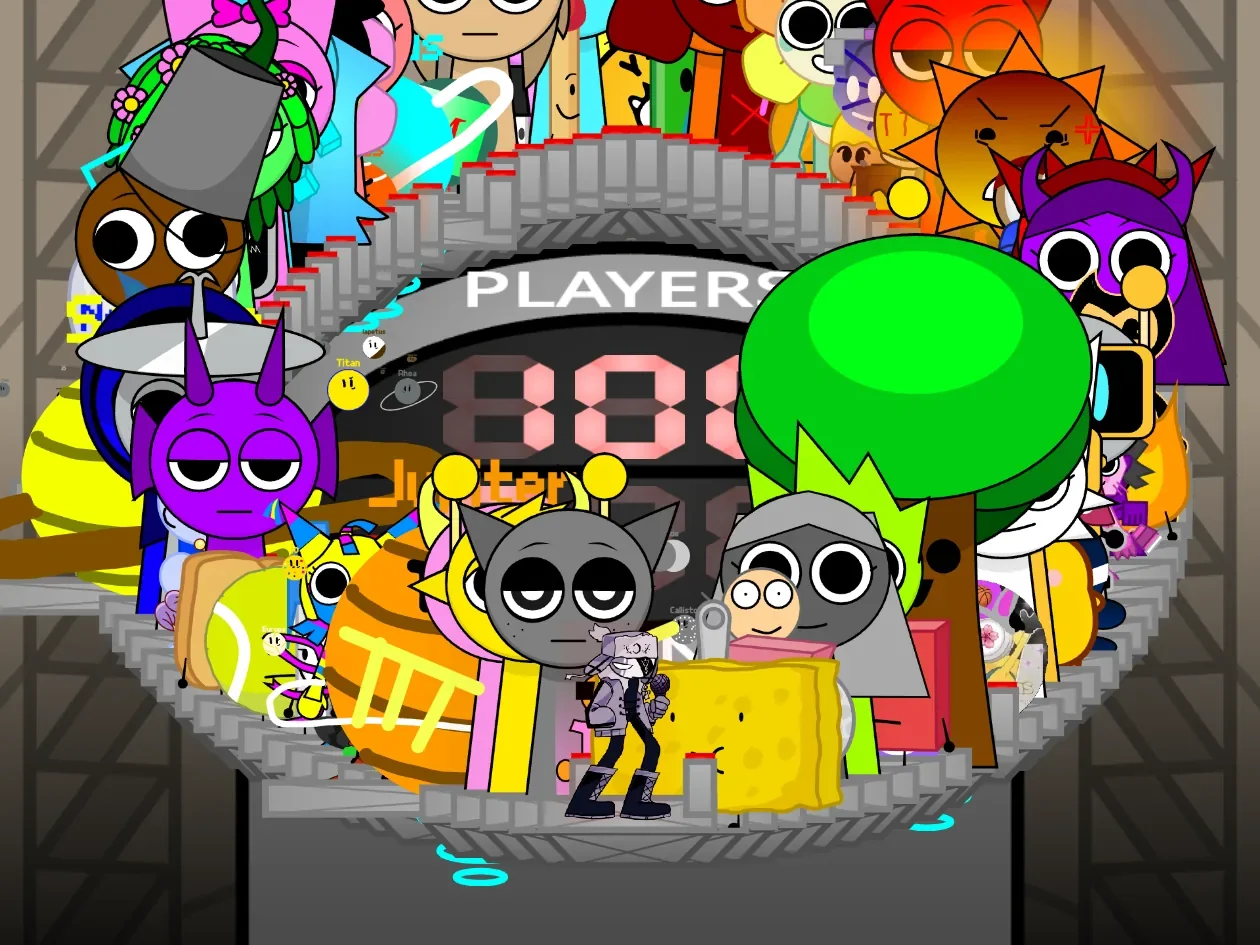
A Packed Crossover Roster Under Automated Rules
The core draw of the game is its massive 100-entrant crossover list. Sprunki representatives like Oren, Gray, Brud, Wenda, Pinki, Simon, Mr. Sun, and Black compete alongside Battle for Dream Island figures such as Firey, Coiny, Teardrop, Flower, Leafy, Blocky, and Golf Ball. Pop culture icons and internet characters including Pocoyo, Bendy, Koopa Troopa, Dandy, celestial bodies from the solar system, original avatars, and custom community additions fill out the remaining slots.
This sheer quantity creates immediate presentation challenges during the opening rounds. Large contestant sprites frequently obscure smaller characters, name bubbles overlay one another when the cursor passes over crowded clusters, and the central three-digit player counter can disappear behind the dense wall of bodies. As eliminations slowly strip away contestants, the circular arena clears out, making individual character animations and positional shifts far easier to track. The audio track keeps the match energetic, using "Sonic the Fighters – Get Ready" for line-up introductions and "Sonic CD Metallic Madness Bad Future JP" to drive the ongoing elimination cycles, backed by impact FX, teleport sounds, and individual reaction clips.
The Unfair Rule That Guarantees the Champion
While ninety-nine contestants abide by standard elimination rules, Spiffy Pictures operates under a unique exception designed by creator @MixelsXD67. When any normal contestant lands in the elimination spot, their player counter decrements, they display a shocked expression, and their sprite is permanently removed from the active roster. When the rotation lands on Spiffy Pictures, however, the elimination fails to trigger.
Instead of falling off the metal platform, Spiffy cycles through surprised and defeated poses, displays an incoming warning cue, unleashes a dedicated enraged reaction animation, and promptly returns to active standing on the arena. Because Spiffy remains on the active contestant list while every other competitor is systematically purged after a single loss, the math guarantees only one outcome. Landing on Spiffy merely creates a non-elimination delay that extends the match duration without changing the ultimate winner. On sites like Fortcade, where players often drop into quick interactive experiments, this mechanic turns a traditional survival tournament into a pre-scripted comedy piece.
Pace, Scale, and Interactive Limits
Because the game relies on randomized button sums to clear a 100-entrant roster, completing an entire match requires significant viewing time. While single rotation cycles resolve briskly, eliminating nearly ninety-nine contestants one by one demands dozens of repeated turns. The initial novelty of watching Spiffy refuse to drop provides a solid punchline on the first discovery, but subsequent runs lose dramatic tension once viewers realize the survivor order is the only remaining variable.
The game traces its structure back to the community-driven "Add Yourself" (AY) format, building upon croassung's original 10-player Tick Drop format and subsequent remixes like ChiaraCarrion's iteration. Players seeking tactical depth or active character control will find the system intentionally restricted, but as a background visual spectacle and crossover showcase, its energetic sound design, dramatic facial reactions, and rigged central premise deliver a distinct, automated fan experience.
![AY in Noggin's RL, GL Game Redux [ 40 Players ] game cover](https://fortcade.com/wp-content/uploads/2026/10/ay-in-noggin-s-rl-gl-game-redux-40-players-225x300.webp)
![AY in Shape Dodge REDUX! [ 10 Players ] game cover](https://fortcade.com/wp-content/uploads/2026/10/ay-in-shape-dodge-redux-10-players-225x300.webp)
![AY in Noggin's RL, GL Game Redux [ 25 Players ] game cover](https://fortcade.com/wp-content/uploads/2026/10/ay-in-noggin-s-rl-gl-game-redux-25-players-225x300.webp)
![AY in Block Party! [ 45 Players ] game cover](https://fortcade.com/wp-content/uploads/2026/10/ay-in-block-party-45-players-225x300.webp)