Dragging a heavy hammer directly into a Nokia phone on a wooden pedestal usually ends a destruction test before it starts, but Can You Destroy The Nokia subverts expectation on the very first swing. The hammer snaps in half, the screen declares that the handset destroyed you, and the game logs Ending 1 of 14. Creator @SnowPlor turns the durable mobile phone meme into a compact experimentation puzzle where the target behaves less like an object with a health bar and more like a hostile opponent.
Every visible item surrounding the gray Nokia 3310-style handset offers another opportunity to misunderstand, attack, or accidentally empower it. Instead of accumulating damage numbers or unlocking weapon tiers, progress relies on testing basic physics, menu options, and interactive interface icons. The central joke remains consistent across every attempt: direct force almost always backfires on the tool, the surrounding environment, or the player.
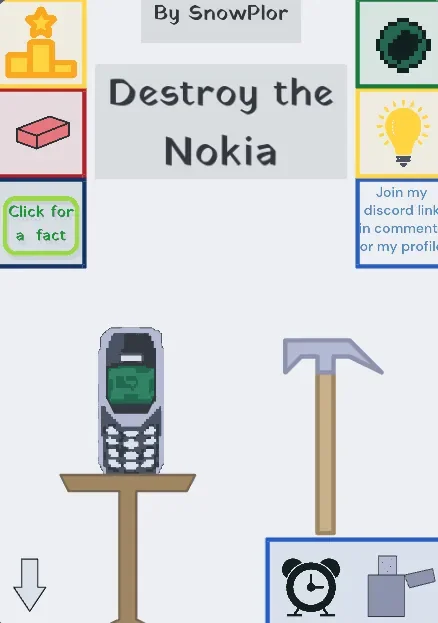 4 Game Screenshots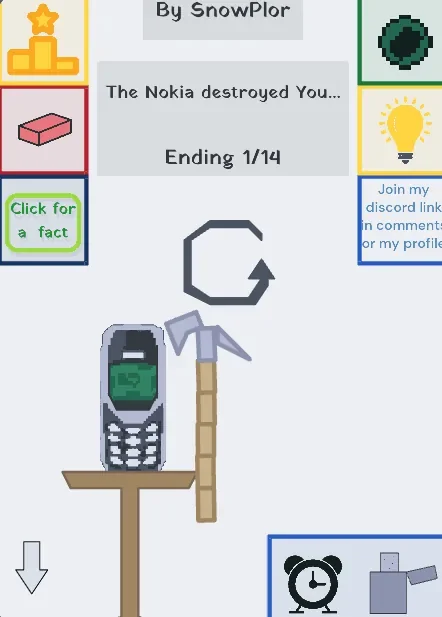
Experimenting Beyond the Hammer
While smashing the hammer against the handset provides the fastest laugh, later solutions require much stranger logic. Players can drag a heavy brick across the stage, ignite objects with a lighter, or tap an on-screen phone menu to dial emergency service responders, the police, or a designated "big brother." An ender pearl introduces teleportation chaos, yielding entirely different outcomes depending on whether the Nokia or the hammer uses it first.
Experimentation extends to the interface surrounding the pedestal. Both the title text at the top of the screen and the wooden table holding the device can be targeted. The lightbulb icon, which normally serves as the hint button, doubles as an interactive puzzle element. Players frequently share the trick of rapidly tapping the lightbulb, which triggers an exclusive joke ending and proves that even the help menu is unsafe from the game's gag design.
Hint Systems, Endings, and Narrative Secrets
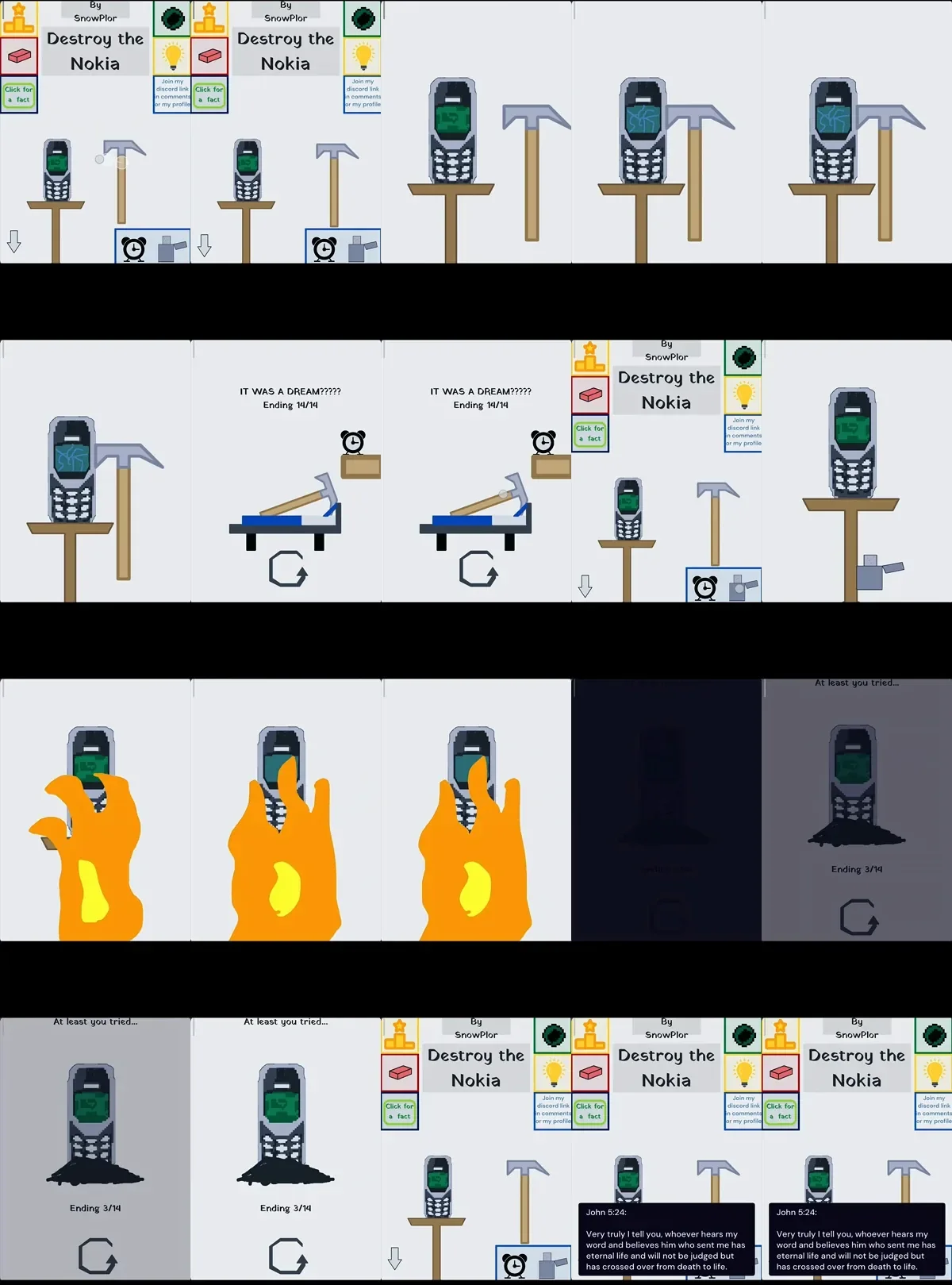
Progress is recorded through a collection of 14 numbered results rather than traditional stage victories. The full set includes straightforward physical destruction attempts, outside interventions, trips into the void, an Among Us-flavored hammer sequence, and two distinct ender-pearl escapes. Pressing the alarm button introduces one of the most memorable narrative punchlines in the game, triggering a reveal that the entire destruction test was merely a dream.
To help players clean up missing entries, the lightbulb offers a structured clue list. It begins with broad suggestions before advancing to specific hints involving the table, brick, void, and alarm. Revealing solutions outright can remove some of the satisfaction of discovery, but it helps bypass precise collision gestures that physics-based drags sometimes require. Finding all 14 outcomes on Fortcade provides a clear goal for players who enjoy hunting achievement-style secrets, supported by an ongoing completion count.
While the original Castle release features an "Endings Completed" leaderboard to log individual progress, players occasionally report friction with tracking, noting that specific endings sometimes fail to register or update on the board properly. Returning to the main screen always resets the room, requiring players to execute each sequence cleanly from the standard starting setup.
Presentation and Gameplay Boundaries
The visual design mimics a hand-drawn mobile activity sheet, utilizing a portrait layout, heavy black outlines, and flat color fills. Economic animations—such as a cracked screen, a shattered tool, or spreading flames—deliver punchlines rapidly without slowing down retries. Short audio impact clips and distinct sound effects accompany specific reveals, keeping the repeated room setup from feeling overly repetitive during long play sessions.
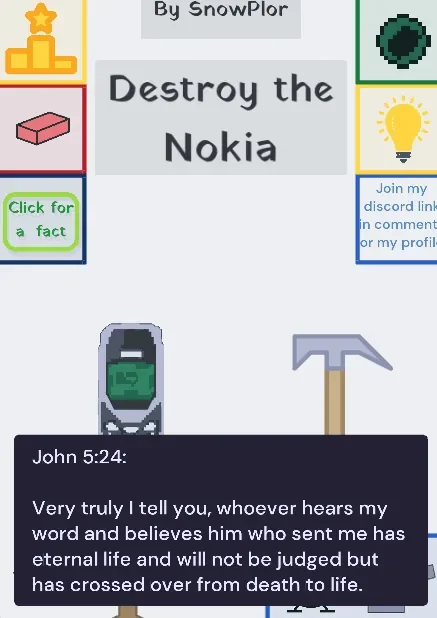
A few reachable extras sit outside the core puzzle loop. A green button labeled "Click for a fact" displays the biblical passage John 5:24, while adjacent links point toward creator community spaces. Beyond these items, the active game contains no secondary levels, staying strictly focused on the pedestal scene, its branching outcome cards, and the interactive phone menu. Exported files contain inactive code passes for unrelated features like farm maps, food upgrades, character skins, and multiplayer bonuses, but these are completely disabled and represent no playable content in this release.
Can You Destroy The Nokia delivers an entertaining, bite-sized ending hunt that knows exactly how to exploit its core meme. It is ideal for players who enjoy interactive gags, physics tinkering, and systematic secret hunting.